
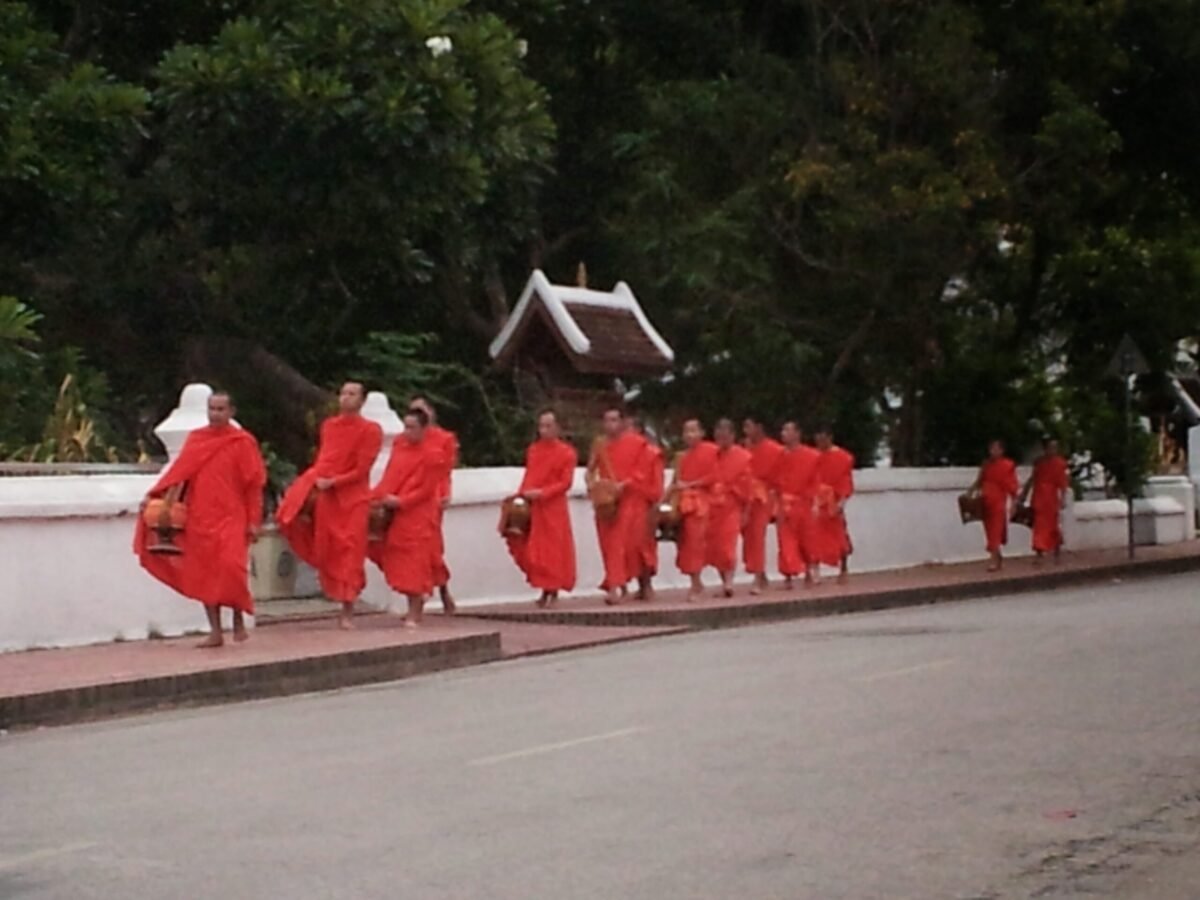
Luang Prabang is one of those places that sells itself on a reputation built a decade or more ago. The photos circulating online — monks in saffron robes at dawn, mist over the Mekong, quiet lanes between crumbling temples — are real. They’re just not the full picture anymore.
If you’re planning a trip based on that version of the town, you’re going to arrive with the wrong expectations, and that gap is going to cost you something. That’s not a reason to skip it. It’s a reason to understand what it actually is now, and plan accordingly.
The Town Itself Is Still Functional — That’s Not Nothing
A layout that makes sense from day one
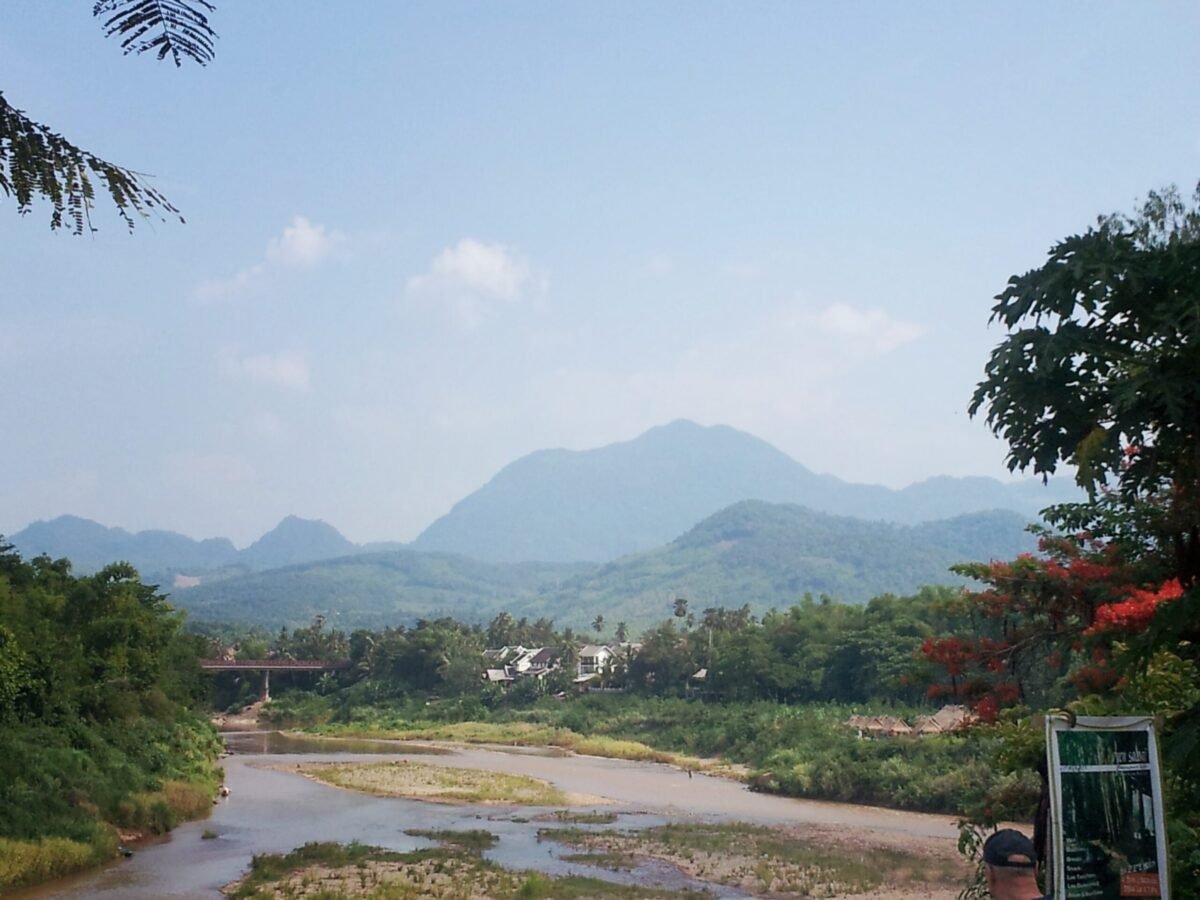
Give Luang Prabang this much: it’s one of the few places in Southeast Asia that doesn’t require days of orientation before it starts making sense. The layout is genuinely compact. The peninsula — bounded by the Mekong on one side and the Nam Khan on the other — contains almost everything worth seeing. The main streets are walkable, the temples are spread across them at reasonable intervals, the night market sets up in the same stretch every evening. You can have a working mental map of the place within a few hours of arriving.
That kind of immediate legibility removes the usual first few days of friction you get in most places. There’s no adjustment period. No days lost to figuring out how to move around, which areas are worth your time, or how things connect. The town presents itself clearly, and it stays that way.
Contained by design — for better and worse
The physical boundaries of Luang Prabang are also what keep it coherent. This isn’t a city that has sprawled outward and left its centre gutted. The same streets that gave the town its character are still the ones you actually use. That containment is both its strength and, increasingly, its problem — a point that runs through Laos at a Glance — A Decision Framework as well, where the country’s appeal and its limitations tend to come from the same source.
When to Go — and When to Avoid
Peak season: best weather, worst crowds
November to February is peak season. The weather is at its best — dry, cooler temperatures, low humidity — and the town is at its most crowded. This is when Chinese tour groups arrive in the largest numbers via the railway, when accommodation prices are at their highest, and when the pressure on the town’s limited space is most acute. If this is when you can travel, go — but factor the crowds into your expectations rather than being surprised by them.
The shoulder months: the clearest windows
The clearest windows, balancing weather and crowd levels, are October to early November and late February to early March — the shoulders of peak season, when conditions are reasonable and the volume of visitors hasn’t yet reached its worst.
Hot season and wet season: the overlooked options
March and April bring heat and haze. The air quality drops noticeably as agricultural burning across the region fills the sky. Temperatures regularly exceed 35°C. The haze can be significant enough to affect visibility on the river and make outdoor time genuinely uncomfortable for much of the day. Crowds thin out during this period, but the trade-off in conditions is real.
May to October is the wet season. This is the most underrated window to visit. Rain comes in the afternoon and evening rather than all day, mornings are often clear, and the landscape around the town is at its most vivid. Visitor numbers are lower, accommodation is cheaper, and the town runs at a slower pace. The Mekong rises significantly — in August and September it can reach levels that flood parts of the lower bank — but this doesn’t meaningfully affect most of what there is to do in town. The wet season isn’t for everyone, but for independent travellers who can work around afternoon rain, it offers the most functional version of Luang Prabang currently available.
What Has Actually Changed
The railway and what it really means for visitors
The most significant structural change to how Luang Prabang is experienced isn’t one you’ll find covered honestly in most travel content: the Laos-China Railway.
Before the railway opened in December 2021, Luang Prabang required a degree of commitment to reach. Flights were limited, the road from Vientiane was long and slow, the river journey was a multi-day undertaking. That friction wasn’t incidental — it filtered the people who showed up. Travellers who made the effort tended to be more prepared, more deliberate, and more willing to move at the town’s pace.
The railway changed that entirely. The line runs from Kunming in Yunnan province south through Boten on the Chinese-Lao border, continuing to Luang Prabang and on to Vientiane. The journey from the Chinese border to Luang Prabang takes roughly two hours. From Vientiane, it’s around two hours in the other direction. For travellers already moving through the region, Luang Prabang is now a straightforward addition to an itinerary rather than a destination that demands planning around.
Getting from the station to town
One practical note: the train station sits about 8 kilometres outside the town centre. There’s no direct public transport link yet that works reliably, so budget for a tuk-tuk or taxi transfer on arrival and departure. This adds a small friction back into the experience at the edges, but it doesn’t change the broader point — the railway has made Luang Prabang fundamentally more accessible than it was, and the visitor numbers reflect it.
The same town, more people, no more space
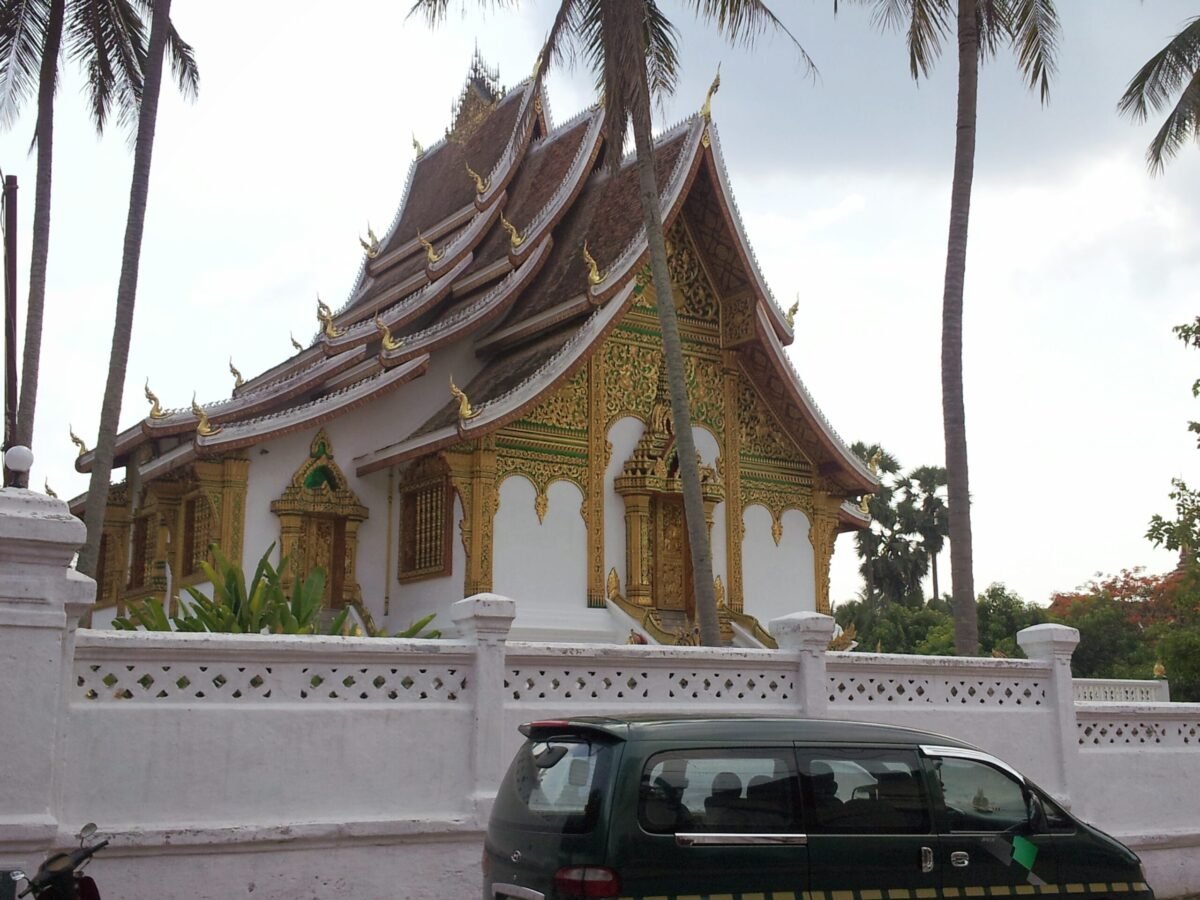
The town has not grown to accommodate this. The same streets, the same temples, the same physical footprint are absorbing a significantly higher volume of people. There has been no meaningful expansion of infrastructure, and there was no particular reason to expect one — the UNESCO heritage designation that has helped preserve the town’s appearance has also constrained what can be changed. The result is a place being squeezed.
Alongside the increase in visitors, the accommodation landscape has shifted. Older guesthouses — many of which were family-run, modestly priced, and part of what gave the town its texture — have been bought out, renovated upward, or replaced by operations catering to a different market. Prices across the board have increased. The economic character of the town is being repositioned, and independent travellers who might have stayed for two or three weeks on a relaxed budget are increasingly priced out of doing so comfortably. The pattern is familiar — Bali went through the same repositioning, and the trajectory in both places points in the same direction.
Where the Experience Breaks Down
The alms ceremony
Tak Bat — the morning procession in which monks collect alms from local residents — is one of the most significant daily rituals in Lao Buddhist life. It is not a tourist event. It was never intended to be observed, let alone photographed. What happens in practice is that tourists line both sides of the route, many with cameras and phones at close range, some using flash, some stepping forward to improve their angle. The monks continue because the ceremony cannot simply be cancelled, but the disruption is not subtle. It is visible, it is uncomfortable, and it happens every single morning.
If you go — and you may well want to — the right approach is to observe from a genuine distance and leave your camera in your bag. Most people do not do this. Budget for the fact that what you see will probably not be the version you came for.
The river at sunset
This should be simple. The confluence of the Mekong and Nam Khan, the light changing over the water, the hills behind — it’s a genuinely good scene. It is increasingly accompanied by party boats passing through with loud music audible from the banks. One or two of these boats is enough to change the atmosphere completely. This is not an occasional occurrence. It is effectively a daily feature of the late afternoon on the river.
The night market
Worth visiting, worth eating at, and worth having realistic expectations about. Child vendors operate in the market — young children, out late, selling to tourists. It is one of those situations where the right response is not to engage, and where doing so, however well-intentioned, makes the problem worse rather than better. There are also people operating near the market who are running scams or offering things they shouldn’t be. This is not unique to Luang Prabang, but it is present, and the town’s relaxed surface can cause people to let their guard down more than they should.
Development pressure
This is slower and less visible than the other issues, but worth naming directly. The town is being actively reshaped by money and by the kinds of businesses that follow increased visitor traffic. The version of Luang Prabang that existed ten years ago was already being mourned five years ago. What’s there now is still worth visiting, but it is a place in transition, and the direction of that transition is not toward slower, quieter, or more authentic.
What Still Works
Timing and positioning still matter
The town’s layout still holds up. The pressure is concentrated in predictable places and times. Moving away from the main streets during the busiest periods, adjusting the timing of how you move through the day, and spending more time in the quieter residential streets north of the peninsula are all practical ways to find a version of the town that the worst of the crowds haven’t reached.
Early mornings — particularly early — are still worth it. The hour before the tour groups have eaten breakfast and assembled is noticeably different from the hour after. The same applies to late afternoons, once day-trippers have moved on.
What the town still does well
There are also things Luang Prabang genuinely does well that don’t depend on avoiding the crowds. The food is good and affordable relative to what you’d expect from a town this tourist-heavy. The temples are architecturally interesting and, at quieter times of day, still visitable at a decent pace. The surrounding area — Kuang Si Falls, the Buddha caves at Pak Ou, villages accessible by road or slow boat — provides enough range to make a longer stay worthwhile without requiring constant movement. It holds up as a base in the same way that Hoi An does in Vietnam — a compact, walkable town with enough depth to absorb time without demanding that you fill it.
The town still functions as a base. That’s a meaningful thing to be able to say.
How Long to Actually Stay
Why three nights almost always fails
The standard package-tour allocation is three nights, and three nights is precisely long enough to hit every busy period without finding your way around any of them. You’ll arrive, move through the market and the waterfront at their most crowded, see the alms ceremony under the worst possible conditions, and leave with a sense that the place was somewhat overrated. That outcome is almost guaranteed if you’re moving quickly — and it’s the same trap that catches most visitors to Siem Reap, where doing too much in too little time is exactly how the place stops working.
The practical minimum: seven nights
Seven nights is the practical minimum for a visit that actually works. That’s long enough to revisit places at different times of day, to write off a morning that isn’t going well and try again the following day, and to establish a loose rhythm that lets you move around the busiest periods rather than through them. It’s also long enough to make a day trip to Kuang Si Falls without feeling like it’s eating into your only remaining day.
Why ten days to two weeks is the better target
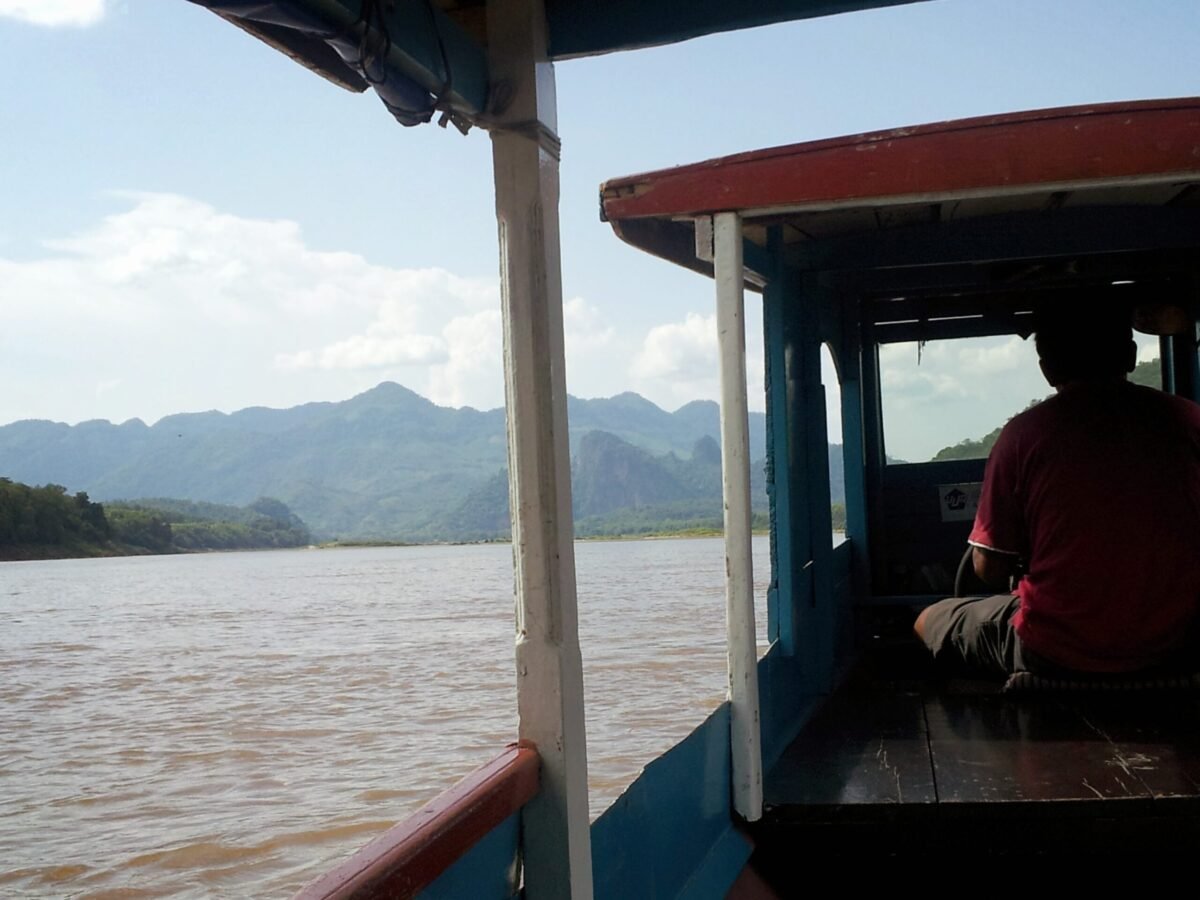
Ten days to two weeks is where the town genuinely opens up. At that length of stay, you stop managing the town and start using it. There’s time for slower things — an afternoon on a rented bicycle in the villages south of the centre, a morning at a cooking class, a day on the slow boat upriver without needing to immediately reverse the journey. The town has enough range to sustain this without requiring constant movement, and that unhurried pace is the closest current approximation of what made Luang Prabang worth talking about in the first place.
Visas and practicalities
The practical constraint for most travellers is the visa. Laos issues a standard 30-day visa on arrival, which is enough for a proper stay in Luang Prabang alongside time elsewhere in the country. If Luang Prabang is the primary destination, the 30-day window is more than sufficient.
The case for staying longer isn’t about doing more. It’s about having enough time to avoid what doesn’t work while making genuine use of what does. Seven nights minimum. More if you can manage it.
The Honest Assessment
Luang Prabang is not the undiscovered gem it was once marketed as, and it hasn’t been for a while. The crowds are real. The changes are real. The gap between the reputation and the current reality is wide enough to matter if you arrive unprepared.
But the core of what makes the place worth visiting is still there. The layout still works. The temples are still standing. The food is still good. The surrounding landscape is still the same. The atmosphere — at the right time of day, in the right parts of town, with enough time to find it — is still something you can access.
The shift isn’t whether to go. It’s understanding that the version of Luang Prabang worth experiencing now requires more time, more awareness, and more willingness to move around the parts that don’t work. Arrive in the shoulder season if you can, take the railway or fly in but don’t rush out, and give yourself at least a week. Approach it that way, and it still delivers. Treat it as a quick stop on a two-week highlights tour, and it probably won’t.
That’s the honest position. Plan for the place it is now, not the version you saw online.
Travel Logistics Planner
A simple framework for thinking through the logistical side of travel — flights, entry requirements, accommodation and transfers — before the journey begins.
Delivered instantly. Occasional thoughtful updates from the road.