
The fear isn’t usually about dining alone. It’s about being seen alone — and what that has been trained to mean.
Once you recognise that, dining solo becomes easier — not because the world changes, but because you stop misreading it. And once you understand that the discomfort is structural rather than personal, the entire experience shifts.
This isn’t a “just be confident!” pep talk—it sits within the broader shift explored in Solo Travel Mindset, where the focus moves from emotion to structure. It’s a practical reframe, built from the way solo dining actually feels on the ground — especially when you care about comfort, energy, and staying steady while you travel.
Dining Alone Isn’t the Problem — The Setup Is
When you walk into a busy restaurant as a solo diner, you are stepping into a social setting designed around pairs, groups, and shared attention. The lighting, the table layout, the pacing of service — all of it assumes interaction. Sitting there alone doesn’t just feel visible; it is visible, because the space has been built that way.
That discomfort is often misread as a confidence issue. It isn’t. It’s a setup mismatch.
Some Environments Absorb You — Others Put You on Display
Think of it as a spectrum of exposure — not a measure of confidence. Restaurants sit at one end: high exposure, socially coded, and often the most uncomfortable when you’re alone. A hotel restaurant carries a very different energy — people are coming and going, often solo, often mid-journey. No one is paying attention because no one is anchored there socially. You are simply part of the flow. An executive lounge sits further along still: dining there is not an event, it’s a function. People eat, work, scroll, leave. There is no performance required.
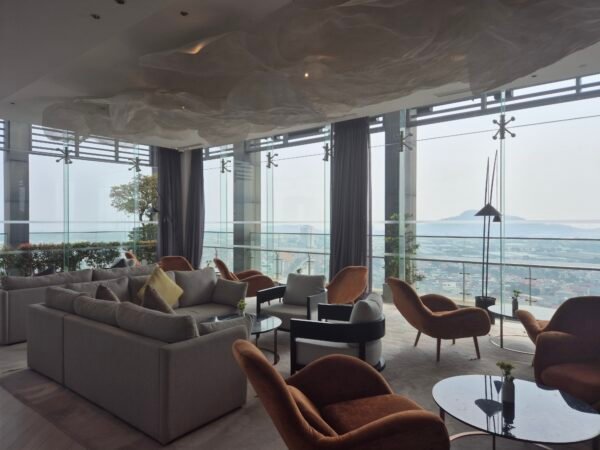
Once you start to see dining this way, it stops being a one-off adjustment and becomes part of a broader system. The same thinking sits behind how I’ve structured my overall travel setup in Why I Sold My House and Live in Hotels Instead — where environments are chosen for how they reduce friction, not just where they are. Dining then follows naturally, because the spaces you move through are already designed to support you rather than expose you.
Takeaway sits at the other end of the spectrum entirely. You remove yourself from the social environment and choose your own setting — your room, a quiet corner, somewhere that matches your energy rather than challenges it.
What changes across these options is not your confidence. It’s the level of exposure the environment imposes on you. When you begin to see dining this way — as a spectrum rather than a test — you stop forcing yourself into environments that don’t fit. And once that happens, the discomfort that felt so personal starts to dissolve.
Is dining alone awkward when traveling?
Dining alone can feel awkward because restaurants are social environments designed for groups, which increases your sense of visibility. The discomfort isn’t about confidence—it’s about how the space is structured. Choosing the right setting reduces that exposure and makes solo dining feel natural.
Why Restaurants Feel So Exposed
There are some fears that arrive as a clear alarm: a dodgy street, a gut feeling, a situation that doesn’t add up. Dining alone in a restaurant isn’t usually like that. It’s softer and more confusing. Your rational brain knows you’re safe enough — you’re just having dinner — yet your body behaves as if you’re about to walk onto a stage.
That mismatch can be unsettling. It makes you question whether you’re “cut out” for solo travel. You are. This is one of the most common friction points — not a limitation.
Meals are rarely just about food
In many cultures, meals are a ritual — not only nourishment but evidence that you’re connected, included, wanted. When you show up alone, you’re not breaking a rule, but you can feel as if you’re breaking a script. For women travelling solo later in life, that script can run deeper. Many of us spent years managing other people’s needs: family meals, work lunches, social dinners, caregiving schedules. We’re good at fitting in. Solo dining asks us to step outside that role — to take up space without performing. That can feel oddly rebellious, even when nobody else cares.
Your brain insists everyone is watching
There’s a psychological phenomenon called the “spotlight effect” — the tendency to overestimate how much other people notice us. In a restaurant, this becomes a very specific fear: everyone can tell I’m alone, everyone is judging me, everyone thinks it’s strange. Yet in practice, most diners are wrapped up in their own conversations, menus, phones, hunger, and plans for the rest of the night. The audience you feel is there usually isn’t.
That sense of being watched often overlaps with the feeling explored in The Truth About Loneliness In Solo Travel — where the discomfort isn’t isolation, but heightened awareness of yourself in the environment.
There are also practical concerns
Dining alone can come with real considerations that have nothing to do with confidence. You might be thinking about how you’ll get back after dark, whether you’ll attract unwanted attention, whether the restaurant is the kind that welcomes solo diners or makes you feel like an inconvenience. You might be tired. If any of that is in play, you’re not imagining things. You’re doing what capable solo travellers do: assessing conditions and reducing risk.
Why does eating alone in a restaurant feel uncomfortable?
Restaurants are built around shared attention—conversation, pacing, and group dynamics. When you sit alone, you become more visible within that structure, which can feel like social exposure rather than a simple meal.
The Quiet Reframe That Changes Everything
Stop treating solo dining as a test of confidence. Start treating it as a normal logistical choice.
When I made it a test, every dinner became loaded. If I didn’t go, I failed. If I went but felt awkward, I failed. If I went and didn’t enjoy it, I failed. That mindset makes one meal carry the weight of your identity.
But dining alone is not your identity. It’s just a setting.
Most restaurant staff are not interpreting your solitude either. They’re doing operations: seating, pacing, table turnover, reservation flow. Sometimes a host might ask, “Just one?” or “Are you waiting for someone?” That can sting if you’re already feeling exposed. But it usually isn’t judgement — it’s standard language. Once you stop taking those lines personally, the interaction stops landing like a small insult.
The goal isn’t to feel fearless. It’s to feel steady. If you can walk into a restaurant, get seated, eat a decent meal, and leave without it costing you too much energy — that’s success. You don’t need a triumphant transformation every time.
It’s a pattern similar to what I break down in Solo Travel Anxiety: What’s Real And What’s Not, where the body reacts first and the meaning gets added afterwards.
Make the Conditions Work for You Before You Sit Down
If dining alone feels hard, the answer usually isn’t “be braver.” It’s “change the conditions.”
Choose venues that are structurally friendly to solo diners
Some restaurants are designed for pairs and groups. Others naturally accommodate solo diners without making it a thing. Bar seating, counters, and chef’s tables work well, as do small neighbourhood places with steady foot traffic, outdoor patios where people-watching feels natural, and restaurants that aren’t empty — empty rooms amplify self-consciousness. You can often spot a solo-friendly venue just from photos. If it has a long bar, counter seating, or closely spaced two-tops, you’re usually fine.
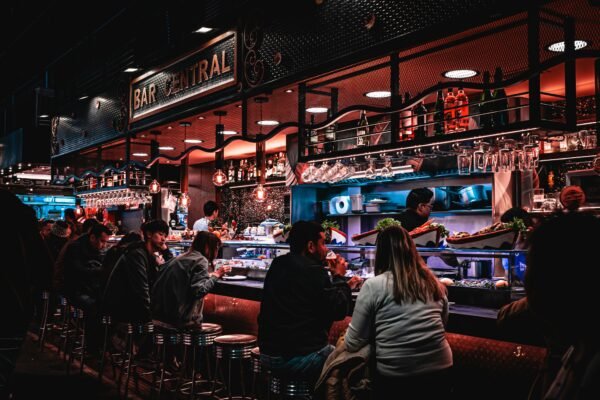
In some places, this is built into the culture. In Japan, for example, solo dining is normal rather than notable, and entire dining formats are designed around it. Counter seating is standard, ordering is often individualised, and meals are structured to be efficient without feeling rushed. You can see this clearly in cities like Tokyo, where eating alone doesn’t stand out—it simply blends into how the space is used.
Time the meal so the room works for you
A moderate crowd helps if you feel exposed — you blend in, the room has movement, and the staff are too busy to make your solo status a topic. If crowds overwhelm you, go earlier. Early dinner or late lunch often gives you calm without the full theatre. Lunch is a cheat code for solo dining generally: the same restaurant that feels intimidating at night can feel completely neutral at midday.
Make a reservation
There’s something psychologically grounding about walking in and saying, “I have a reservation.” It reduces the “do I belong here?” feeling because the system has already accepted you. It also lets you make small requests that protect your comfort: a window table, a quieter corner, somewhere that still feels safe. You don’t need to apologise for asking. You’re a paying customer, not a nuisance.
Decide your “dining companion” in advance
This isn’t about hiding behind your phone — it’s about easing entry. If you arrive with something that gives your hands and attention a place to go, your body settles faster. A book signals “contentedly occupied,” not “waiting.” A journal turns the meal into reflection rather than endurance. A note on your phone — trip planning, tomorrow’s route — works just as well.

In-the-Moment Techniques During Your Meal
Once you’re seated, the hardest part is usually over. But your body might still be on alert — scanning, tightening, interpreting. These are the techniques that move you from enduring to enjoying.
Enter as if you belong there — because you do
You don’t need swagger. You need clarity. Walk in, make eye contact, and say: “Table for one, please.” No apology. No explanation. No “Sorry, it’s just me.” When you apologise for your own presence, you teach your nervous system that being alone is something to be ashamed of. If you’re offered a table you don’t want, request an alternative without drama: “Could I have a table by the window, if possible?” This is especially useful if you’re thinking about safety and comfort.
Use a simple grounding routine to stop the mental spiral
If you sit down and immediately start thinking about how you look, what others think, whether you seem awkward — you’re not failing. You’re just nervous. Try this instead: put both feet on the floor, take one slow breath in and out, and look around to name three neutral things you can see — a menu, a glass, a light, a plant, a doorway. Then return to the menu as if it’s your only job. This interrupts the loop where your brain tries to make meaning out of strangers.
Let the meal be about sensory pleasure, not social performance
One of the real gifts of dining alone is that you’re not negotiating anyone else’s preferences. You can order what you actually want, eat at your own pace, stop when you’re done, linger if you feel safe, or leave quickly if you don’t. If you tend to rush because you feel watched, try a small practice: for the first three bites, focus only on texture, temperature, and flavour. It’s a gentle way to return to your body without making the moment heavy.
When Solo Dining Becomes One of the Best Parts of Travel
Once you’ve done this a few times, something shifts. You stop feeling like you’re “getting away with it.” You start feeling like it’s yours.
Not every meal becomes magical. But it becomes normal. And normal is powerful, because normal means you can travel without this fear running the show.
Try one intentional solo meal per trip
Instead of waiting until hunger forces you into a random choice, plan one meal you genuinely want — a place with a view, a dish you’re curious about, a café you’ve bookmarked. Treat it as an experience you’re giving yourself, not a hurdle to clear. This also helps avoid the “I’m tired, I’ll just eat in my room again” pattern, which can amplify loneliness on longer trips.
Understand that most people move through stages, not a single breakthrough
Most people move through stages, not a single breakthrough. It often begins with avoidance—eating in your room, grabbing takeaway, sticking to food courts and easy venues where nothing feels exposed. Then it shifts into something more deliberate. You start choosing places that are structurally easier, timing your meals, making reservations, controlling where you sit.
After a while, it becomes normal. Dining alone stops feeling like an event and becomes practical—just another part of how you move through a place. And eventually, if you stay with it, something else happens. You begin to enjoy it. Meals become something you choose on purpose, not something you work your way through.
This progression is not linear. Some nights you’ll be tired and choose the easy option. That doesn’t erase your capability. It’s simply energy management.
Does dining alone get easier with practice?
Yes. Most solo travellers move through stages—from avoidance to strategic choices to complete normalcy. The shift happens not through confidence, but through better decisions about where and how you eat.
Your Table Isn’t a Test
Dining alone while travelling feels bigger than it is because it touches something old – visibility, belonging, judgement, the fear of being misunderstood.
In reality, it’s just a meal. A room. A chair. A menu. A small decision you can shape.
You don’t need to become a different person to do this. You don’t need to be fearless. You don’t need to perform confidence. You only need to understand the structure, reduce the friction, and let the experience become ordinary through repetition.
The next time you find yourself hesitating outside a restaurant, try this: take one breath, walk in, and say “Table for one, please.” No apology. No explanation.
Your table isn’t a test. It’s just yours.
Travel Logistics Planner
A simple framework for thinking through the logistical side of travel — flights, entry requirements, accommodation and transfers — before the journey begins.
Delivered instantly. Occasional thoughtful updates from the road.