
In two years of full-time travel, my first 24 hours in a new country have never gone wrong. Not once.
That isn’t luck. It’s the direct result of a system I built and refined: my travel logistics planner. Everything that could create friction on landing day gets sorted before departure — visas, e-arrival submissions, flights timed so I never land in the middle of the night — I explain exactly why that matters in Why Your Arrival Time Matters More Than Flight Length and onward flights, accommodation, Immigration Fast Track bookings where they exist, and private car transfers where I use them. All of it lives inside that single document, including the e-arrivals that only open for submission three or seven days before departure.
The system gets tested every time I land, and it was tested clearly on a flight from Bangkok to Cambodia via Ho Chi Minh City. My visas were already approved, applied for weeks earlier, with copies saved on my phone. My onward ticket existed. Even so, the questions arrived one after another during flight check-in: proof of onward travel, visa confirmation, accommodation booking, arrival registration.
Nothing about them was unreasonable, and nothing about them was personal. They were procedural, and the rhythm of the interaction shifted the moment they began stacking. I was no longer simply a passenger presenting documents. I was being assessed for entry eligibility, and even with everything in order, that assessment draws on cognitive resources you don’t expect to spend.
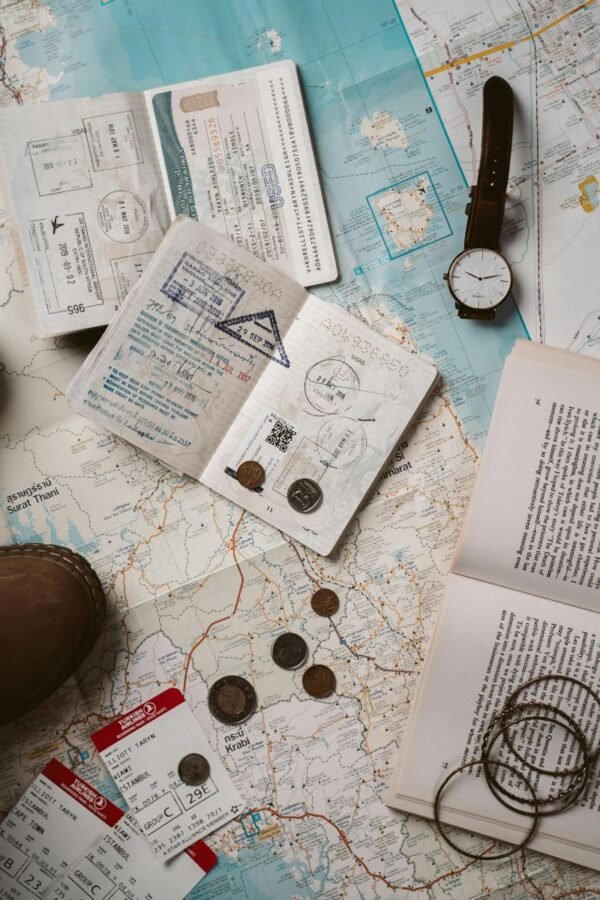
Because every document already existed in one place, I wasn’t searching for anything under pressure that day. Nothing had to be found. It only had to be shown. That’s the entire purpose of having a logistics plan before you travel, instead of trusting yourself to assemble one under fluorescent lighting with a queue building behind you.
Most solo travel content treats spontaneity as the reward for finally being brave enough to go. I’d argue the opposite. For a woman travelling alone later in life, spontaneity isn’t freedom — it’s a liability the industry has successfully rebranded as personality. It creates risk in exactly the hours you have the least capacity to manage it, and calling that risk ‘adventure’ is how the industry gets you to buy into the version of travel that fails you first.
What Actually Makes the First 24 Hours Fragile
The first twenty-four hours of any trip compress more decisions into a shorter window than any other part of it. You’re moving between two countries’ systems at once: the one you’re leaving and the one you’re entering. That transition feels simple weeks out, when flights are just segments on a screen and immigration requirements reads as a short paragraph on a government website. Once the trip actually starts, though, those two systems don’t arrive one after another. They arrive stacked together, and by the time the aircraft door closes, you’ve already been managing decisions for hours.
Why This Matters Even More on a Long-Haul Flight
This compression counts for even more if you’re doing a long-haul flight. A twelve, eighteen, or twenty-four-hour journey adds a layer of fatigue before you’ve even reached immigration. My own trips are usually a short hop between neighbouring Asian countries as I am now based in Asia, so I don’t carry that same accumulated exhaustion into arrival. Even so, I run the identical system every time, because the process protects the first 24 hours, not the length of the flight.

Fatigue compounds directly with flight length, and it changes how all of this feels. Most travel advice treats it as something to fix with coffee or an early night, but in practice it alters judgement directly. It shortens patience, narrows perspective, and lowers tolerance for ambiguity, so small inconveniences start to feel larger than they are.
A twelve-hour flight leaves you with less patience and less perspective than a two-hour hop does, and that’s exactly why the first 24 hours carry more risk the longer your journey to get to Asia. They sit at the point where clarity is declining and decisions are increasing, and that point arrives earlier, and harder, the further you’ve flown. Once you see it clearly, you can design around it instead of pushing through it.
The Two Friction Points in Southeast Asia
Two moments create almost all of the friction in a Southeast Asian arrival: check-in at your home airport, where requirements vary by airline, and immigration on landing. Japan, Taiwan, and South Korea don’t carry the same intensity — in my experience, both checkpoints are considerably more relaxed in those countries. Southeast Asia is where documentation actually gets tested, which is exactly why the logistics planner exists: to make sure nothing arrives unverified at either checkpoint.
What the Checkpoints Actually Check
What gets tested, specifically, comes down to three things: an e-visa if your passport isn’t visa-exempt for the country you’re entering, an e-arrival form where one’s required, and an onward flight out of the country. Each piece is straightforward by itself. What catches people out is leaving it until the days before departure, when an e-visa that takes a week to process suddenly doesn’t fit the timeline. My logistics planner tracks each of these against my actual travel dates, so nothing gets left to the last minute.
Why Immigration Fast Track Is Worth Booking
Fast Track immigration is worth booking wherever it exists, and across Southeast Asia that’s more places than most travellers realise — Bangkok, Hanoi, Phnom Penh, Kuala Lumpur, and Ho Chi Minh City all offer it. I book mine through Klook or GetYourGuide, at least a month ahead, alongside everything else the planner tracks.
A staff member meets you at the gate and walks you through a separate lane, and by the time other passengers are still working through the main line, you’re already at the luggage carousel. It’s a small cost for a meaningfully calmer first hour. I go into more detail on exactly what that first hour looks like in Ho Chi Minh City for First-Time Visitors: What to Expect and How to Handle It.
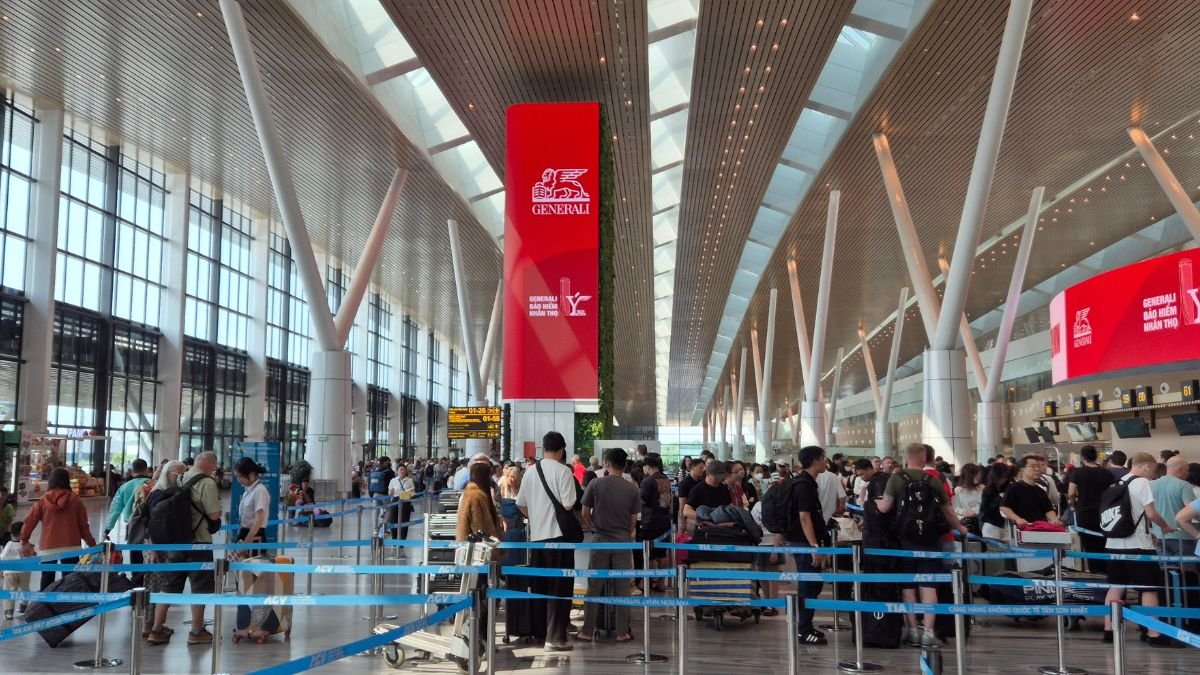
No amount of Fast Track access changes what it can’t change, though. Fast Track buys a shorter queue and a calmer lane, not an exemption from having your paperwork in order. If a visa is missing or an e-arrival wasn’t submitted inside its window, Fast Track will not get you into the country. The paperwork has to be right first, and the convenience only matters once it is.
Over-preparation gets treated as anxiety in most travel writing — the implication that a woman with a plan is a woman who’s afraid. I unpack exactly which parts of that fear are real and which aren’t in Solo Travel Anxiety: What’s Real and What’s Not. It’s the opposite. A plan that’s been stress-tested across a dozen countries isn’t fear. It’s what competence looks like once you’ve stopped needing an audience to believe you’re brave.
The Only Goal on Landing Is to Leave the Airport
Once immigration is behind you, the goal simplifies to one thing: leave the airport and reach the hotel with as little friction as possible. I don’t withdraw cash nor exchange money at the airport. My eSIM with Airalo is already active before the wheels touch down, so there’s no kiosk to find and no queue to join for a local number. Nothing gets solved at the airport that could have been solved before I left home, because every minute spent on logistics in an arrivals hall is a minute spent tired, distracted, and more exposed than necessary.
Choosing How You Leave The Airport, Before You Land
How I get from the airport to the hotel depends on how familiar I am with the country. If it’s a new destination, or somewhere I haven’t returned to in years, I arrange a pre-booked private transfer. The driver waits with my name on a sign, and the journey starts without a single decision left to make. In Seoul, on my first visit, I paid for that private car transfer even though it was expensive, because the certainty was worth more than the savings. Taipei was the same, at a lower cost but the same reasoning.
For Anywhere Familiar: A Verified Taxi, Bus, or Train
Where I’m more familiar with a city, or staying close to the airport, a taxi can work — but only once I’ve confirmed in advance that it takes card payment, since I never sort out cash and transit cards at the airport, not even in Japan. Landing at Haneda and staying nearby at the Mercure Hotel, I took a taxi from the rank because I’d already checked that card payment was accepted there.
For anyone flying into Tokyo and heading straight into the city, the limousine bus and a single train ticket are both realistic options too, and both can be paid for with a credit card at the counter or the machine, so cash still isn’t required either way.
The real trade-off is cognitive load, not payment. Working out the right bus counter or ticket machine on arrival takes more attention than stepping into a taxi you’ve already verified or a private car transfer that’s already booked, especially straight off a long flight. If a hotel’s location makes the bus or train hard to avoid, booking somewhere closer to the airport on arrival day is often the simpler fix. Then sorting out cash and transit card once you have had a good night’s sleep.
Ride-Hailing, Only Where It’s Frictionless
Ride-hailing apps sit somewhere in between, and I only use them where I already know the airport and the service is reliably frictionless. Don Mueang airport (DMK) in Bangkok works well for this. Suvarnabhumi airport (BKK) doesn’t — the Grab queue there gets chaotic enough that a pre-arranged option is worth the extra cost.
Night One Sets the Tone for Everything After
Accommodation decisions rarely feel consequential when you make them weeks in advance, but the first night carries more weight than any other night of the trip. It’s the stabilising point of the whole arrival sequence. Self-check-in instructions you can’t decipher, a host who doesn’t respond quickly, an unmarked entrance in an unfamiliar neighbourhood after dark: none of it is dangerous, but all of it adds friction exactly when your reserves are lowest.
Why Hotels and Not Airbnbs
This is one reason I stay in hotels rather than Airbnbs. Reception exists specifically to resolve uncertainty, and if documentation is required again, someone is there to guide the process. An Airbnb doesn’t have that mechanism, however well it’s set up otherwise. I hold status with both Accor and IHG, and I move between the two depending on where I’m travelling, because the underlying system — check-in, reception, the way problems get solved — stays recognisable within each network even as the country around it changes.
It also means that in a hotel I’ve never set foot in, in a city or country I’m visiting for the first time, I get welcomed the way an old friend would be, before I’ve said much more than my name. That welcome does real work in the first hour of somewhere entirely new — at least one part of it already feels familiar, even when nothing else around it does. I explain that system in more detail in Why I Sold My House and Live In Hotels Instead.
What Status Actually Buys You
Status carries its own weight here, too. As an Accor Diamond and IHG Platinum member, early check-in gets honoured most of the time, regardless of the country in Asia or the property. It isn’t guaranteed, though — two recent stays in Phuket, the room wasn’t ready either time.
What status changed was what the wait looked like. One hotel sent me to the restaurant with a drink on the house. The other gave me the Executive Lounge instead of a lobby chair. Either way, I’m not standing around with my luggage while jet lag catches up with me. It’s a small detail on paper, and it changes the entire shape of a landing day, whether the room is ready the moment I arrive or not.
Why the First 24 Hours Reward Restraint
After the room key is collected and the bags are down, relief usually arrives, followed almost immediately by a different impulse: the sense that the trip should properly begin now. It can feel wasteful to reach a new city only to rest. That instinct makes sense — it comes from wanting to feel oriented as quickly as possible.

The problem isn’t the tasks themselves. It’s what happens when several of them land on top of a day that’s already long. You start making decisions you hadn’t planned to make yet: finding the right ATM, checking a map twice, making sense of machines. None of this is dramatic. It’s usually small — an unnecessary fee, a misplaced card, a walk that takes longer than the map suggested. On their own, these things barely matter. Stacked together, on an evening when you’re still finding your footing, they quietly sour the mood.
Why I Wait Until the Next Morning
This is why I don’t sort transit cards nor withdraw cash on landing day, in any country. Landing at Haneda in the early evening, I took a taxi straight from the rank to the hotel and paid by card. The transit card and the cash both waited until the next morning, once I’d had a proper night’s sleep and had a clear head to manage them. I cover the detail of that system in The Transit Card You Need for Public Transport in Japan, and it’s the same rule I apply everywhere, not just Japan. This approach is fixed, and it’s proven itself over two years of travel. Everything else is the exception, not the standard.
Before You Land: The Calm Arrival Checklist
A short, saveable version of everything above:
- Visas applied for, approved, and saved as copies on your phone
- E-arrival forms submitted inside their required window — many only open 3–7 days before departure – and saved as copies on your phone
- Passport validity checked against the destination’s requirement, typically six months
- Flights, onward flights, and accommodation confirmed and stored on your phone
- Immigration Fast Track booked through Klook or GetYourGuide where it’s available, understanding it speeds the queue, not the paperwork
- Transport from airport to hotel decided and booked in advance
- eSIM active before landing, so there’s no SIM stall or kiosk queue on arrival
- No cash withdrawal or currency exchange planned at the airport
- Transit card and cash withdrawal deliberately left until the next morning, after sleep
What Changes When the First 24 Hours Go Right
Two years of full-time travel, and the first 24 hours have never once gone wrong for me. That isn’t a claim about luck. It’s what happens when nothing about landing day is left to figure out on the day.
There’s no stress in it and no anxiety — everything simply goes like clockwork, exactly as planned. That absence is its own kind of proof. Landing somewhere entirely new and watching the system hold, again and again, without a single thing left to figure out on the day: that’s the satisfaction. Not excitement. Just certainty, confirmed once more.
Travel Logistics Planner
A simple framework for thinking through the logistical side of travel — flights, entry requirements, accommodation and transfers — before the journey begins.
Delivered instantly. Occasional thoughtful updates from the road.