
For many travellers, Ho Chi Minh City is less a chosen beginning than an inherited one. It is where routes converge, where international arrivals make practical sense, and where Vietnam first becomes real not as an idea, but as an airport queue, a transfer pickup, a hotel check-in, and the first crossing of a road that does not behave according to familiar rules.
Even travellers who never intended to dwell here for long often find themselves passing through at the beginning or end of a trip simply because the city is useful. Flights are plentiful, onward connections are easy, and the practical architecture of travel quietly pushes people in this direction before they have even decided what they want Vietnam to feel like.
That is part of what makes Ho Chi Minh City important, although not necessarily in the way people assume. It is not important because it defines Vietnam. If anything, one of the problems with starting here is that it can distort perception precisely because it is such a forceful first impression. Ho Chi Minh City often becomes the city through which people begin interpreting the whole country, even though what it offers is only one version of Vietnam and, in many ways, a particularly intense and specialised one. It is a gateway, but gateways are not always representative. Sometimes they are simply functional thresholds, and understanding that difference matters more than many travellers realise.
My own relationship with Ho Chi Minh City has always been relatively straightforward. I have never found it especially difficult to use. Once you understand how movement works, how transport needs to be arranged, how much walking is actually realistic, and how little value there is in improvising the basics, the city becomes manageable very quickly.
In that sense, I understand why so many people begin here. It works. It does its job. Yet over time I have also had to admit something else, something less flattering but more honest: although Ho Chi Minh City is easy enough to operate in, it has never given very much back to me emotionally. It is a city I can use well, but not a city I have ever truly felt drawn towards.
That does not make it a failure, and it certainly does not make it a bad destination. It simply means that Ho Chi Minh City plays a particular role, and the sooner that role is understood, the more clearly the city begins to make sense.
Why So Many Trips to Vietnam Begin in Ho Chi Minh City
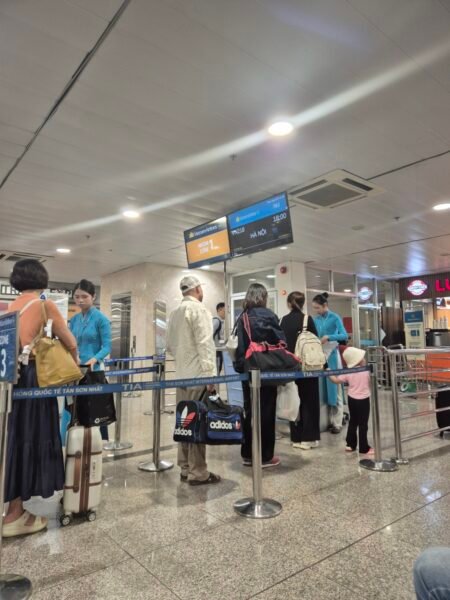
There is very little mystery in the fact that so many Vietnam itineraries begin here. Ho Chi Minh City sits inside the travel system in a way that is hard to ignore. Tan Son Nhat is one of the country’s busiest gateways, and from a planning perspective the city is often the easiest place to stitch the rest of a journey together. Whether someone intends to continue north, head towards the central coast, or simply begin with a few days of urban orientation before deciding what comes next, Ho Chi Minh City tends to present itself as the path of least resistance.
That practical logic is real, but the emotional effect of arrival is more complicated. After a long flight, the city does not gently introduce itself. It arrives all at once. The airport is busy, the transition out of the terminal can feel abrupt, and within a very short span of time you move from the contained logic of international travel into a city whose pace is immediate, dense, and unapologetic. For some travellers that reads as energy. For others, especially if they are tired or underprepared, it reads as impact. Ho Chi Minh City does not really warm you in; it places you straight into motion.
When Convenience Shapes First Impressions
That is where the first misreading often begins. Because it is a major city, because international hotels are easy to find, because the infrastructure appears legible enough on the surface, many people assume it will provide a soft introduction to Vietnam. They imagine that starting in Ho Chi Minh City will allow them to ease into the country before moving elsewhere. There is some truth in that, but only in a narrow practical sense. It is easy to organise from here. It is not necessarily easy to absorb from here. The city is useful as a logistical base, but usefulness and gentleness are not the same thing.
That distinction becomes important very quickly, because it shapes how people judge not only Ho Chi Minh City, but Vietnam itself. A city can be efficient and still feel emotionally unrewarding. It can be workable and still feel draining. It can function exactly as it should, while still leaving you oddly unconvinced. Ho Chi Minh City, for me, sits precisely in that space.
For travellers trying to understand how the country actually feels, it helps to step back and see how different cities fit together — something I explore more broadly on my Vietnam overview page.
Ho Chi Minh City Works Well — If You Understand the Systems
One of the most persistent assumptions people bring to Vietnam is that it will be chaotic in the sense of being unreliable, that the systems will somehow collapse under pressure, or that everything will need to be negotiated in real time with a high tolerance for uncertainty. My own experience has not really supported that, at least not once I understood the underlying rhythm. Vietnam does work, but it does not always explain itself in the language Western travellers expect. If you wait for the environment to translate itself for you, it can feel difficult. If you arrive prepared and learn the logic of how things move, it often works better than people anticipate.
This is especially true in Ho Chi Minh City, where the practical side of travel can run surprisingly smoothly once the right pieces are in place. Pre-arranged transport tends to be clear and reliable. Hotel logistics, onward travel, airport transfers, and day-to-day movement all become much easier once you stop expecting the city to organise itself around spontaneity. In fact, what I have often noticed in Vietnam is not dysfunction, but a kind of quiet precision that reveals itself only after you stop trying to improvise everything. It is less forgiving of vagueness than some travellers expect, but when you meet it on those terms, it responds well.
Vietnam Rewards Preparation More Than Improvisation
That, for me, is one of the deeper patterns not just of Ho Chi Minh City, but of Vietnam more broadly: it rewards preparation far more than loose, optimistic wandering. This is one reason I do not think Vietnam is a place to “wing it” later in life, especially if comfort, energy, and decision quality matter to you. It is not that travel here must become rigid. It is that unnecessary friction can be reduced so dramatically by thinking ahead that there is very little romance, and even less wisdom, in pretending otherwise.
Once I accepted that, Ho Chi Minh City became simpler. Not more charming, not more emotionally magnetic, but simpler. The city stopped feeling like something I needed to decode on the fly and started feeling like a place that functions well when approached with the right kind of respect.
Preparation changes the experience dramatically — something I explore more deeply in my Travel Planning page.
Where Ho Chi Minh City Still Costs Energy
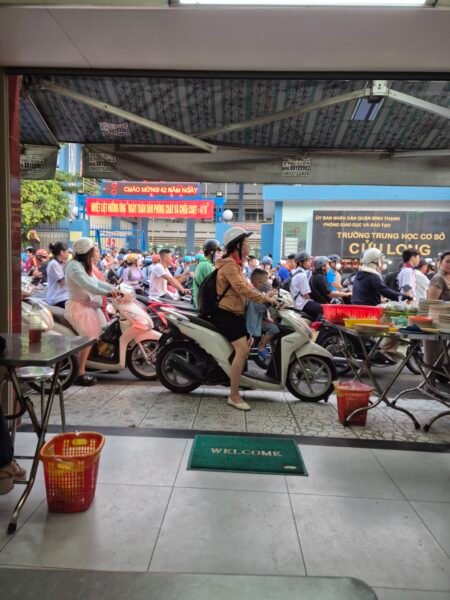
Even so, smooth logistics do not remove the city’s sensory demand. In fact, one of the more interesting things about Ho Chi Minh City is that it can be functioning perfectly well while still asking a great deal from your nervous system. That is part of why the city can confuse people. They assume that if things are working, they should also be feeling comfortable. But functionality and restoration do not always travel together, and in Ho Chi Minh City they often part ways.
The Hidden Cost of Constant Stimulus
The city is dense not only in population or traffic, but in stimulus. Movement rarely disappears into the background. Noise remains present. Visual clutter never really recedes. Roads are busy in a way that asks for constant attention, and even when you are not actively doing much, there is a sense that the city continues moving around you without pause. That ongoing external pressure is not necessarily dramatic, but it is cumulative. Over several days, it can become tiring in a way that is difficult to explain if you are only measuring a place by whether it is “safe” or “easy”.
Why Walking in Ho Chi Minh City Is Harder Than It Looks
Walking is where many travellers misjudge this most severely. On paper, distances can look manageable. In practice, walking in Ho Chi Minh City is often far more draining than people expect, not simply because of heat, but because the act of walking itself rarely feels neutral. Pavements are inconsistent, blocked, or repurposed. You are frequently negotiating around parked motorbikes, low stools, food setups, broken surfaces, and traffic patterns that make even short stretches feel more effortful than they appear on a map. What seems like a simple urban stroll can become a steady exercise in vigilance.
For an independent traveller, especially one who is trying to preserve energy over the course of a longer trip, this matters a great deal. Ho Chi Minh City can burn through reserves early, not because anything has gone terribly wrong, but because the city asks you to process so much while doing ordinary things. If you start your Vietnam experience here and interpret that fatigue as a verdict on the country, you may come to entirely the wrong conclusion.
The Mistake Many Travellers Make When Starting in HCMC
A common pattern I have noticed is that travellers use Ho Chi Minh City as a kind of test case. The thinking goes something like this: if I can settle here, if I can handle this pace, then I can handle Vietnam. On the surface that sounds sensible. In reality, it is often misleading, because coping with Ho Chi Minh City is not the same thing as connecting with Vietnam.
Coping With a City Isn’t the Same as Connecting With It
You can function very effectively in Ho Chi Minh City without ever feeling any real affection for it. You can move around efficiently, eat well, organise the next stage of your journey, and still end the day feeling emotionally flat. That does not mean you have failed. Nor does it mean Vietnam is not for you. It may simply mean that this particular city is asking you to respond to systems, movement, and density rather than to atmosphere, ease, or cultural tenderness. Those are not the same forms of travel experience, and they should not be confused.
What worries me slightly is how often neutrality gets misread as disappointment, and disappointment gets expanded into a national judgement. A traveller arrives in Ho Chi Minh City, finds it practical but tiring, manageable but unloveable, and then begins to wonder whether the country as a whole is going to feel the same. But Vietnam is too varied for that conclusion to mean very much. Cities and regions carry themselves differently. Some places ask more of you and reward that effort with depth. Others support you more directly and feel generous almost immediately. Ho Chi Minh City is only one entry point, and a particularly specific one at that.
Once I saw that more clearly, I stopped treating my own indifference here as a problem to solve. I began treating it as information. The city was telling me something real, but it was telling me something about itself, not about Vietnam in total.
The Principles I Now Follow in Ho Chi Minh City
Over time, I have developed a quieter way of approaching Ho Chi Minh City, not as a set of hard rules, but as a pattern of behaviour that reduces unnecessary friction.
Transport Is an Energy Strategy
I no longer assume walking is the default. Unless there is a specific reason to walk, or a specific area where walking will actually feel enjoyable, I treat transport as part of the energy strategy rather than as an indulgence or backup. In a city like this, conserving effort early in the day often determines whether the rest of the day still feels usable.
Reducing Friction Instead of Fighting the City
I also arrange the larger pieces ahead of time wherever possible. Ho Chi Minh City rewards this. So does Vietnam more generally. Longer transfers, flights, trains, and onward movements become much less stressful when the framework is already in place. Last-minute improvisation can feel romantic in travel writing, but in practice it often just introduces avoidable decision fatigue. In Ho Chi Minh City, I have found that the city gives more when I ask less of it in real time.
Language Reality vs Travel Expectations
And then there is language, which is best approached with realism rather than assumption. Outside international hotels and more polished hospitality settings, English can be variable. Once that is accepted, interactions become easier. You stop waiting for seamlessness and begin adjusting your expectations around what the environment actually is. That shift matters because it turns irritation back into observation, and observation is always a more useful travel state than resistance.
None of these habits make me love Ho Chi Minh City. That is not their purpose. What they do is make the city clearer, and clarity is often more valuable than affection.
Why Ho Chi Minh City Doesn’t Give Much Back (For Me)
This is the most personal part of the story, and perhaps the part that is hardest to explain without sounding unfair. Ho Chi Minh City does not offend me. I do not avoid it. I do not even particularly dislike being there. But despite repeated visits, it has never deepened into attachment. Some places accumulate in memory. Their atmosphere lingers. Their streets replay themselves later. You think about them after you leave, and not only because something happened there, but because the place itself continued working on you. Ho Chi Minh City has never quite done that for me.
Some Cities Stay With You — Others Simply Function
What it tends to offer instead is competence. Once the systems are in place, days usually run well enough. I can use the city effectively. I can reset logistics, organise the next leg, stay comfortably, and move through it without much trouble. Yet when I leave, it recedes very quickly. It does not seem to gather emotional texture in the way other places do. It does its job, and then it steps back.
I have come to believe that not every city is meant to be loved in the same way, and that travel can become distorted when we insist otherwise. There is a subtle pressure in travel culture to turn every destination into a relationship, to speak as though every city should enchant, transform, or seduce us if we are travelling “properly.” But that expectation can flatten the truth. Some places are atmospheric. Some are nourishing. Some are conceptually interesting but physically tiring. Some are simply transitional, useful precisely because they help the journey continue.
Ho Chi Minh City belongs in that last category for me. Accepting that has made my decisions better, not poorer. It has removed the need to force an emotional story that does not genuinely exist.
What Ho Chi Minh City Is Actually Good For
Once I stopped asking whether I liked Ho Chi Minh City, and started asking what it was actually good for, the city became easier to place within the wider pattern of Vietnam. It works well as an arrival point. It works well as a departure point. It works well when a journey needs structure, when logistics need to be reset, when transport needs to be reassembled, or when I need a few days in a city that can support movement without demanding deep emotional involvement.
A City That Works Best With a Clear Purpose
That is why I now think it works best in shorter, more intentional stays. The city becomes more balanced when approached with purpose. If I arrive expecting atmosphere of the kind I associate with places like Hoi An, or cultural layering of the kind I feel more strongly in Hanoi, I am likely to leave underwhelmed. If I arrive understanding that Ho Chi Minh City is there to help me transition, reorganise, and continue, the city makes much more sense. It becomes useful in the best sense of the word: not glamorous, not especially moving, but structurally valuable.
There is something quietly reassuring about that once you stop trying to turn it into more. Ho Chi Minh City does not have to become a favourite in order to justify its place in the journey. Sometimes a place earns its value by making the wider trip easier, steadier, and more coherent. That is not a lesser role. It is simply a different one.
How Ho Chi Minh City Fits Into My Vietnam Pattern
Seen alongside other Vietnamese cities, Ho Chi Minh City’s role becomes clearer. Hanoi, for me, asks more and gives more. It demands greater attention, and at times greater patience, but it also offers a depth of texture that lingers. Hoi An, by contrast, supports the traveller more gently. The environment itself seems to carry some of the load. It is easier to move through, easier to settle into, and more immediately restorative in how it feels.
Ho Chi Minh City sits elsewhere on that spectrum. It asks less of me in some ways because I know how to make it work, but it also gives less back in return. It does not create the same emotional residue. It does not invite the same attachment. Both Hanoi and Hoi An remain more alive in memory for me, but that does not reduce Ho Chi Minh City’s usefulness. It simply clarifies its purpose.
This is why I think starting in Ho Chi Minh City tells you very little about whether Vietnam is “for you”. At most, it tells you how you respond to one of the country’s busiest gateways. It tells you something about your relationship to movement, density, systems, and stimulation. It does not tell you whether you will connect with Vietnam once the scale changes, once the tempo softens, or once you enter places where the environment offers more support and more emotional return.
That distinction is worth protecting, because too many travellers judge the whole country through the lens of the first city that happened to be easiest to book.
A Place to Start — Not a Place You Have to Love
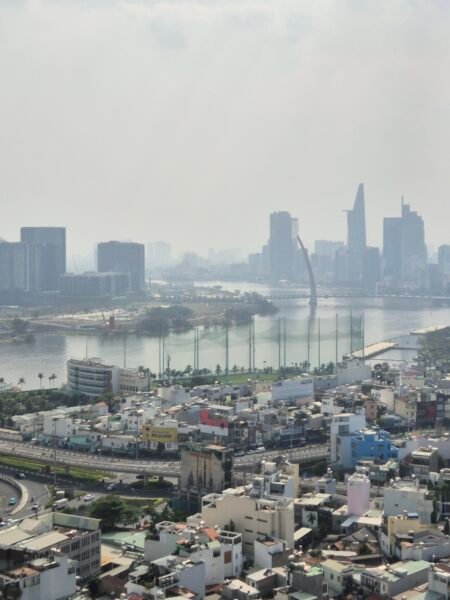
Ho Chi Minh City is, in many respects, an easy city to visit. The routes make sense, the infrastructure supports movement through the country, and the practical side of travel often works with less friction than people expect once they stop trying to improvise everything. If you arrive prepared and approach the city with a clear sense of purpose, it usually rewards that practicality. It can be an effective place to orient yourself, to organise the next leg, and to begin or end a trip through Vietnam without too much drama.
For me, though, it remains a place that is easier to use than to feel deeply attached to, and over time I have come to see that as a perfectly acceptable truth rather than a deficiency. Not every destination needs to produce affection in order to be worthwhile. Travel can become more honest when we allow places to play different roles, rather than insisting that every stop must become beloved in order to count.
What Ho Chi Minh City offers me is not enchantment, but clarity. It reminds me that usefulness is still a form of value, that neutrality is sometimes the most accurate response a traveller can have, and that a city can still deserve its place in the journey even if it never becomes one of the places you carry most tenderly afterwards. In that sense, Ho Chi Minh City remains part of my Vietnam pattern not because it captivates me, but because it helps the wider journey hold together — and sometimes that is reason enough.
Travel Logistics Planner
A simple framework for thinking through the logistical side of travel — flights, entry requirements, accommodation and transfers — before the journey begins.
Delivered instantly. Occasional thoughtful updates from the road.