
Hoi An has never let me down.
Not once. Not across multiple trips, different seasons, or different stages of my life. No matter what else shifts around it, Hoi An remains the one place in Vietnam where I arrive already knowing how I will feel.
I don’t come hoping it will work. I come knowing it will.
That certainty doesn’t come from novelty or excitement. It comes from repetition. From time spent. From having stayed long enough for the city to move from being something I visited to something I quietly belonged to.
Hoi An is not a place I rush through. It’s a place I linger in. And it’s in that lingering that its real charm reveals itself.
Hoi An Has Never Let Me Down
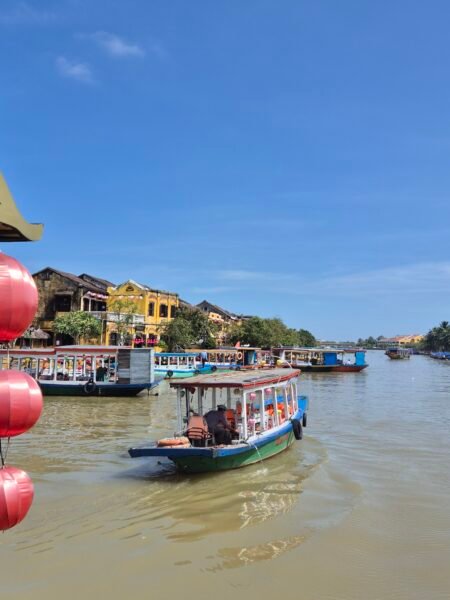
There are places you arrive at with expectation — and places you arrive at with trust.
Hoi An belongs firmly in the second category for me.
I don’t arrive braced or alert. I don’t arrive wondering how difficult the next few days might be. Instead, there’s a familiar softening that happens almost immediately, a sense that the city will carry some of the load for me rather than asking me to manage everything myself.
That feeling hasn’t faded with familiarity. If anything, it’s become more dependable over time.
Hoi An doesn’t demand that you prove anything to it. It doesn’t ask for stamina, strategy, or constant decision-making. It simply offers a rhythm — and waits to see whether you’ll meet it.
What It Feels Like to Arrive — and Stay — in Hoi An
There’s a noticeable shift that happens when I arrive in Hoi An, and it’s as physical as it is mental.
The Immediate Softening
My body relaxes before my mind does. I stop scanning. I stop bracing. I notice that I’m breathing more evenly, that I’m no longer calculating my next move quite so carefully.
Hoi An doesn’t require the same level of vigilance as larger Vietnamese cities. The sensory load is lighter. The pace is gentler. Even the air feels different, as though the city itself is making space rather than filling it.
When Time Stops Being Compressed
What I notice next is how time behaves.
Days in Hoi An don’t feel crammed. They stretch instead of stacking. There’s no urgency to optimise, no pressure to “make the most” of every hour. Lingering feels natural here — not like a deliberate choice, but like the default state.
This is where Hoi An begins to separate itself from places like Hanoi, where attention is constantly demanded, or Ho Chi Minh City, where efficiency often takes precedence over feeling.
Hoi An allows you to settle.
A Place That Rewards Lingering, Not Consuming
Hoi An is often introduced through images: lanterns glowing at night, yellow walls, the old town framed perfectly for photographs.
Those things are real — and they’re beautiful. But they’re only the surface.
Beyond Lanterns and Historic Streets
If you move through Hoi An quickly, it can feel like a carefully preserved postcard. Pretty, yes — but slightly flat.
It’s only when you stay that the city deepens.
The charm I return for isn’t found in ticking off streets or landmarks. It’s found in repetition. In taking the same walk each morning. In sitting in the same café often enough that you stop being noticed as a visitor. In letting the city become familiar rather than impressive.
How Staying Changes What You Notice
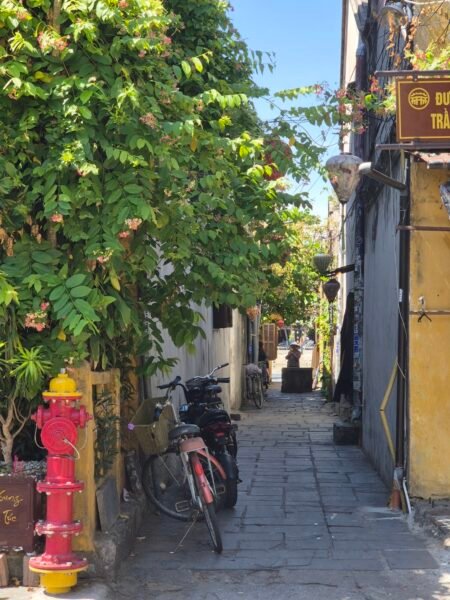
When you linger, small things begin to stand out.
The way the light shifts on the river at different times of day. The quiet routines of shop owners opening up each morning. The rhythm of bicycles passing by at dusk.
These aren’t moments you seek out. They emerge naturally once you stop rushing.
Hoi An doesn’t reveal itself all at once. It waits to see whether you’re willing to stay.
Beauty That Becomes Background — and Why That Matters
One of the reasons Hoi An continues to work for me is that its beauty doesn’t demand attention.
A City Comfortable in Its Own Skin
Hoi An knows what it is.
The architecture, the colours, the river — they all sit together with a sense of coherence rather than spectacle. There’s no sense that the city is trying to impress or perform.
Over time, the beauty becomes background. And that’s not a loss — it’s a gift.
When beauty no longer asks to be admired, it becomes something you live inside instead.
Why Familiarity Doesn’t Dull the Experience
Repeated visits haven’t made Hoi An feel flat to me. They’ve simply shifted how I experience it.
I stop photographing. I start noticing.
Beauty in Hoi An becomes a form of emotional regulation rather than stimulation. It calms rather than excites. And that’s exactly why it holds its appeal over time.
The Human Scale That Makes Belonging Possible
Hoi An’s scale is one of its greatest strengths.
Walking as Presence, Not Navigation
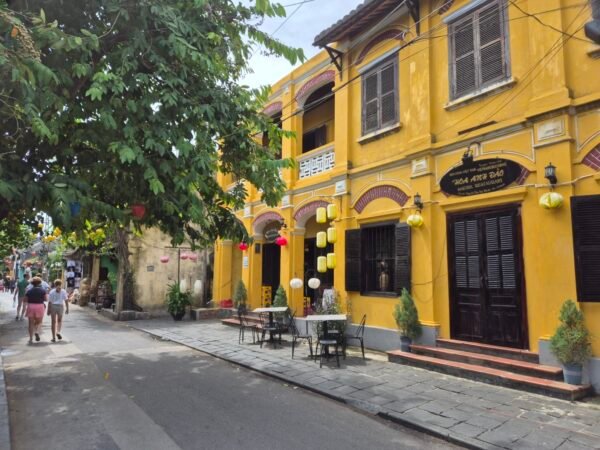
Walking here feels different. It’s not something I do strategically or defensively. I’m not calculating routes or avoiding obstacles. I’m simply moving through space.
That ease allows for presence. And presence is what makes recognition possible.
When the City Starts to Recognise You
After a while, Hoi An begins to acknowledge you back.
A nod from a café owner. A familiar smile from someone you pass regularly. A remembered preference, offered without comment.
These are small moments, but they matter. They mark the shift from passing through to belonging — quietly, without ceremony.
Hoi An makes that shift possible precisely because it doesn’t rush you.
Food, Cafés, and the Rhythm of Everyday Life
One of the reasons Hoi An supports lingering so well is how seamlessly food and daily routines fit into the city.
Good Food Within Minutes
I don’t have to plan meals here. I don’t have to research or travel far. Good food is always close — often just a few minutes’ walk away.
That immediacy matters more than variety over time. It keeps days flowing instead of fragmenting.
Cafés as Social Glue
Cafés in Hoi An are places you stay, not stop.
You sit. You linger. You see the same faces return day after day. Conversations unfold naturally, without agenda or urgency.
These cafés become anchors — places where days begin or end, where time stretches without being wasted.
The Kind of Community You Find When You Stay
Hoi An doesn’t offer loud or performative community. What it offers is quieter — and, for me, far more meaningful.
Small, Unforced Connections
Interactions here are simple. A brief exchange. A shared moment. A sense of familiarity that builds slowly rather than all at once.
There’s no sense of being watched or evaluated. No pressure to explain yourself.
Why This Feels Rare in Travel
In bigger cities, speed gets in the way. In shorter stays, repetition never has a chance to take hold.
Hoi An’s pace creates space for continuity. And continuity is what allows belonging to form.
Why I Don’t Question Hoi An’s Popularity
Hoi An is popular, and I’ve never seen that as a problem.
Popularity as a Signal
People come because it feels good to be here. The design, the walkability, the coherence — these things attract visitors for a reason.
Comfort isn’t a failure. It’s information.
Knowing How to Be Here
Staying longer teaches you how to coexist with that popularity.
You learn when to engage and when to retreat. You find your own rhythm within a shared space. You stop resisting crowds and start flowing around them.
Hoi An doesn’t require exclusivity to feel special.
How I Use Hoi An Now
My relationship with Hoi An has simplified over time.
A Place I Don’t Rush
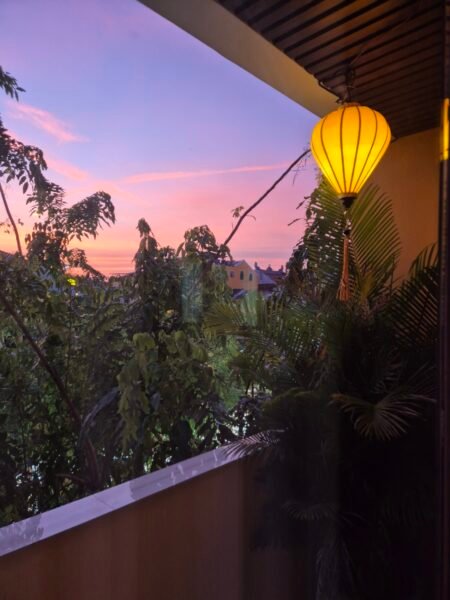
I don’t “do” Hoi An. I don’t approach it with a list or a plan. I let days unfold as they will.
There’s no sense that I’m missing out if I do less.
A Place Where I Feel Like Myself
Hoi An is where I think clearly. Where I work calmly. Where I feel grounded.
It restores my judgment rather than demanding it.
Hoi An’s Place in My Vietnam Pattern
Seen alongside other cities, Hoi An’s role becomes even clearer.
Compared to Hanoi, it asks far less and gives softness instead of stimulation.
Compared to Ho Chi Minh City, it offers warmth and belonging rather than neutrality.
Together, these places form a balance that defines how I experience Vietnam.
Why “Always Works” Matters More Than Novelty
Over time, I’ve learned that reliability becomes a precious quality in travel, even though it’s rarely the thing people talk about. Most travel writing celebrates novelty — the thrill of discovering somewhere new, the excitement of unfamiliar streets, the sense of constant movement from one destination to the next. And there is certainly a place for that. But after enough years on the road, I’ve found that the places which matter most are not always the ones that surprise you. They are the ones that continue to hold you steady.
Not every place needs to challenge you, and not every destination needs to impress. Some places exist in a different role entirely. They support you. They offer a sense of familiarity that allows your mind and body to settle, even while you are still travelling through the wider world. In a life that involves constant motion, those places quietly become anchors.
Hoi An has become one of those anchors for me. It’s a place I return to not because it is new, but because it is known — because the rhythms of the town are already familiar, the scale of the streets manageable, and the everyday routines easy to slip back into without effort. I know where to sit with a coffee, where the river slows the pace of the day, and how the town changes as evening arrives.
It doesn’t need to dazzle in order to matter. What it offers instead is something rarer: the ability to arrive and feel immediately at ease, as though the town recognises you as someone who has been there before. In a travel life that often revolves around constant adjustment and adaptation, that sense of quiet belonging carries more value than novelty ever could.
And that, more than anything else, is why it always works.
Travel Logistics Planner
A simple framework for thinking through the logistical side of travel — flights, entry requirements, accommodation and transfers — before the journey begins.
Delivered instantly. Occasional thoughtful updates from the road.