
How to Travel on a Budget as a Solo Female Over 40

Did you know that women over 40 are now the fastest-growing demographic in solo travel? Yeah, I was surprised too when I first read that statistic! But after thinking about it, it makes perfect sense. We’ve spent decades putting everyone else first, and now it’s finally our turn to explore the world on our terms – and guess what? We don’t need a massive budget to do it!
After 30 years in financial management and with a FCPA qualification, I’ve spent my career helping organisations optimize their finances. But it wasn’t until I hit my forties and decided to take my first solo trip to Spain that I applied these professional skills to my personal adventures. My colleagues thought I was having some kind of midlife crisis, but honestly, it was the most empowering decision I’ve ever made. I was able to use my financial expertise to transform a modest budget into a memorable two-week adventure, and the strategies I developed have changed how I travel forever.
The beautiful thing about traveling solo as a woman in your 40s, 50s, or beyond is that we bring life experience, confidence, and wisdom to our journeys. We know ourselves better – what we truly enjoy, what we can tolerate, and where we’re willing to splurge versus save. This self-knowledge, combined with practical financial acumen, becomes your secret weapon for budget travel!
I’ve spent the last ten years applying my financial management principles to the art of affordable solo travel, refining systems that work efficiently and effectively. From creating tailored travel budgeting frameworks to finding comfortable (but cost-effective) accommodations that aren’t filled with 20-something party-goers, to optimizing meal expenses without sacrificing experience – I’ve developed strategies that maximize value at every step.
In this guide, I’ll walk you through everything you need to know about budget solo travel specifically tailored for women over 40, drawing on both my professional financial expertise and personal travel experiences. No backpacker hostels or ramen noodle budgets required (unless that’s your thing!). Let’s dive into how you can see the world affordably while still honoring the comfort and security needs we develop with a few extra candles on our birthday cakes!
Why Solo Travel After 40 Is the Perfect Time to Go Budget-Friendly?
Let me tell you something nobody talks about enough – traveling in your 40s and beyond is actually the PERFECT time to embrace budget travel! I used to think budget trips were just for college students willing to sleep in 12-bed dorm rooms, but I couldn’t have been more wrong.
First off, we’ve got something those younger travelers don’t – perspective! Remember when we thought we absolutely needed to pack seven pairs of shoes for a weekend trip? Yeah, those days are gone! After decades of living, we know what actually matters to us. I discovered this the hard way when I lugged a massive suitcase through the cobblestone streets of London, swearing with every bump and cursing my “just in case” packing philosophy.
The freedom of this life stage is another budget superpower. Many of us have more flexible schedules than we did during the height of career-building or child-raising years. This means we can travel during shoulder seasons when prices drop dramatically! I scored a gorgeous private room in a Greek B&B for literally half the high-season price just by going in late September instead of August. The weather was actually better, and the locals were much more relaxed without the summer crowds.
There’s also this misconception that budget travel means “cheap” travel or missing out. Honestly, that’s complete nonsense! Some of my most meaningful travel experiences cost absolutely nothing – like the time I got hopelessly lost in a small Italian village and ended up being invited to a local grandmother’s home for coffee. No expensive tour could have created that authentic connection! And also the time when I used my hotel loyalty points to stay in Cambodia free for a whole month.
Your confidence at this age is another secret weapon for budget travel. I’m no longer afraid to negotiate prices at markets, walk away from tourist traps, or strike up conversations with locals who might share insider tips. I remember being paralyzed with anxiety about this stuff in my 20s – worried about being rude or looking foolish. Now? I couldn’t care less! That confidence has literally saved me thousands over the years.
And let’s be real – many of us have spent decades managing household budgets, stretching family finances, and finding creative solutions to financial challenges. These are exactly the skills that make for successful budget travel! I apply the same meal planning techniques to my food strategy on the road, cutting my dining costs in half while still eating amazingly well.
Creating a Realistic Travel Budget That Works for Your Lifestyle
Let’s get real about money for a minute – creating a travel budget that actually works is about informed decision-making, not deprivation! The biggest mistake I see, even after three decades in financial management, is people trying to adopt someone else’s budget template without personalizing it. On my first solo trip, I initially tried to follow some blogger’s bare-bones budget. Two days in, I was miserable and ended up splurging on a nice hotel room just to recover. A classic case of false economy!
The key is applying fundamental financial planning principles to your travel budget – start by identifying your non-negotiable comfort requirements. For me, I need a clean, private room with my own bathroom – that’s my accommodation baseline. But I’m comfortable with simple breakfasts and lunch from local markets. I prioritize unique experiences over shopping. Your formula should reflect your personal values, not someone else’s travel style.
After reviewing thousands of budgets throughout my career, I’ve found that flexible range budgeting consistently outperforms strict line-item budgeting for variable expenses like travel. In Spain, I set my range at $75-100 per day all-in, with specific allocations based on local cost research. Some days I came in under, which created flexibility for a special dinner or unexpected opportunity on other days – a principle of cash flow management that works as well on the road as it does in business.
One financial planning fundamental that applies perfectly to travel is the contingency reserve. I always recommend adding about 15% to your estimated total budget as an “opportunity/contingency” fund. In corporate finance, we prepare for unexpected costs; in travel budgeting, we prepare for both challenges and opportunities – like the time I needed to change accommodations because of construction noise, or the sunset sailing trip I spontaneously joined in Croatia. This buffer transforms potential stress points into manageable situations.
The pre-trip financial prep is something a lot of people overlook. About six months before a big trip, I start what I call my “latte transfer” – every time I skip a small luxury in daily life, I immediately transfer that amount to my travel fund. It’s amazing how quickly those $5 and $10 transfers add up! I also do a subscription audit to temporarily pause services I won’t be using while traveling. My Hulu, gym membership, and meal kit deliveries can wait until I return, putting more money toward meaningful experiences.
For tracking travel expenses, my professional background has taught me that the best system is one you’ll actually use consistently. I’ve tested various apps for my own travels, but ultimately developed a simplified zero-based travel budget spreadsheet that has proven most effective. I create categories aligned with travel-specific spending patterns: accommodation, food, transportation, experiences, and miscellaneous. Before the trip, I research average costs in my destination and set target allocations for each category based on historical pricing data. This approach helps me make informed decisions without feeling restricted – like when I realized taking a slightly more expensive direct train would actually create net savings by eliminating the need for an extra night’s accommodation!
Accommodation Strategies That Save Money Without Sacrificing Comfort
Finding affordable places to stay might be the biggest challenge for women over 40 who want comfort without emptying their bank accounts. I learned this lesson the hard way during my first solo trip when I booked the cheapest hotel I could find, only to discover it was above a nightclub that thumped until 3 AM! Never again!
Let’s address the hostel question right away. While I’m not totally against hostels, I’ve found that many now offer private rooms with ensuite bathrooms for a fraction of hotel prices. In Lisbon, I stayed at a gorgeous hostel in a historic building that had a private room option – it was immaculate, quiet, and half the price of nearby hotels. Plus, the common areas gave me opportunities to meet other travelers (including plenty of folks our age!) when I wanted company.
My absolute favorite accommodation discovery has been apartment rentals for longer stays. For my two-week stay in Madrid, I found a lovely studio apartment that worked out to about 40% less per night than a comparable hotel. Having a kitchen saved me a fortune on breakfasts and some dinners, plus I got to shop at local markets (one of my favorite travel activities anyway!). Just be sure to check reviews carefully for mentions of noise, neighborhood safety, and reliable WiFi.
House-sitting has been a game-changer for my longer travels! I joined a reputable house-sitting website three years ago, and it’s completely transformed how I travel. Last year, I spent three weeks in a beautiful home in the English countryside, taking care of a sweet elderly cat. My accommodation cost? Absolutely zero! It took some time to build my profile and reviews, but now I regularly get house-sitting opportunities. This works especially well for us mature travelers because homeowners often prefer responsible adults watching their homes and pets.
Don’t overlook small, family-run B&Bs and guesthouses. Unlike the major hotel chains, these places often don’t appear on the big booking sites (which charge them hefty commissions). I’ve found some gems by searching local tourism websites or Facebook groups for my destination. In Greece, my favorite place was a family-run pensione I found through a local travel blog – it was authentic, charming, and about 30% cheaper than similar options on booking sites.
Loyalty programs really do add up, especially if you can concentrate your stays. I primarily use Booking.com and have reached their “Genius Level 3” status, which regularly saves me up to 20% and often includes perks like room upgrades or free breakfast. For frequent travelers, these savings are significant! There is also the loyalty programs of major hotel chains like Accor and IHG that I now frequently use in my long-term full-time travel. I keep a spreadsheet tracking which hotel chains I’ve stayed with, making it easier to strategically build points with just a few companies rather than spreading stays too thin across many.
Safety considerations become even more important when looking at budget options. I always map potential accommodations before booking, checking their proximity to public transportation and well-lit areas. I’m willing to pay a bit more to stay in a central, safe neighborhood rather than saving a few dollars in an area that would make me uncomfortable walking alone at night. I also prioritize places with 24-hour reception or secure entry systems. These safety features are worth every penny of the sometimes slight premium they command.
Transportation Hacks for the Budget-Conscious Solo Female Traveler
Transportation costs can eat up your travel budget faster than you can say “are we there yet?” – but with some strategic planning, you can save hundreds without sacrificing convenience or safety. I’ve learned these lessons through plenty of trial and error (and a few memorable transportation mishaps!).
Let’s start with flights, since they’re often the biggest expense if you are traveling longer distances. Flexibility is your golden ticket to savings here! I’ve saved as much as 40% by being able to fly mid-week instead of weekends. The flight comparison tool I swear by is Google Flights – I set fare alerts for potential destinations months in advance and pounce when prices drop. My best score was a round-trip ticket to Spain for $430 because I caught a 24-hour price drop! I also frequently use Skyscanner to narrow down the available flights that I want.
Don’t forget to check if your destination has smaller regional airports served by budget carriers. On my trip to Italy, flying into Pisa instead of Florence saved me almost $200, and it was just a short train ride to my actual destination. Just be careful with budget airlines’ baggage restrictions – they’ll get you with fees if you’re not careful! I’ve become an expert at packing light since my European budget airline adventure where my bag fees actually cost more than my ticket (not my finest travel moment).
Sometimes, it is worthwhile to book larger airlines to check in your bags, have a good meal and plenty of movies to watch especially on longer haul flights. I once made a mistake of booking a budget airline with none of these benefits from Melbourne to Singapore leading to 8 hours of flight boredom!
Once you’ve reached your destination, public transportation is usually your most economical option. I always research transportation passes before arrival – many cities offer tourist passes that include unlimited public transit plus museum entries. In Amsterdam, the city card saved me at least $100 over what I would have spent on individual tram tickets and museum entries. I download transit apps before arriving so I’m not standing confused at stations (which, unfortunately, can make us targets for scammers). Due to safety concerns in some cities, I would pre-book transport from airport to hotels that include meet and greet, either through the hotel itself or through booking platforms.
Rental cars make sense in some cases, especially if you’re exploring rural areas. The trick is knowing when they’re worth it. I always calculate the all-in cost (rental, gas, parking, tolls) versus public transportation options before deciding. In Portugal, renting a car for just three specific days of my two-week trip gave me access to stunning coastal villages while relying on trains and buses for city exploration saved hundreds overall. If you do rent, check if your credit card offers rental insurance coverage – many do, allowing you to decline the expensive options at the counter.
Rideshare safety abroad requires extra caution. I only use official apps like Uber or locally established equivalents like Grab in Asia, never unofficial “taxi” offers. I always wait inside until the car arrives and confirm the license plate before getting in. In some countries, women-only rideshare services are available, which I’ve found worth the sometimes slight premium for evening travel.
Walking tours have become one of my favorite transportation hacks! Many cities offer free (tip or meal -based) walking tours that not only provide fascinating local insights but also orient you to the city layout. After a 2-hour walking tour in Prague, I felt confident enough to navigate the entire historic center on foot for the rest of my stay, saving daily transit costs while getting wonderful exercise. Just make sure to wear proper footwear – I learned this lesson the hard way with a nasty blister situation in Barcelona!
Eating Well Without Breaking the Bank
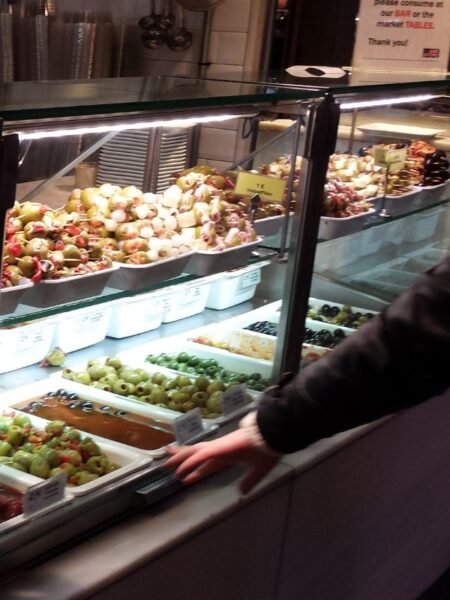
Food might be one of the best parts of travel, but restaurant meals three times a day will destroy even the most generous budget! After some epic fails (like my $30 tourist-trap sandwich in Venice), I’ve developed strategies that let me eat incredibly well while keeping costs reasonable.
Local markets have become my absolute favorite food source while traveling. There’s something magical about wandering through a bustling market, pointing at intriguing produce, and trying things you’ve never seen before! I make a game of visiting a market on my first day and assembling a picnic with bread, cheese, fruit, and whatever local specialties catch my eye. In France, my $12 market picnic rivaled nearby restaurant meals costing four times as much. Plus, shopping alongside locals gives you authentic cultural interactions you’ll never get in a tourist restaurant.
For accommodations, I now prioritize places with at least minimal kitchen access – even just a mini-fridge and microwave opens up tons of possibilities! My rhythm usually includes making my own breakfast (much faster anyway), assembling lunch from market finds, then choosing between a simple meal “at home” or a restaurant for dinner.
Find hotel accommodations that include breakfast or achieve Platinum status with hotel loyalty programs where you can essentially get all meals for free. I took my newly acquired Accor Platinum status for a test drive in Vietnam and got free breakfast, all day drinks/coffee (non-alcoholic) and in the evening, canapes and alcoholic drinks in the Executive Lounge! This approach easily cuts my food budget in half while often resulting in more authentic eating experiences.
Finding authentic, affordable local restaurants took me years to master, but I’ve finally cracked the code: eat where the working locals eat! This usually means traveling a few blocks away from main tourist areas and looking for lunch spots filled with people in office clothes or work uniforms. In Spain, I discovered the “menú del día” (daily set menu) at these local spots, offering 3 courses with wine for around €10-15 – the same dishes à la carte in tourist zones would cost at least twice that amount!
I used to feel awkward about dining alone, but I’ve come to embrace it as one of solo travel’s pleasures! I bring my Kindle, a journal, or use the time to plan my next day’s adventures. For evenings when I do want company, I’ve found food tours to be a wonderful option. Yes, they cost more than eating alone, but they combine dinner, entertainment, and social interaction with other travelers and locals. In Athens, my evening food tour became one of my favorite memories and introduced me to restaurants I returned to later in my trip.
Smart splurging is my philosophy for memorable food experiences. Rather than trying to have an amazing meal every night, I research and plan a few special dining experiences during my trip. In Portugal, I saved by preparing simple meals most days, which allowed me to enjoy an incredible seafood dinner at a famous local restaurant without guilt. Often, I’ll do these special meals at lunch when many upscale restaurants offer the same food at lower prices than their dinner service.
Cooking classes have become another favorite food-related activity. In Bali, I took a half-day cooking class where we shopped at a local market, prepared five dishes, and then feasted on our creations. Not only was it a fantastic cultural experience, but I learned techniques I’ve used countless times at home. The class cost about the same as two restaurant dinners but provided much more value in terms of experience and skills.
Conclusion
Well, there you have it – a framework for solo female travel that merges professional financial management principles with practical on-the-ground experience! When I look back at how nervous I was before that first solo trip to Portugal, I almost laugh at how naturally my financial background eventually translated into travel planning. The same principles that guided my 30-year career as a financial professional create the foundation for rewarding, affordable travel experiences.
Remember that your version of budget travel should be personalized to your specific values and priorities – that’s not just good travel advice, it’s fundamental financial planning. The detailed expense tracking I’ve practiced professionally for decades allows me to make trade-offs that enhance rather than diminish my travel experiences. Perhaps you’ll prioritize guided experiences but save on accommodations, or you’ll invest in memorable dining experiences while using public transportation. The financial principles remain the same: align spending with values, maintain flexibility, and monitor results.
Start small if you’re feeling uncertain. My first solo trip was just a long weekend in a city where they spoke my language. Each journey has built my confidence for the next bigger adventure, much like how financial confidence grows with each successful planning cycle. There’s no shame in beginning with training wheels – what matters is that you begin!
I hope you’ll leverage both the unique perspective we bring to travel at this stage of life and the financial wisdom you’ve developed. These combined strengths make us not just capable travelers, but exceptional ones who can navigate the world both affordably and authentically.
I’d love to hear about your own budget solo travel experiences or answer questions about specific destinations or financial planning aspects! Drop me a comment to share your tips or ask about places you’re considering for your next adventure. And remember – the world is waiting for you, and experiencing it doesn’t have to cost a fortune when you apply sound financial principles to your travel planning!