
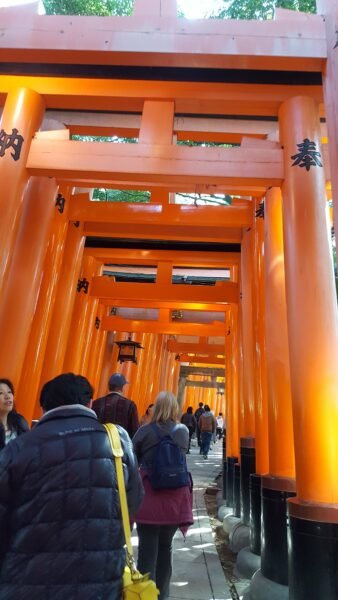
Kyoto carries a particular weight in the imagination. It is presented as the cultural heart of Japan, the place where tradition is preserved, rituals endure, and the past feels intact. For many travellers, Kyoto is not just a destination but a promise — of beauty, refinement, and meaning. That promise is not false. Kyoto is extraordinary. But it is also a city that operates on stricter terms than many first-time visitors expect, and that gap between expectation and lived experience is where discomfort often arises.
This is not a critique of Kyoto’s value or significance. It is an attempt to describe how Kyoto feels on the ground, especially for first-time visitors travelling alone, navigating language barriers, and encountering a city that prioritises preservation over accommodation.
If you’re still deciding how Kyoto fits into your broader trip, it helps to step back and look at how Japan’s major cities relate to one another. I’ve laid that out on the Japan travel page, which explains why sequencing often matters more than duration.
Why Kyoto Is So Strongly Idealised
Kyoto is often used as shorthand for “traditional Japan.” Images of temples, shrines, seasonal foliage, and geisha districts circulate endlessly, reinforcing the idea that Kyoto is where Japan’s cultural essence resides. Compared to Tokyo’s modern sprawl or Osaka’s commercial energy, Kyoto is framed as quieter, purer, and more authentic.
What that framing rarely prepares visitors for is the reality that Kyoto is also compact, heavily visited, and socially exacting. The symbolism is accurate, but incomplete. Kyoto is not a museum preserved for gentle wandering; it is a living city balancing daily life with constant visitor presence. Understanding that tension is key to understanding the experience.
Crowd Pressure in Kyoto Is Highly Concentrated
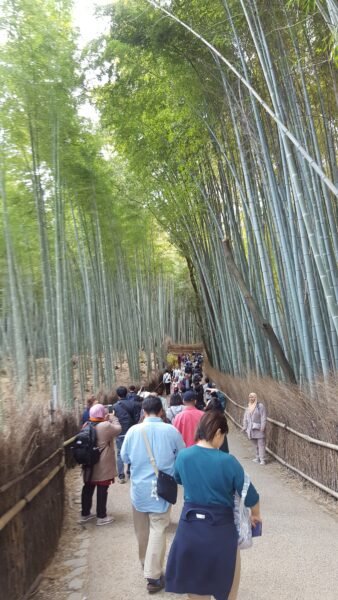
Kyoto’s major attractions are clustered into relatively small areas. Historic districts, famous temples, and culturally significant streets sit close together, connected by narrow roads never designed for modern visitor volumes. As a result, crowds don’t disperse easily. They accumulate.
For me, this concentration made Kyoto feel more overwhelming than Tokyo, despite Tokyo being vastly larger. In Tokyo, crowds spread across many districts, and it is usually possible to step sideways into a different neighbourhood or a quieter pocket without leaving the city entirely. In Kyoto, stepping away often means stepping out. The sense of compression is higher, and recovery space is harder to find.
This contrast becomes clearer if you’ve already spent time in Tokyo. I wrote more about that dynamic in the Tokyo post, which explores why Tokyo is often misread by first-time visitors.
When Preservation Overrides Access
One of the clearest signals of pressure in Kyoto is the way access has been restricted in certain areas. Parts of Gion have introduced entry controls, photography bans, and restrictions on tourist movement through private streets. These measures were not implemented lightly. They reflect years of friction between daily life and visitor behaviour.
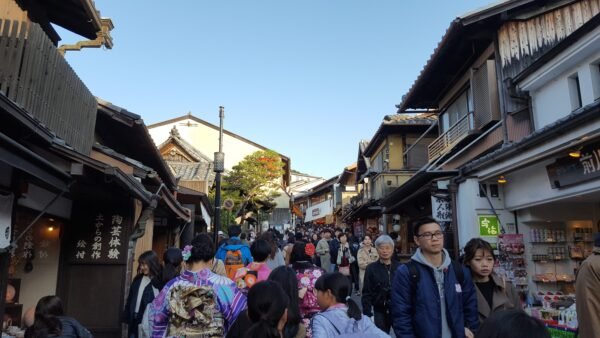
For visitors, these restrictions can feel abrupt or disappointing, particularly when Gion is marketed internationally as a must-see area. But they also make something clear: in Kyoto, preservation takes priority over accessibility. Access is conditional. Visitors are expected to self-regulate, observe boundaries, and accept limitations.
This shapes the tone of the city. Kyoto does not present itself as endlessly accommodating. It draws lines, quietly but firmly.
Language-Based Discrimination Exists in Kyoto
Another reality that visitors encounter — and one that deserves to be named — is language-based discrimination. In Kyoto, some restaurants refuse service to customers who cannot communicate in Japanese. This is not limited to obscure or informal venues. It can include well-known restaurants with strong reputations, high ratings, and English-language reviews — places where there is no visible indication in advance that non-Japanese speakers will be declined.
Locally, this practice is often justified on operational grounds: staff should not be expected to operate in English, misunderstandings create risk, and service quality cannot be guaranteed. Those explanations may make sense within a domestic framework. From a visitor’s perspective, however, the effect is the same: denial of service based on language ability. That is discrimination, regardless of intent.
The additional friction comes from unpredictability. When there is no clear disclosure, visitors invest time and emotional energy only to be turned away at the door. That moment — not just the refusal itself — is what many find confronting.
This practice is not universal across Japan, nor is it encountered by every traveller. But it is real, observable, and more concentrated in Kyoto than in other cities I’ve visited.
Why This Can Feel Sharper for Asian, Non-Japanese Travellers
As an Asian traveller, this dynamic can be particularly confronting. Appearance initially signals belonging. Interactions begin on the assumption that you are local or at least Japanese-speaking. When that assumption falls away — when it becomes clear that you do not speak Japanese — the shift can be immediate and stark.
The shock comes not from being refused, but from the reversal. A moment ago, you were inside the boundary. Suddenly, you are outside it. The change in tone, body language, or access is felt viscerally, and it can be disorienting in a way that a polite upfront refusal may not be.
This is not about intent or malice. It is about how quickly belonging can be withdrawn when language becomes the dividing line.
A Cross-Cultural Contrast Many Visitors Notice
For travellers coming from countries with strong tourism service cultures, this can feel jarring. In many tourist-facing destinations, language barriers are treated as a service challenge rather than a reason for refusal. Menus are adapted, gestures are used, translation tools are employed, and staff make an effort to bridge the gap.
Kyoto operates differently. Domestic norms take precedence. There is no expectation that service will adapt to visitors, and no assumption that inclusion is part of hospitality. Visitors are expected to adjust, or to accept refusal without escalation.
This difference in approach does not make Kyoto wrong. But it does make it harder for some visitors, especially those encountering it for the first time.
If this kind of friction is something you want to plan around more deliberately, it’s worth reading the broader principles in the Travel Planning section, particularly around expectations, energy management, and decision load.
Why This Did Not Put Me Off Japan
(But Did Change My Relationship with Kyoto)
These experiences did not put me off Japan. I continue to return to Japan regularly, and I continue to enjoy the country deeply. Elsewhere, the conditions felt different — not absent of friction, but less concentrated, less abrupt, and easier to navigate emotionally.
Kyoto, however, crossed a threshold for me. The combination of crowd pressure, restricted access, and language-based discrimination felt more widespread there than anywhere else I’ve been in Japan. That doesn’t make Kyoto a place to avoid universally. It does mean that, for me, it is not a city I feel drawn to return to.
On subsequent trips, I’ve chosen to spend more time in cities like Tokyo — and, in a very different way, Osaka — which I’ll cover separately. You can read the Osaka piece here: Osaka travel experience.
Conditions Change — and Kyoto May Too
Tourism pressure is not static. Policies evolve, practices shift, and cities respond to changing conditions. Kyoto today is not the Kyoto of a decade ago, and it may not be the Kyoto of the future. Restrictions may ease. Attitudes may adjust. New approaches may emerge.
I remain open to reassessing. On a future trip, I will observe again and see how the city feels then. My judgement is provisional, grounded in what I experienced, not fixed forever.
Kyoto Is Profound — and Uncompromising
Kyoto’s cultural depth is undeniable. Its beauty, history, and significance are real. But it is also a city that operates on uncompromising terms, shaped by preservation priorities and strict boundaries. Discrimination exists and should be acknowledged, not minimised or explained away. Knowing this upfront does not diminish Kyoto’s value; it prevents misalignment.
Reverence does not guarantee comfort. Understanding that distinction is what allows travellers to engage with Kyoto honestly — or to decide, consciously, that it may not be the right fit for them.
Travel Logistics Planner
A simple framework for thinking through the logistical side of travel — flights, entry requirements, accommodation and transfers — before the journey begins.
Delivered instantly. Occasional thoughtful updates from the road.