
Penang is not a place you arrive at with a neutral view. By the time it comes up in your planning, the decision has already been shaped. Social media does most of that work. Short videos, food clips, and neatly framed shots of George Town repeat the same message — easy, charming, and compact, a place where everything seems to sit close together and fall into place without much effort.
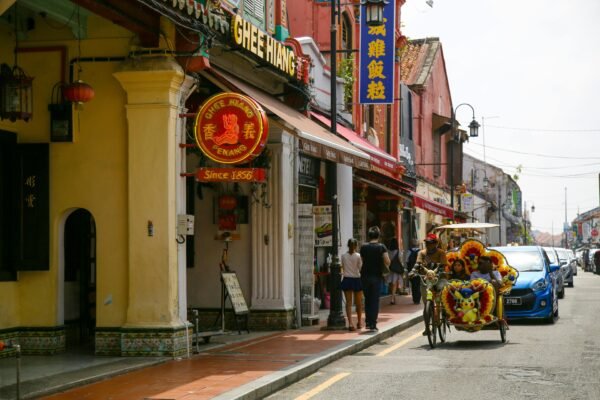
It’s presented as a place that just works. That version travels well because it’s simple. You see people walking between murals, stopping at cafés, moving from one street to another without needing to think about how to get there. The experience looks contained and manageable, and it feels like you already understand how the trip will go before you even arrive. And that is exactly why it gets chosen so easily.
Penang, specifically George Town, is a UNESCO heritage town. That label carries a certain expectation. Places like Hoi An or Luang Prabang are also UNESCO towns, but they are structured in a way that makes movement feel obvious. You walk, you follow the streets, and the experience unfolds without much effort. George Town does not work like that.
I was born in Penang, so the city itself is not unfamiliar to me. But familiarity from living somewhere and understanding how it behaves as a visitor are not the same thing. The difference only becomes clear once you start moving through it in real time. Because the experience does not unfold the way it is usually shown.
It starts when you move beyond the small areas that are always featured. When you try to get from one part of the island to another. When distances that look short begin to stretch, and each transition requires a bit more coordination than expected.
The day doesn’t carry itself in the way the image suggests. And that’s where the gap begins — not because the image is wrong, but because it is incomplete.
The way Penang works only really becomes clear when you place it within the broader conditions of Malaysia, where the travel experience follows a slightly different rhythm to what many people expect.
Why Penang Is So Easy to Say Yes To
Most people don’t hesitate with Penang, and that absence of hesitation is part of how the experience is shaped before it even begins. The appeal feels immediate, but more importantly, it feels settled — as if the decision has already been validated elsewhere, and you are simply stepping into something that has been widely confirmed.
What makes this different from other destinations is not just that Penang is attractive, but that it appears internally consistent. The elements people associate with it — food, heritage, atmosphere — align so cleanly that they form a complete picture. There is very little tension within that picture, and because of that, very little reason to question it.
That coherence removes a layer of scrutiny that would normally sit behind a travel decision. You are not evaluating whether Penang will work. You are accepting that it already does. And it is this quiet certainty — not excitement, not curiosity, but the sense that everything fits together — that makes Penang so easy to say yes to.
Food Reputation That Sets the Standard
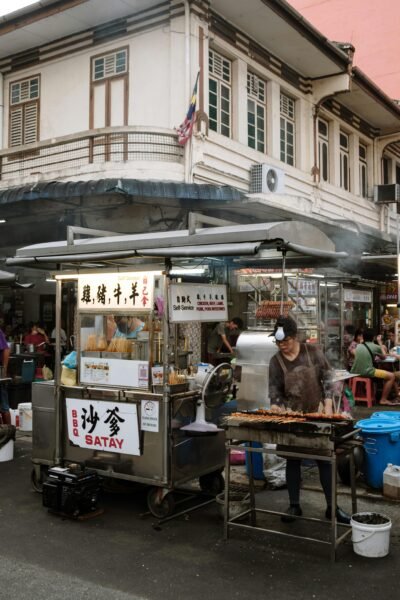
Penang’s food reputation is not exaggerated. It is, in many ways, deserved. The density of hawker stalls, the layering of Chinese, Malay, Indian and Peranakan influences, the sense that food is not curated for tourists but exists as part of daily life — all of this creates a powerful draw.
But this also sets a particular kind of expectation. You arrive assuming that everything will work as easily as the food experience appears to promise — that the city will unfold with the same coherence and accessibility.
What becomes clear quite quickly, though, is that the ease you associate with the food does not extend to the city itself. Finding a specific stall may be straightforward once you’re there, but getting there—navigating heat, traffic, uneven walkways, and streets that don’t always connect intuitively—requires a different kind of attention. The food feels effortless because it is embedded in long-established routines; the city around it does not organise itself for you in the same way.
Heritage Identity That Feels Authentic
George Town presents itself as a place with continuity. The architecture is not reconstructed. The streets feel lived in. There is a sense that the place has not been redesigned for visitors, which gives it weight and credibility.
This authenticity becomes part of the appeal. It signals depth rather than convenience. And again, it suggests that the experience will be naturally navigable — that you can simply step into it and move through it.
The “Walkable Cultural City” Assumption
This is where the expectation becomes more specific. Penang is often positioned — implicitly or explicitly — as a walkable city. A place where you can drift between streets, discover food, absorb culture, and allow the day to unfold without structure.
That assumption is rarely questioned before arrival. It feels intuitive. And because it feels intuitive, it becomes the baseline against which everything else is measured.
What People Actually Struggle With in Penang
Penang doesn’t present obvious problems. Getting around is possible. Food is everywhere. Nothing feels broken or difficult in a way that forces you to stop or change plans completely. What becomes noticeable instead is how much effort sits behind each part of the day.
The version of Penang that circulates online is tightly framed. A few streets in George Town. Short walking distances. Clean, contained moments where everything appears close and easy to move between. That version is real, but it is limited.
Outside of those small pockets, movement requires more planning than expected, and the effort involved doesn’t disappear after the first day. It stays with you. Each decision — where to go, how to get there, whether it’s worth the time — remains part of the experience instead of fading into the background.
Most of the friction people feel in Penang doesn’t come from anything being broken. It comes from how the day needs to be structured, especially when movement isn’t as straightforward as it first appears. This sits at the core of how I approach trips in the Travel Planning section, where decisions are structured upfront rather than made on the move.
Traffic Feels Heavier Than the Scale of the Place
Penang looks small enough to move through quickly. That assumption doesn’t hold once you are on the road. Traffic slows movement in a way that feels out of proportion to the distances involved, particularly around George Town and along the main routes connecting the island.
Short trips rarely stay short. Ten minutes becomes twenty. Moving between areas takes longer than expected, not because anything has gone wrong, but because that is simply how the roads operate.
This changes how the day is structured. Places stop feeling close, even when they are.
Walking Only Works Where It Has Been Preserved
The walkable version of Penang is not false, but it is contained within a specific area. Inside the heritage streets of George Town, walking works well enough. That is the version most people see — murals, cafés, and narrow streets where everything appears connected.
That condition doesn’t extend very far. Footpaths narrow, break, or disappear. Crossings are not always placed where they are needed. Traffic becomes something that requires attention rather than something that flows around you. Heat and humidity build quickly once you are outside shaded streets.
Walking remains possible, but it stops being the default way to move.
Public Transport Exists — But There Is No Metro to Support It
Penang relies mainly on buses. Coverage is not the issue. The limitation is how the network functions in practice. Without a metro or rail system, there is no clear structure that carries movement between key areas in a simple, predictable way.
Using buses requires planning routes, allowing for waiting time, and adjusting when timing doesn’t align. That layer of effort does not reduce after a day or two. It remains part of every trip.
Grab Becomes Necessary — But Timing Is Unpredictable
Ride-hailing fills most of the gaps. Cars are generally available, but reliability shifts depending on time of day and location. During peak periods, waits increase, drivers cancel, and short trips become harder to secure.
Movement stays possible, but it becomes conditional. Plans start to account for delays. Some trips feel less worth the effort. The decision to go somewhere includes the question of how difficult it will be to get there.
The Island Looks Compact — But Movement Feels Segmented
Planning gives the impression that everything connects easily. George Town, Batu Ferringhi, and other parts of the island appear close enough to move between without much effort.
In practice, each movement stands on its own. There is no natural flow from one area into another. You go somewhere, stay there, and then make a separate decision about where to go next. The day doesn’t carry forward in a continuous way.
The Beaches Don’t Deliver What an Island Suggests
Being on an island creates a clear expectation of the coastline. Penang doesn’t meet that expectation.
Beaches such as Batu Ferringhi are serviceable, but they are not strong swimming beaches. Water clarity is inconsistent and often affected by sediment, runoff from the mainland, and nearby development. The Strait of Malacca is also one of the busiest shipping lanes in the region, and that affects water quality and overall conditions.
From a distance, the coastline looks acceptable. Up close, it does not invite you into the water. The sea exists, but it does not shape the experience in the way an island destination usually does.
How Penang Compares to Other Cities
The difference becomes clearer when you place Penang alongside other cities that travellers often consider within the same trip.
Compared to Kuala Lumpur: Where Systems Fall Away
Kuala Lumpur is easier to move around than Penang, but not in the way people often expect. There is more structure. Rail lines connect key parts of the city, and English is widely used, which removes a layer of friction when figuring things out. It doesn’t take long to understand the basic layout.
But that doesn’t mean movement becomes effortless. The train network doesn’t cover everything cleanly, and using it often involves switching lines, walking between stations, or working around gaps in coverage. It helps, but it doesn’t carry the whole journey.
In practice, most movement still relies on Grab. Cars are easy to get, relatively affordable, and used frequently — not as a backup, but as the main way of getting from one place to another. The difference is that in Kuala Lumpur, combining short train rides with Grab tends to work reasonably well once you settle into a rhythm.
In Penang, that rhythm doesn’t form in the same way. Each trip still needs to be thought through — how to get there, how long it will take, and whether it’s worth the effort. There is less structure supporting the movement, so the thinking never really drops away.
Compared to Singapore: Where Friction Is Removed Completely
In Singapore, movement is designed to feel continuous. The MRT network reaches most places you’re likely to go, stations are integrated into malls and walkways, and transitions between train, street, and indoor spaces are tightly connected. Signage is clear, routes are predictable, and even short journeys follow a pattern you don’t need to rethink each time. Once you’re inside the system, it carries you forward with very little interruption.
Penang does not operate with that level of integration. And it doesn’t need to. But the comparison makes something visible — not a failure, but an absence. Movement in Penang requires more input from you, while in Singapore, much of that work has already been done before you arrive.
What I Would Do Differently in Penang
Once you begin to recognise how Penang actually behaves — not as an idea, but as a place you have to move through — your approach shifts quite naturally. You stop trying to experience everything the city offers, and instead start shaping the experience in a way that works with its structure rather than against it.
Why I Would Choose Location More Carefully
Where you stay in Penang matters far more than it initially appears, because location determines how much of the city you can access without effort. This is not simply about convenience in the usual sense. It is about how often you will need to stop, reassess, and organise your next move.
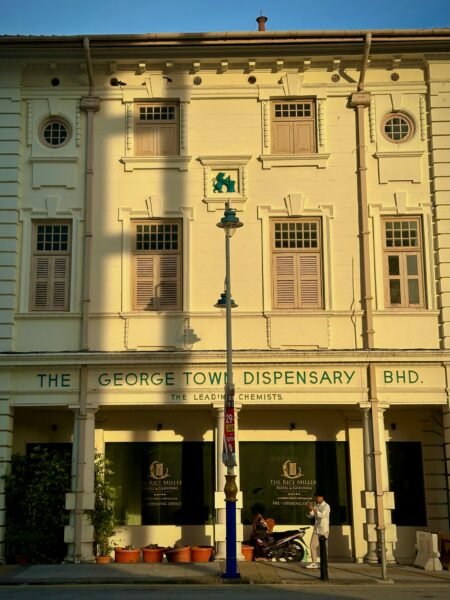
In Penang, that difference becomes very noticeable.
If you stay within the core of George Town — around areas like Armenian Street, Lebuh Chulia, or closer to the waterfront near Weld Quay — you are positioned within one of the few parts of the island where movement can feel relatively continuous. You can step out, walk between streets, find food, explore, and return without needing to constantly think about how to get from one place to another.
That continuity matters. It allows the day to hold together.
Once you move outside of that core — to places like Batu Ferringhi or further along the coast — the experience changes. These areas can be comfortable, even more spacious, but they are not connected in the same way. Each time you leave your hotel, you are committing to a sequence: transport, timing, return. The day becomes structured around those movements rather than flowing through them.
It is not that these areas are worse. It is that they require a different kind of planning — and if you are not expecting that, the effort becomes more visible.
Why I Would Limit Movement Across the Island
There is a strong temptation in Penang to “cover the island” — to move between George Town, the beaches, the hills, the food areas, and everything in between. On a map, this looks entirely reasonable. Distances are short. Nothing appears out of reach.
But the experience of moving between these places does not scale as cleanly as the map suggests.
Each transition carries a small cost — arranging transport, navigating traffic, adjusting to conditions on arrival, and eventually making your way back. None of these are difficult on their own, but together they begin to shape the day in ways that feel more managed than intended.
What I would do differently is reduce the number of transitions rather than trying to optimise them.
That might mean treating George Town as a contained environment for a few days — walking, eating, observing, allowing the experience to build depth rather than range. Or choosing one additional area and committing to it, rather than moving back and forth across the island.
The shift is subtle, but important. Instead of asking, “What else can I fit in?”, you begin to ask, “What can I experience without breaking the flow of the day?”
What I Would Refuse to Assume About Ease
The most important adjustment is not logistical. It is conceptual.
Penang is often presented as a place where you can arrive and simply drift — where the experience unfolds naturally, without much need for structure. And while that may be partially true within certain pockets, it is not a reliable assumption across the entire city.
What I would refuse to carry into Penang is the expectation that ease will be automatic.
Once that assumption is removed, the experience shifts in a more practical way. Instead of expecting the city to carry you, you begin to move through it with clearer intent. Where you stay becomes a more deliberate choice, unnecessary movement is reduced, and the day is shaped within a smaller, more manageable frame that feels easier to navigate.
The friction does not disappear — but it no longer feels like a disruption. It becomes part of the structure you are working within, rather than something that is constantly pushing against you.
What changes, ultimately, is not Penang itself — but the way you engage with it.
Why Distance Creates a Different Version of Penang
If Penang appears almost perfectly resolved on paper, it is because it is being observed from a distance where everything aligns neatly. The food, the heritage, the atmosphere — each element presents itself clearly, without resistance, without the interruptions that come from actually moving through a place. At that distance, nothing competes for your attention. Nothing asks anything of you. The city exists as a complete idea.
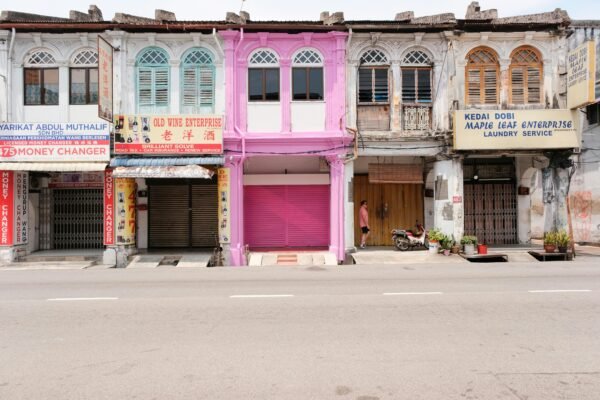
But proximity changes the nature of that experience. Once you are inside Penang — not looking at it, but moving through it, making decisions, adjusting to its rhythm — the clarity begins to soften. Not because the qualities that drew you there disappear, but because they now sit alongside other realities that were not visible before.
Movement requires more thought. Energy is spent in ways you did not anticipate. The environment begins to shape how long you stay out, how far you go, how much you try to fit into a day.
And it is in that shift — from observation to participation — that the question quietly reconfigures itself.
You are no longer asking whether Penang is good. That question belongs to distance, to evaluation from the outside, where qualities can be listed and compared without friction. Instead, you begin to ask something more specific, and more personal. Whether the way Penang functions — the way it asks you to move, to adjust, to engage — aligns with what you assumed it would be.
Because the difference is not about expectation being wrong. It is about expectation being incomplete.
Travel Logistics Planner
A simple framework for thinking through the logistical side of travel — flights, entry requirements, accommodation and transfers — before the journey begins.
Delivered instantly. Occasional thoughtful updates from the road.