
Singapore is often introduced through its price, as though cost is the most important thing to understand about it. And on paper, that seems fair. The numbers sit closer to Australia than to anything else in Southeast Asia, and there is very little about the city that feels conventionally “cheap.”
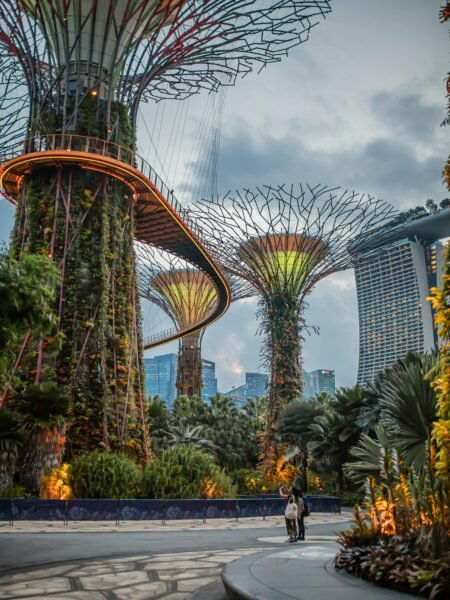
But arriving into Singapore, the price is not what you notice first.
What registers instead is how quickly everything settles. The airport does not feel like an arrival you need to manage. The transfer into the city does not require decoding. The streets do not ask you to adjust your pace or your expectations. There is a quiet continuity from one step to the next, as though the day has already been thought through in advance.
It is a different starting point from most of the region. In many Southeast Asian cities, you arrive into a layer of negotiation — small decisions, minor uncertainties, moments where you pause to work things out. None of these are difficult on their own, but they accumulate. They shape how you move, how far you go, and how much you attempt in a day.
Singapore removes much of that layer from the beginning. You are not easing into the environment. You are already inside something that is functioning at full capacity.
And because of that, the cost begins to sit differently.
It does not feel like you are paying for a destination in the usual sense — not for landmarks, or experiences, or a list of things to see. What you are paying for is harder to point to at first. It reveals itself through how the city behaves over time. Through how little variation there is between one part of the day and the next. Through how consistently the environment holds, without requiring you to adjust alongside it.
Only once you notice that does the pricing start to make sense. Not as something that needs justification, but as a reflection of a system that is doing a significant part of the work for you.
This article sits within the broader context of Singapore section, where the decision framework explains how the city functions as a whole.
Arrival Sets the Tone Before You Reach the City
The experience begins before you step into the city itself. What stands out is how each stage of arrival follows through without disruption, setting a clear expectation of how the rest of the stay will unfold.
Changi Airport Feels Like Part of the City
Changi Airport does not feel like a place you pass through before the “real” journey begins. It feels like a place you could stay in. There are indoor gardens, water features, proper seating areas that don’t feel temporary, and spaces that look more like a mall or a public building than a transit hub. Even if you have just landed, there is no immediate pressure to move quickly or “clear” the space. It absorbs you in a way most airports don’t.

Movement through immigration, baggage collection, and onward transport happens without hesitation. Signage is clear, directions are obvious, and there is no moment where you need to stop and work things out. It behaves like an extension of the city rather than a transition into something less predictable.
The Journey Into the City Holds Together
The drive into areas like Orchard Road, Marina Bay, or the CBD takes around 20 to 30 minutes. Slightly longer on the MRT, but still straightforward.
What stands out is how uneventful that journey feels. Roads are maintained properly, traffic behaves in a controlled way, and the route into the city does not introduce confusion or disruption. There is no “arrival phase” to manage.
A City Where Movement Is Designed, Not Improvised
Once you begin moving through Singapore, the physical environment starts to remove many of the small adjustments that are usually required elsewhere.
Walking Works — Within the Limits of Heat
Singapore is one of the few cities in Southeast Asia where walking is genuinely possible.
Footpaths connect properly. Crossings are clear. Routes make sense without needing to double back or navigate around gaps. The limitation comes from the humidity and heat rather than the infrastructure itself.
That changes how the day feels. Movement becomes something you choose, not something you constantly solve.
MRT and Buses Fit the Way People Actually Move
The MRT and bus network sit naturally within the city rather than feeling like separate layers you have to think your way through.
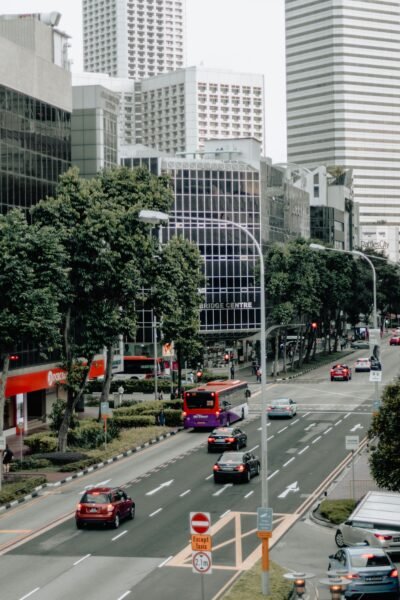
Stations are placed where people actually need them — not just in obvious central corridors, but across the areas where daily life happens. You are not walking long distances to “access” the system. You are already inside it, often without needing to plan for it in advance.
Transfers are straightforward, and more importantly, they feel expected rather than improvised. You are not pausing to work out which platform, which exit, or whether the connection will hold together. The system anticipates the movement, so you are not constantly checking that the next step will work.
Payment is simple, often just tapping a card without needing to think about fares, zones, or ticket machines. That removes another small layer of friction that usually sits around transport — the part where you stop, figure something out, and then continue.
And all of that adds up to something more than convenience.
Movement does not break into separate steps where you feel yourself switching between modes — walking, then transport, then walking again. It carries through from one place to the next without drawing attention to itself. You are not managing the system. The system is carrying you through it.
That is the difference.
In many cities, even when transport is good, you are still aware of the effort involved in using it. You are thinking ahead, making small adjustments, staying engaged with how it works. In Singapore, that awareness fades. You are already in motion before you realise you would normally need to stop.
English Changes the Entire Experience
Language affects more of the experience than most people realise. In Singapore, that layer disappears almost completely.
English is used across transport, services, healthcare, and everyday interactions without compromise. Conversations happen normally. Instructions are understood immediately. There is no need to repeat, simplify, or second-guess what has been said.
That absence of friction sits quietly behind everything else.
Food in Singapore Is Not One Layer — It’s a Full Spectrum
Food in Singapore does not sit in one category or price range. It exists across multiple layers that operate side by side, and all of them hold a consistent standard.
Hawker Culture Exists Alongside High-End Dining
Places like Maxwell Food Centre, Lau Pa Sat, and Chinatown Complex Food Centre provide access to local food that is reliable and widely used.
At the same time, restaurants and cafés operate at an international level across the city. There is no clear divide between “cheap and local” versus “expensive and good.” Both exist at the same time without compromise.
Food Is Embedded Into Where You Already Are
Food does not require planning.
It sits inside malls, transport hubs, business districts, and neighbourhoods. Whether you are near Orchard Road or around Marina Bay Sands, eating fits into where you already are rather than forcing you to move across the city for it.
Rules, Enforcement, and Safety Shape the Experience
This is one of the clearest differences compared to neighbouring countries, and it affects how the city feels at every level. It is not just about rules existing. It is about how consistently they are applied, and what that consistency removes from the day.
Rules Are Clear and Consistently Enforced
Singapore operates with clearly defined rules, but more importantly, those rules hold.
Littering, smoking restrictions, public behaviour, and drug laws are enforced in a way that does not shift depending on where you are. The same standard applies across the city, not just in central or highly visible areas. Cleanliness, order, and predictability are maintained because behaviour is regulated, not left to chance.
That consistency removes the need to interpret the environment.
In many cities, you are quietly reading cues — what others are doing, where boundaries sit, how much something matters in practice. Singapore removes much of that layer. The expectations are clear, and they remain clear as you move through different parts of the city.
Over time, that creates a sense of stability that does not need to be checked.
Safety Removes the Need for Constant Awareness
Safety in Singapore does not present itself as a feature. It shows up in what is no longer required. The need to scan your surroundings fades. Small adjustments in response to uncertainty become less frequent. Those low-level checks begin to fall away.
Having been scammed in Kuala Lumpur, the contrast is immediate. But even without that, the difference becomes clearer over a few days. It is not about a single moment. It is about how consistently nothing requires extra attention.
That consistency changes how the day feels.
In many destinations, some level of background vigilance is always present, even if it is subtle. Singapore reduces that demand. And when that demand drops, the city feels lighter — not because it adds something dramatic, but because it removes a layer you would normally be carrying.
Compared to Kuala Lumpur — Similar Foundations, Different Outcomes
The contrast becomes clearer when placed alongside Kuala Lumpur, which already works well in many ways.
Kuala Lumpur offers strong food, widespread English, and a wide range of hotels — something explored in Why Kuala Lumpur Is Easier Than Most Cities in Southeast Asia. The fundamentals are there, and the city is far more accessible than many other places in the region.
But the day requires more involvement. Walking is limited. Transport choices need to be considered. Small decisions appear throughout the day, whether it is choosing between rail and car or working out the most practical route.
Costs are significantly lower in Kuala Lumpur. But more of the experience depends on how those decisions are managed.
Compared to Penang — Smaller, Cheaper, But Not Simpler
Penang presents a different kind of experience, where scale is smaller but movement is not necessarily easier.
Penang delivers some of the best food in the region, but getting around requires ongoing attention, as covered in Penang is Harder than Expected — What People Don’t See.
Distances, heat, and transport options shape how the day unfolds. Being smaller does not remove that effort.
What You Are Actually Paying For
The cost becomes easier to understand once you stop looking for a visible “return” and start noticing how little you are required to manage. Singapore does not present its value through standout moments. It reveals itself through the absence of friction, and through how little of your own energy is needed to hold the day together.
What you are paying for is not a highlight. You are paying for a system that carries the weight of the experience so that you do not have to.
Consistency Across the Entire Environment
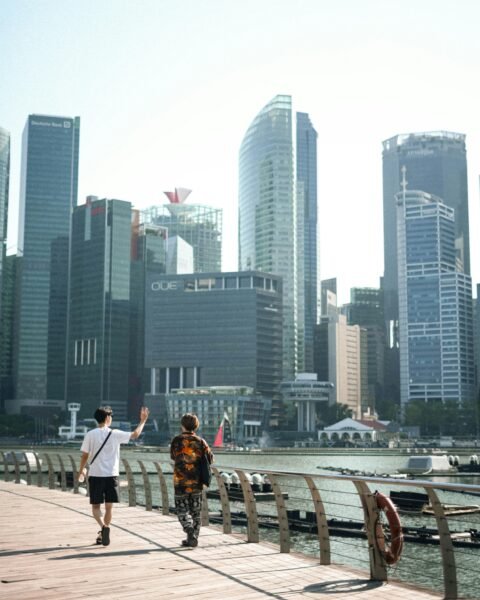
The most immediate shift happens in how evenly the city behaves from one part of the day to the next. Arrival, transport, walking routes, food access, and services all operate within a narrow band of reliability. There is no visible “peak” area where things work well followed by a gradual drop-off once you leave it. The baseline simply holds.
That changes how you move through the city. You are not second-guessing whether the next station will be confusing, whether the street will suddenly become difficult to walk, or whether the next meal will require negotiation. The decisions that normally sit quietly in the background of travel — where to go, how to get there, whether it will work — begin to fade because the environment has already resolved them.
In most Southeast Asian cities, the experience is uneven. There are pockets of ease, but they are not continuous, and you spend more time than you realise adjusting between them. Singapore removes that adjustment layer. The city does not ask you to recalibrate as you move; it maintains the same conditions regardless of where you are.
Enforcement That Holds That Standard in Place
That consistency is not accidental. It is actively maintained, and it is maintained through enforcement.
Rules are not loosely interpreted or selectively applied. They are consistent, visible, and embedded into how the city operates. Cleanliness is not a cultural preference; it is upheld. Order is not a suggestion; it is expected. Behaviour is shaped in a way that protects the overall environment, and that is why the standard does not drift.
This is often where discomfort comes in for travellers, because the structure is more explicit than in many other places. But on the ground, what it produces is a level of stability that is difficult to replicate without that enforcement behind it. The city does not rely on individual behaviour to maintain standards; it builds systems that ensure those standards are sustained.
Over time, that becomes less about rules and more about outcome. You are moving through an environment that holds its shape without constant variation, and that predictability removes a layer of vigilance you would otherwise carry.
Safety That Reduces Mental Load
The effect of that structure becomes most noticeable in how the day feels.
The absence of low-level risk does not register as a dramatic sense of safety. It shows up more quietly, in what drops away. The need to scan your surroundings softens. Route adjustments become less necessary. Decisions about whether to head out again later no longer carry the same weight. Those small, repeated checks begin to fade.
And when they fall away, something else becomes visible — the amount of energy they were quietly consuming.
In many destinations, that low-level monitoring sits in the background and is simply accepted as part of travel. It shapes behaviour, limits movement, and adds a subtle layer of fatigue over time. Singapore removes much of that layer. The city feels lighter not because it is more exciting, but because it demands less ongoing attention from you.
That is where the value sits. Not in what is added, but in what is no longer required.
And once you recognise that — the consistency, the enforcement, and the reduction in mental load — the pricing stops feeling like a premium for a destination. It begins to read as the cost of a system that is doing a significant part of the work on your behalf.
Why Singapore Stands Apart in Southeast Asia
Singapore does not rely on a single defining attraction, and that is precisely why it is so easy to misread. There is no landmark or experience that carries the city in the way Angkor Wat does for Cambodia or old towns do for places like Hoi An. What Singapore offers instead is far less visible at first glance, but far more consistent once you are inside it.
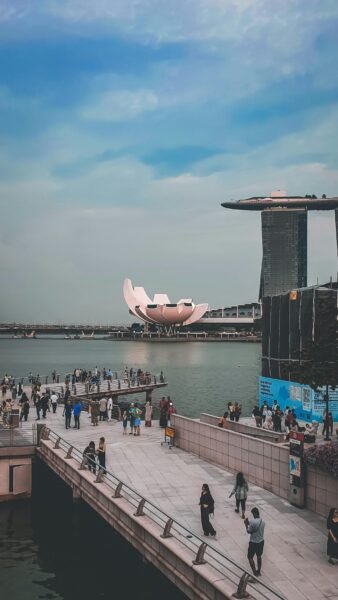
The difference sits in how evenly everything is held together. The same level of infrastructure, cleanliness, and predictability is not confined to a central district or a handful of curated areas. It extends outward without much variation. Whether you are in the CBD, along Orchard Road, or moving through residential neighbourhoods, the systems do not noticeably degrade. Transport behaves the same way. Streets feel the same. Services respond with the same level of reliability. You are not adjusting your expectations as you move through the city; the city is already calibrated.
That consistency changes how travel feels on the ground. It removes the need to constantly assess, compare, and compensate — which is what most Southeast Asian cities quietly demand of you. In many places, ease is selective. You can have comfort, or location, or affordability, but rarely all three at once, and you spend a surprising amount of energy managing those trade-offs. Singapore collapses that decision layer. The baseline is already high, so you are no longer negotiating with the environment every time you step outside.
It also operates at a different cultural and structural layer to much of the region. Theatre, international productions, touring performances, and large-scale events are not occasional additions — they are part of the city’s ongoing rhythm. That level of integration, where global programming sits comfortably alongside everyday life, is closer to cities like Hong Kong, London, or New York City than to its Southeast Asian neighbours. The city does not just function well; it connects into a wider global circuit in a way that most destinations in the region do not.
That combination — system stability, environmental consistency, and global integration — is not common in Southeast Asia. And because it is not packaged as a single “highlight,” it is easy to overlook. It reveals itself gradually, through the absence of friction rather than the presence of spectacle.
Once that becomes visible, the pricing stops feeling abstract. You are not paying for a landmark or a checklist of attractions. You are paying for a city that carries the load for you — quietly, consistently, and without requiring constant adjustment.
Travel Logistics Planner
A simple framework for thinking through the logistical side of travel — flights, entry requirements, accommodation and transfers — before the journey begins.
Delivered instantly. Occasional thoughtful updates from the road.