
Tokyo tends to provoke strong reactions. People describe it as overwhelming, exhausting, emotionally distant, or simply “too much,” often followed by “but I’m glad I went.” That combination is telling. It suggests a city that is impressive, even admirable, but not necessarily one people feel comfortable inhabiting for long.
I understand where that perception comes from. Tokyo can feel relentless if you try to compress it into a short stay, rush between famous sights, and expect the city to reveal itself quickly. My experience has been different, not because Tokyo is inherently easier than people say, but because I don’t try to do everything in one visit — and I don’t treat a first visit as the only chance to understand it.
If you’re deciding whether Tokyo belongs in your Japan itinerary at all, it helps to step back and understand the broader context first. I’ve laid that out on the Japan travel page, which explains how the major cities fit together — and why sequencing matters more than ticking off places.
Why So Many People Find Tokyo Overwhelming
Treating Tokyo as a one-and-done city
Many first-time visitors arrive in Tokyo with a sense of urgency. There is so much to see and do that it feels wasteful not to pack everything into one trip. Famous districts, headline temples, major intersections, shopping areas — all scheduled tightly, often with little space between them. By the end of the visit, fatigue sets in.
The conclusion many people draw is that Tokyo itself is overwhelming. In practice, it’s often the compression that does the damage, not the city’s inherent demands.
What happens when everything is stacked into one trip
Tokyo is dense and stimulating in the areas most visitors prioritise. When you stack high-energy experiences back-to-back over multiple days, the body and mind don’t get much opportunity to reset. Even places you were excited to see start to blur together. Interest dulls. Decision-making becomes harder. Enjoyment gives way to endurance.
This isn’t a sign that Tokyo isn’t suitable. It’s what happens when a city with extraordinary breadth is treated as if it can be absorbed in a single pass.
Why this leads to the wrong conclusion
When people leave Tokyo feeling drained, it’s understandable they conclude the city is simply “too much.” What’s less often acknowledged is that very few cities of Tokyo’s size and complexity reward being rushed. The difference in Tokyo is how clearly that mismatch shows up.
Tokyo Only Makes Sense When You Build in Contrast
Tourist density is unavoidable — and not the problem
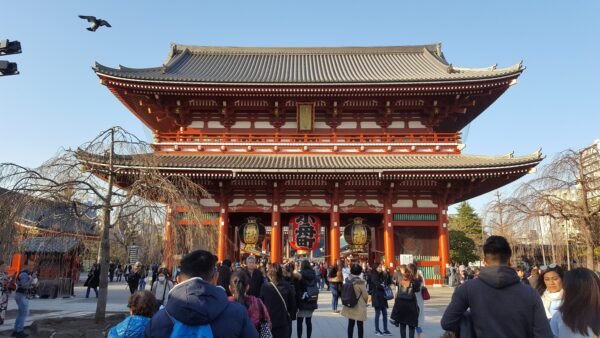
There’s no point pretending places like Senso-ji, Shibuya, or major shopping districts won’t be crowded. They are popular for good reasons. Avoiding them entirely isn’t necessary, and it can even distort your sense of the city.
Why pairing intensity with calm changes the experience
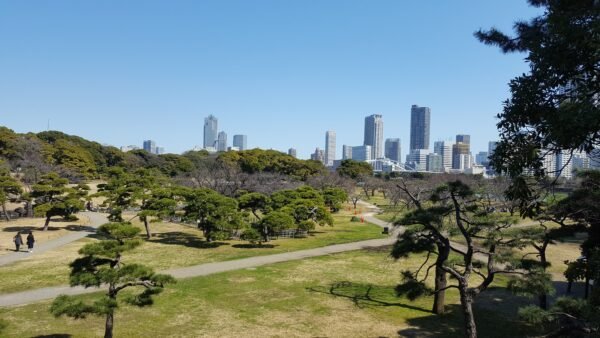
What changes the experience is contrast. I might spend part of a day in a busy, high-profile area, fully expecting crowds and noise, and then deliberately offset that with time somewhere quieter — a shrine, a garden, a residential neighbourhood, or simply walking without an agenda. Senso-ji followed by Meiji Shrine feels fundamentally different from Senso-ji followed by another packed district. Shibuya followed by time in a Japanese garden feels restorative rather than draining.
Tokyo allows this balance — if you choose it
Tokyo doesn’t force you into this rhythm, but it makes it available. Quiet spaces are woven into the city rather than pushed to the outskirts. If you ignore that and keep stacking intensity, Tokyo can feel relentless. If you alternate deliberately, the city becomes far more workable.
This idea of energy management through contrast is something I talk about more broadly in the Travel Planning section, because it applies well beyond Japan.
A First Visit Doesn’t Have to Cover Everything
Why “seeing it all” isn’t realistic
Tokyo is not a city that can be meaningfully “done” in one visit. There are too many districts, too many layers, and too many variations in atmosphere. Trying to cover everything often leads to shallow engagement rather than understanding.
What changes when you accept that limitation
Once you accept that you won’t see everything on a first visit, pressure drops. You still see major sights. You still explore well-known areas. But you stop treating each decision as irreversible. There will be another opportunity, and that knowledge alone changes how you move through the city.
Why this matters for enjoyment
Enjoyment improves when you’re not constantly measuring what you’ve missed. Tokyo starts to feel expansive rather than demanding. You engage more fully with what’s in front of you instead of rushing toward the next highlight.
This becomes especially important when Tokyo is followed by cities like Kyoto or Osaka, where energy, crowd dynamics, and social expectations feel very different.
It’s Not Just Systems — It’s Culture and Etiquette
Behavioural expectations that differ from the West
Much of the disorientation Western travellers feel in Tokyo has less to do with crowds and more to do with social expectations. Quiet on trains. Limited phone noise in shared spaces. Observing before acting. Not inserting yourself loudly into public flow. These norms are widely followed but rarely spelled out.
Why intuition doesn’t always translate
Western travel instincts often rely on intuition and social ease. In Japan, intuition can misfire because the social script is different. Stress builds not because people are unkind, but because travellers aren’t yet reading the environment correctly.
How awareness changes the experience
Once you understand what’s expected, Tokyo becomes easier to move through. You stop second-guessing yourself. Interactions feel less tense. You’re not trying to “get it right” emotionally — you’re simply aligning your behaviour with the environment.
This kind of cultural adjustment is also covered in the Travel Planning section, where I unpack how expectations shape travel stress.
Language Limitations Are Real — and Manageable
English is limited, and that surprises many visitors
Tokyo is not an English-speaking city. For many Western travellers, this still comes as a surprise. It isn’t hostility or indifference — it’s simply the reality of daily life in Japan.
Why Tokyo still works without Japanese
Despite that, Tokyo is often workable without Japanese because so much is system-based. Signage, visual cues, and predictable processes allow you to function without constant conversation. You may not be able to explain yourself at length, but you can usually complete the task in front of you.
Where frustration tends to arise
Frustration often comes from expecting reassurance instead of function. Tokyo generally offers function reliably. Once expectations are aligned, language becomes a limitation you work around calmly rather than a constant obstacle.
Tokyo Is a City of Layers
Why first impressions are incomplete
Most people’s first impression of Tokyo is shaped by a narrow slice of the city — the most famous districts, the busiest transport hubs, the most photographed locations. That slice is real, but it isn’t representative of the whole.
What changes on subsequent visits
On later visits, familiarity reduces cognitive load. You’re not decoding everything at once. You start to explore beyond default areas, notice smaller neighbourhoods, and choose experiences more selectively. Tokyo doesn’t feel smaller — it feels more intelligible.
Why Tokyo rewards return visits
Each return allows a different layer to come into focus. Not because the city changes, but because your relationship with it does. That’s why Tokyo continues to hold interest long after the novelty wears off.
Why Tokyo Works Particularly Well for Mature Solo Women
Safety without constant vigilance
Tokyo is widely regarded as a safe city by global standards, and in practice that often means less background vigilance when moving around alone. You’re still aware of your surroundings, but you’re not constantly bracing yourself. That reduction in mental load is noticeable.
Acceptance of solo presence
Being alone in Tokyo is unremarkable. Eating alone, walking alone, spending time alone doesn’t invite comment or curiosity. It simply blends into the everyday rhythm of the city, which removes a layer of social friction many women experience elsewhere.
Care and consideration that come with age
What I’ve noticed most, though, is that being a mature woman often brings more care, not less. There’s a quiet attentiveness in interactions — a gentler tone, a little more patience, a sense that you are being looked after rather than assessed. It’s not dramatic or performative, and it’s not something people announce. It shows up in small, practical ways that make moving through the city feel easier and, at times, unexpectedly reassuring. That kind of consideration is rare in travel, and it’s one of the reasons Tokyo feels so workable for me.
The Real Reframe
Tokyo isn’t overwhelming by default. It’s expansive, busy in obvious places, and structured in ways that can feel unfamiliar at first. Many people rush it, compress it, and leave with conclusions that make sense given how they experienced the city.
Approached with the understanding that you don’t have to see everything at once — and that return visits reveal different layers — Tokyo becomes a city that is not only manageable, but genuinely rewarding for a mature solo woman. That is why I keep coming back, and why Tokyo remains a place I’m not finished with.
Travel Logistics Planner
A simple framework for thinking through the logistical side of travel — flights, entry requirements, accommodation and transfers — before the journey begins.
Delivered instantly. Occasional thoughtful updates from the road.