
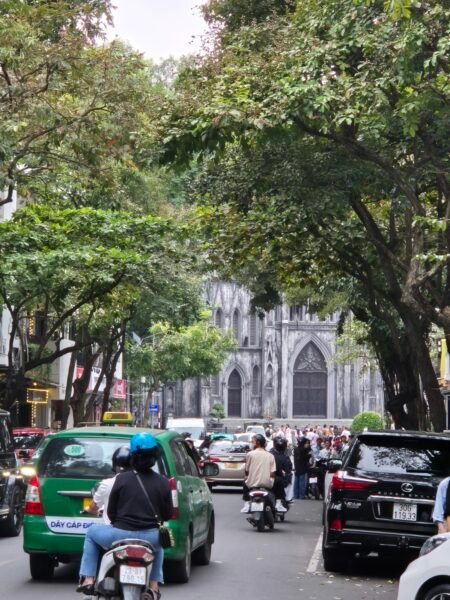
Hanoi has never been easy for me. Not on the first visit, and not on any of the ones that followed.
From the moment you arrive, the city asks for attention. The streets are narrow and busy, traffic flows without much regard for formal rules, and the air often feels heavier than you expect. Even when you’re sitting still, the city doesn’t quite settle. There’s always movement, sound, and activity pressing in around you.
And yet, despite all of that, Hanoi is a city I keep returning to. Not because it becomes easier with familiarity — it doesn’t. Not because I’ve learned how to “handle” it better — that’s never really been the point.
I go back because Hanoi gives me something I value deeply, something that continues to resonate long after the practical inconveniences have faded from memory.
Hanoi Has Always Been Full On — and I Don’t Expect It to Be Otherwise
One of the biggest mistakes people make with Hanoi is expecting it to soften over time. There’s an assumption that familiarity will smooth the experience, that repeated visits will somehow turn intensity into comfort.
That hasn’t been my experience at all.
If anything, knowing Hanoi better has made its demands clearer. I notice the density more, not less. I’m more aware of how much attention the city requires, even on quiet days. The difference now is not that the city asks less — it’s that I arrive already accepting what it will ask.
That acceptance changes the relationship.
I no longer arrive hoping for ease, or resenting its absence. I don’t measure Hanoi against places designed to feel comfortable. I treat it as a city that offers depth and engagement, provided I’m willing to meet it on its own terms.
That mindset is very different from how I approach places like Ho Chi Minh City, where functionality is often enough, and emotional attachment is optional.
Hanoi doesn’t allow that kind of neutrality. It insists on being engaged with — and that insistence is precisely why it stays with me.
What “Full On” Actually Feels Like in Hanoi
People often describe Hanoi as chaotic, but that word never quite captures it for me.
What Hanoi feels like is compressed.
Density, Not Disorder
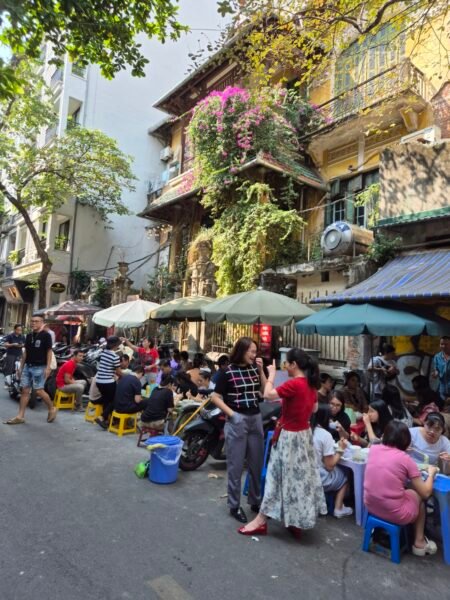
Life here doesn’t spread out; it layers itself. History, commerce, daily routines, and social life all occupy the same physical space. Shops spill onto pavements, conversations overlap with traffic noise, and food is cooked, served, and eaten in streets that also function as thoroughfares.
There’s very little separation between public and private life. Everything happens close together, often at the same time.
This compression creates intensity, but it also creates texture. You’re not moving through a series of curated experiences — you’re moving through a living city that doesn’t pause or rearrange itself for visitors.
Attention Is the Price of Entry
Even when you’re sitting in a café, ostensibly doing nothing, part of your awareness stays switched on. Motorbikes pass close by. Voices rise and fall. The city continues to assert itself around you.
At first, that can feel stimulating, even invigorating. Over longer stretches, it becomes mentally demanding. Hanoi is not a place where your senses ever fully disengage.
That constant engagement is tiring — but it’s also part of what makes the city feel so alive.
Why Hanoi Feels Strangely Familiar to Me
Despite the intensity, Hanoi resonates with me in a way that often surprises people. The reason has nothing to do with ease or convenience.
It has everything to do with how discovery works here.
Laneways, Discovery, and the Pleasure of Not Knowing
The Old Quarter, in particular, reminds me of Melbourne, Australia — not because the cities look alike, but because they feel alike in the way they reveal themselves.
You move through narrow streets without quite knowing what you’ll find. A café tucked behind an unassuming doorway. A small shop selling something unexpected. A turn that opens into a completely different rhythm.
Melbourne taught me to love cities that reward curiosity rather than efficiency. Hanoi does the same, albeit in a far more intense and demanding way.
Melbourne has better roads and pavements, of course. But the underlying pleasure — the sense that discovery is always possible — feels remarkably familiar.
Choosing When to Wander
Hanoi rewards wandering, but only when it’s chosen deliberately.
There are days when I walk very little, conserving energy and letting the city come to me. And then there are days when I decide to wander the Old Quarter, knowing it will take effort, but also knowing that the payoff can be worth it.
That choice is important. Hanoi isn’t a city you drift through unconsciously. But when you enter it with intention, it offers moments of discovery that feel genuinely earned.
The Coffee Culture That Keeps Pulling Me Back
If there’s one reason I return to Hanoi again and again, beyond history or architecture, it’s coffee.
Vietnam’s coffee culture is strong across the country, but Hanoi amplifies it in a way I haven’t experienced anywhere else.
Coffee as Craft, Not Trend

Egg coffee, salted coffee, coconut coffee — these aren’t novelties designed for visitors. They’re expressions of craft and technique that have evolved organically, rooted in local tastes and habits.
As someone from Melbourne, a city that prides itself on coffee culture, I don’t say this lightly: Hanoi surpasses it.
Not because it’s trendier or more refined, but because coffee here is integrated into daily life. It’s not performative. It’s practical, habitual, and deeply satisfying.
Cafés as Places to Sit, Think, and Work
One of my favourite ways to spend time in Hanoi is sitting in cafés and working until my laptop battery runs out.
There’s no pressure to rush. No expectation that you’ll move on quickly. These cafés function as genuine third spaces — places where time stretches and productivity feels natural rather than forced.
That rhythm matters to me. It’s one of the reasons Hanoi continues to feel creatively and intellectually nourishing, even when the city itself feels demanding.
Depth You Can Feel, Not Just Visit
Hanoi’s depth isn’t packaged or curated. It doesn’t announce itself politely.
History and Architecture That Remain Visible
Buildings here carry layers. Architectural styles overlap rather than replace each other. History isn’t cordoned off — it lives alongside the present, sometimes uncomfortably.
You don’t just observe Hanoi’s past; you move through it, often without clear boundaries between eras.
That continuity is part of what gives the city weight. It feels lived-in, rather than staged.
Parks, Lakes, and Necessary Contrast
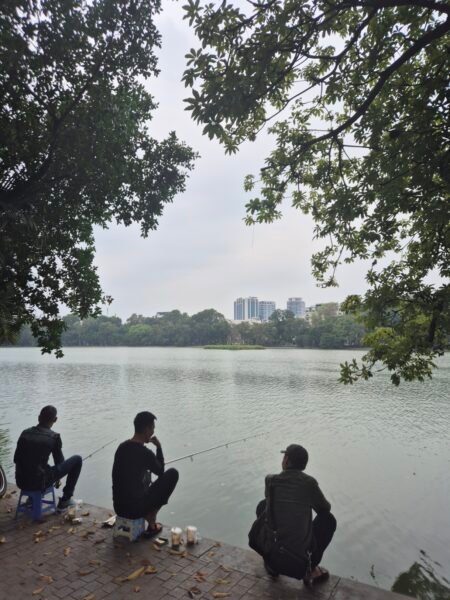
What makes this density bearable — and at times beautiful — is contrast.
Hanoi’s lakes and parks provide pockets of visual and mental relief. Moments where the intensity pulls back just enough to reset your senses.
In a city that otherwise demands constant attention, these spaces become essential rather than decorative.
The Real Cost of Hanoi (and Why I Still Accept It)
For all that it gives back, Hanoi has a cost.
Pollution as the Hardest Reality
Traffic density and air quality are the city’s most persistent challenges. Pollution is the aspect of Hanoi I struggle with the most, both physically and mentally.
It’s the primary factor that limits how long I want to stay.
Drawing Boundaries Without Disappointment
Over time, I’ve learned where my line is.
I retreat indoors when needed. I choose cafés and green spaces deliberately. And I leave before engagement tips into depletion.
These boundaries don’t come from frustration or disappointment. They come from respect — for both myself and the city.
Why Hanoi Doesn’t Get Easier — and Why That’s Not the Point
There’s a persistent belief that cities like Hanoi become easier with experience.
They don’t.
Awareness Replaces Illusion
You don’t conquer Hanoi. You don’t master it. You simply understand it better — including when to step back.
That awareness doesn’t reduce the city’s demands. It just helps you meet them honestly.
Why Waiting Until “Later” Often Backfires
Many travellers save Hanoi for later in a trip, thinking they’ll be tougher or more adaptable by then.
In reality, arriving tired dulls the payoff.
Hanoi rewards presence and attention, not endurance.
Signs of Change — and Why I’m Quietly Optimistic
One reason I remain hopeful about Hanoi’s future is the city’s gradual shift toward cleaner transport, including electric vehicle initiatives.
Air quality matters enormously here, and while change will take time, even incremental improvements could transform how the city feels.
Hanoi deserves that chance. It has too much depth to be diminished by pollution alone.
Hanoi’s Place in My Vietnam Pattern
Seen alongside other Vietnamese cities, Hanoi’s role becomes clearer.
Compared to Ho Chi Minh City, Hanoi asks more but also gives more back. Where HCMC is efficient and neutral, Hanoi is demanding and meaningful.
Compared to Hoi An, Hanoi offers far less ease but far greater intellectual and cultural engagement.
Both are essential to how I experience Vietnam — just in very different ways.
Why I Keep Going Back
I don’t return to Hanoi because it’s comfortable. Comfort was never really the point of the city, and anyone expecting it will probably struggle with Hanoi in the beginning. The streets are dense, the rhythm relentless, and the sensory load far higher than most places people travel through in Southeast Asia. But what Hanoi offers in return is something very different from comfort, and far more compelling to me.
I return because it continues to resonate on several levels at once — creatively, culturally, intellectually — in a way that few places manage to sustain over time. Hanoi is one of those cities where sitting quietly in a café can become an act of observation. The street life unfolds continuously in front of you: conversations, commerce, scooters threading through impossible spaces, families gathering on low plastic stools, the layered textures of everyday life revealing themselves in small details if you sit still long enough to notice them.
It gives me places to think and to work, but also places to simply watch. Hanoi rewards that kind of attention. The city’s density, its contradictions, and its constant movement create an environment that feels mentally stimulating rather than merely busy. For someone who enjoys observing how cultures organise themselves, Hanoi offers an almost endless field of material.
Hanoi does ask a lot from the people who spend time there. It demands patience, curiosity, and a willingness to adapt to a rhythm that is not designed around the comfort of visitors. But what it gives back in return — creative energy, cultural depth, and a sense of intellectual engagement with the place itself — is something I rarely find elsewhere.
And for me, that makes the decision to return not just understandable, but almost inevitable.
Travel Logistics Planner
A simple framework for thinking through the logistical side of travel — flights, entry requirements, accommodation and transfers — before the journey begins.
Delivered instantly. Occasional thoughtful updates from the road.