Discovering Hoi An’s Gentle Embrace: Why This Ancient Town Calls to Solo Female Travellers
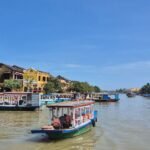
The morning mist rises gently from the Thu Bon River as I step onto my balcony, breathing in the intoxicating blend of incense from nearby temples and fresh herbs from the market. This is Hoi An in its purest form—before the tour buses arrive, before the narrow streets fill with eager photographers. At 6:30 AM, the ancient town belongs to the locals and to those of us wise enough to rise early for this daily gift.
As a solo female traveller in my fifties, I’ve discovered countless destinations that promise adventure and discovery. Yet few places have embraced me with the same gentle warmth that Hoi An solo travel offers. This isn’t just another stop on the well-worn tourist trail; it’s a place where time moves differently, where the art of slow travel isn’t just encouraged—it’s essential.
My Hoi An travel guide for women begins with a simple truth: this UNESCO World Heritage site doesn’t demand to be conquered in three frantic days. Instead, it invites you to settle into its rhythm, to walk its lantern-lit streets with the unhurried pace of someone who has finally found home. Hoi An is one of the best places in Vietnam for solo female travellers seeking both safety and soulful discovery.
The Perfect Canvas for Solo Female Exploration
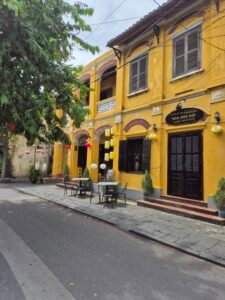
Hoi An hidden gems aren’t just tucked away in forgotten corners—they’re woven into the fabric of daily life that reveals itself only to those who choose to linger. During my month-long stay, I discovered that solo travel in Vietnam finds its most comfortable expression here in this riverside town where ancient Chinese shophouses lean companionably against French colonial buildings, creating a visual poetry that speaks to the soul.
The narrow streets that ban motorbikes during daylight hours become pedestrian sanctuaries where I could wander freely, camera in hand, without the constant vigilance required in Vietnam’s busier cities. Here, being a woman alone wasn’t a challenge to navigate—it was a gift that opened doors to conversations with shop owners, invitations to morning tai chi sessions by the river, and the kind of serendipitous encounters that solo travel promises but rarely delivers with such consistency.
Morning Rituals and the Sacred Hours: How Hoi An Reveals Her Secrets
The Golden Hour Advantage
My daily routine began before dawn became popular Instagram real estate. At 6 AM, armed with nothing but comfortable walking shoes and an open heart, I’d slip through the hushed streets to discover quiet cafés and hidden spots in Hoi An old town that would later vanish beneath the day’s tourist tide.
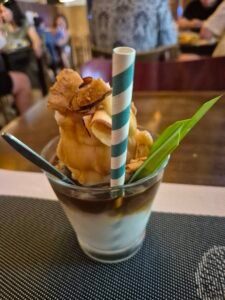
Buttercup by Rosie’s Café, tucked away on a side street you’d never stumble upon accidentally, became my morning sanctuary. This place is more than just a café—it is a garden oasis where digital nomads and travellers like myself could savour coconut iced coffee that seemed to capture the essence of Vietnamese hospitality in every sip. This hidden coffee shop in Hoi An offers delicious brunch and coffee, with possibly the best coconut iced coffee in Hoi An, attracting lots of digital nomads and expats who appreciate its outdoor seating area with tons of plants giving it a secluded garden feel.
The River’s Daily Performance
The Thu Bon River serves as Hoi An’s liquid backbone, and my morning walks along its banks revealed a daily performance that rivaled any theater. Fishermen in traditional round basket boats glided silently across water that mirrored the changing sky, while women in conical hats arranged their produce at the riverside market with an artistry that spoke of generations of practice.
Taking in Hoi An’s magical scenery from a bicycle is one of the most beloved activities, offering glimpses of rice paddies, Buddhist temples, beaches and water buffalos. These early river walks became my meditation, a gentle way to begin each day connected to the pulse of local life rather than tourist schedules.
Temple Whispers and Incense Dreams
Before 8 AM, the local temples and shrines that don’t appear in guidebooks offered their most intimate moments. The Quan Cong Temple, usually bustling with tour groups by midday, stood peacefully in the early light, where I could sit quietly and watch elderly locals light incense and whisper prayers that seemed to carry centuries of devotion.
Afternoon Sanctuary: Embracing the Art of Vietnamese Siesta
Café Culture and Creative Pursuits
The relentless Vietnamese sun taught me wisdom that my busy Western life had forgotten: the sacred art of afternoon rest. Between noon and 3 PM, when even the most determined tourists sought air-conditioned refuge, I discovered Hoi An cafés and eateries that became my creative sanctuaries.
Reaching Out Teahouse offers an experience so unique it transcends typical café culture. Everyone inside remains silent and you order using the order sheet provided on the table. If you need to ask a question or say thank you, you can signal to the staff using the message cubes laid out on the table. The concept of this place is to empower those with disabilities. This wasn’t just afternoon tea—it was a lesson in mindful communication and the beauty of silent connection.
The Hidden Beach Restaurant, nestled along the shoreline and within 15 minutes (by car) of the Ancient Town, became my writing retreat where I could process the morning’s discoveries while listening to the rhythmic conversation between waves and sand. Nestled along the beautiful shoreline, this restaurant steals the hearts of many visitors with its serene environment.
The Wisdom of Slow Afternoons
These afternoon interludes weren’t empty hours to fill—they were essential pauses that allowed the morning’s experiences to settle into memory. I learned to match my energy to the town’s natural rhythm, understanding that best walking routes in Hoi An for solo female travellers aren’t just about covering distance but about finding the perfect balance between exploration and reflection.
Evening Magic: When Lanterns Transform Ancient Streets
The Golden Hour Returns
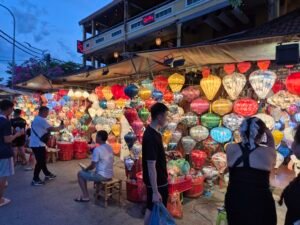
As the sun began its descent toward the South China Sea, Hoi An underwent its daily transformation. Lantern-lit strolls became less about seeing and more about feeling—the warm glow of silk lanterns reflecting off time-worn walls, the gentle murmur of evening conversations spilling from doorways, the intoxicating aroma of street food beginning its nightly performance.
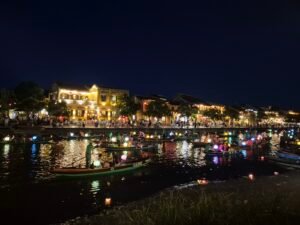
Evening walks after dinner along the Thu Bon River became my favourite meditation practice. Walk along the Thu Bon River and watch the colourful boats and pretty lanterns reflecting in the water. Take a wander through the night market, or drop into one of the riverside cafes for a spot of people-watching; there are plenty to choose from along the waterfront. The river serves as Hoi An’s liquid timeline, carrying stories from its days as a major Silk Road port into its present incarnation as a UNESCO treasure.
Where Evening Flavors Awaken
Hoi An’s culinary landscape reveals itself most intimately after sunset, when the day’s heat subsides and the ancient town’s restaurants come alive with the sizzle of woks and the gentle hum of conversation. Beyond the well-trodden path of tourist favorites lies a world of authentic flavors, where family recipes passed down through generations meet the skilled hands of local chefs who understand that every dish tells a story.
My evenings in Hoi An became a delicious journey of discovery, each restaurant offering not just a meal, but a window into the soul of Vietnamese cuisine. Three dining experiences, in particular, left indelible marks on both my palate and my memory, each one showcasing a different facet of this town’s remarkable gastronomic heritage.
Pause and Enjoy Restaurant – try the Bun Cha, perfectly grilled pork patties and belly, a sweet and tangy dipping sauce, accompanied by fresh rice vermicelli and an abundance of crisp herbs.
Red Gecko Hoi An Restaurant – try the Cao Lau, made with water exclusively from the town’s Ba Le well—were topped with tender slices of pork, fresh greens, and crispy rice crackers that added delightful textural contrast.
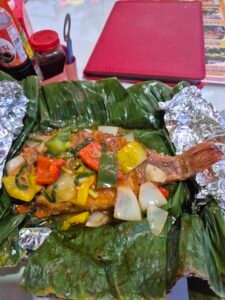
Nhà Hàng Bảo Phương – try the whole fish, wrapped in aromatic banana leaves and grilled over open flame. A true celebration of Vietnamese coastal cuisine served in a welcoming, family-run atmosphere.
Beyond Tourist Territory: Discovering Hoi An’s Hidden Soul
Secret Alleys and Forgotten Corners
My most treasured discoveries came from embracing the art of purposeful wandering. My favorite way to explore any new city is by walking and seeing what hidden treasures I can find. Because cars and motorbikes aren’t allowed to drive in the Ancient Town for the majority of the day, the area is prime for exploring on foot. Wandering aimlessly around the Ancient Town is easily one of the best things to do in Hoi An.
The backstreets behind Tran Phu Street revealed family workshops where artisans continued crafts passed down through generations. Here, I discovered the woman who still hand-paints silk lanterns using techniques her grandmother taught her, working in a tiny shophouse where time seemed suspended in amber light.
The Rhythm of Daily Life
Neighbourhood life provided the most authentic cultural immersion. Morning laundry ceremonies transformed narrow alleys into rainbows of drying fabric, while children’s laughter echoed from hidden courtyards where three generations shared the same ancient roof. These weren’t photo opportunities but invitations to witness life lived at its most genuine pace.
Spiritual Sanctuaries
Go off the beaten path to discover hidden temples and shrines in Hoi An. These lesser-known sites offer an intimate glimpse into the town’s religious and historical heritage. Long Tho Pagoda, with its weathered stone walls and tranquil courtyards, stands as a testament to centuries of devotion, quietly welcoming those who seek its peaceful embrace. Explore ancient architecture and experience local religious practices in a serene, peaceful setting. I found particular solace in the small family temples tucked behind unassuming doorways, where the scent of sandalwood incense and the soft murmur of prayers created sacred spaces untouched by tourist schedules.
Connections That Matter: The People Who Shaped My Journey
The Tailor’s Tale
My relationship with Nhan began with a simple need for cooler clothing but evolved into daily conversations about family, tradition, and the changing face of Hoi An. Her tiny shophouse near the Hoi An Market (Ti Ti 38 Tailor) housed not just a tailoring business but three generations of family history. Each fitting became a lesson in Vietnamese family dynamics, each conversation a bridge between cultures.
Nhan’s gentle correction of my pronunciation, her patient explanations of fabric choices, and her insistence on adjusting my order until it was “perfect for your life, not just your body” transformed a commercial transaction into a relationship that continues through social media exchanges about travel.
Market Morning Wisdom
Anh Thu at the riverside market became my unofficial guide to Vietnamese produce and cooking techniques. This remarkable woman, who spoke five languages and managed her family’s vegetable stall with military precision, took special delight in introducing me to fruits I’d never encountered and spices that would transform my cooking forever.
Our morning exchanges—part Vietnamese lesson, part cooking tutorial, part life philosophy discussion—taught me that cultural sensitivity isn’t just about avoiding offense but about opening yourself to learning from every interaction. Anh Thu’s patient answers to my endless questions about Vietnamese food culture created a friendship that enriched every meal I prepared during my stay.
River Bench Philosophy
My favourite bench by the river near the Night Market became an accidental meeting point with Mr. Duc, a retired teacher who spent his evenings watching boats and practicing English with interested tourists. Our conversations about Vietnamese history, teaching methods, and the changes he’d witnessed in Hoi An over six decades provided context that no guidebook could offer.
These weren’t chance encounters but the natural result of moving slowly enough through the world to notice the people who wanted to share their stories. Solo travel in Vietnam requires this kind of openness—a willingness to let the day unfold at its own pace rather than ticking items off a predetermined list.
Practical Wisdom: Safe and Comfortable Solo Exploration
Choosing Your Home Base
Accommodation choices significantly impact the quality of a solo travel experience. After extensive research and personal experience, I recommend Hoianan Boutique Hotel as an exemplary choice for women seeking comfort, safety, service and authentic connection to local culture.

Hoianan Boutique Hotel is just 5 minutes’ walk from Japanese Covered Bridge, and relatively close to Hoi An Market. The hotel is located on Nguyen Hoang street – the vibrant night market on it’s doorstep, with 18 rooms featuring traditional design and modern equipment including TV, fridge, air conditioner and hair dryer. The hotel’s prime location allows comfortable evening walks while providing easy morning access to the Ancient Town before crowds arrive. I used their laundry services twice during my stay with them which was very convenient for long-term travelers like myself (VND50K/kilo) and they arranged for my car transfer back to Da Nang (VND300K one way) at the end of my trip.
Navigation and Transportation
Getting around Hoi An as a solo woman requires understanding the town’s unique rhythm. The Ancient Town’s vehicle restrictions create a pedestrian paradise during daylight hours, while complimentary bicycles provided by most hotels offer perfect transportation for exploring rice paddies and reaching An Bang Beach.
Walking remains the most rewarding transportation method within the old quarter. The flat terrain and short distances mean everything essential lies within comfortable walking range. For longer excursions, cyclos provide a charming alternative, though agreeing on prices beforehand prevents misunderstandings.
Safety Without Limitations
Staying safe without feeling limited requires common-sense precautions rather than excessive worry. Hoi An’s compact size and tourist-friendly infrastructure create an environment where solo women can explore confidently while maintaining reasonable awareness.
Evening walks along well-lit streets feel comfortable and safe, though I avoided isolated areas after dark. The riverside promenade and main tourist streets maintain consistent foot traffic that provides natural security without feeling overwhelming.
Respectful Dressing
Packing for comfort and respect means balancing Vietnam’s heat with cultural sensitivities. Lightweight, breathable fabrics that cover shoulders and knees served me well in temples and local neighborhoods while remaining comfortable in tropical conditions.
A light cardigan or shawl proves invaluable for temple visits and air-conditioned spaces, while comfortable walking shoes with good grip handle the occasional uneven cobblestone gracefully. Vietnamese summers demand sun protection, making wide-brimmed hats and high-SPF sunscreen essential rather than optional.
Should you find yourself with gaps in your wardrobe or simply desire something perfectly tailored to the climate, Hoi An presents a wonderful opportunity. The ancient town has earned international acclaim for its skilled tailors and fabric artisans who can craft custom clothing within days.
Whether you need a lightweight linen shirt that breathes in the humidity or a modest dress that transitions seamlessly from temple visits to evening strolls along the riverside, Hoi An’s craftspeople can create pieces that marry comfort with cultural appropriateness while serving as lasting mementos of your journey.
What Hoi An Taught Me About Slow Living
The Gift of Patience
Hoi An travel tips for women travelling alone ultimately centre on one essential principle: embracing patience as a travel strategy. My month-long residence taught me that meaningful travel experiences can’t be rushed or forced. They emerge naturally when we create space for authentic encounters rather than cramming activities into artificial schedules.
The Vietnamese concept of “enough” permeated my daily experience. Enough exploration for one morning, enough conversation for one afternoon, enough reflection for one evening. This wasn’t laziness but wisdom—understanding that deeper connection requires sustained attention rather than frantic consumption.
Cultural Understanding Through Presence
How slowing down deepens respect and understanding became apparent through countless small interactions. When I rushed through markets or temples, I remained an observer. When I moved at the town’s natural pace, I became a temporary participant in its daily rhythm.
Vietnamese culture values relationship-building over efficiency, conversation over commerce, presence over productivity. My willingness to sit with shopkeepers during quiet afternoon hours, to linger over morning coffee conversations, to return repeatedly to the same places created authentic connections that transcended typical tourist interactions.
Mental Space and Quiet Confidence
How Hoi An gave me mental space and quiet confidence surprised me with its subtlety. The town’s gentle pace allowed thoughts to settle rather than tumble through my mind like laundry in a dryer. Without constant stimulation demanding immediate response, I rediscovered the pleasure of sustained attention and deep observation.
This mental spaciousness translated into quiet confidence—the assurance that comes from moving through the world at your own pace rather than trying to match someone else’s expectations. Solo travel in Hoi An taught me that confidence isn’t about fearlessness but about trust in your ability to handle whatever emerges.
Your Invitation to Slow Discovery
Hoi An journey awaits every woman ready to exchange hurried sightseeing for meaningful immersion. This ancient town doesn’t reveal its treasures to those who rush through its streets but opens its heart to travelers willing to match its gentle rhythm.
Safe, enriching, and transformative describes not just the practical aspects of solo travel here but the emotional and spiritual dimensions that emerge when we give ourselves permission to slow down. Hoi An’s greatest gift isn’t its photogenic lanterns or UNESCO recognition—it’s the reminder that travel, at its best, changes us from the inside out.
The lantern-makers and market vendors, the hotel staff and café owners, the river and the ancient walls themselves become teachers when we approach them with curiosity rather than haste. Your Hoi An solo travel guide experience will differ from mine in beautiful, unpredictable ways because that’s the nature of authentic travel—it meets us exactly where we are and shows us exactly what we need to see.
Conclusion
My Hoi An solo travel experience transformed from a destination visit into a masterclass in mindful living. This UNESCO World Heritage site offers solo female travellers something increasingly rare: permission to move slowly through a world that celebrates rather than merely tolerates contemplative exploration.
The practical elements—safe accommodation like Hoianan Boutique Hotel, walkable distances, welcoming locals, and excellent infrastructure—create the foundation for deeper discoveries. But Hoi An’s true gift lies in its ability to teach patience, presence, and the art of finding extraordinary meaning in seemingly ordinary moments.
Whether you spend three days or three weeks here, approach this ancient town with openness to its natural rhythm. Allow morning mist over the Thu Bon River to set your daily pace, let afternoon siestas become creative incubation periods, and embrace evening lantern walks as moving meditation.
The hidden gems you’ll discover won’t just be tucked-away cafés or secret temples—they’ll be insights about yourself, connections with inspiring people, and a renewed appreciation for travel that prioritises depth over breadth. Hoi An waits patiently for every woman ready to discover what happens when we finally give ourselves permission to slow down.
For more detailed walking routes, local stories, and hidden gems, explore my other Hoi An articles that dive deeper into specific aspects of this magical town.