
Patong’s reputation is not a good one, and it earned every bit of it. Bangla Road is loud, seedy, and built around a kind of exploitation that has nothing to do with the rest of Thailand. That reputation belongs to one small pocket of a very large island. Somehow, it has come to stand in for the whole of Phuket. Ask most people what they think of Phuket and they will describe Bangla Road.
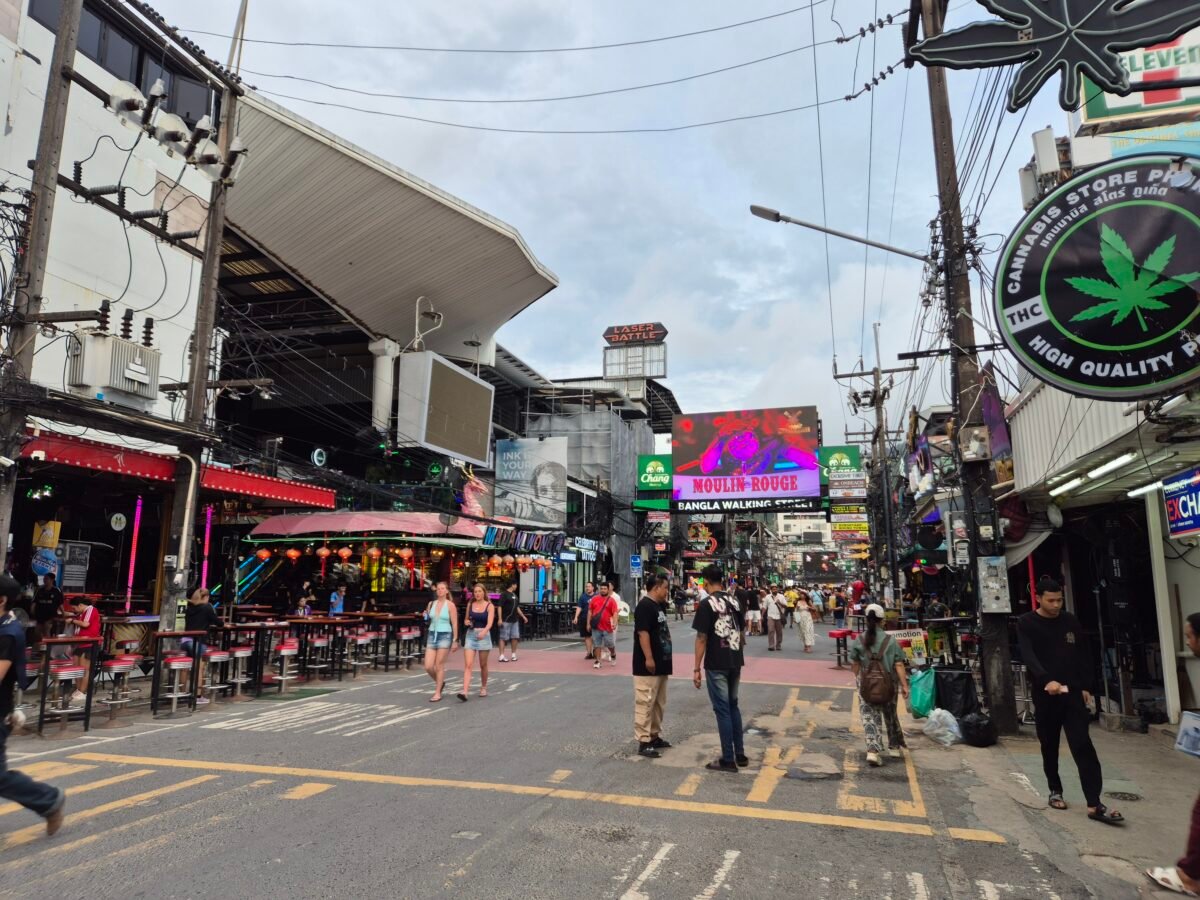
I know this because I lived it. Years ago, I spent seven days in Phuket entirely in Patong, and it left a genuinely bad taste. Even away from Bangla Road at night, Patong itself stays crowded — the beach, the streets, the whole area sits under constant pressure from tourist volume and pavements too narrow to absorb it. What troubled me most wasn’t the crowding, though. It was watching young women positioned, casually and without question, as part of the landscape of consumption that the Bangla strip runs on. That’s not something I want to normalise by softening it, and nothing about revisiting the island this year has changed how I see it.
For a long time, I was adamant I would never return to Phuket. I didn’t want my money supporting an industry built around Bangla Road, and staying away felt like the only honest response I had. Eventually, though, I decided the island deserved another look, and that decision is what brought me back this time.
I came back with a different plan: four hotels across three areas, including a second stay in Patong to see if my read on it would change. Twelve nights later, my read on Patong hasn’t moved. My read on Phuket has, completely. It was never going to offer the kind of effortless alignment I found in Chiang Mai — I wrote about exactly what that felt like in Why Chiang Mai Is the Best First Stop in Thailand for Solo Women. Getting Phuket right takes real discernment. That doesn’t make it not worth doing.
Why Patong still gets a no
For my return trip to Patong, I decided to make Grand Mercure Patong my base for three nights. It sits back from the beach itself, closer to Patong’s restaurant and shopping streets than the sand, and the upgrade to a pool-access room — balcony opening straight onto the pool — was a genuine treat. Dinner one night was a whole steamed seabass, a five-minute walk from the hotel, for around AUD20 — the kind of price you simply can’t get back home.
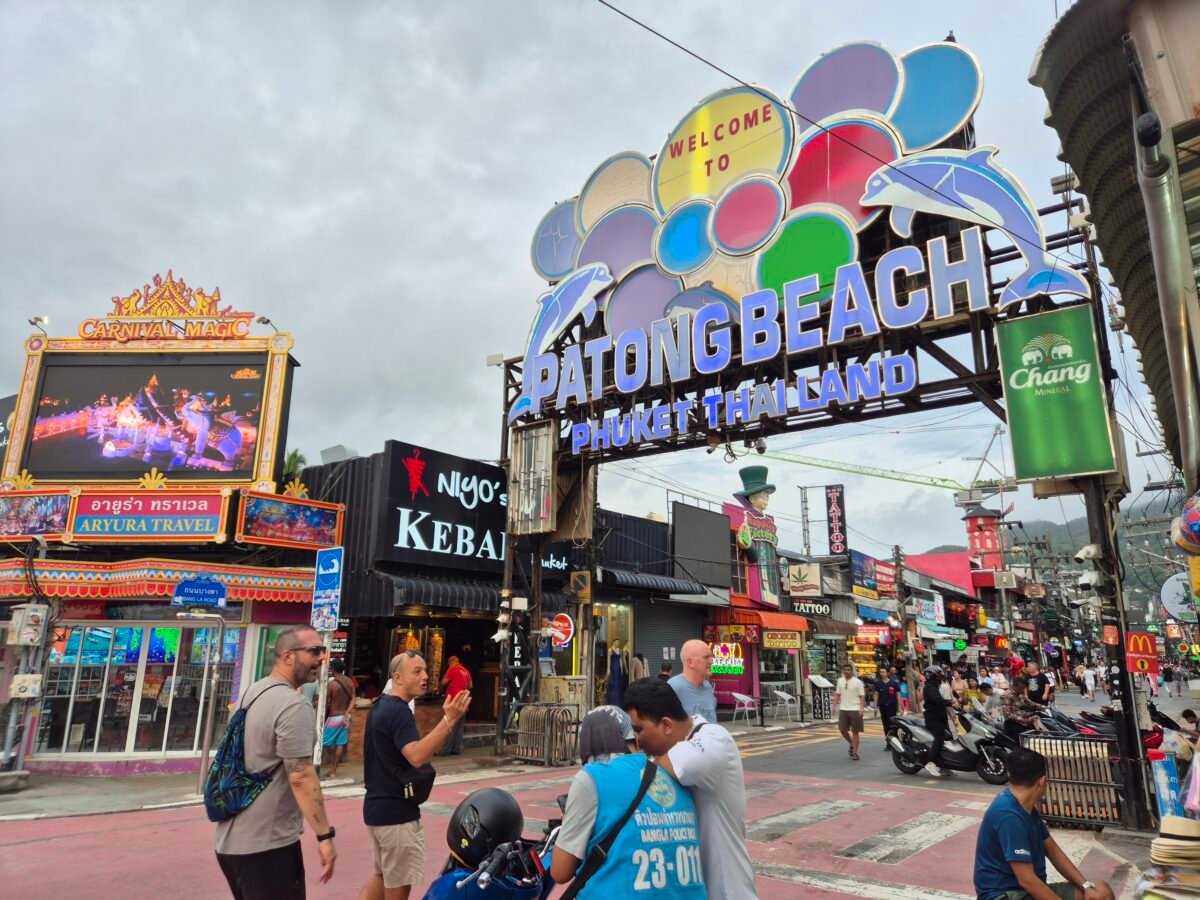
None of that changes the answer, because the hotel was never the problem. Most Western travellers come to Thailand’s beaches for one thing: a good beach, and Patong’s is too crowded and too busy to deliver that, regardless of how well the hotel performs. One evening after dinner, I walked down to Patong Beach and back through Bangla Road to the hotel. It was still fairly early, and the seedy side of the strip hadn’t come out in full yet. In a way, I was glad not to have to witness it again. The hotel is worth returning to. The beach and the strip are not.
A second Patong stay, at Andaman Beach Hotel Phuket, further north and away from the main Patong strip and Bangla Road, came with a genuinely good view and a quieter feel than the strip. I was upgraded to a suite. But the hotel was built into the hillside, and getting to dinner meant calling a hotel buggy every time. A good room doesn’t fix a bad location.
Where Phuket actually works
Karon Beach
I made Avista Grande Karon Resort & Spa Phuket my three-night base for Karon Beach. It was the most expensive hotel across my twelve nights in Phuket, and it gave me the most back in return. The upgrade to a seaview room brought magnificent sunsets every night from a large balcony built for exactly that, alongside an impressively large pool and a restaurant with a genuinely large choice of quality food.
The welcome amenities were more extensive than many Accor hotels I’ve stayed at in Bangkok, and two free welcome drinks came on top of my own Accor Explore welcome drink — three different cocktails across three nights, all on the house. I had Accor Explorer dining vouchers to use up, so I ate at the hotel every night rather than going out or ordering Grab takeout.
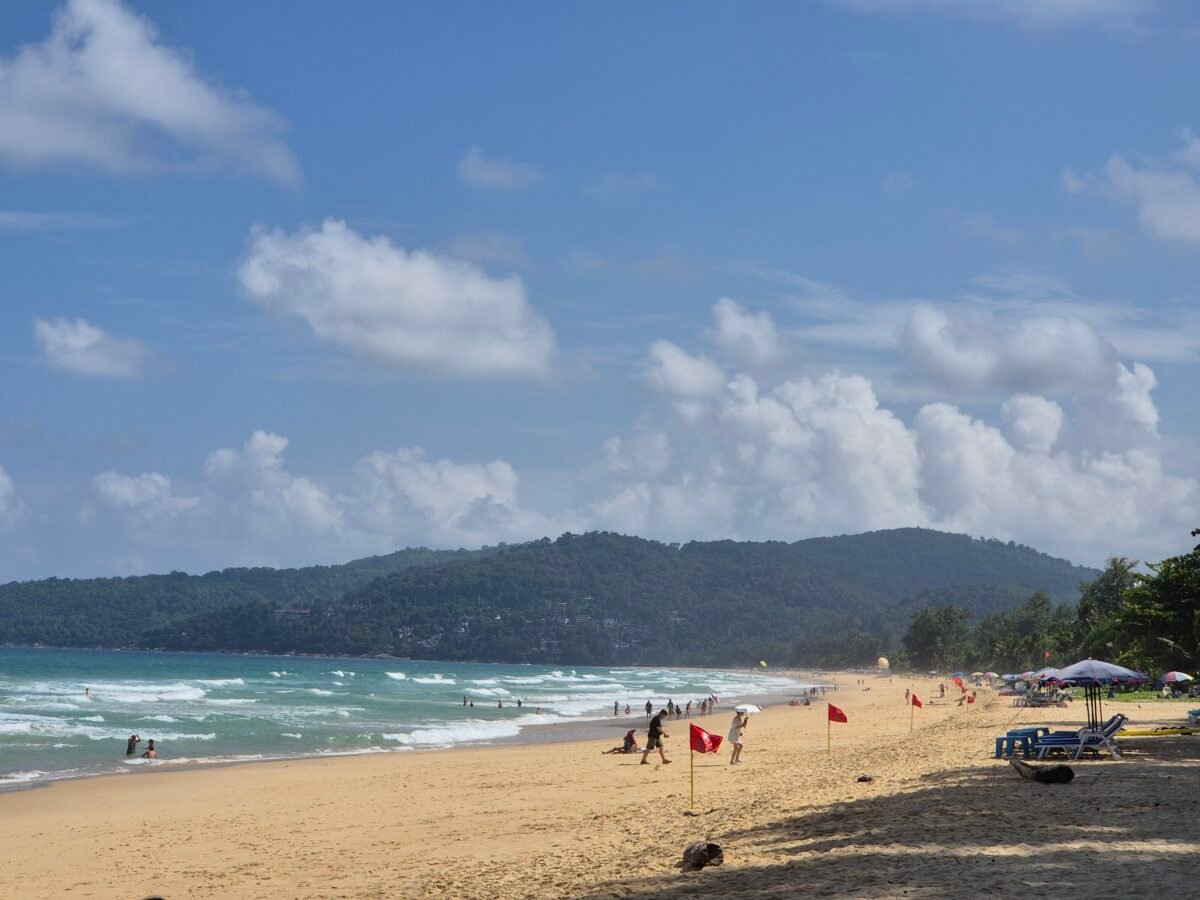
The beach itself meant a short walk from the hotel, across a quiet road, no direct beachfront required. Making that walk for the first time, I felt something sharper than relief: I could breathe. The pavements were wider here than anywhere else I stayed, easy to cross without threading through traffic, and the beach at the end of it turned out to be the best one I saw all trip. Karon’s town centre has real character too, worth a slow look on foot rather than a drive-through. If I sent one reader to one base in Phuket, this is where I would send her first.
Kamala Beach
I made Novotel Phuket Kamala Beach my base for three nights, to see what Kamala had to offer on its own terms. I was upgraded to a suite overlooking the beach, and the hotel’s direct beach access turned out to be a real plus — no road to cross, no gap between the lobby and the sand. Novotel sits at the northern end of Kamala, and it’s an easy walk down the full length of the beach to the small town centre.
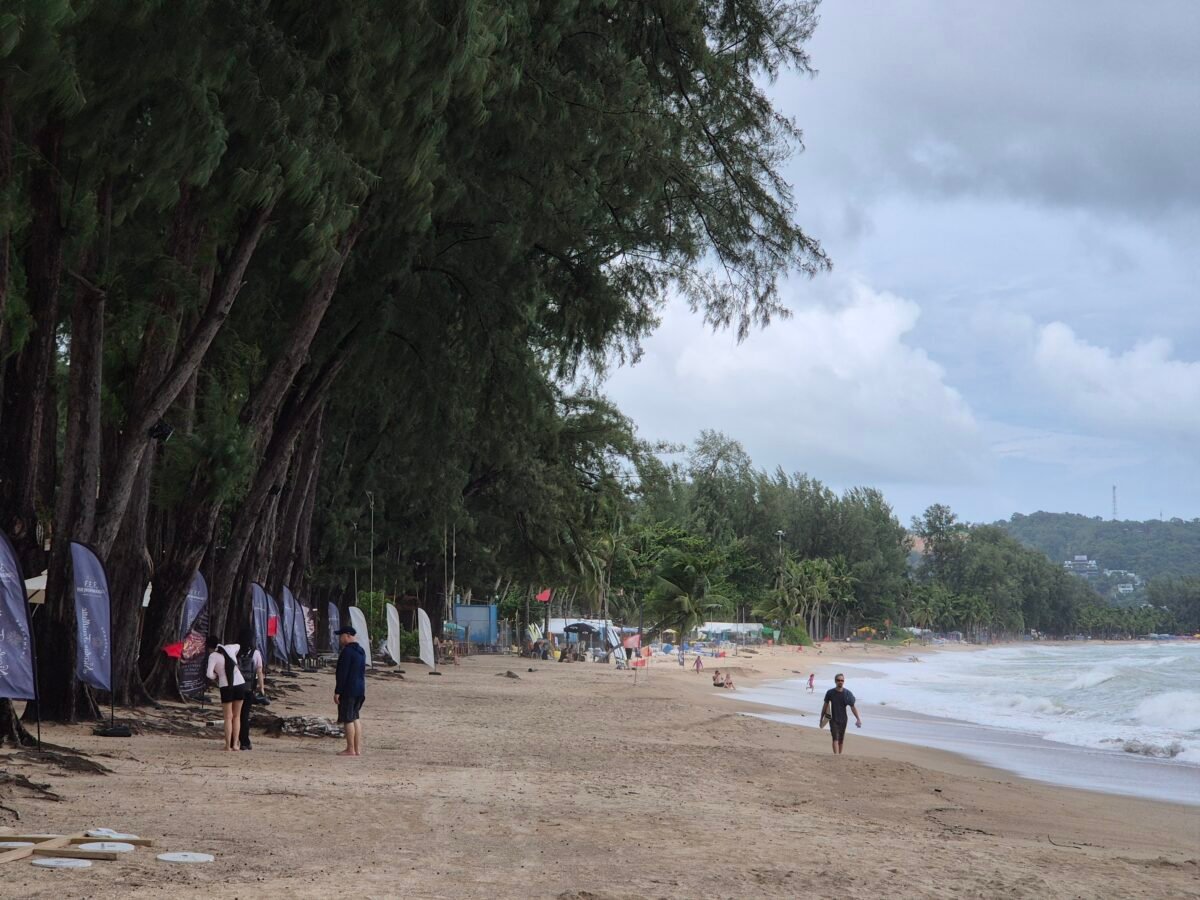
The town itself felt rougher around the edges than Karon’s town centre, less polished, less built out for tourists. Even so, I liked Kamala and its sense of seclusion. The waves were strong while I was there, and that’s a monsoon-season pattern. If a beach right outside your room matters more to you than anything else, this is where I’d point you.
The season question
Before this trip, I expected the wet season to mean lost days. Twelve nights into this trip, with only the first two spent under genuine rain, that assumption didn’t hold. The real trade-off in low season turns out to be smaller crowds and lower prices, not unreliable weather, set against currents that run stronger than they do in the calmer months. Respect the red flags and check conditions before swimming; that’s a safety note, not a seasonal write-off.
High season, by contrast, buys dependable calm seas at a price that climbs hard over Christmas and New Year. I skip Thailand’s high season entirely now and spend that window in Vietnam instead — I’ve written in detail about how I plan those trips region by region in Planning a Trip to Vietnam? Start With the Region, Not the Circuit.
| Season | Months | Conditions & Crowds |
| High / Dry | December – February | Driest weather, calmest seas. Busiest and most expensive, especially around the holidays. |
| Shoulder / Hot | March – April | Hot and dry with calm seas. Crowds and prices begin to ease (excluding the mid-April Songkran spike). |
| Early Wet | May – June | Rain increases, seas begin roughening. Crowds and prices drop rapidly. |
| Full Wet | July – August | Rain arrives in short bursts. Strong currents, quiet beaches, and low prices. |
| Peak Wet | September – October | The wettest, roughest months. Absolute quietest beaches and lowest rates. Strongest currents. |
| Transition | November | Shifting back to the dry season. Seas calm down and crowds begin to build. |
The scale of it
To truly understand why you can’t judge this island by Bangla Road, you have to look at its sheer scale. Phuket isn’t a small beach outpost; it is a massive, thriving province that operates as Thailand’s second-largest tourism hub after Bangkok. It welcomes close to 9.9 million visitors a year, handling nearly 20 million airport passengers in 2024 alone.
When a destination operates on that kind of macro-level, it naturally fragments into completely different ecosystems. Patong is just one highly commercialized grid. The rest of the island has the space, infrastructure, and geographical diversity to offer something entirely different.
To put that scale into perspective against the rest of the region:
| Thai island | Visitors (most recent full year) |
| Phuket | ~9.9 million |
| Koh Samui | ~2.78 million (airport arrivals, 2024) |
| Krabi’s islands (Koh Phi Phi, Ao Nang) | ~1.8–2 million |
| Koh Phangan | ~458,000 |
Set against the rest of the Southeast Asia region, the picture holds just as clearly:
| Islands in Southeast Asian Countries | Visitors (most recent full year) |
| Phuket, Thailand | ~9.9 million |
| Phu Quoc, Vietnam | ~8.1 million (1.8M international) |
| Bali, Indonesia | ~6.95 million international |
| Langkawi, Malaysia | ~2.9–3.5 million |
Getting In, Getting Around
None of what follows is incidental. It’s the same system I use to design every trip like this one: strip out the parts that cost you a day, and use whatever status leverage you’ve built to do it.
Arriving
Phuket International Airport sits at the island’s northern tip, well away from where most visitors actually stay. By private car, Kamala runs roughly 30 to 40 minutes, Patong 45 to 60, and Karon 50 to 70 — longer with traffic. Worth building into your plans, because the airport is not the quick in-and-out its size might suggest.
Long-haul makes this worse before it gets better. Flying Melbourne to Phuket on that first trip was genuinely gruelling — a full day of flying and airport waiting, a transfer at BKK, and then a long car ride from Phuket’s airport into Patong on top of it all. We didn’t reach the hotel until late into the night. I wouldn’t recommend that route to anyone. If you’re coming from further afield, it’s worth considering an overnight stay near Bangkok’s airport and taking the connecting flight the next day, rather than pushing straight through on no sleep — the logic is the same one I laid out in Why Your Arrival Time Matters More Than Flight Length.
For the Bangkok-to-Phuket leg itself, I deliberately choose to fly out of Don Mueang (DMK) rather than Suvarnabhumi (BKK). While I normally avoid budget carriers as they don’t earn me any frequent flyer miles, DMK is significantly less crowded, far more manageable, and much faster to navigate for a short domestic hop. Choosing the smaller airport means stepping down to a low-cost airline for an hour, but it removes a massive amount of transit friction from the day—a trade-off that is absolutely worth it.
Getting Around
I pre-booked a private car transfer from the airport to my first hotel, on Kamala Beach. For my next trip, I’d probably just call a Grab from the airport instead — it’s not crowded, and the walk to the pickup point looks easy enough, at least going by the app. For every hotel-to-hotel move across the twelve nights, including the final transfer back to the airport for my flight out, I called a Grab.
Travelling Light
This trip, I also did something I couldn’t have done as a casual visitor. I left my 22kg suitcase at Grand Mercure Bangkok Atrium, where they put it into storage, and travelled to Phuket with just a 7kg backpack for the twelve nights. I’ll return to that same hotel for another two weeks before I leave Thailand, and the case will be waiting for me. That kind of flexibility is one of the quieter benefits of Accor status, and it’s part of a broader system I’ve written about in Why I Sold My House and Live In Hotels Instead.
| Decision point | My approach | Why |
| Bangkok airport (connecting) | Fly via Don Mueang (DMK), not Suvarnabhumi (BKK) | Significantly less crowded and faster to navigate than BKK for a short flight. |
| Long-haul arrival | Overnight near Bangkok’s airport, connect the next day | Avoids pushing straight through a travel day on no sleep |
| First airport transfer | Pre-booked private car | Certainty on arrival after a long flight |
| Every transfer after that | Grab — hotel to hotel, and back to the airport | Reliable, affordable, no pre-booking needed |
| Luggage | Store the heavy case at an Accor hotel, travel light between islands | Status-driven flexibility — a 7kg backpack moves a lot easier than a 22kg case |
Twelve Nights Later
Twelve nights and four hotels later, this was worth doing. I came back to give Phuket another chance, and it worked — even though Patong itself didn’t change my mind, twice over. It earned its bad reputation, and I’m not walking that back. Phuket earned something else entirely: real time spent in more than one part of the island. Yes, I would return to Phuket. Next time, though, I won’t bother with Patong at all. I’ll spend those nights seeing the rest of what the island has to offer instead.
If you’re planning your first trip to Phuket, don’t ask whether Phuket is worth visiting. Ask where in Phuket you’ll stay. Those are two very different questions—and the answer determines whether you’ll leave loving the island or wondering what everyone else sees in it.
Travel Logistics Planner
A simple framework for thinking through the logistical side of travel — flights, entry requirements, accommodation and transfers — before the journey begins.
Delivered instantly. Occasional thoughtful updates from the road.