
Most booking platforms train you to optimise the wrong variable. Price is highlighted. Flight duration is bold. The number of stops is displayed prominently. Arrival time appears almost as an afterthought — a detail to note rather than a condition that will shape the first two days of your trip. In reality, arrival time matters far more than most travellers realise, because the hour you land determines how easily you orient yourself, how well you sleep that first night, and how steadily the trip begins.
For years, I treated arrival hour as a by-product of routing. If the flight was affordable and the duration reasonable, I accepted the landing time that came with it. Over time, however, I began to notice a pattern: the arrival hour was shaping the tone of my trips far more than the number of hours spent in the air.
Flight length determines how long you sit in transit. Arrival timing determines how you begin. And beginnings matter.
This does not mean every itinerary can be designed around a perfect afternoon landing. Airline networks, award availability, geography, and pricing often remove that option entirely.
The point is not perfection. The point is understanding that arrival timing carries consequences. Once you recognise that, you can make more deliberate choices about routing, stopovers, and how you structure the first evening when the ideal window is unavailable.
The Illusion of “Shorter Is Better”
Flight Duration Is a Visible Metric
We instinctively gravitate toward shorter flights because duration feels measurable. Six hours feels better than nine. A direct route feels superior to a connection. These are clean comparisons, easy to justify.
But flight time ends when the wheels touch the runway. The trip does not.
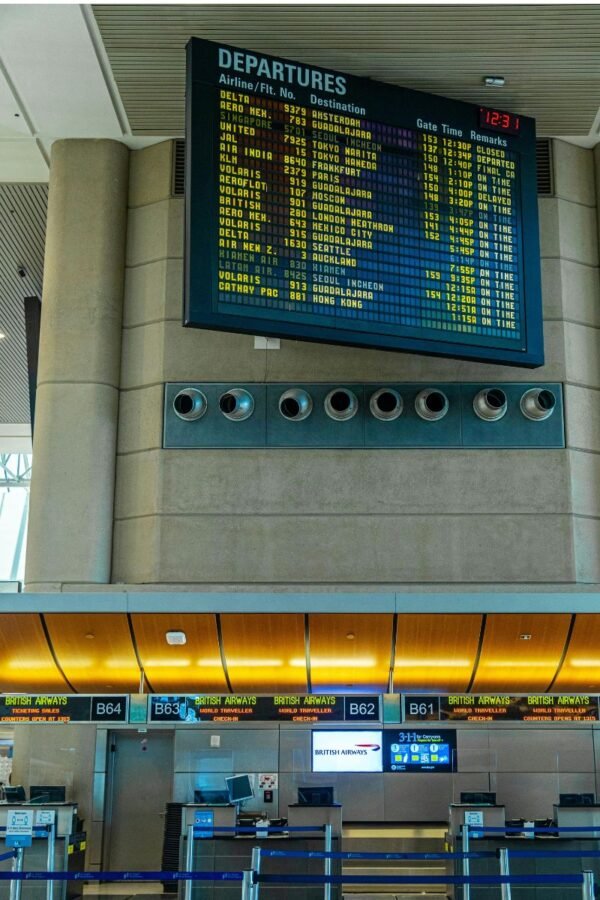
Arrival hour rarely receives the same scrutiny. We assume we will “manage” a late landing. We tell ourselves that one tired evening is a minor inconvenience. We focus on efficiency in the air rather than clarity on the ground.
What I have learned is that the arrival hour is not a minor detail. It is the structural hinge on which the first two days turn.
A five-hour direct flight that lands at 11:45 p.m. may appear efficient on paper. In practice, that arrival compresses immigration processing, luggage collection, transport decisions, and accommodation check-in into a period when your cognitive resources are already depleted.
Efficiency is not measured only in airborne hours. It is measured in how cleanly you transition into the next environment.
Arrival Timing Determines Your Cognitive State
Decision Density Peaks on Arrival
Arrival is the moment when you move from passive transport to active navigation. You are required to interpret signage, respond to immigration questions, retrieve luggage, secure transport, and orient yourself in a new environment.
In The First 24 Hours of Solo Travel: Where Most Mistakes Happen, I explore how decision density concentrates in this window. What becomes clear over time is that the hour at which you land dramatically alters how well you handle that density.
Daylight Preserves Orientation
Daylight arrival provides visual context. Streets are active. Public transport runs at full frequency. Information desks are staffed. Hotel reception teams are alert and fully operational. Even small uncertainties feel manageable because the environment itself is functioning at full capacity.
Natural light also affects internal perception. You are more likely to read a city accurately when you can see it clearly.
Night Arrivals Narrow Margin for Error
Late-night arrivals reduce environmental redundancy. Transport layers thin. Staff numbers decline. Streets quieten. Even in structurally safe cities, darkness amplifies ambiguity.
The issue is not fear. It is margin. At night, there is less slack in the system. A missed train has fewer alternatives. A closed counter has no substitute. A misread instruction requires more effort to correct.
The hour of arrival shapes how forgiving the system is.
The Hidden Cost of Late Arrivals
Fragmented Sleep on Night One
A midnight arrival rarely results in immediate rest. Adrenaline lingers. You are unfamiliar with the room layout. Your body clock may be misaligned. Even if you fall asleep quickly, the quality of sleep is often shallow.
The consequence is not just one tired morning. It is diminished clarity during orientation hours.
The “Lost First Morning” Effect
A poorly designed arrival often results in a sluggish first morning. You wake later than intended. Breakfast feels rushed or skipped. Administrative tasks — SIM cards, cash withdrawal, transport cards — are delayed.

Instead of beginning with deliberate exploration, you begin with recovery.
But the impact runs deeper than a slower start. The first morning of a trip is when you establish your internal relationship with a place. It is when you gauge how the streets feel, how far things are in reality compared to a map, how your body responds to the climate, how quickly you tire, how crowded public spaces become at certain hours. That orientation period quietly shapes every pacing decision that follows.
When arrival has been poorly timed, that first morning often becomes reactive rather than observant. You may oversleep because your body is still unwinding. You may skip breakfast because you feel slightly unsettled. You may postpone small administrative tasks because they feel heavier than they should. The day begins not with curiosity but with recalibration. And recalibration consumes energy.
By the time you are ready to “start properly,” the city is already in full swing — hotter, louder, busier. What could have been a measured introduction becomes an adjustment under pressure. You may compensate by doing more than you intended, or by retreating too quickly, misreading your own capacity because it was influenced by fatigue rather than by the city itself.
That lost morning is rarely recaptured. Even if the schedule looks flexible, the psychological tone has shifted. The trip begins slightly out of alignment, and subtle misalignments accumulate.
Momentum Is Harder to Rebuild Than It Is to Preserve
Travel momentum is subtle. When preserved, it feels natural. When disrupted, it requires effort to restore. Poor arrival timing operates similarly. It does not destroy a trip, but it complicates its rhythm. Maintaining momentum is easier than reconstructing it.
Arrival Timing and Hotel Ecosystems
Early Afternoon Arrivals Align With Hotel Systems
Most hotel systems are built around early afternoon arrivals. Rooms are ready or nearly ready. Luggage can be held securely. Lounge access may be available. Staff are operating within full shift strength.
Arriving during this window means stepping into a stable system.
Elite Recognition Changes the Arrival Experience
When you operate within a hotel ecosystem, recognition layers further stability. Early check-in, room upgrades, lounge access, and streamlined processing reduce friction at the precise moment it matters most.
This is not indulgence. It is structural support. I explore this in depth in Why I Sold My House and Live In Hotels Instead, because accommodation stability and arrival timing reinforce each other.
Midnight Arrivals Remove Those Structural Supports
Arriving at midnight often means bypassing these advantages. Lounge access is closed. Upgrade discussions are deferred. Orientation support is limited. Even when the hotel operates efficiently, the systemic alignment is weaker.
Arrival timing determines whether you enter a system at its strongest point or its thinnest.
When a Longer Routing Is Structurally Better
Choosing a Daytime Arrival Over a Direct Midnight Arrival
There are times when I deliberately choose a longer routing — sometimes adding a connection or even breaking the journey overnight — if it allows me to land at 1:00 p.m. rather than 11:00 p.m. The difference between those two arrival windows is not one hour in transit; it is an entirely different starting point. An afternoon arrival means open transport systems, fully staffed hotels, natural light for orientation, and a realistic chance of sleeping properly that first night.
A midnight arrival compresses immigration, transfer logistics, check-in formalities, and recovery into a narrow window when your clarity is already compromised. When framed this way, the extra transit time is rarely a loss. It is a structural investment in stability.
Strategic Stopovers as Stabilisation
If a direct routing forces an awkward landing time, I will consider breaking the journey. A short stabilising stopover can transform a compressed arrival into a deliberate one. Instead of stepping into a new environment already depleted, the journey becomes segmented into manageable phases. A night in a transit city allows the body to reset, the mind to regain clarity, and the following flight to feel like a fresh departure rather than the final stretch of exhaustion.
The goal is not leisure in transit. It is preserving clarity at destination. Even a brief overnight pause can prevent the cascade of fatigue that often accompanies late-night arrivals. What looks like an interruption in the itinerary often functions as structural protection for the days that follow.
Protecting Energy for the Destination
Travel is not about minimising airborne minutes. It is about preserving cognitive resources for the place you came to experience. The hours spent in the air are rarely the part of the journey that requires judgement. The moments that demand clarity occur after landing — when you must interpret a new environment, make decisions, and begin orienting yourself within it.
An efficient flight that undermines your first two days is not efficient at all. Efficiency in travel is not measured only by duration; it is measured by how well your energy survives the transition from movement into place. Protecting that energy ensures that the destination — not the journey itself — remains the centre of the experience.
Arrival Timing and City Type
High-Infrastructure Cities
In cities with strong public transport networks, clear signage, and 24-hour services, late arrivals are more manageable. The system contains redundancy. Mistakes are easier to correct.
In these environments, there are layers of support built into the system. If you miss one train, another follows shortly after. If you misread an exit, signage is usually clear enough to reorient without stress. If you arrive tired, the infrastructure absorbs some of that fatigue for you because it is predictable and consistent.
That predictability lowers cognitive load. It allows you to arrive late without feeling immediately exposed.
Low-Infrastructure or High-Sensory Cities
In destinations where traffic is chaotic, pavements uneven, signage inconsistent, and transport layered, arrival timing becomes more consequential. Daylight provides orientation. Full operating hours provide alternatives.
In these environments, you are often interpreting rather than following. You are reading informal signals — how vehicles move, how pedestrians flow, where it is safe to cross, where ride-share pickups actually occur. Terrain may require physical effort. Traffic patterns may not follow the logic you are used to. Public transport may exist but require more active negotiation.
At night, those interpretive demands intensify. Visual cues are reduced. Support staff are fewer. The city may not feel unsafe, but it may feel ambiguous. Ambiguity increases cognitive strain, especially when combined with fatigue.
The same arrival hour does not produce the same outcome in every city. Infrastructure literacy matters. Arrival timing is not about preference; it is about matching your energy state to the structural complexity of the environment you are entering.
Designing Arrival Backwards
Most flight searches begin with a filter for price or duration. The system invites you to optimise the airborne portion of the journey first: the cheapest ticket, the shortest total travel time, the routing with the fewest hours in transit.

Yet when you travel alone — especially across unfamiliar cities and languages — the part that most determines how the trip begins is not the flight itself, but the moment you step into the arrivals hall. Designing the journey backwards simply means beginning with that moment.
Instead of asking which fare is cheapest, begin with a different question: When do I want to land?
For most solo travellers, the most stable arrival window sits somewhere in the early afternoon. By that time the airport is fully operational, transport systems are running normally, and hotel front desks are staffed. You are also arriving while the city is still clearly awake. Streets are active, shops are open, and daylight provides orientation while you move through unfamiliar surroundings.
Defining this window first changes the way you look at flights. Rather than scrolling through pages of fares hoping to find something acceptable, you are evaluating whether a particular routing delivers you into that arrival window or not. The arrival hour becomes the fixed point around which the rest of the journey is organised.
Then Choose the Routing
Once the arrival window is established, the flight search becomes far simpler. Instead of optimising for the air, you are optimising for the transition into the destination.
A routing that lands at the right hour may involve a slightly longer connection or a departure that is not the absolute cheapest option on the screen. Yet what you gain is something far more valuable: a predictable landing moment. Immigration queues are manageable. Airport transport options are functioning normally. Hotel check-in is either available or close enough that luggage storage is straightforward.
When the arrival time is stable, the rest of the logistics begin to fall into place almost automatically.
Accept That “Efficient” Isn’t Always Effective
Flight search engines reward efficiency in narrow terms: fewer hours in transit, lower ticket prices, tighter connections. But the most efficient routing on paper often creates the most fragile arrival in practice.
Landing at midnight after a supposedly “efficient” itinerary compresses every decision that follows. You step into a city that is already winding down. Transport options narrow. Fatigue accumulates. Every small logistical choice suddenly requires far more effort than it would have earlier in the day.
Designing the arrival backwards recognises that the flight is only one segment of a much longer chain. What matters is not how elegantly the airborne portion is optimised, but how smoothly the entire arc of the journey unfolds from touchdown to hotel room.
When the arrival moment is designed deliberately, the rest of the trip begins with a sense of continuity rather than recovery. The first day does not feel like something to survive. It simply becomes the beginning of the experience.
What Good Arrival Timing Actually Buys You
When arrival is designed deliberately, the benefits are not dramatic in isolation. No single element feels revolutionary. What changes instead is the tone of the first hours. Small frictions disappear, and with them the subtle sense that the trip has begun under pressure. What replaces that pressure is something quieter: a feeling that the environment is understandable and that you have entered it at the right moment.
Immediate Orientation
Arriving during daylight changes how quickly the mind can map a new place. Light provides context. You see the shape of the streets outside the terminal, the scale of the buildings, the flow of traffic, the rhythm of pedestrians moving through their ordinary routines.
Even small observations matter. You notice where taxis queue, where buses stop, how people cross intersections, which directions feel busier and which streets quieten as they move away from the centre. None of this requires conscious effort. Orientation begins to form almost automatically because the environment is visible and active.
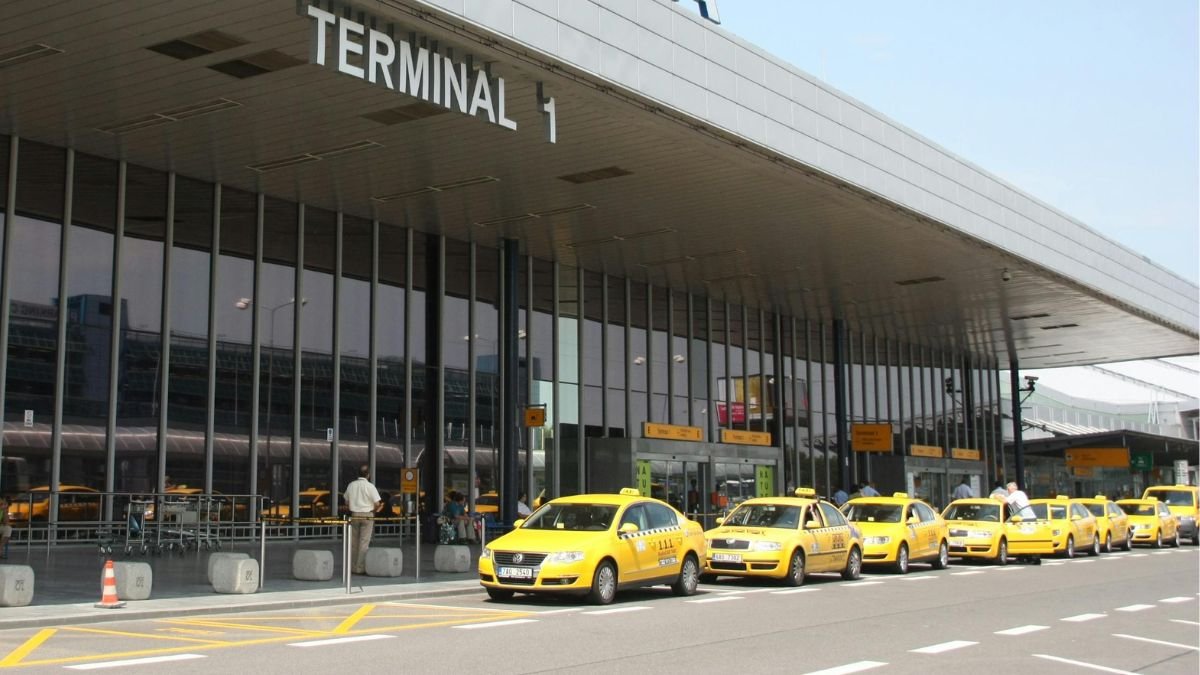
When arrival happens late at night, this process often stalls. The city is present but partially withdrawn. Shops are shuttered, transport frequency thins, and the streets hold fewer cues about how the place normally functions. What should be the beginning of familiarity instead becomes a temporary suspension of understanding.
Calm First Evening
A well-timed arrival allows the first evening to unfold gently rather than urgently. By the time you reach your accommodation, the logistical portion of the day has already concluded. There is no need to rush through remaining tasks before services close or before exhaustion overwhelms whatever energy remains.
Instead, the evening becomes observational. You step outside, walk a few nearby streets, perhaps sit in a café or order a simple meal. The point is not productivity. It is exposure — allowing the senses to register the atmosphere of the place without pressure to interpret it immediately.
This quiet wandering does something subtle. It signals to the mind that the trip has begun in stability rather than strain. Sleep arrives more naturally when the nervous system has not spent the evening negotiating uncertainty.
Preserved Momentum
The following morning then begins from a different baseline. Instead of waking with the residual fatigue of a difficult arrival, you wake with the sense that the environment has already begun to make sense.
You recognise the street outside the hotel. You know where a café or convenience store sits nearby. Even small fragments of familiarity reduce the mental cost of the next decisions. The day begins with forward movement rather than recovery.
Momentum in travel is fragile. Once lost, it can take several days to rebuild. A well-timed arrival protects that early momentum when it matters most.
Better Decision Quality
The first decisions of a trip often establish the pattern for those that follow. When early choices are made under fatigue or time pressure, the mind tends to remain in that compressed mode — reacting quickly, solving problems as they appear, and accepting suboptimal outcomes simply to keep moving.
By contrast, when the arrival unfolds calmly, the first decisions are made with clarity. You choose where to eat, how far to walk, or whether to explore further with a steadier mind. Those small decisions reinforce a different rhythm — one where observation precedes action.
Over the course of a trip, that difference compounds. Travel begins to feel less like a sequence of logistical tasks and more like a gradual process of entering the life of a place. Good arrival timing does not guarantee a perfect trip. What it does provide is the quiet advantage of beginning well.
In practice, many travellers will not always be able to choose the ideal arrival window. Some routes only land late. Some redemptions are too valuable to ignore. Some itineraries are shaped by airline schedules rather than personal preference. When that happens, the question shifts. Instead of asking whether the arrival hour is ideal, the more useful question becomes how to reduce the strain of a non-ideal arrival.
Discernment — When Late Arrivals Are Acceptable
Arrival timing is not a rigid rule. It is a judgement about how much uncertainty the environment will ask you to absorb at the moment you arrive. There are circumstances where a late landing carries very little risk because the surrounding systems are already familiar or designed to function predictably at any hour. Discernment lies in recognising when the environment can carry the weight of a late arrival — and when it cannot.
Returning to a Familiar City
When you already understand a city, the arrival experience changes dramatically. The environment no longer needs to be interpreted from scratch. You know how the airport connects to the city. You recognise the transport options without needing to compare them. Even small details — which exit to take, where taxis queue, how ticket machines operate — are already stored somewhere in memory.
Because of that familiarity, the mind is not trying to process new information while simultaneously navigating fatigue. You are simply repeating a sequence you have already performed before. The journey from airport to hotel becomes procedural rather than exploratory.
In those circumstances, a late arrival rarely carries the same cognitive weight. You are not trying to orient yourself to a new place while tired. You are simply returning to a system you already understand.
Airport Hotels With Guaranteed Late Check-In
Late arrivals also become manageable when the arrival chain itself is deliberately simplified. An airport hotel connected directly to the terminal — or reachable through a short, clearly marked transfer — removes most of the uncertainty that normally accompanies nighttime landings.
Instead of navigating unfamiliar transport networks or negotiating with taxi drivers after midnight, the transition becomes mechanical. You clear immigration, collect luggage, follow signage, and arrive at a front desk that is expecting you regardless of the hour.
The difference is not merely logistical. Knowing that the final step of the journey is guaranteed removes a large portion of the mental load that accumulates during long travel days. The mind does not remain in problem-solving mode. It can begin to relax because the final transition is already secure.
When Infrastructure Is Highly Predictable
Some environments are simply designed to absorb late arrivals without strain. Airports connect directly to efficient rail systems. Taxis are regulated and clearly organised. Public transport continues operating at predictable intervals even late into the night. Hotels maintain staffed front desks around the clock.
In these places, the systems themselves carry much of the burden that would otherwise fall on the traveller. Even if you arrive tired, the environment offers clear instructions about what to do next. Movement through the arrival process feels orderly rather than improvised.
The key is not assuming that every destination functions this way. It is recognising which environments are stable enough to support a late landing and which ones will amplify uncertainty when the hour is late and energy is already depleted.
Discernment simply means adjusting the arrival strategy to the environment rather than forcing the same pattern everywhere. When the systems are strong and familiar, late arrivals can be entirely manageable. When they are not, the cost of landing at the wrong hour becomes far more visible in the first fragile hours of a trip.
If You Cannot Avoid a Late Arrival
Sometimes the itinerary simply lands when it lands. Long-haul routes often arrive late in the evening, and the most practical flight may still place you in the city well after dark. In those situations the objective changes slightly. Instead of designing the arrival window, the focus becomes reducing the number of decisions required once you land.
One of the simplest stabilisers is removing as many arrival tasks as possible before departure. Install your eSIM in advance. Save the exact hotel address in your phone. Screenshot transport instructions in case connectivity is slow. Small administrative decisions made at home prevent cognitive stacking when fatigue is highest.
The second stabiliser is simplicity of transfer. When arriving late, the most direct route to your accommodation is usually the best one, even if it costs slightly more. A single pre-booked transfer or a straightforward ride-share pickup reduces negotiation, navigation, and uncertainty during the most depleted moment of the journey.
Finally, treat the first evening as purely functional rather than exploratory. The goal is not to begin discovering the city immediately. The goal is simply to reach the room, settle in, and sleep. Exploration can wait until the following morning when the environment is visible and your energy has reset.
A late arrival does not ruin a trip. It simply requires a different kind of design — one that protects clarity and conserves energy until the destination can be properly experienced the next day.
The Through-Line
Flight length ends when the aircraft door opens. Arrival timing, however, continues to shape the experience long after you have collected your luggage and stepped outside.
The hour at which you land influences how clearly you read a new environment, how well you sleep that first night, and how steadily your momentum builds over the following days. Arrival timing is one of the foundational elements of travel comfort and pacing, because the conditions under which you begin a trip often determine how sustainable the following days will feel.

An arrival aligned with daylight and functioning infrastructure gives you space to orient yourself without haste. It allows your first impressions to form from observation rather than exhaustion. It gives your nervous system time to settle before decisions begin stacking.
When arrival timing is treated as a deliberate design choice rather than an incidental outcome of ticket pricing, the entire trip feels more coherent. The first evening becomes transitional rather than turbulent. The first morning begins with clarity rather than recovery. Subsequent decisions are made from steadiness rather than depletion.
Flight duration measures how long you were in motion. Arrival timing determines how well you begin.
And how you begin has a way of echoing through everything that follows.
Travel Logistics Planner
A simple framework for thinking through the logistical side of travel — flights, entry requirements, accommodation and transfers — before the journey begins.
Delivered instantly. Occasional thoughtful updates from the road.