
When a trip feels exhausting, most people blame the travel days — the flights, the train hours, the distance covered. But in practice, long travel days are rarely the problem. It is what happens in between them that quietly drains you. Distance is easy to see and straightforward to measure, which makes it a convenient explanation. Over time, a different pattern becomes obvious: it is not distance itself that depletes you, it is the number of times you reset your environment and your accommodation.
Before you even begin planning your travel itinerary, understanding where fatigue actually accumulates can reshape every decision you make about where to stay and for how long. Constant accommodation changes create a cycle of micro-disruption — packing, reorienting, reassessing, rebuilding routine — that quietly consumes far more energy than a well-structured inter-city journey ever does.
This article is not about slow travel as an ideology. Instead, it is about recognising where the real energy costs hide, and why stability protects your pacing more than most people realise.
Is changing accommodation often exhausting?
Changing accommodation frequently is more exhausting than most travellers expect. Each move forces a full reset — packing, navigating, reorienting, and rebuilding routine — which quietly drains energy. Long travel days are finite, but repeated accommodation changes create ongoing fatigue that accumulates across the entire trip.
The Myth That Movement Equals Fatigue
The most persistent misconception in travel planning is that distance and fatigue are directly proportional. We reach for the most visible explanation when a trip feels tiring — the flight hours logged, the kilometres covered, the connections navigated — because distance is neat, countable, and easy to point to. Travel planning platforms reinforce this thinking by highlighting routing and duration, encouraging us to optimise flight time, reduce stopovers, and shorten transit windows. As a result, distance absorbs blame that often belongs somewhere else entirely.
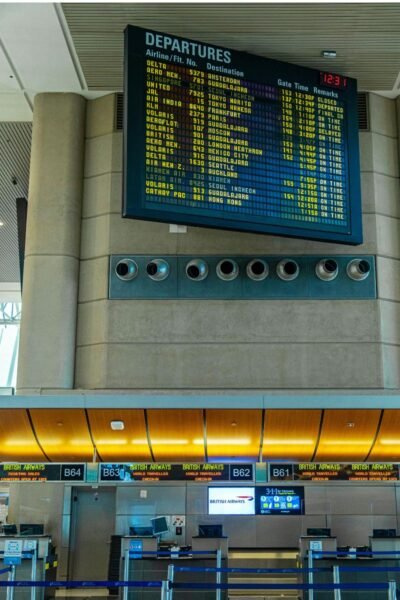
The key distinction that most itineraries fail to account for is this: distance travel is largely passive, while relocation is completely active. Once seated on a plane or a train, the system carries you. You may feel physically stiff after a long journey, but you are not making decisions or learning a new environment. You are not recalibrating your internal map of the world around you.
Relocation, by contrast, demands constant engagement. Every time you change accommodation, you reset your environment from scratch — checking out, repacking, navigating to a new neighbourhood, assessing an unfamiliar room, decoding new house rules, and adapting to a different soundscape, lighting pattern, and spatial layout. Even when the move is short, even when it is only across town, your nervous system treats it as a full reset.
Fatigue, therefore, does not come solely from kilometres travelled. It comes from how often you disrupt your own stability.
The Illusion of Variety
There is a cultural pressure in travel to see more, do more, and cover more ground, and it is this pressure that leads most people toward constant relocation in the first place. Changing neighbourhoods can feel efficient; staying two nights here, one night there, three nights somewhere else can look dynamic on an itinerary and can genuinely feel like maximising opportunity.
The reality, however, is that novelty carries a cost that rarely appears on any itinerary. Every relocation consumes orientation time — the hours spent finding your footing in a new space — that could instead have been spent observing more deeply, moving more freely, and experiencing a place with the ease that only familiarity provides.
When you stay longer in one place, something meaningfully shifts in the quality of the experience itself. You begin to recognise faces at the café. You learn the rhythm of traffic lights and the hours when the streets swell and quiet again. A shortcut emerges that you would never have discovered on a two-night stay.
Depth, in other words, begins to replace rotation, and the places you visit become genuinely known rather than merely seen. Movement feels like richness, but it can quietly hollow out the very experience it promises to deepen.
The Real Energy Cost: Environmental Reset
Understanding why stability feels so different in practice requires looking at what actually happens each time you change accommodation. A hotel check-in is never simply administrative — it is, in practice, a quiet and automatic assessment that your nervous system runs whether you invite it to or not.
You notice the tone of the lobby, register whether staff are confident or uncertain, scan the building for security cues, and orient yourself to lift placement and the flow of people through the space. Once inside the room, the assessment continues: bathroom layout, light switches, window locks, emergency exits.
This is the same pressure that shows up in The First 24 Hours of Solo Travel: Where Most Mistakes Happen — except here, it repeats again and again in smaller, less visible ways.
Beyond the administrative reset, there is the subtler and more insidious issue of subconscious vigilance. When you enter a new space, your body remains slightly alert in ways you may not consciously register. You sleep more lightly on the first night, test the door lock once more than necessary, and listen more carefully to sounds moving through the walls.
None of this is fear — it is simply adaptation, the body doing its job of assessing a new environment. The problem is that adaptation takes energy, and the more often you change accommodation, the more often you re-enter this vigilance cycle without ever allowing your nervous system to fully settle. Settling is precisely where recovery happens, and when you are constantly moving on before that settling can occur, the deficit accumulates in ways that no amount of sightseeing can offset.
The Cost of Constant Reorientation
There is also a cognitive switching cost that compounds the physical one, and it rarely gets the acknowledgement it deserves. Each relocation means relearning Wi-Fi access, locating food and water options, understanding breakfast hours, assessing laundry requirements, and rebuilding a morning rhythm from nothing.
Individually, each task is minor. Collectively, they represent a significant cognitive load repeated every few days without relief.
This is where continuity inside consistent hotel ecosystems becomes genuinely valuable — when staying within the same hotel group across multiple cities, Wi-Fi often connects automatically, routines transfer across properties, and the small points of familiarity compound into measurable ease over weeks of travel. This is not about luxury. It is about reducing switching friction, and friction, when repeated across an entire trip, is quietly exhausting in proportion to its frequency.
Packing Is Not a Neutral Activity
The physical dimension of frequent relocation is equally underestimated. Packing looks simple from the outside — folding clothes, closing a suitcase — but even mild time pressure turns it into a sequence of decisions that draw on the same cognitive reserves already worn down by constant resets. What goes in first? What needs to remain accessible? Is laundry dry? Did you check the safe?

You run this sequence every single time you move, and the physical lifting compounds the mental cost: suitcases shift your posture, require spatial awareness in transit, and demand attention at every stage of the move. When you are relocating frequently, your body is never quite at rest between one destination and the next, and the invisible tax of reorienting inside each new room — where is the kettle, which drawer did I use, what is the light switch configuration — means that the cognitive load never fully resolves either.
When you remain in one place longer, these questions simply disappear. You move through the space without thinking, reach for items automatically, and wake in the night without hesitation. That absence of micro-friction is genuinely restorative in a way that is easy to underestimate until you experience its opposite for days on end.
Why does moving hotels feel so tiring?
Moving hotels feels tiring because it combines physical effort with constant cognitive resets. Every new space requires you to reassess layout, routines, and surroundings while making small decisions repeatedly. This ongoing switching cost prevents your energy from stabilising, making even short moves feel more draining than expected.
The Base Camp Approach: A Better Model
The most effective alternative to constant relocation is not slow travel in the ideological sense — it is the deliberate use of a stable base from which to explore outward. The difference in experience is profound, and it resolves the tension between wanting to cover ground and needing to preserve energy simultaneously.
What Stability Looks Like in Practice
My time based in Hiroshima illustrated this clearly. Rather than moving accommodation every two or three nights along the route, I stayed for an extended period in one property and used the shinkansen to reach surrounding destinations as day trips. Miyajima, with its floating torii gate, was less than an hour away. Himeji Castle, Okayama, and Kurashiki were all accessible within a comfortable day-trip window along the same line.
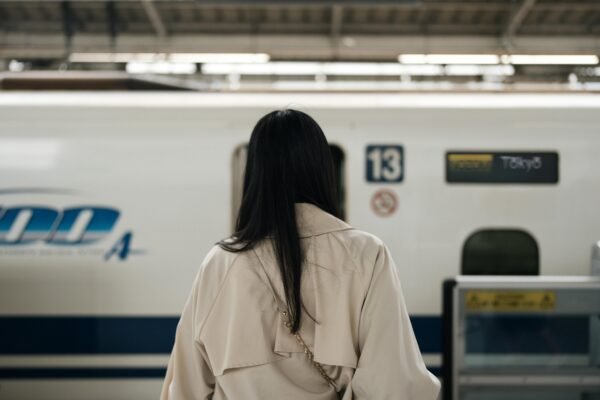
Each morning I left with a small backpack — no luggage to manage, no check-out to navigate, no new room to assess upon arrival somewhere else. Each evening I returned to a hotel I already knew, staff who recognised me, a room whose layout required no thought, and a routine that had already established itself. The result was not a slower trip or a smaller one. It was a trip that felt sustainable in a way that constant movement never does, because the energy I was not spending on environmental reset was available instead for genuine exploration.
Why Staying Put Often Lets You See More
This approach works because a well-chosen base absorbs exploration rather than being dismantled by it. The base needs transport access, food options within walking distance, and enough infrastructure to support day trips without requiring you to uproot entirely — and when those conditions are met, the surrounding region becomes accessible in a way that reactive hotel-hopping rarely achieves. Ironically, staying in one place often allows you to see more, because you are not spending a portion of every day on the logistics of relocation.
As I explored in Why Arrival Timing Shapes Your Entire Trip More Than Flight Length, beginnings require energy. Every accommodation change becomes a new beginning, and when beginnings accumulate without resolution, you never quite reach the cruising speed at which travel becomes genuinely effortless.
Somewhat counterintuitively, moving between distant cities can feel lighter than constant relocation within the same region. When travelling between cities, the movement has a clean arc — departure, transit, arrival, settle — contained within a predictable frame.
Frequent hotel-hopping along a route, by contrast, fragments that arc into a series of restless beginnings that never resolve into genuine stability.
Distance is linear. Relocation is cyclical.
Cycles, almost by definition, consume more energy than a straight line does, which is why a single long travel day followed by a week in one place will almost always feel lighter than a week of two-night stays spread across the same geography.
When Changing Accommodation Makes Sense
Not every relocation is a mistake — but most are not as necessary as they feel. It is worth being clear about when moving genuinely serves the trip rather than interrupting it. Very large cities with geographically distinct zones — Tokyo Is Often Misread Especially by First-Time Travellers being the obvious example, where the character and infrastructure of each major neighbourhood differs substantially — may justify a mid-trip move to reduce commute times and improve access to different areas.
The operative word, though, is strategic: this kind of relocation is planned around infrastructure and pacing, not restlessness, and it is decided before the trip begins rather than in response to a feeling of having exhausted one neighbourhood.
Sometimes availability, local events, or long-term rate structures simply necessitate a move, and practical constraints are a legitimate reason to relocate. The key distinction is recognising when a move serves a structural need rather than an impulse dressed up as practicality.
Before booking any relocation, one question cuts through the noise with surprising reliability: am I moving for necessity, or am I moving because I feel restless? Restlessness often disguises itself as productivity, presenting itself as a desire to maximise the trip or experience more layers of a destination. Stability, more often than not, delivers more of both.
Building Stability Into Your Itinerary
Stability in travel does not happen by accident — it must be chosen deliberately and protected through consistent structural decisions made before departure. One-night stays serve only purely transitional stops, and two or three nights rarely create genuine stability because there is simply not enough time for the nervous system to settle before the next reset is demanded.
Five nights or more begins to feel like a base rather than a pause between movements, and it is at that threshold that the compounding benefits of continuity — the automatic familiarity, the settled routine, the energy surplus — begin to materialise in ways that meaningfully change the quality of the trip.
The closing line of any itinerary review should be a simple continuity check: does this sequence allow me to settle, or does it keep me in a permanent state of reorientation? A familiar bed, a familiar route to the lobby, a morning rhythm that does not need rebuilding each day, a Wi-Fi connection that works without interruption — none of these are indulgences. They are stabilisers, and stabilisers allow you to travel further, explore more widely, and return each evening with energy to spare rather than running on a deficit that accumulates invisibly across the weeks.
The problem is not how far you travel. It is how often you force yourself to start over.
The traveller who understands that distinction will almost always have a better trip than the one still optimising their flight connections.
Travel Logistics Planner
A simple framework for thinking through the logistical side of travel — flights, entry requirements, accommodation and transfers — before the journey begins.
Delivered instantly. Occasional thoughtful updates from the road.