
Jakarta is one of those cities that looks like it should matter more than it does.
It’s the capital. It’s large, central, and often unavoidable when you enter Indonesia. On paper, it carries the weight of a place that should hold your attention for a few days. Somewhere you explore, understand, and gradually build into your trip. It presents itself as if it belongs in that category of cities where you arrive, settle in, and let the experience unfold.
But once you’re there, that expectation doesn’t quite hold.
Part of it is simply this: there are very few sights that feel compelling enough to organise your time around. You can move through the main landmarks quickly, and what remains doesn’t naturally pull you deeper into the city. For most travellers, that becomes obvious quite quickly — which is why Jakarta is often passed through rather than stayed in, with people choosing to continue on to places like Bali or Yogyakarta where the experience feels more defined and easier to shape.
If you’re trying to understand how Jakarta fits into a broader Indonesia trip, it helps to step back and look at the country as a whole rather than judging Jakarta on its own. The Ms Grey Nomad’s Indonesia decision framework sits at that country level, and it makes the contrast clearer.
Jakarta isn’t there to carry the experience of your trip. It sits alongside it — as a point of entry, a place you position around, or somewhere you include for a specific reason rather than for exploration.
Because it doesn’t behave like a destination.
And once you recognise that, the question shifts from “what is there to see?” to something far more useful. Why are you here at all, and does that reason justify the time you’re about to give it.
The Assumption That Doesn’t Hold
There’s a quiet assumption most travellers carry into any capital city — that it deserves a few days of attention.
In many places, that instinct works. A capital usually gives you enough structure to build something out of your time. A centre to orient yourself around, a sequence of neighbourhoods that connect and, a sense that if you keep moving, the city will gradually reveal itself.
Jakarta doesn’t follow that pattern.
The scale is part of it, but not in a way that translates into depth for a visitor. What you encounter instead is a city that spreads out without drawing itself together. There isn’t a natural arc to move through, no clear progression where one part leads meaningfully into the next.
What exists are separate pockets — and the one area that most closely resembles what travellers expect, Kota Tua, is contained and limited. You can walk through it, take in the main square, the colonial facades, a couple of museums, and be done within a few hours without feeling like there is anything left to build on.You can see it, understand it, and be finished with it far more quickly than you anticipated.
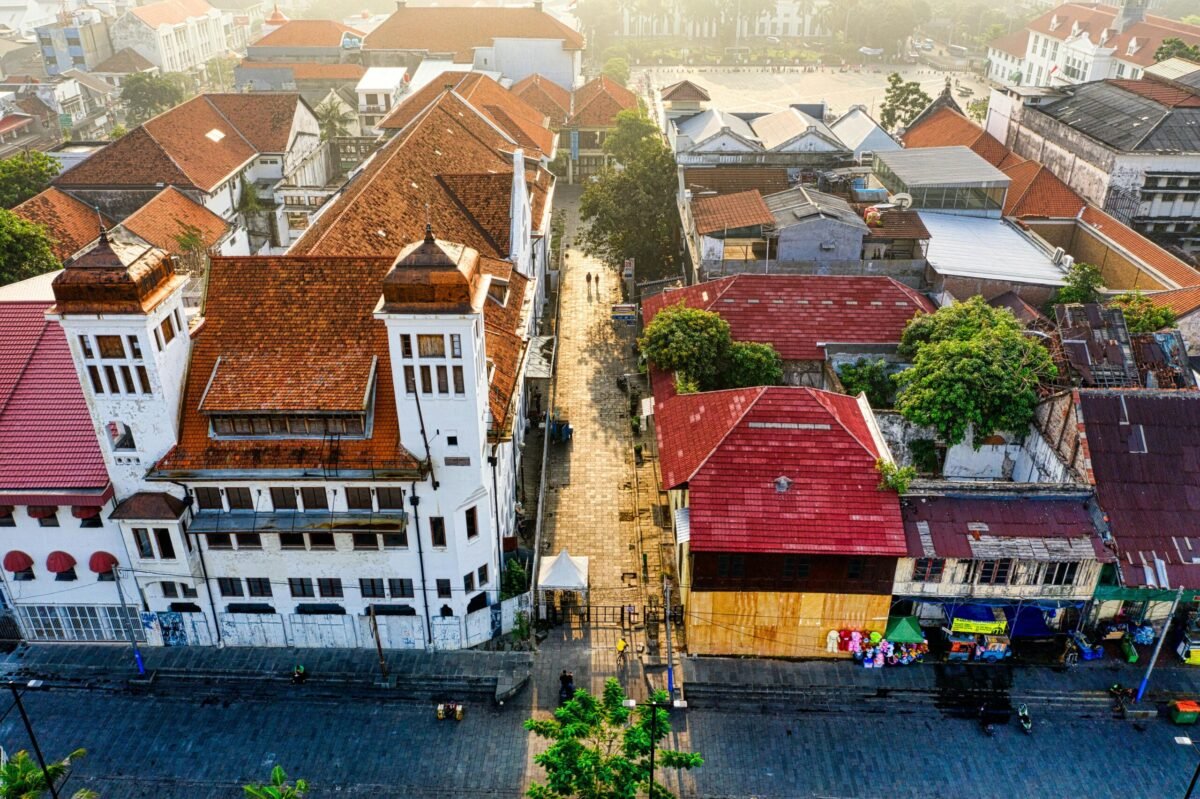
Beyond that, the city doesn’t offer enough that compels you to keep going. So when people try to “do Jakarta,” what they are often doing is trying to construct a few days out of pieces that don’t naturally form a whole. And that’s where the effort starts to outweigh the return.
Why It Doesn’t Come Together
Jakarta isn’t difficult in the way people sometimes describe it. It’s not about complexity or confusion. It’s about how little the city supports the kind of movement most travellers rely on.
Distances stretch across a city that is already expansive. Traffic builds into the day rather than sitting around it, shaping what is realistically possible rather than simply slowing you down. Getting from one area to another becomes a decision, not a default. Even short distances can take longer than expected, which quietly limits how much you can reasonably connect within a single day.
That would matter less if each area offered enough to justify the effort. But outside of a few contained pockets, there isn’t a strong pull to keep moving through the city. You can visit individual places, but they rarely build into something that feels cumulative.
Over time, that changes how the city feels. Not overwhelming, not chaotic — just oddly flat, despite its size.
The Adjustment That Makes It Work
The shift is not about trying harder or planning better. It comes from recognising what Jakarta actually is within your trip.
This is not a city you arrive in to explore. It’s a place you include for a specific reason.
Once that becomes clear, the pressure to extract something from it disappears. You stop trying to justify your time through sights or coverage. Instead, you decide upfront why you are there — whether it’s a flight connection, a hotel stay, or a specific logistical need — and you build your time around that single purpose.
Seen that way, Jakarta begins to make more sense. Not as a destination that carries part of your trip, but as a point within it — one that supports the broader structure rather than defining it.
And when you approach it like that, the city stops feeling underwhelming. It simply becomes precise.
Where Jakarta Actually Works
Jakarta begins to make sense when you stop asking what it offers as a destination and start looking at what it enables within a broader trip. It’s role is strutural.
Flights in and out are frequent, both within Indonesia and across the region, which makes it one of the easiest entry and exit points to work around. From here, you can move on quickly to places that carry the experience more clearly — Bali (Bali Still Works — Stop Expecting It to Be Easy), Yogyakarta (Yogyakarta Gives One Reason to Go — But No Reason to Rush), or elsewhere in Southeast Asia — without needing to build anything meaningful inside Jakarta itself.
That function has become more pronounced with the introduction of the Jakarta–Bandung high-speed rail, known as Woosh. Launched in October 2023, it connects Halim in East Jakarta to Padalarang (serving Bandung) in around 40–45 minutes, cutting what used to be a multi-hour journey down to something far more manageable.
There are already plans to extend this line further east across Java over time, although those expansions are still in development rather than something you can rely on yet. Even in its current form, the intent is clear. The infrastructure is being built to move people through Jakarta more efficiently, not to draw them into the city itself.
Jakarta is being reinforced as a movement hub — a place you pass through efficiently, not somewhere you linger to construct an experience. When you approach it that way, the city starts to feel less like something that falls short, and more like something that performs a very specific role well.
Where the Economics Shift
The second reason Jakarta works sits in something far less visible at first glance: hotel pricing.
Across Southeast Asia, there are plenty of cities that feel more appealing to stay in. Bangkok (Why I Would Not Start My First Thailand Trip in Bangkok) and Hanoi offer a stronger sense of place, more to see, and a more obvious reason to linger. Yet once you step away from short stays and start thinking in terms of weeks rather than nights, the economics begin to shift in a way that is not immediately obvious.
Jakarta sits in that gap — the kind of pricing environment that only makes sense once you understand why I sold my house and live in hotels instead.
What looks like “just another big city” on the surface becomes one of the few places where hotel pricing holds steady enough to support something longer-term. Not just for a few nights, but for sustained stays where the cost doesn’t quietly escalate as you go. That consistency is what most travellers underestimate. It’s not about finding a cheap rate once — it’s about whether you can repeat that rate over and over again without it distorting your overall spend.
That is where Jakarta becomes useful.
Where I built the system
For my initial IHG Platinum status run, I wasn’t looking for an experience. I was looking for an environment that would allow the numbers to work without forcing trade-offs elsewhere in my trip. Jakarta provided that. I stayed at a Holiday Inn Express connected to a shopping centre, which meant the basics were already solved. Food was downstairs. Groceries were easy. There was no need to move around the city to maintain a routine. The hotel itself was simple — free breakfast, nothing more — but it didn’t need to be anything else.
What mattered was stability.
Each night added up without resistance. There was no sense that I was overpaying just to accumulate status, no feeling that I had to justify the stay by turning it into something experiential. The city itself stayed in the background, which was exactly what I needed at that stage.
That only works when the underlying economics support it.
Why Jakarta Holds Over Time
In many cities, even budget hotels begin to feel expensive when the stay extends beyond a few nights. Prices fluctuate. Availability tightens. What looks manageable at the start becomes harder to sustain over time. You start making compromises — moving hotels, adjusting plans, questioning whether the outcome is worth the cost.
Jakarta doesn’t push back in the same way.
Rates remain relatively stable across a wide range of properties, and that stability creates something far more valuable than a one-off deal. It creates an environment where you can build — quietly, consistently, and without needing the city itself to carry any part of the experience.
And that is the shift most people don’t see.
Jakarta isn’t where you go to get something memorable out of your stay. It’s where you go when you need the numbers to work — when the outcome matters more than the location, and the environment allows you to follow through without friction or compromise.
Why It Becomes More Valuable Later
Once you move beyond entry-level status, Jakarta becomes useful again — but for a different reason.
At this stage, the focus shifts from accumulating nights to extracting value from the status you already have. That’s where upper-tier and luxury hotels start to matter. Lounge access, evening food, late checkout, upgrades — these benefits only become meaningful if you are staying in properties that actually offer them.
Lower-tier hotels like Holiday Inn Express won’t give you that. They serve a purpose early on, but they don’t support the system as it evolves.
Jakarta, however, sits in an unusual position. The pricing for upper-tier hotels — Crowne Plaza, InterContinental, Raffles, Fairmont and comparable brands — is often significantly lower than what you would expect in other Southeast Asian cities. That creates a gap between cost and experience that is difficult to find elsewhere.
You’re not coming to Jakarta for luxury in the way you might in Tokyo (Why Tokyo Feels Overwhelming — and Why It’s Not) or Singapore (Singapore Works in a Way Other Cities Don’t).
But if you are already moving through the region, it becomes one of the few places where staying at that level feels repeatable rather than occasional. You can access the benefits of your status without needing to justify the cost each time.
And that changes how sustainable the system becomes over the long term.
Why Jakarta Stays in the System
None of this turns Jakarta into somewhere you would choose for its own sake.
There is no real reason to extend your stay, and no benefit in trying to reinterpret it as a destination it isn’t. Most travellers recognise that quickly and move on to places that offer a clearer sense of experience. That instinct is usually right.
Even so, removing Jakarta entirely rarely improves the structure of a trip.
Its value sits in how it supports movement rather than how it fills your time. The city functions as a reliable junction, linking flights and onward routes in a way that keeps the broader itinerary efficient. It also creates a pricing environment where accommodation decisions feel less strained, particularly when you are thinking beyond a single stay and looking at how nights accumulate over time. Certain outcomes become easier to execute here — positioning yourself for the next leg, building or renewing hotel status, or simply creating a pause between destinations where nothing more is required of you.
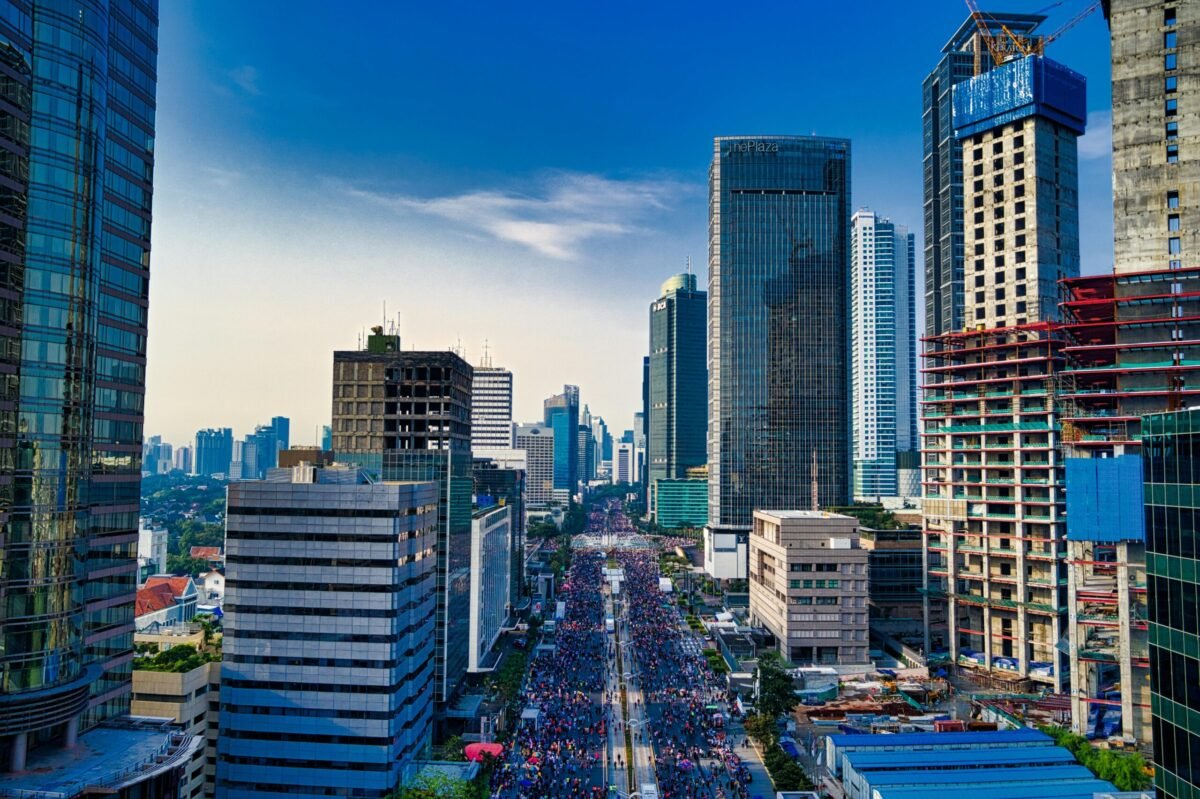
Over time, that kind of consistency becomes more useful than another place to “see.”
Trips that hold together well are not built only on destinations that deliver an experience. They rely just as much on places that absorb the practical weight of travel without asking for attention in return. Jakarta sits in that role. It carries part of the system quietly, allowing the rest of your trip to remain where the experience actually happens.
That is where Jakarta works.
Not as somewhere you explore, but as somewhere that keeps everything else working as it should.
You Don’t Need Jakarta to Be More Than This
Jakarta becomes much easier to deal with once you stop asking it to carry part of your trip.
It doesn’t need to be interesting. It doesn’t need to be memorable. There is no requirement to extract a sense of place from it, or to turn it into something you later look back on as a highlight. That pressure is what creates the tension in the first place — the quiet expectation that every stop should justify itself in experiential terms.
Here, that expectation simply doesn’t apply.
What matters instead is whether Jakarta serves the reason you came. Whether it moves you forward, supports a decision, or holds a part of your itinerary together without complication. When you approach it with that level of clarity, the need to “see” or “do” anything falls away quite naturally.
The city stops asking anything of you once you stop asking anything of it.
In that space, Jakarta fits into the structure of your trip without needing to justify itself. Not as a destination you build around, but as a point that allows everything else to work as intended — a place you pass through with purpose, and leave without feeling like you missed something.
Travel Logistics Planner
A simple framework for thinking through the logistical side of travel — flights, entry requirements, accommodation and transfers — before the journey begins.
Delivered instantly. Occasional thoughtful updates from the road.