
I paid AUD 890 for a twenty-one day JR Pass. The legs I actually rode, priced individually with a reserved seat on every one, added up to AUD 616.
That gap has nothing to do with how many of the twenty-one days I used. A JR Pass is a fixed price for a fixed period, and whether it pays off depends only on whether the legs you actually complete add up to more than what you paid, not on how many days you travelled.
Completing my full planned itinerary, including every day trip I never reached, would have saved about AUD 77 over buying each ticket separately. That was the plan. It didn’t survive the trip.
My East Asia trip ran two months, from Taipei through Seoul and into Japan. Somewhere along that route, my body started disagreeing with the itinerary I had built, and Japan is where that disagreement became impossible to ignore.
The transfer that almost went wrong
The first real test came early, changing trains at Nagoya on the way to Takayama. My JR Pass office had booked every major leg’s seat reservation for me in Tokyo before I left, and she had allowed thirty minutes for that connection. The incoming train ran fifteen minutes late, which left me with fifteen minutes instead of thirty to find the right platform, the right staircase, and the right direction.
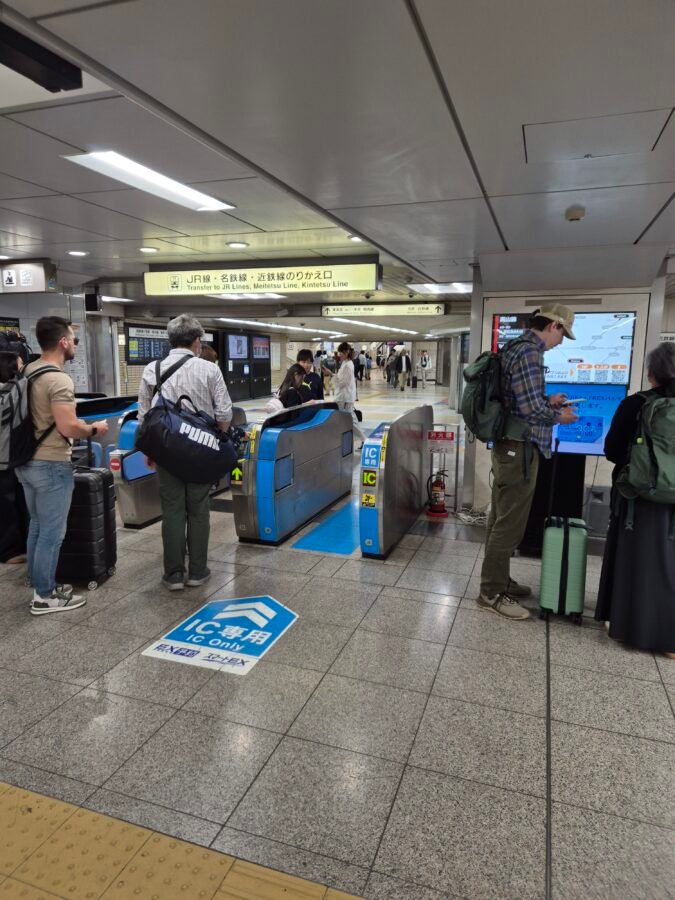
I was carrying a seven kilogram day pack, since I forward my main luggage ahead on every multi-city leg, exactly as I laid out in Luggage Forwarding in Japan: A Real Multi-City Route. Even so, I made the train with the kind of stress that has nothing to do with the walk and everything to do with logistics. ChatGPT talked me through the platform change in real time while I walked, the same habit I cover in full in Forget AI Itineraries: What Actually Helps Solo Travellers. I would not want to repeat that fifteen-minute window on a good day, let alone a difficult one.
What the pass actually cost against what I actually used
Here is the real comparison, built from my own booking records rather than a generic calculator.
| Leg | Reserved fare (AUD) |
| Shinagawa → Takayama | 169.10 |
| Takayama ↔ Hida-Furukawa (day trip) | 27.23 |
| Takayama → Nagoya | 49.04 |
| Nagoya → Hiroshima | 106.80 |
| Hiroshima ↔ Himeji (day trip) | 169.10 |
| Hiroshima → Fukuoka | 89.00 |
| Fukuoka ↔ Futsukaichi, Dazaifu (day trip) | 6.05 |
| Total, reserved seats throughout | 616.32 |
I paid AUD 890 for the pass itself. Buying every one of those tickets separately, with a reserved seat each time, would have cost AUD 616. In other words, holding the pass cost me AUD 274 more than simply paying for each leg as I travelled it.
My original itinerary also included Miyajima, Okayama, Kurashiki, Takehara, Kumamoto, Kitakyushu, and Fukuyama. None of that extra ground got covered, and closing the AUD 274 gap would only have taken a handful of those legs, not all of them.
Where the pass stopped covering me
A JR Pass covers JR lines, including some local JR trains within a city, but it doesn’t cover private railways or municipal subways. Getting around inside Nagoya and Fukuoka meant switching onto exactly those non-JR systems, and my Pasmo card carried that load instead. The Transit Card You Need for Public Transport in Japan covers exactly how that card works. The point that matters here is simpler: a JR Pass buys you the shinkansen and JR lines between cities. It doesn’t cover the private railways or subways you need once you’re in one.
Why the itinerary and the body stopped agreeing
I want to be plain about why the gap opened. I had no issues leaving Taipei. Moving through Seoul and into Japan, something started building quietly, and by the time I reached Japan it had turned into full inflammation. I needed rest days I had not planned for, and those rest days removed exactly the day trips the pass’s maths depended on.
This is not a caution against travelling this way. Health can change for any reason, at any point in a trip, and there is no way to predict which day it will happen on. The JR Pass calculation assumes every optional leg gets completed as planned. Mine didn’t. No fare comparison can predict that in advance.
The Nozomi Trade-Off
A JR Pass covers the entire JR network nationwide. The one exception sits on the Tokaido, Sanyo, and Kyushu shinkansen lines, where the fastest services, Nozomi and Mizuho, are excluded. You’re limited to Hikari and Kodama on those lines instead. There is no discounted way to add Nozomi or Mizuho to a pass. You can buy a separate ticket at full fare, but doing so removes the reason for holding the pass on that leg.
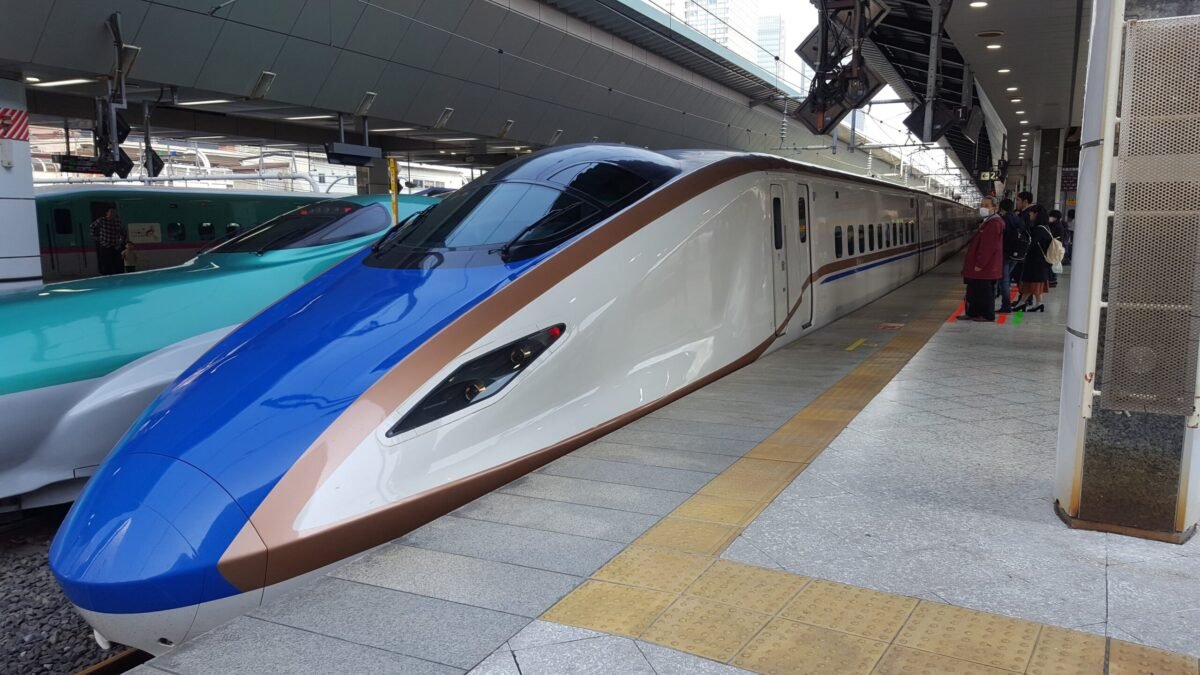
The trade-off matters because of how the service works, not because of geography. Hikari trains often split their run partway through a longer journey: many go only as far as Shin-Osaka, and a separate train continues west from there through Shin-Kobe, Himeji, Okayama, and on to Hiroshima.
On my own Nagoya to Hiroshima leg, this meant changing trains at Kobe, even though Kobe sits directly on the same line running west from Nagoya through Kyoto and Osaka. It was an easy change, since Kobe is a small station and the connecting train waited on the same platform.
Nozomi runs the exact same physical route, through Kyoto and Shin-Osaka and on to Hiroshima, but as one continuous service that never splits partway. It just doesn’t stop at most of those stations along the way. Choosing Nozomi would have meant no change of train at all.
The itinerary that would actually justify a JR Pass
If you want the pass to pay for itself, check the maths this way. Work out whether your spine, the unavoidable city-to-city moves, covers the cost on its own. On a route like mine, it didn’t, even fully completed.
Where the spine falls short, day trips are what close the gap, and making a pass worth it means treating a defined number of those optional legs as fixed commitments, not flexible extras you fit in if time and energy allow. A different route, with a longer or pricier spine, might clear the cost without needing a single day trip. Mine didn’t, and that’s the calculation worth running before you buy.
That is not how I travel, and it is probably not how you travel either if you are reading this. A pace built around rest days and day trips you can drop when you are tired is the opposite of what a JR Pass rewards financially, on a route where the spine alone isn’t enough. For that kind of trip, the pass asks you to remove the flexibility it is supposed to represent, which makes it the wrong tool rather than a discount used badly.
Before You Buy a JR Pass
- Split the itinerary into spine legs (unavoidable city-to-city moves) and optional day trips, and price each group separately
- Check whether the spine alone clears the pass cost; if not, work out the minimum number of day trips needed to close the gap
- Treat those specific day trips as fixed commitments rather than flexible extras, if the pass is going to pay off
- If your capacity for optional legs is uncertain, due to health, energy, or pacing, assume the gap won’t close and price everything point-to-point instead
- Check your transfer time yourself rather than accepting what a booking agent allows, and add at least fifteen minutes on top of it
No More JR Pass For Me
I will not be buying another JR Pass. Next time, I’ll book each shinkansen leg as I need it, most likely through the Smart EX app, which handles reservations across the Tokaido, Sanyo, and Kyushu lines, including Nozomi. Reserved seating stays non-negotiable, regardless of how I book. Non-reserved cars are limited, often just one or two per train, and I’d rather know I have a seat than gamble on standing for hours. Where Nozomi removes an actual change of train, the way it would have on the Nagoya to Hiroshima leg, I’ll pay the extra fare without a second thought. Buying as I go means I only ever pay for the trip I actually take. If I want to see Miyajima next time, I’ll book that one train the morning I actually feel like going, not six months out on a pass I have to justify.