
I stood on a Nagoya platform with fifteen minutes to find my connecting train, no one beside me to ask, and a phone that could read what I could not. That single moment captures what two months across Taiwan, South Korea, and Japan taught me about AI and solo travel — and none of it was about planning.
I had reserved tickets for every major train leg of that trip, including the transfer in Nagoya from the Shinkansen to the Hida limited express bound for Takayama. The original window was thirty minutes. I had assumed the JR Pass staff who booked it knew what they were doing. They had not accounted for my age, or for how far I would actually need to walk.
Then the Shinkansen ran late. Thirty minutes became fifteen.
My luggage had been forwarded ahead — I cover exactly how that process works in Luggage Forwarding in Japan: A Real Multi-City Route — which meant I was carrying only a seven kilogram backpack. That was the only reason fifteen minutes was even possible.
Nagoya is not a small station. Dozens of lines move through it, and finding the right platform in fifteen minutes was not something I wanted to work out by trial and error. I photographed the departure board, added the image to ChatGPT, and gave it the details of where I was headed. It confirmed I was on the right track, directed me through the gates visible in the photo, and gave me the platform number and where to find it. The time and carriage were already on my ticket.
I made the train.
That moment had nothing to do with planning. The trip was already planned, booked, and confirmed weeks earlier. What I needed, standing on that platform, was something else entirely, and that distinction is the whole subject of this piece.
This is not what most people mean by using AI to travel
What I am describing comes from two months on the ground across three countries — Taiwan, South Korea, and Japan. Not a holiday, not a trial run. Two months of sole reliance on ChatGPT for everything that happened after I landed: navigation, translation, machine operation, historical context, decision support. That is the test this article is drawn from.
One distinction matters before I go further. ChatGPT was my primary on-the-ground tool throughout. However, I use Gemini for a specific purpose: identifying sights and deciding what to visit. I also run anything from ChatGPT through a pub test, and Gemini is my backup when something doesn’t sit right. Two tools, two different jobs. The on-the-ground work in this article is ChatGPT’s.
What everyone else means by AI travel
Ask most people how AI fits into travel right now, and they will tell you about itineraries. Ask a chatbot to build you a week in Kyoto. Let an app predict the best week to book flights. Hand the whole plan over and let the algorithm optimise it around your interests.
That is not what this article is about, and it is not how I use AI.
Why I don’t let AI plan my trips
I do not let AI plan my trips. It cannot weigh what actually matters to me: how much walking I can tolerate in a day, where my mobility limits sit, what kind of friction I am willing to absorb and what kind genuinely wears me down. No algorithm has that information, and I am not interested in handing my decisions to one that does not.
What I do ask AI for, before I leave, is narrower and more useful. I ask what the must-visit places in a destination actually are, and why they matter. Then I do the planning myself, with that context in hand.
Where it actually earns its place
Where AI earns its place is after I land. Once I am on the ground, alone, in a country where I cannot read the signs, AI stops being a planning tool and becomes something closer to a constant, fluent, endlessly patient local. That is the use case nobody is writing about, and it is the one that has changed how I travel more than anything else has.
The real gap is information, not courage
Most advice aimed at solo women travelling later in life treats hesitation as an emotional problem. Build your confidence. Trust yourself. Take the leap. None of that addresses what is actually happening on the ground in a country where you cannot read the signs.
The hesitation I see most often is not a courage gap. It is an information gap. A woman standing in front of a ticket machine covered in Japanese characters does not need reassurance. She needs to know which button to press. Once she knows, the hesitation is gone, because it was never really about bravery. It was about not having the one piece of information that would have made the next step obvious.
AI closes that gap immediately, and it closes it without anyone watching you struggle first.
How I actually use it on the ground
The method
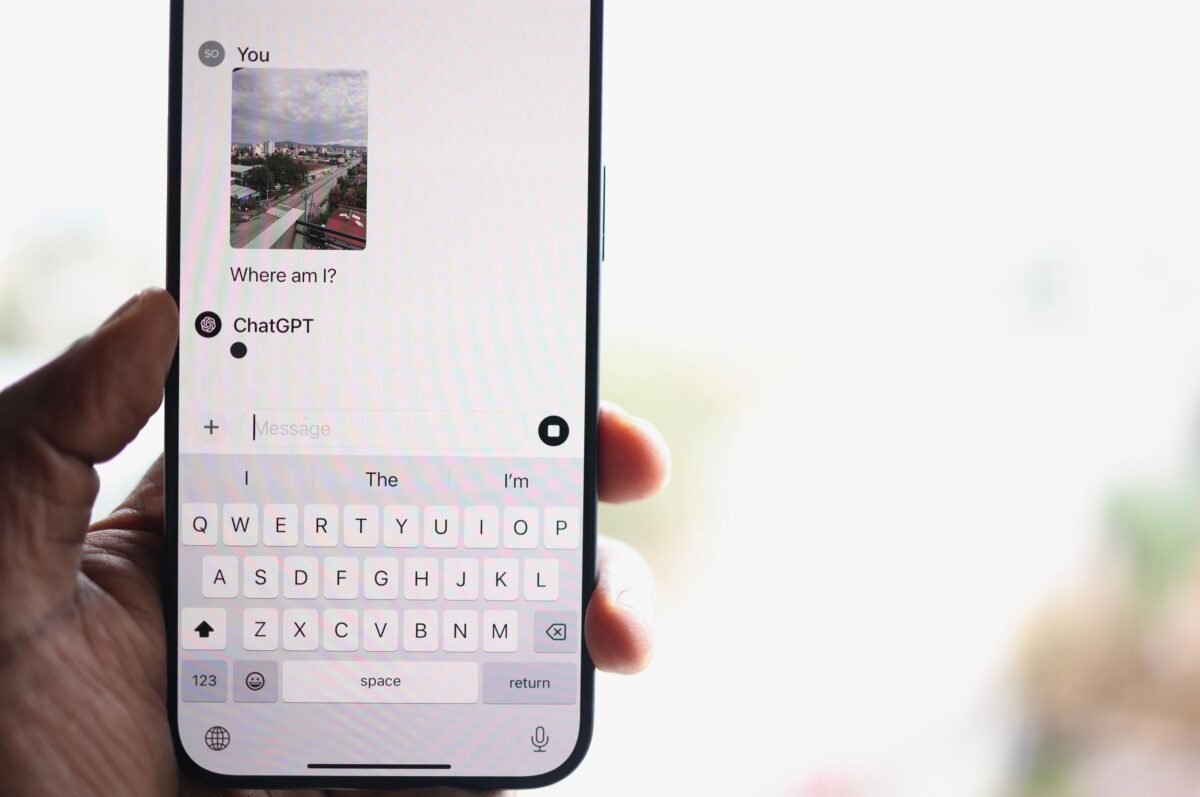
My approach is simple and I use it constantly. I photograph the machine, the sign, the screen, or anything else I cannot read, and I ask AI what it says and what to do. I do not try to read it myself first. I go straight to the photo.
Arriving somewhere new: Taipei
Taiwan was the first stop on the two-month itinerary, and my first time in the country. Arriving alone somewhere entirely new, with no read on the language or the infrastructure, is exactly where AI either earns its place or does not.
The first practical task was the EasyCard — Taipei’s transit card, the equivalent of a Suica or Pasmo in Japan. ChatGPT directed me to buy one. I bought it from a human at an MRT counter rather than a machine. That part was simple. The ATM was not.
ChatGPT directed me to a specific bank branch within ten minutes’ walking distance from my hotel, named it precisely, and explained why: it was a major bank, more reliable with foreign cards, and far safer than any standalone ATM. The screens on the machine were more convoluted than anything I had encountered in Japan. I photographed each one, uploaded the image, and followed the instructions step by step. I got my cash.
That advice — go to the branch, avoid standalone ATMs — is exactly the kind of thing no guidebook updates in real time. ChatGPT gave it to me specifically, for that bank, on that day.
Navigating Taipei
Taipei’s metro is clean and manageable, however Taipei Main Station is a different matter. It is large, multi-layered, and disorienting in the way major interchange stations are when you cannot read anything around you. Google Maps functions in Taiwan, however it loses accuracy underground. ChatGPT told me which line to take, from which platform, and which exit to use for each day’s journey. I gave it my starting point and my destination, and it gave me the full picture before I left the hotel.
That became my method throughout the two months: plan the journey before leaving, confirm the details with ChatGPT, move with confidence rather than consulting the phone mid-platform.
Seoul: where it was tested hardest
Seoul required preparation before I even landed. On ChatGPT’s advice — confirmed by Gemini — I installed Kride for transport payments, which accepts foreign credit cards, and Naver Maps for navigation. Google Maps does not work in South Korea, and neither does much of what works everywhere else.
The metro was where the real test happened.
My hotel was the Ibis Ambassador Seoul Insadong, a four-minute walk from Jongno 3-ga station. Three lines — 1, 3, and 5 — intersect there, and walking from one end of the station to another can take up to ten minutes through long underground corridors, up and down stairs, with narrow platforms and minimal escalators. The broader network matched it: complex and convoluted, significant walking between platforms across the system, almost no English signage, and no benches in many stations.
ChatGPT did not warn me about the distances. That I learned the hard way, at the cost of physical effort I had not budgeted for. I gave ChatGPT an earful. On that front it demonstrated one of its most consistent qualities: the endless patience that a human guide would have exhausted in the first hour.
There were days where the walk required was more than I could manage. On those days, I called a taxi instead. That was not a failure of AI. That was information, used well — I knew my limits, and I acted on them.
ChatGPT also knew where to stand to take the best images. At Bukchon Hanok Village, it directed me to the exact viewpoint that puts the traditional rooflines in front and N Seoul Tower in the background. Navigation and composition, from the same tool.

Tokyo: the learning ground
The Japan leg began with ten nights in Tokyo, and I used that time deliberately. Every machine I could find became a test: a coin laundry panel, a Pasmo top-up machine, a movie ticket kiosk. Tokyo was the right place to build this — a city with enough English signage that I could cross-check myself, before moving into regions where there was none.
The coin laundry alone required a machine-by-machine lesson — four different machines, four sets of Japanese-only instructions. ChatGPT worked through each one, then told me to use the red ones. Simplest controls, least room for error. It also taught me how to change coins at the payment kiosk. That is the level of granularity that makes the difference between doing the thing and standing there hoping someone walks in who speaks English.

AI is fluent in any language you put in front of it. That single fact removes one of the oldest sources of solo travel anxiety: the fear of being stuck in front of something you cannot operate, with no one around who speaks your language. I held up my phone and within seconds had the answer in plain English. Confidence did not arrive as a feeling. It arrived as a series of small things I tried because I had backup if I got them wrong.
Before any of this works, however, your phone needs to actually be ready for real-time use the moment you land. I covered the full digital groundwork in Digital Apps, eSIM, VPN: Sorted Before I Land in Japan — the connectivity setup that has to be in place before any of this is possible.
I wanted the story, not just the words
Here is the part that surprised me most across the two months. I did not just want to know what something said. I wanted to know why it mattered.
A restaurant in Takayama was closed. Pasted on the door was a long letter written entirely in Japanese. I photographed it and asked ChatGPT to translate the whole thing, line by line. What came back was not a summary. It was the full text — context, tone, and all. That is not translation in the conventional sense. That is understanding what is actually in front of you.
When the museum doesn’t tell the whole story
At the Chiang Kai-shek Memorial in Taipei, I asked ChatGPT for the full background — who he was, what the memorial represented, and the political context behind it. What came back was a proper history lesson, the kind that changes how you stand in a place. At the National Palace Museum, I noticed the collection was almost entirely Chinese history, not Taiwanese. I put that observation directly to ChatGPT and got an illuminating answer. AI gave me the frame to understand what I was looking at, including its contradictions. For anyone wanting to understand Taiwanese history specifically, ChatGPT pointed me to Tainan — and that is now planned for my next trip.

The Seoul National Museum was one of the stronger museums I visited across the two months for English signage and sequential history. Even so, the depth I wanted was not there. ChatGPT filled the gaps, as it had everywhere else.
Two statues in a park
In Sapporo, I came across two statues in a park. The signage was entirely in Japanese. I photographed them, uploaded the images, and asked ChatGPT who they were. What followed was a full account of both figures — their place in Japanese history, why they were memorialised there, what the park itself represented. Two statues in a park became an unexpected education. That is the level of depth I travel for, and it is consistently what AI delivers when everything else — labels, guides, audio tours — falls short.

Where AI helps the decision, and where it stops
The Shirakawa-go choice
In Takayama, I needed to get to Shirakawa-go. My reserved ticket had sold out, which left two real choices: buy a non-reserved ticket and stand if necessary, or join an organised tour instead.
ChatGPT already understood my constraints — my mobility, my health, my tolerance for discomfort — from months of prior conversation. It gave me a clear comparison between both options without my having to explain myself from scratch. Standing for the journey was a real possibility on the non-reserved option, and it told me so plainly.
I made the decision myself. That is the part I want to be direct about, because it is easy to blur. I use AI for information, for context, and for laying out my options clearly. The decision is always mine. A useful checkpoint if you want to use the same approach: ask for the trade-offs, and treat the answer as input rather than instruction.
The Tokyo train line
I learned why that boundary matters the hard way, on a different evening in Tokyo. ChatGPT once sent me onto the wrong train line entirely, and I ended up at a dead stop nowhere near my hotel. Getting back cost me time, not the trip, but it taught me something I have not forgotten since: cross-check the navigation, every time, rather than trusting any single source blindly. I still use AI for almost everything else without hesitation. I just stopped treating it as the final word on where my train was actually going.
What changed, and what did not
The old choice for a solo woman travelling somewhere she could not read the language used to be narrow. Go alone and manage everything yourself, or go guided and hand the thinking over to someone else for the day.
I tried the guided option. A Klook day tour from Nagoya covered Shirakawa-go, Takayama, and Gujo Hachiman. The guide was pleasant and the logistics were smooth. However, after months of going deep with ChatGPT on the history, culture, and context of every place I intended to visit, I sat on that tour bus and found myself noticing how shallow the information actually was. The guide skimmed the surface. ChatGPT had already taken me well beneath it. That is not a criticism of tour guides specifically. It is a description of what becomes possible when you have spent months building a different kind of relationship with a place before you arrive.
There is a third option now, and it did not exist for the generation of solo travellers before mine. You can go alone and still have answers to everything you want to know, in real time, in your own language, without waiting for a tour schedule or a guidebook written for someone else’s questions. That is not a small shift. It changes what travelling alone actually feels like, day to day, on the ground.
The guided tour is optional now, not required. What is left is a traveller who still makes her own decisions, but is no longer the one standing in front of a ticket machine with no idea what to do next. The hesitation that used to stop her was never about courage. It was always about not knowing which button to press.
What it actually replaces
- Reads anything you cannot: signs, menus, departure boards, machine panels, letters on doors — in any language, on the spot
- Tells you which button to press, not just what the words mean
- Advises on cash withdrawal: which bank, which branch, which ATMs to avoid in an unfamiliar country
- Plans transit journeys end to end — line, platform, exit — before you leave the hotel
- Navigates complex networks where English signage is minimal and Google Maps does not work
- Prepares you before you land: which apps to install, which infrastructure works and which does not
- Explains why something is the way it is, not only what it says — the story behind a closure, a building, a custom
- Gives you the full history and context behind what you are looking at, well beyond what any label or audio guide provides
- Lays out real trade-offs for a decision, using constraints it already understands about you
- Gives you a second opinion before you commit to something uncertain
- Lets you attempt things you would otherwise default to a staffed human option for, because you have backup if you get it wrong
- Does not make the decision for you. It informs it
- Should always be cross-checked against a second source for navigation, never trusted blindly
After two months and three countries, that list is not theoretical. It is what I actually used, day after day, on the ground.
Eight years later in the age of AI
I think about the version of this trip I would have taken eight years ago. Fewer stations attempted alone. More tours booked as insurance. A phrasebook I would have consulted and abandoned. The experience would have been real, however it would have been narrower — bounded by what I could confidently navigate without help. That boundary no longer exists in the same way. The difference is not that I have become more capable. It is that the information is now always there, in my pocket, in any language, at any hour. The trip expands accordingly.