
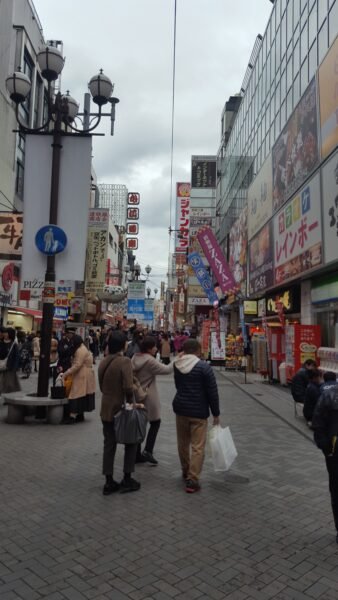
Osaka is often described as Japan’s most approachable city. It’s presented as informal, energetic, and easy to like — a place where visitors can relax after the intensity of Tokyo or the exacting nature of Kyoto. For many first-time visitors, that reputation holds. Osaka is welcoming in a very practical sense, and that alone makes it a reasonable inclusion in a first Japan itinerary.
At the same time, Osaka doesn’t offer what I personally value most in Japan: cultural depth, architectural presence, and the sense that a city continues to unfold over multiple visits. Both of these things can be true at once. Osaka can be enjoyable and complete, without necessarily being a place you feel drawn back to.
Understanding that distinction helps place Osaka properly — not as a lesser city, but as a city optimised for a different kind of experience.
Why Osaka Often Feels Easier
By the time I arrived in Osaka, I had already spent time in Tokyo and Kyoto. The systems, rhythms, and unspoken rules of Japan were no longer unfamiliar. I wasn’t trying to learn everything at once. That sequencing mattered.
After Kyoto in particular, Osaka felt like a release. Not because Japan changed, but because the pressure eased. The environment felt less exacting, the pace less compressed, and the emotional load noticeably lighter. I wasn’t navigating dense symbolism or constant crowd compression. I was simply moving through a city.
This is where Osaka’s reputation for ease comes from. It’s not that expectations disappear. It’s that the city feels less heavy once you’ve already done the work of orientation elsewhere. Osaka tends to land well because it follows places that demand more attention, restraint, and adjustment.
If you’re interested in how that initial learning curve works, I’ve written about it in the Tokyo post, which explores how Tokyo shapes first impressions of Japan.
Restaurants That Clearly Expect Tourists
One area where Osaka stood out clearly for me was restaurant access. Across the sit-down restaurants I visited — not cheap eateries, but proper restaurants — the systems were designed to work for non-Japanese speakers. Menus with photos were common. Point-and-order systems were normal. You didn’t need Japanese for the experience to function.
Staff didn’t necessarily speak English fluently, but that wasn’t a barrier. Conversation wasn’t required to order successfully. There was no hesitation at the door, no sense of being screened, and no refusal of service once it was clear I didn’t speak Japanese.
That clarity matters. After experiencing language-based refusal elsewhere, Osaka felt straightforward. You could walk in, eat well, and leave without friction. For first-time visitors, that kind of predictability reduces stress and builds confidence.
For contrast, I’ve written separately about why Kyoto operates on much stricter terms, particularly around access and expectations.
Osaka as a Pressure-Release City
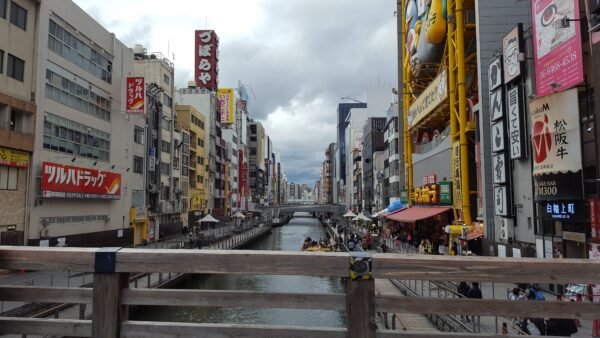
Osaka is often placed after Kyoto in itineraries, and the logic becomes obvious on arrival. Streets feel wider. Crowds feel less compressed. Social interactions feel less formalised. The cumulative tension that can build in Kyoto dissipates quickly.
This isn’t because Osaka lacks structure or sophistication. It’s because the city doesn’t carry the same symbolic weight. There’s less ritual, less reverence, and less sense that you’re constantly moving through spaces that feel fragile or contested.
After Kyoto, Osaka felt like a deep exhale. That role — as a pressure-release city — is one of Osaka’s strengths, particularly for travellers who have found Kyoto demanding.
Urban Character and Why Osaka Fades More Quickly
Where Osaka differs most clearly from Tokyo and Kyoto is in how it registers over time. Osaka is functional, legible, and easy to read. You get a good sense of the city early on, and there are fewer moments that stop you or demand recalibration.
Many of Osaka’s commonly visited places are experiential rather than symbolic. Districts like Dōtonbori are lively and memorable in the moment, but they don’t tend to linger. Attractions such as Osaka Castle are visually impressive, yet emotionally self-contained. You see them, understand them, and move on.
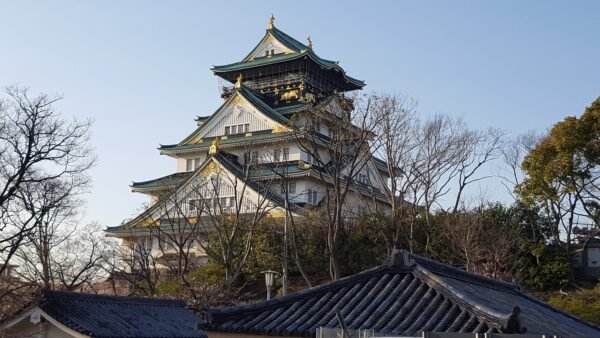
What’s missing — for me — is the sense of unresolved depth. Tokyo often leaves you curious. Kyoto often leaves you reflective or unsettled. Osaka leaves you satisfied. The experience completes itself quickly.
That isn’t a flaw. But it does explain why Osaka doesn’t accumulate in memory in the same way.
Architecture Without Weight
Architecture is one of the lenses through which I assess a city, and this is another area where Osaka felt lighter. Much of the city is practical, modern, and serviceable. Buildings do what they need to do, but few demand pause.
Compared to Tokyo, there’s less tension between old and new, less architectural contradiction to sit with. Compared to Kyoto, there’s less historical gravitas embedded in the built environment. Osaka’s architecture supports movement rather than contemplation.
This contributes to the feeling that Osaka reveals itself quickly. The city doesn’t ask you to slow down or look again. It doesn’t resist understanding. And for travellers who value architecture as a source of meaning rather than function, that matters.
Emotional Residue After Leaving
When I think back on Tokyo, I feel curiosity — a sense that there are still layers I haven’t touched. When I think back on Kyoto, I feel tension and reflection — boundaries encountered, expectations tested.
When I think back on Osaka, what I feel is closure.
The visit was pleasant. It was easy. It didn’t leave loose threads pulling me back. I didn’t feel unfinished. For some travellers, that sense of completion is exactly what they want. For me, it signalled that my time there was enough.
Why “Once Is Enough” Can Still Be a Positive Outcome
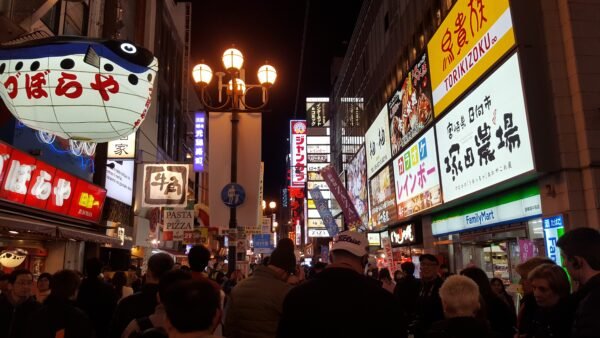
Saying that I wouldn’t return to Osaka isn’t a criticism. It’s a recognition that the city delivered what it was designed to deliver efficiently. I experienced the atmosphere, the food, the accessibility, and the ease — and I didn’t feel the need to repeat it.
Japan offers so many places with greater cultural, architectural, and historical density that, for me, return visits are better spent elsewhere. I’m drawn back to Tokyo for its layers and to other parts of Japan that continue to reveal themselves over time.
Osaka doesn’t need to compete on those terms to be worthwhile. It simply serves a different role.
Where Osaka Fits Best in a Japan Trip
Osaka works well as a first-time inclusion, particularly after a more demanding city like Kyoto. It’s a place where effort drops, access improves, and the experience becomes easier to hold.
It may not be a city you feel compelled to revisit, depending on what you value. But that doesn’t diminish its place. Osaka’s openness makes it a valid and worthwhile stop — and one that allows travellers to make their own judgement.
For a broader view of how Osaka sits alongside other destinations, the Japan travel page lays out that structure in more detail.
Osaka Welcomes You — and That Matters
Some cities reward return. Some demand alignment. Some offer ease.
Osaka falls firmly into the last category. It may not be the city you keep coming back to, but for first-time visitors, its willingness to meet you where you are makes it an experience worth having — and a judgement worth making for yourself.
Travel Logistics Planner
A simple framework for thinking through the logistical side of travel — flights, entry requirements, accommodation and transfers — before the journey begins.
Delivered instantly. Occasional thoughtful updates from the road.