
Singapore is the one city in Southeast Asia where the heat never gets the final word.
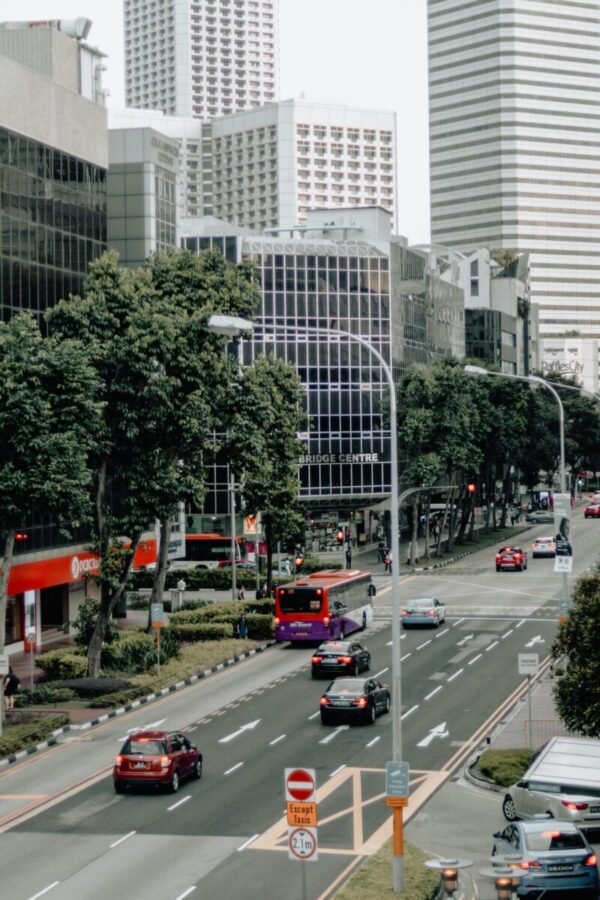
I learned this on my first afternoon there, walking out of an air-conditioned lobby into that thick, early-afternoon wall of humidity that hits you across most of this region, and realising within about four minutes that I didn’t have to stay in it. An underground walkway took me straight from the hotel into a shopping concourse, then into a food hall, then to another walkway, and another mall, without a single traffic light or a single bead of sweat in between.
By the time I resurfaced, the worst of the heat had already passed. I’ve looked for the same relief in Bangkok, in Kuala Lumpur, in Phnom Penh, and never found it. Singapore gave it to me, and not by accident. Someone designed the city to work this way.
Singapore is usually introduced through its price, as though cost is the most useful thing to understand about it, and on paper that’s fair. The numbers sit closer to Australia than to anywhere else in this region. But arriving into Singapore, the price isn’t what registers first. What registers is how quickly everything settles: the airport doesn’t feel like an arrival you need to manage, the transfer into the city doesn’t require decoding, and the streets don’t ask you to adjust your pace or your expectations. This piece sits inside the wider Singapore section on this site, and everything in it comes back to the same idea: the city has already thought the day through before you arrive in it.
Arrival Sets the Tone Before You Reach the City
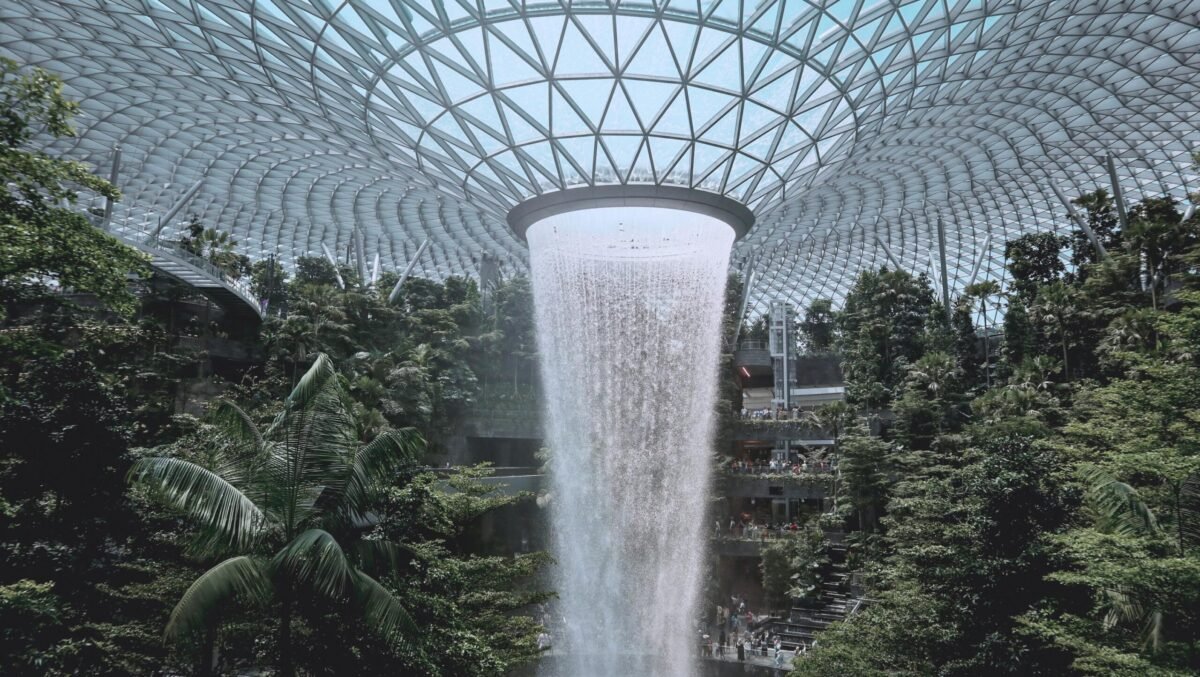
Changi doesn’t feel like somewhere you pass through before the real journey begins. Skytrax named it the World’s Best Airport again in 2026, its fourteenth win since the awards began, and this year Changi also took World’s Best Airport Dining and Best Airport in Asia.
Walking through Jewel, past the Rain Vortex, at forty metres the tallest indoor waterfall in the world, set inside an indoor forest valley, then past the Canopy Park and the Butterfly Garden, it’s obvious why passengers rate it the way they do. The drive into Orchard Road, Marina Bay, or the CBD takes twenty to thirty minutes, and by the time you arrive, the airport has already told you what the rest of the trip is going to feel like.
Consistency You Can Rely On Without Thinking About It
In most cities I have lived in across this region, quality varies block by block, and so does trust. A meal, a taxi, a footpath, a queue — you learn, over the first few days, to keep making small judgment calls about which version of the city you’re currently standing in. Singapore removes almost all of that.
Hawker centres like Maxwell Food Centre, Lau Pa Sat, and Chinatown Complex sit at the same standard of hygiene and reliability as the international restaurants a few streets over, and food fits into wherever you already are rather than forcing you to plan a detour for it. Payment across the MRT and buses is a single tap, with no fare calculation required, and English carries every transaction and every instruction without you needing to repeat or simplify anything. Taken together, that’s a long list of small decisions the city has already made for you before you’ve made any of your own.
Enforcement That Holds the Standard in Place
Consistency doesn’t happen by accident, and Singapore doesn’t pretend otherwise. Rules here are specific, published, and enforced without much discretion, which some visitors read as rigid and others read as reassuring. I read it as the second one. When a country tells you plainly what the rule is and then actually applies it evenly, you stop having to guess whether it applies to you today. That predictability is the product, and it’s the reason the underground walkways stay clean enough to want to spend an afternoon in, and the reason the transit system runs closely enough to schedule that you can stop building in a buffer for delays.
Safety That Removes the Weight of Vigilance
Having been scammed in Kuala Lumpur, the contrast is immediate. Not because Kuala Lumpur is a dangerous city — it isn’t — but because Singapore removes a specific kind of low-grade vigilance that most travellers carry without noticing. You stop scanning the taxi meter, stop double-checking the exchange, stop keeping one eye on your bag on the train. On a short trip built around food, culture, and shopping, that matters more than it sounds: every hour you aren’t spending on vigilance is an hour back in the itinerary.
I’d put Singapore on the same footing as Japan here, and I don’t say that lightly. Japan is the only other country in Asia where safety simply stops being a question worth asking, which is exactly what I found writing Why Tokyo Feels Overwhelming — and Why It’s Not. Both places share the same underlying mechanism: a low-discretion system that applies one standard to everyone, including you. That’s real, and it happens to be one of the more useful things I can tell a reader who’s still deciding whether the extra cost is worth it for a short trip.
Compared to Its Nearest Neighbours
Kuala Lumpur and Penang both work, in their own ways, and I’ve written honestly about both. Why Kuala Lumpur Is Easier Than Most Cities in Southeast Asia offers strong food, widespread English, and genuine value, but the day asks more of you: walking is limited, transport choices need weighing, and small decisions turn up throughout the day.
Penang is Harder than Expected — What People Don’t See delivers some of the best food in the region, and being smaller doesn’t make it simpler — heat and distance still shape how the day unfolds, and getting around still takes ongoing attention. Singapore is better than both, and the price is exactly why. You pay more in Singapore, and in exchange, the ongoing attention both of those cities still ask for is no longer required of you.
The Greenery Is a Design Choice, Not a Coincidence
Singapore’s greenery isn’t confined to Changi. Landscaped verges and canopy walkways continue the same idea on the drive into the city and throughout it, doing work that most cities leave entirely to whatever parks survived urban planning. Singapore is just as dense as Hong Kong or Taipei, tower for tower, but it never treated density and greenery as a trade-off. Hong Kong, for comparison, has some of the lowest urban green space per person in Asia, largely because its density and underground infrastructure make it genuinely difficult for trees to establish in the urban core. Singapore hit the same constraint decades ago and designed around it instead of accepting it.
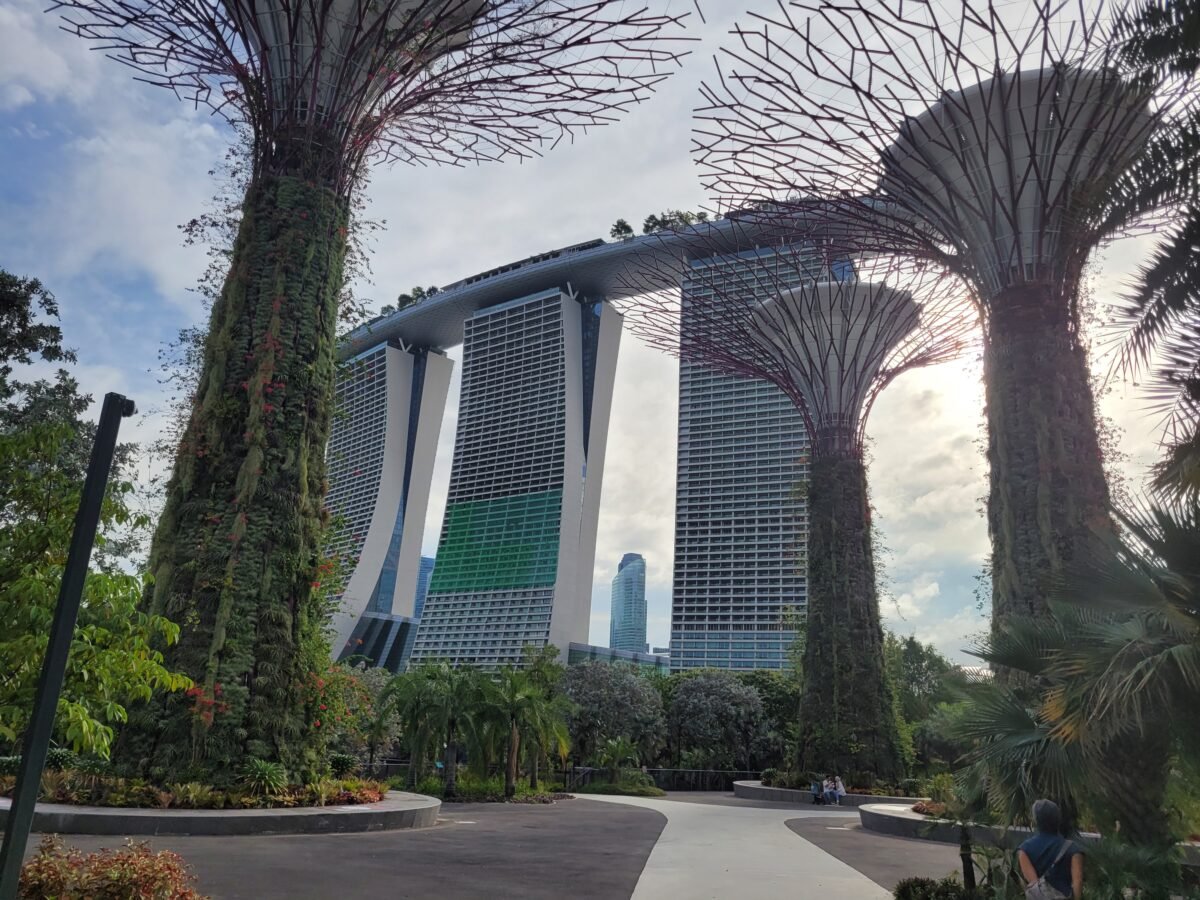
Gardens by the Bay makes the same point at a larger scale. The Supertree Grove’s vertical gardens and the Cloud Forest and Flower Dome sit directly beside Marina Bay Sands, in the middle of the financial district, rather than pushed out to the city’s edge the way most parks are. A short ride away, the Singapore Botanic Gardens holds a distinction most visitors never learn: it’s the only tropical garden on UNESCO’s World Heritage List, and the first garden in Asia to receive that recognition at all. None of this greenery was left over from before the city was built. It was planned alongside it.
Major International Theatre Chooses Singapore
The same intent shows up in how Singapore treats culture. Major international touring productions use it as a Southeast Asian stop or premiere on a genuinely different scale to most of the region, from Cats and Wicked to Les Misérables and the Moulin Rouge! Southeast Asian premiere. Manila has built a real theatre scene of its own in recent years and is closing that gap, but Singapore’s volume and consistency still put it closer to Australia’s major cities, where Sydney and Melbourne see the same Broadway and West End productions on a similar rotation, than to anywhere else in this region. None of that is incidental to the price of visiting. It’s part of what you’re paying for.
What Nobody Says Out Loud About Singapore
Here’s the part most travel writing avoids saying directly: the usual criticism of Singapore — that it isn’t “real” Southeast Asia, that it’s too clean, too controlled, too easy — says more about what the critic wants from travel than what Singapore is actually offering. Some travellers want friction. They want a version of a place that requires constant improvisation, because the improvisation itself feels like proof they went somewhere real.
Heritage Kept, Not Replaced
In fact, Singapore has spent decades and real money keeping its heritage intact rather than replacing it, and the results are there to walk through. The Urban Redevelopment Authority’s conservation programme, running since 1989, has protected more than 7,000 shophouses across Chinatown, Little India, Kampong Glam, Joo Chiat, and Emerald Hill, restoring facades and internal courtyards instead of demolishing them for something newer. The Sultan Mosque still anchors Kampong Glam. The Sri Mariamman Temple, Singapore’s oldest Hindu temple, still stands in the middle of Chinatown, largely as it did when it was built in 1827.
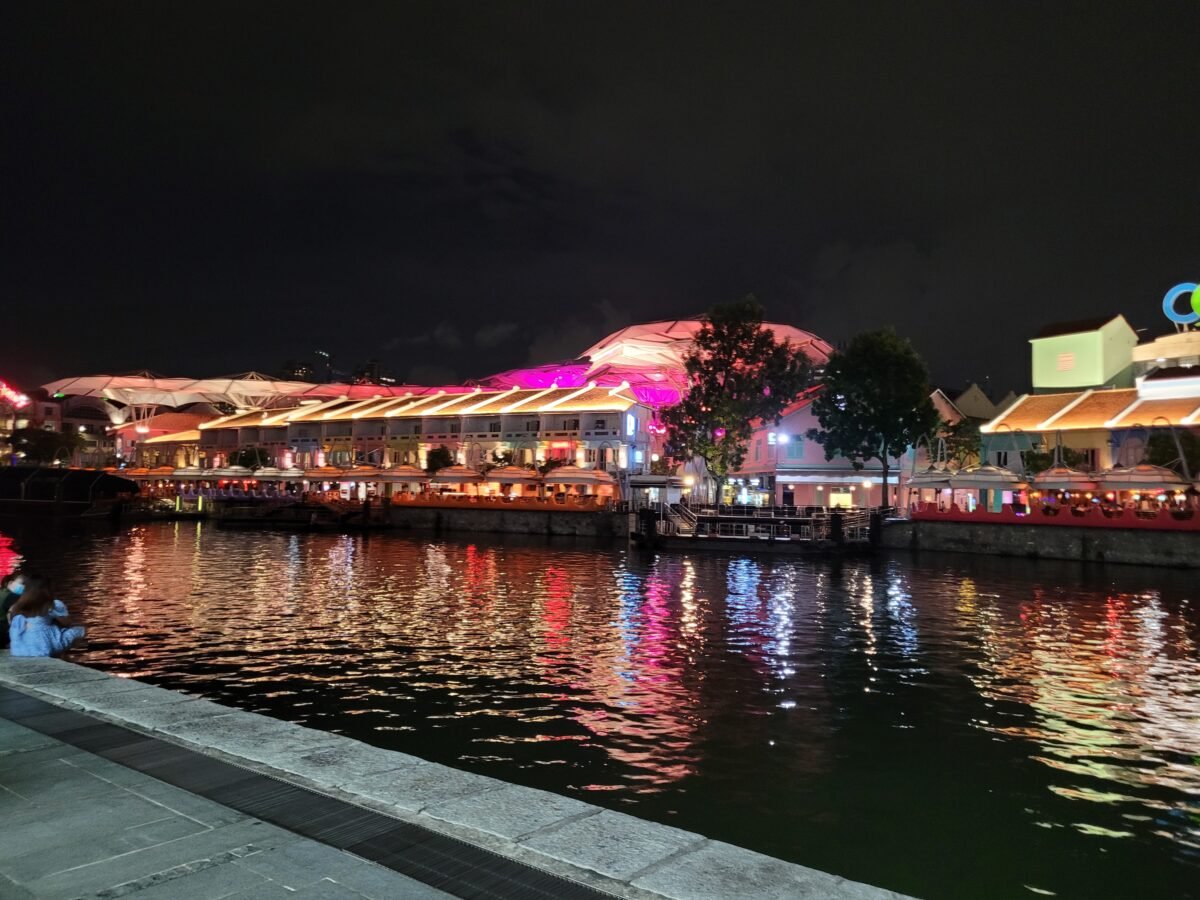
Clarke Quay took a different route to the same result. The same 1989 conservation programme protected its riverside godowns, but let their use change completely, from cargo warehouses to restaurants and bars. The shells survived by staying useful, not by staying empty. CHIJMES goes further still. Once the Convent of the Holy Infant Jesus, built in 1854, its Gothic chapel now hosts weddings, and its convent buildings hold restaurants and bars. A convent turned into a nightlife venue is about as complete a change of use as a building can survive, and Singapore let it happen rather than choosing between demolition and a museum.
This is not a city that erased its past to build its present. It built the present around the past, deliberately.
The Honest Starting Point
That same deliberateness extends to a reader who has never travelled through Southeast Asia and isn’t sure she’s ready to. Singapore is the solution to that hesitation. English is the working language everywhere, the city is genuinely walkable, and she can find any cuisine she already knows from home. The safety record holds up under real scrutiny, not just marketing. There isn’t a version of Southeast Asia that delivers the region’s food, culture, and vibrancy this fully while asking so little of a first-time solo traveller. A first trip built around Singapore isn’t a smaller version of Southeast Asia. It’s the version with the friction and guesswork already removed.
Where I Wouldn’t Start Instead
If this is a first trip through Southeast Asia, I wouldn’t start it in Ho Chi Minh City or Bangkok, and the reasons aren’t the same for each. I’ve written about this in Why I Would Not Start My First Thailand Trip in Bangkok: it isn’t that Bangkok is dangerous, it’s that landing jet-lagged into a city of that scale stacks fatigue on top of fatigue before your system has had any chance to catch up.
As I’ve written, Ho Chi Minh City Is Easy to Visit — Harder to Care About, and a flat first impression like that can quietly colour how you judge the rest of the region before you’ve given it a fair chance. Singapore doesn’t carry either problem. Jet lag still exists, but it’s not asking your nervous system to process scale and disorientation at the same time it’s processing the time difference.
A 4-Day Trip to Singapore
Four days is enough to cover this properly without rushing any of it, and here’s roughly how I’d spend them.
- Day one: land, check in, and use the rest of the day to ease into the time zone. Once the heat breaks in the late afternoon, head to Gardens by the Bay for the Supertree Grove, timed for the evening light show, then finish at Marina Bay for the skyline after dark, with dinner at Lau Pa Sat on the way back.
- Day two: start in Chinatown early, while the morning is still cool, for the Sri Mariamman Temple and a hawker breakfast at Chinatown Complex. Spend the hottest hours of midday somewhere indoors, then head to Kampong Glam in the late afternoon for the Sultan Mosque and Arab Street, finishing the evening in Little India for dinner.
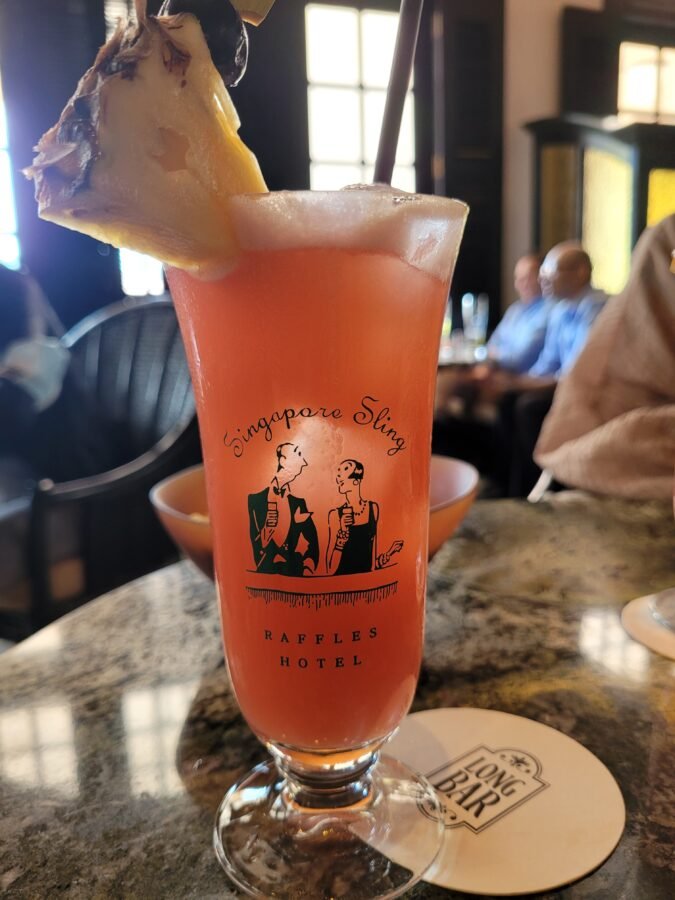
- Day three: spend the morning at the Singapore Botanic Gardens before the heat sets in, retreat into Orchard Road’s malls once midday hits, and end the day at the Long Bar in Raffles Hotel with a Singapore Sling in the room where it was invented.
- Day four: spend the morning in Katong and Joo Chiat, where pastel-painted Peranakan shophouses sit under the same conservation protection as Chinatown and Kampong Glam, then keep the rest of the day loose for whatever’s calling loudest.
The Bar Where It All Started
I ordered the original Singapore Sling in the Long Bar at Raffles Hotel, in the room where a Raffles bartender first mixed it in 1915, over a century of the same ritual still playing out exactly as it did then. Heritage that is this carefully kept doesn’t feel staged. It feels like the same instinct running through everything else Singapore does: take something worth preserving, look after it properly, and let people experience it as it was meant to be, not a diminished version of it for a photo.
What stays with me is the room itself, and the fact that it hasn’t needed to change to remain worth visiting. A century-old ritual, still running exactly as it began, is about as real as Southeast Asia gets. Look past the surface, and you’ll find it everywhere in Singapore.
Travel Logistics Planner
A simple framework for thinking through the logistical side of travel — flights, entry requirements, accommodation and transfers — before the journey begins.
Delivered instantly. Occasional thoughtful updates from the road.