
Tokyo is not a city that reveals itself quickly. Most first-time visitors leave impressed but slightly wrung out, concluding that Tokyo is simply “a lot.” That conclusion makes sense given how most people experience it — rushed, compressed, and measured against a checklist they’ll never finish.
My experience has been different, not because Tokyo is easier than people say, but because I stopped trying to do it in one visit. What follows is what I’ve learned across multiple trips, starting with the practical foundation that makes the difference between functioning in this city and just surviving it. That foundation makes more sense once Tokyo is placed inside the wider Japan travel framework.
Tokyo is not difficult in the way most people expect—but it does require attention. It’s structured, predictable, and safe, but the scale and constant navigation can feel demanding at first. Once you understand how it works, it becomes one of the easiest cities in the world to move through.
Before You Arrive: Entry Requirements
Visa-exempt visitors — which includes nationals from Australia, the UK, the US, Canada, New Zealand, and most of Europe — currently enter Japan without any pre-travel authorisation. A valid passport is all you need. Make sure it has at least six months’ validity beyond your travel dates, as airlines will enforce this before you board. Entry conditions depend on your passport, so confirm the details before you travel.
E-arrival and customs declaration – Visit Japan Web
Before you fly, register on Visit Japan Web. It’s the Japanese government’s platform for completing your immigration and customs declarations online before arrival. It’s free and available in English, but the process is more convoluted than it should be — budget more than an hour, do it on a desktop rather than your phone, and don’t attempt it when you’re tired. If you hit a wall, close it and come back.
Once through it, you receive a QR code covering both your arrival card and customs declaration. At the airport, you scan it at an automated kiosk rather than filling out paper forms on the plane or queuing at a counter. The time it saves on arrival justifies the effort beforehand. Register as soon as your flights and accommodation are confirmed, save the QR code to your phone, and have it done well before departure.
What Tokyo Feels Like When You Arrive
The first thing that strikes you is how well everything works.
It’s clean, orderly, and operating at a level of civic discipline that most cities don’t come close to. Trains arrive at the exact minute. Crowds move in organised streams through spaces that could hold a small town. Nobody raises their voice on public transport — not because of a posted rule, but because that’s simply how this city functions. On my first visit, I spent longer than I’d like to admit looking for a bin to throw away a coffee cup. There are almost none on the streets. People carry their rubbish home or you can find rubbish bins near convenience stores. The cleanliness is not maintained by infrastructure — it’s maintained by behaviour.
That’s the city you’re arriving in. Understanding that early changes how you move through it.
Why It Feels Demanding at First
The demand isn’t disorder. It’s precision at scale. You’re making small, constant decisions throughout the day — which line, which exit, where to transfer — and those decisions don’t pause. Stations are larger than you expect. Distances between exits stretch further than a map suggests. Areas that look close together can take more time to reach than anticipated once you’re navigating platforms, corridors, and street-level orientation.
After a couple of days, something shifts. You start reading the patterns. The colour-coded lines, the signage, and the movement of crowds follow a logic that becomes progressively easier to navigate. The city hasn’t changed — but your ability to operate within it has. That’s when Tokyo stops feeling demanding and starts feeling like one of the most efficient cities you’ve ever moved through.
It’s also why first impressions can be misleading, which I’ve explored in Tokyo is often misread – especially by first-time travellers.
Setting Up Before You Land
Tokyo is not the place to be sorting out logistics on arrival. Between the flight, immigration, and the first transfer into the city, there’s already enough to manage. Removing a few decisions beforehand makes a real difference to how that first day unfolds.
Airport Choice
Tokyo is served by two international airports, and in many cases your airline makes the choice for you. Understanding the difference before you book — or before you land — is worth a few minutes.
Haneda (HND) sits inside Tokyo itself, roughly 15 to 20 kilometres from the city centre. It’s mainly served by full-service carriers including ANA, JAL, Cathay Pacific, EVA Air, and Qantas. Trains reach major city hubs in around 20 to 30 minutes, and the connections are straightforward. After a long flight, that proximity is tangible.
Narita (NRT) is located in Chiba Prefecture, around 60 to 70 kilometres from central Tokyo. It handles the bulk of long-haul flights from Europe and North America and is the main hub for low-cost carriers. The fastest train options into the city — the Keisei Skyliner or the Narita Express — take around 50 minutes to an hour.
One option worth knowing about is luggage forwarding. Services such as Yamato Transport operate from both Narita and Haneda, collecting your bags at the airport and delivering them directly to your hotel — usually by the following day. This makes the train journey considerably more manageable and is widely used by travellers who don’t want to haul luggage through stations and platforms on arrival. Book through the service counter at the airport or arrange it in advance online.
The Airport Limousine Bus is an alternative to the train, operating direct routes to over 120 major hotels across central Tokyo. If your hotel is on the network it drops you at the entrance, but journey time runs around 90 minutes depending on traffic, and you still need to locate the departure point at the airport. Check the Airport Limousine Bus website before you arrive to confirm your hotel is served. Neither option is inherently easier than the other — it depends on your hotel location, your luggage situation, and how much you want to engage with the rail system on your first day.
The honest reality is that if your flight goes into Narita, that’s where you’re landing. It isn’t complicated, but factor the transfer time into your planning rather than treating arrival as the end of the journey. If you have a genuine choice between the two airports at similar cost, Haneda is the easier start to a trip.
One practical note on late arrivals: public transport from both airports stops around midnight. If your flight lands late, check last departure times in advance — a late arrival with no train options means a significantly more expensive taxi into the city.
Travel Card
A Suica travel card is non-negotiable. It covers trains, buses, convenience stores, vending machines, and coin lockers. Getting one sorted before or on your first day removes a layer of friction you don’t want to deal with while jet-lagged.
iPhone users have the simplest option. Download the Welcome Suica Mobile app before departure — it’s designed specifically for international visitors, available in English, and requires no Japanese account. Once set up, load funds via Apple Pay using a foreign credit card and your phone functions as a Suica the moment you land. You walk straight through the train gates without stopping. The app requires iPhone XR or later running iOS 17.2 or above, and the card is valid for 180 days. Express Mode means you don’t even need to unlock your phone — just tap and go.
Android users have a more limited option. Mobile Suica on Android typically requires a Japan-sold device with a FeliCa chip, which most internationally purchased Android phones don’t have. If that applies to you, a physical card is the straightforward solution.
Physical cards are readily available at airport ticket machines at both Haneda and Narita, and at major station kiosks. The standard green Suica is the one to get — valid for ten years from last use, which makes it worth keeping if you plan to return. Whichever route you take, have it sorted before your first train journey.
eSIM and Connectivity
Your phone handles most of the work in Tokyo — maps, translation, route planning, ordering taxi. Setting up an eSIM before departure removes a category of uncertainty you don’t want to deal with on the ground. I use Airalo, and it has worked reliably across multiple countries throughout Asia — one account, straightforward top-ups, and no hunting for a local SIM on arrival.
If Japan is your only destination, the Japan-specific plan (Moshi Moshi) covers what you need. If you’re travelling through several Asian countries on the same trip, the Asialink regional plan is the more practical option — it covers Japan and 17 other countries across the region, so you’re not buying a new eSIM every time you cross a border. Set it up before you leave, and you have connectivity from the moment you land.
Cash
Japan is still more cash-dependent than most developed countries, and this catches visitors off guard who’ve grown accustomed to tapping their way through cities. Many smaller restaurants, local shops, and traditional establishments don’t accept cards at all. Having cash on hand isn’t optional — it’s how a significant portion of daily life operates here.
Withdraw enough to cover several days comfortably rather than topping up constantly. The most reliable ATMs for international cards are at banks — look for Japan Post Bank and Seven Bank branches in particular. If a bank ATM isn’t convenient, 7-Eleven, Lawson, and FamilyMart convenience store ATMs also accept international cards reliably and are everywhere.
Taxi App
Hailing a taxi on the street in Tokyo isn’t practical — the language barrier makes communicating a destination genuinely difficult. The GO app solves this entirely. It’s Japan’s dominant taxi app, available in English, and works across all 47 prefectures. You set your pickup point and destination in the app before the taxi arrives, so there’s no conversation required with the driver. Most international credit cards are accepted for in-app payment, though some users report occasional card registration issues — if that happens, you can pay the driver directly in the car instead. Download and register before you leave home, as registration with international phone numbers is supported and it’s one less thing to sort out on arrival.
Arrival timing matters more than most people realise. I’ve covered that in detail in Why Your Arrival Time Matters More Than Flight Length, and the broader setup framework in The First 24 Hours of Solo Travel: Where Most Mistakes Happen applies directly here.
Getting Around In Tokyo: The Rail Network Is the City
Movement in Tokyo revolves entirely around the rail network. Everything else is secondary.
It isn’t a single system. It’s multiple networks layered together — JR lines, Tokyo Metro, and private railways — operating seamlessly from a user perspective while still requiring you to understand how they connect. The JR Yamanote Line loops through the major districts and forms the backbone. The Metro fills in inner-city coverage, and private lines extend further out. Most journeys involve a combination of these, and transfers are a normal part of how the system works.
Navigating Stations in Tokyo
Google Maps handles the complexity well. It tells you which platform, which carriage, and where to transfer. Even so, it assumes you can follow those instructions in real time inside stations that can feel like self-contained cities. Shinjuku is the clearest example — not simply a station but a network of interconnected spaces, exits, and lines that takes a few visits to internalise. Once you understand it, it’s remarkably efficient. Until then, it requires patience.
That’s the consistent pattern. The system is reliable and comprehensive, and once you’re reading it fluently, distance stops being a problem.
The JR Pass — What It Is and Whether You Need It
The Japan Rail Pass (JR Pass) is an unlimited rail pass available exclusively to foreign tourists, covering most JR trains across the country including Shinkansen bullet trains, limited express services, and local JR lines. It comes in 7, 14, and 21-day versions. It must be purchased before arriving in Japan — through the official JR website or an authorised seller — and collected at a designated JR office at major airports or stations. You cannot buy it once you’re in the country.
The honest assessment of the JR Pass is that it requires careful calculation before you buy. A significant price increase has changed the maths. What used to be an automatic purchase is now entirely dependent on your itinerary.
For a Tokyo-focused trip, the pass offers poor value. Most of Tokyo’s subway network runs on non-JR lines, so the pass has limited use within the city — a Suica card covers the Metro lines the JR Pass doesn’t. For a multi-city itinerary covering Tokyo, Kyoto, Osaka, and Hiroshima within seven days, the numbers work more in its favour. For anything in between, compare individual ticket prices against the pass cost before committing.
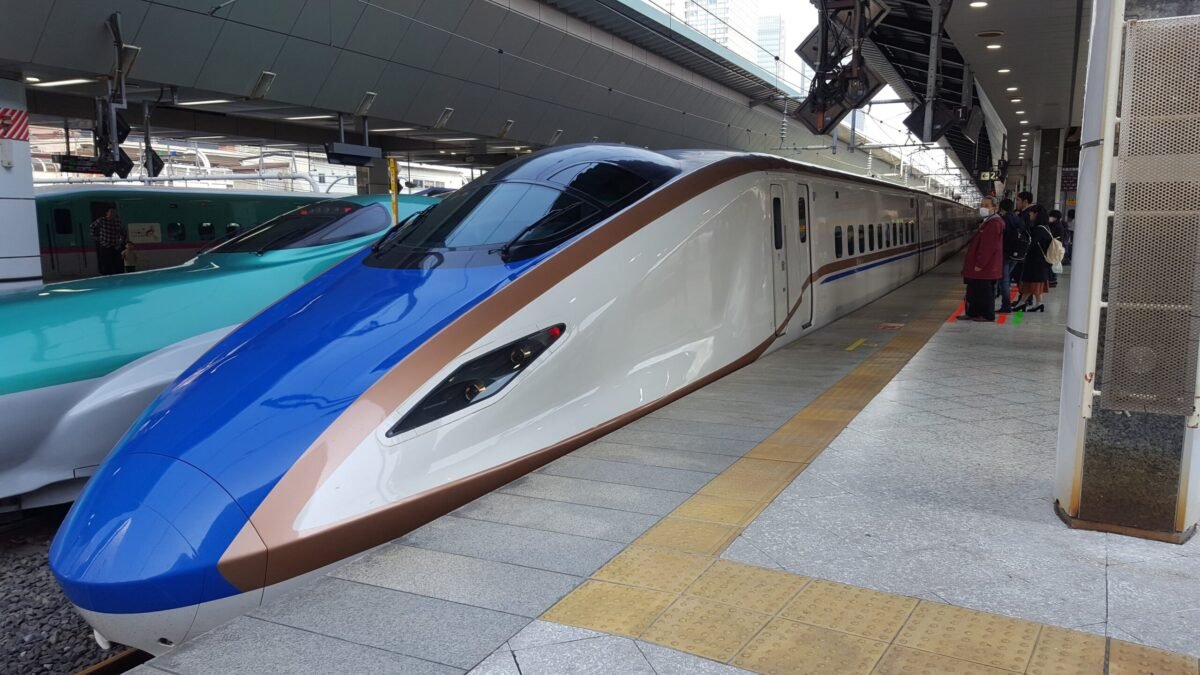
Two practical points worth knowing. The fastest Shinkansen services — the Nozomi and Mizuho — are not covered by the standard JR Pass, so pass holders use the Hikari instead, which runs slightly slower and less frequently. If your travel stays within one region, regional passes often offer better value than the national pass. Always compare against your actual routes before purchasing.
Where to Stay in Tokyo: Positioning Over Proximity
Where you stay shapes every day of your trip — not just the hotel experience but how much effort you spend moving through the city. That shift in how you structure your base is what led me to rethink living arrangements entirely, which I’ve explained in Why I sold my house and live in hotels instead.
On my last trip, I based myself at the Mercure Tokyo Haneda. It isn’t central in the way most first-time visitors think about central locations, but it sits directly on the rail network and gets into Central Tokyo in half an hour. In Tokyo, that changes the calculation entirely. I’m not paying central Tokyo accommodation prices, and yet I have immediate access into the city. The connections are direct and the routes are straightforward.
Central locations can look compelling on paper, but if they come at significantly higher cost without meaningfully reducing your daily movement effort, the trade-off rarely holds. In Tokyo, access to the rail network matters more than proximity to any specific neighbourhood. Once you understand that, accommodation becomes a decision about positioning and value rather than geography alone.
What the Neighbourhoods Actually Feel Like
Positioning is the principle. The next question is which area suits you, and that depends on what you want your days to feel like, not just which station sits closest to a landmark.
Shinjuku is Tokyo at full intensity — the station itself is a small city, the entertainment district runs late, and the energy doesn’t let up. It’s the most central choice for rail connections in every direction, but it isn’t a restful base. I’d choose it for convenience, not for atmosphere.
Shibuya sits next door in spirit if not geography — younger, louder, built around the famous crossing and the shopping that surrounds it. It’s a fascinating place to visit. As a base for several nights, it asks a lot of you, particularly after dark.
Ginza is the calmer alternative at a similar price point. Upmarket, orderly, and quieter in the evenings, it suits a traveller who wants polish without noise. The trade-off is that Ginza closes down earlier than the entertainment districts, which some people prefer and others find flat.
Asakusa trades scale for character. It sits further from the rail interchange hubs but closer to Sensoji and the older streets around it, and it has a neighbourhood feel that the bigger districts don’t. I’d weigh the slightly longer transfers against the atmosphere, and for a multi-night stay, the atmosphere often wins.
Shimokitazawa is the quiet recommendation. It’s a smaller, bohemian district known for vintage shops, independent cafés, and a slower pace than almost anywhere else on this list. It sits one stop from Shibuya on the Inokazawa Line, so you’re never far from the centre, but you come home each night to somewhere that actually feels like a neighbourhood rather than a transit hub. For a longer stay, this is where I’d point a traveller who wants Tokyo’s energy in reach but not on her doorstep.
None of these beats the rail-access principle. They sit on top of it. Once you’ve confirmed an area connects well, the choice between them is really a choice about what kind of evenings you want.
Where to Start: Things to Actually Do in Tokyo
Tokyo can’t be covered in a single visit, and I’d rather be honest about that than hand you a list that pretends otherwise. What I can give you is where I’d start, and why, grouped by area so a day’s movement makes sense rather than crossing the city back and forth.
The Palace, Marunouchi, and Tokyo Station
I’d start here, and I’d start slowly. The Imperial Palace grounds give you green space and history in the middle of the financial district, and the walk through it into the historic Marunouchi area shifts the register from monument to streetscape without effort. Marunouchi itself is handsome rather than flashy — wide boulevards, restored brick buildings, none of the visual noise you get elsewhere in the city.
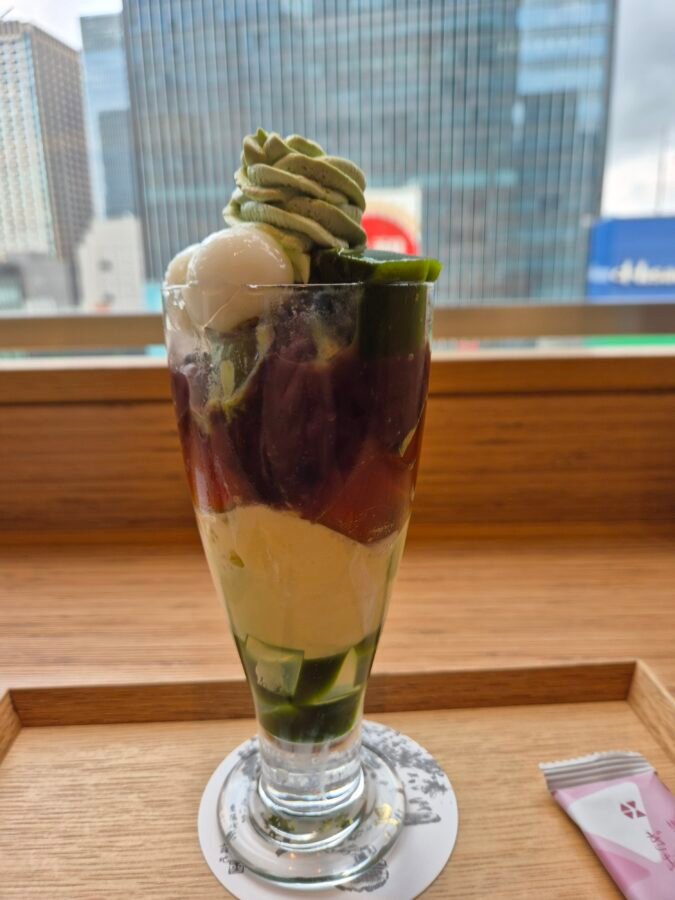
Tokyo Station sits at the end of that walk, and it’s worth treating as a destination rather than a transit point. On the 10th floor of Daimaru Tokyo Station, Saryo Tsujiri makes one of my favourite matcha parfaits anywhere in the city — layered with red bean, mochi, and a soft-serve matcha that earns the height of the glass. If you only take one café stop from this entire guide, I’d make it this one.
Ueno: The National Museum and Ameyoko
Ueno rewards a half-day rather than a quick pass-through. The Tokyo National Museum holds the country’s largest collection of Japanese art and artefacts, and it’s the kind of place where an hour turns into three without you noticing.
Step outside the museum grounds and the register changes completely at Ameyoko, the market street running alongside the rail line. It’s loud, crowded, and entirely unpolished — dried seafood, cheap clothing, street snacks — and that contrast with the museum’s quiet is part of what makes the area worth the trip. Few places in Tokyo put refinement and chaos this close together.
Sensoji and Asakusa
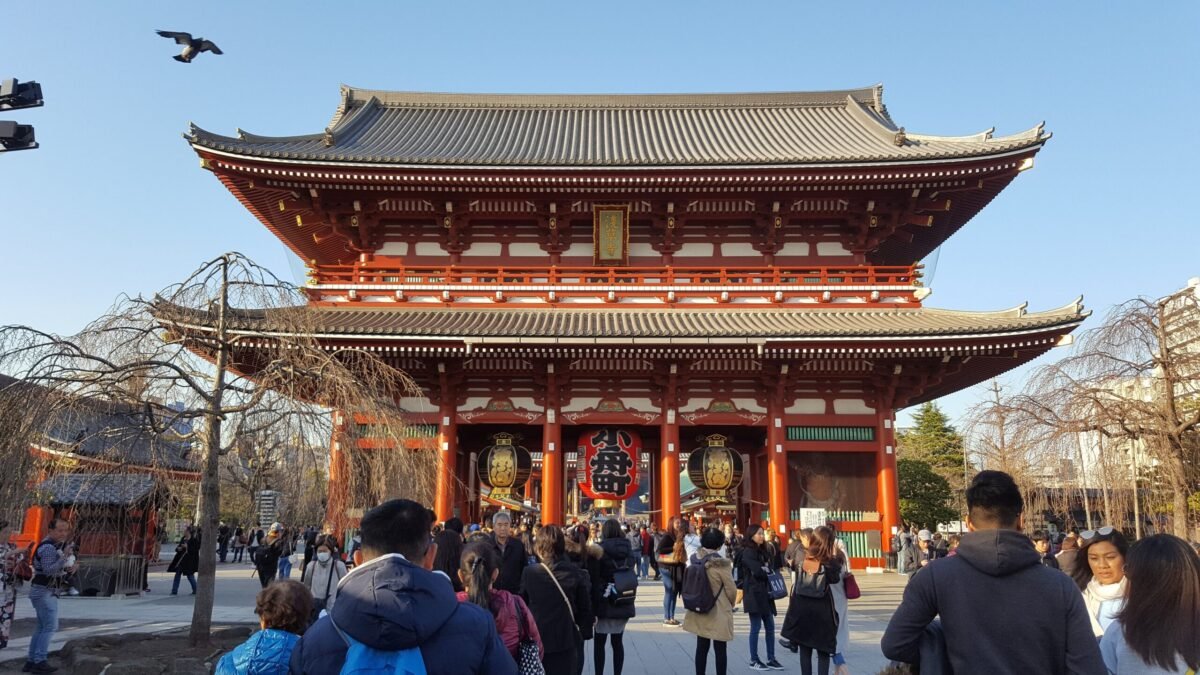
Sensoji is Tokyo’s oldest temple, and the approach through Nakamise-dori — the shopping street leading up to it — is as much the experience as the temple itself. It’s busy, it’s touristy, and it’s still worth doing, because the older streets surrounding it haven’t been smoothed over the way some of Tokyo’s newer districts have.
If you have the time, walk beyond the main temple grounds into the quieter side streets nearby, where the neighbourhood character that drew me to recommend Asakusa as a base reveals itself properly.
Meiji Shrine and Harajuku
These two sit almost on top of each other and couldn’t feel more different. Meiji Shrine is set inside a forested approach that muffles the city almost entirely — a deliberate piece of design, not an accident. Walk out the other side of that forest and you’re in Harajuku, specifically Takeshita Street, which is Tokyo’s youth culture and fashion scene running at full volume. Doing both in the same outing gives you the clearest sense of how fast Tokyo can shift registers within a few hundred metres.
Two Gardens Worth Building a Morning Around
If you want a slower morning between the busier stops above, two gardens earn the detour.
Shinjuku Gyoen National Garden is open year-round and blends three garden styles — French formal, English landscape, and traditional Japanese — across one large, genuinely peaceful space. It sits a short walk from Shinjuku Station, which makes it an easy add-on if you’re already in the area.
Hama-rikyu Gardens, near Tsukiji and Shiodome, is the one I’d send a photographer to. Centuries-old pine trees, a tidal pond, and a teahouse on a small island sit directly beneath the modern Shiodome skyline — the contrast between Edo-period landscaping and glass towers is more striking here than almost anywhere else in the city. It’s also open year-round, which makes it a safe recommendation regardless of when you’re travelling.
Tsukiji Outer Market — and Where I’d Actually Spend the Money
Tsukiji Outer Market is still worth doing for the atmosphere — the narrow lanes, the knife shops, the smell of grilling seafood. Go in with clear eyes, though: pricing here has shifted firmly into tourist territory since the wholesale market relocated to Toyosu, and you’ll pay for the experience as much as the food.
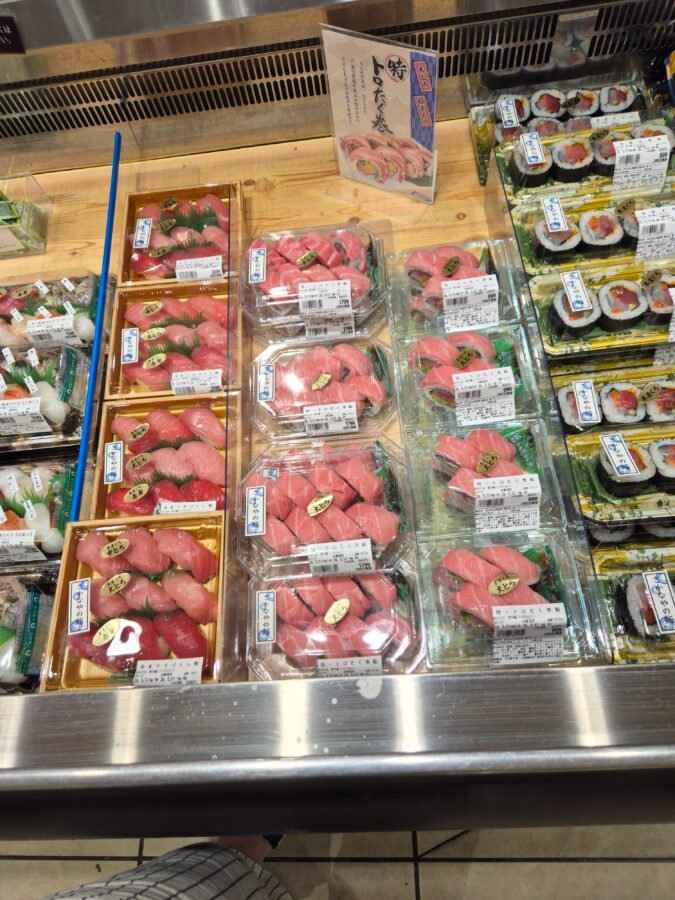
If what you actually want is high-quality tuna at a fair price, I’d send you to a depachika instead — the department store basement food halls I’ve already mentioned for everyday eating. The quality rivals what you’ll find at Tsukiji, the quantity is often better, and the price reflects a supermarket rather than a tourist strip. Go to Tsukiji for the experience. Go to a depachika if you actually want to eat well for less.
Language and How You Get By
You don’t need to speak Japanese to function in Tokyo.
Signage is clear, consistent, and bilingual in the areas you’re most likely to use. Train stations, ticket machines, and most structured environments are designed to allow you to move through them without relying on conversation. Where language becomes relevant — smaller restaurants, local shops — you adjust quickly. Visual menus, ordering systems, and simple interaction are generally enough.
What stands out is how deliberately Tokyo operates through systems rather than conversation. You buy tickets from machines, order through screens, tap in and out of stations. The process replaces the need for explanation, and once you settle into that rhythm, communication becomes far less of a concern than most visitors anticipate beforehand.
Food and Dietary Restrictions
Tokyo’s food culture is one of its genuine strengths. Quality is consistently high across all price points, and options are everywhere. You don’t need to spend significantly to eat well.
Food on the Ground
Tokyo makes eating well at every price point straightforward, once you know where to look beyond restaurants.
Convenience stores — 7-Eleven, Lawson, and FamilyMart — are not what you think they are. In Tokyo they function as genuine infrastructure: reliable meals at any hour, a level of food quality that would embarrass most Western supermarkets, ATMs that accept international cards, printing services, and phone cables. They’re also a useful fallback when language makes restaurant ordering feel complicated. Understanding this early removes a category of daily friction.
Supermarkets are worth knowing about too, particularly in the early evening when prepared meals are marked down. The quality is consistently good and the range is wide — bento boxes, sushi, salads, grilled items — all packaged and ready to eat. It’s an entirely normal way to have dinner in Tokyo, not a compromise.
Department store basement food halls — known as depachika — are a different experience again. Major department stores in areas like Shinjuku, Shibuya, and Ginza dedicate their entire basement level to food: prepared dishes, sushi counters, baked goods, regional specialities from across Japan, and sweets. The quality is high and the presentation is meticulous. It’s worth going at least once simply to see it, and it’s a practical option for putting together a genuinely excellent meal without sitting down in a restaurant.
For anyone concerned about unfamiliar food, Tokyo is probably the least challenging major Asian city in that regard. Western cuisines are represented everywhere from casual to high-end, and international fast food is on virtually every corner. The more useful question is whether you’ll want it, given the quality and accessibility of everything else.
Dietary Restrictions
Tokyo can be genuinely difficult to navigate with dietary restrictions, and it’s worth being clear-eyed about this before you arrive. Vegetarian and vegan options exist but require effort to find outside dedicated restaurants. Hidden ingredients — particularly dashi stock in broths and sauces — mean that dishes which appear meat-free often aren’t. Gluten-free is harder still, given the prevalence of soy sauce. If you have significant restrictions, research specific restaurants before each day rather than relying on improvisation, and consider carrying a translation card that explains your requirements in Japanese. Apps like HappyCow and Vanilla Bean are useful tools for this.
Packing and Cultural Norms
Footwear
Tokyo involves more walking than most cities. Daily step counts of 15,000 or more are normal once you’re moving between neighbourhoods and navigating stations. Comfortable, well-worn shoes are not optional — this is not the trip to break in new footwear.
Beyond comfort, some traditional spaces require you to remove shoes at the entrance. Temples, shrines, and certain ryokan-style accommodations all follow this practice. Slip-on shoes that come off and go back on cleanly make this considerably less disruptive than laces in a doorway with people waiting behind you.
Clothing for Temples and Shrines
Tokyo’s temples and shrines do not enforce the strict dress codes you encounter in some other parts of Asia. There is no requirement to cover shoulders or knees for entry to most sites. That said, the general principle applies: dress with some awareness of where you are. Very short shorts or beachwear would read as careless rather than offensive, but neat, modest clothing is simply appropriate and requires no thought once you’ve packed it.
Tattoos
In daily life — on the street, in restaurants, on public transport — tattoos attract no attention and present no practical issue in Tokyo. The consideration arises specifically at onsen (hot spring baths) and public sento baths, where many establishments still maintain no-tattoo policies rooted in longstanding cultural associations with organised crime. This is changing, and Tokyo in particular has become more accommodating, but it hasn’t disappeared.
If onsen is part of your plan, research the specific venue before you go. Some facilities accept tattoos outright, some require them to be covered with waterproof patches — available at Japanese drugstores — and some offer private bathing options that sidestep the question entirely. Private baths at ryokan are generally the most straightforward solution. Packing a few waterproof patches costs nothing and removes the uncertainty.
A Note on Layers
Tokyo’s weather varies considerably across the seasons and, within a single day, between air-conditioned interiors and outdoor heat in summer. Lightweight layers that can be added or removed serve better than single heavy pieces regardless of when you visit.
Safety and Solo Travel
Tokyo feels different as a solo traveller almost from the first day.
The quiet on public transport is something you feel rather than just observe. Trains run full during peak hours and yet remain genuinely calm — no raised voices, no aggressive energy, no sense of needing to monitor your surroundings. You can move around independently at any hour without the level of background vigilance that many other cities require.
Dining alone carries no social weight. That’s often the part people overthink before they travel, even though it rarely plays out that way, which I’ve unpacked in Dining alone while traveling feels awkward – but you’re solving the wrong problem.
Counter seating, individual tables, and solo diners are simply part of how restaurants operate. You sit down, eat, and leave — no negotiation of social space, no unwanted attention. That absence of friction is one of the things that makes daily movement in Tokyo feel easier than almost anywhere else.
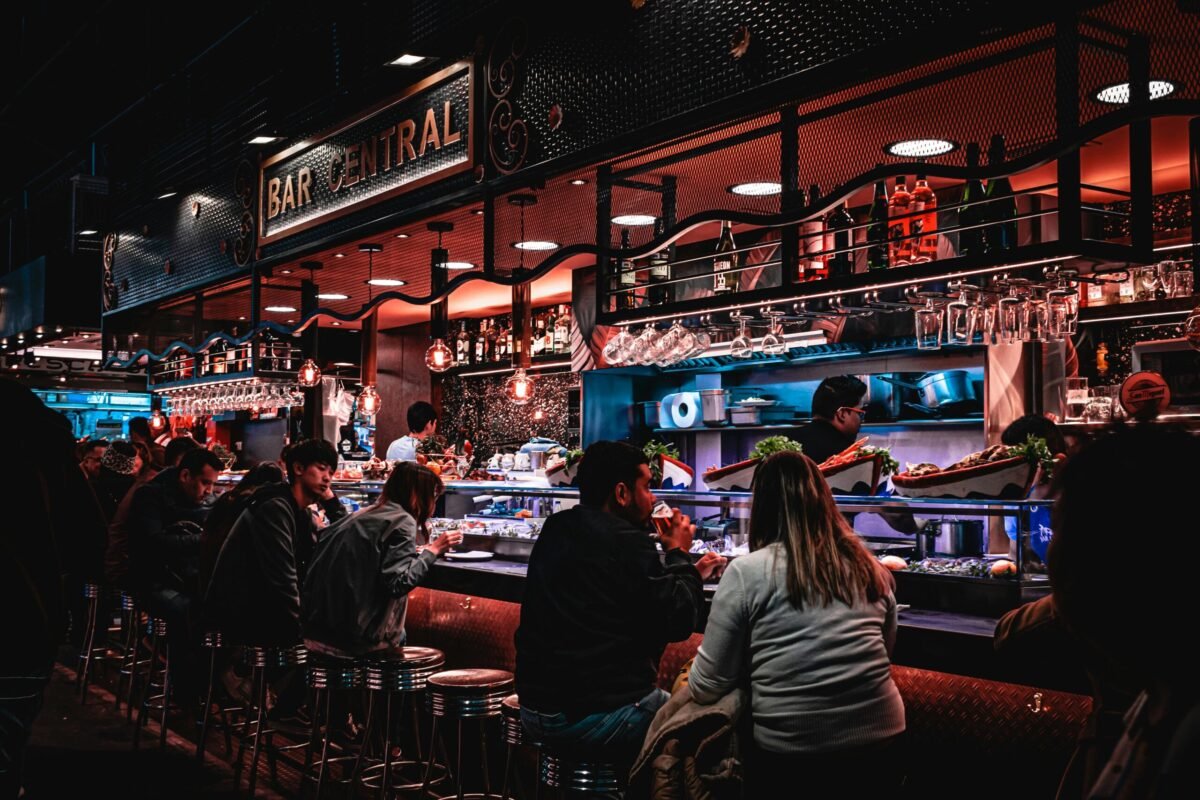
What I’ve also noticed, across multiple visits, is that being a mature woman in Tokyo tends to bring more consideration rather than less — a quieter attentiveness in interactions, a little more patience, a sense of being looked after rather than assessed. It doesn’t announce itself. It shows up in small, practical ways that are easy to miss until you notice the cumulative effect.
When to Visit Tokyo
Timing changes how Tokyo feels more than most visitors expect — and the difference between a well-timed trip and a poorly-timed one isn’t just about weather. Japan has three major domestic holiday periods when accommodation prices spike, transport fills up weeks in advance, and the city operates under a different kind of pressure entirely. Knowing these dates before you book is basic trip planning.
The Three Peak Periods to Know
Golden Week runs from approximately April 29 to May 6, clustering four national holidays — Showa Day, Constitution Memorial Day, Greenery Day, and Children’s Day — into a single stretch. Many Japanese workers extend this with paid leave, creating what can effectively become a ten-day holiday for much of the country. Hotels in Tokyo can double or triple in price during this period. Transport fills weeks in advance. If you’re already planning to be in Tokyo during Golden Week, book everything as early as possible. If you have flexibility, move your dates to avoid Golden Week.
Obon falls in mid-August, typically August 13 to 16, though the surrounding period — roughly August 8 to 16 — sees significant travel movement. It’s a Buddhist tradition centred on honouring ancestral spirits, and it triggers a mass domestic migration as Japanese families return to their hometowns. The practical effect for a tourist in Tokyo is crowded transport, fully booked accommodation, and oppressive summer heat arriving simultaneously.
New Year (Oshogatsu) runs from approximately December 28 to January 3. Much of Japan — including many restaurants, smaller shops, and some attractions — closes entirely during this period. Meiji Shrine in Tokyo draws millions of visitors in the first three days of January for Hatsumode, the first shrine visit of the year. It’s a genuinely impressive cultural spectacle, but it requires planning around rather than stumbling into.
Cherry Blossom Season
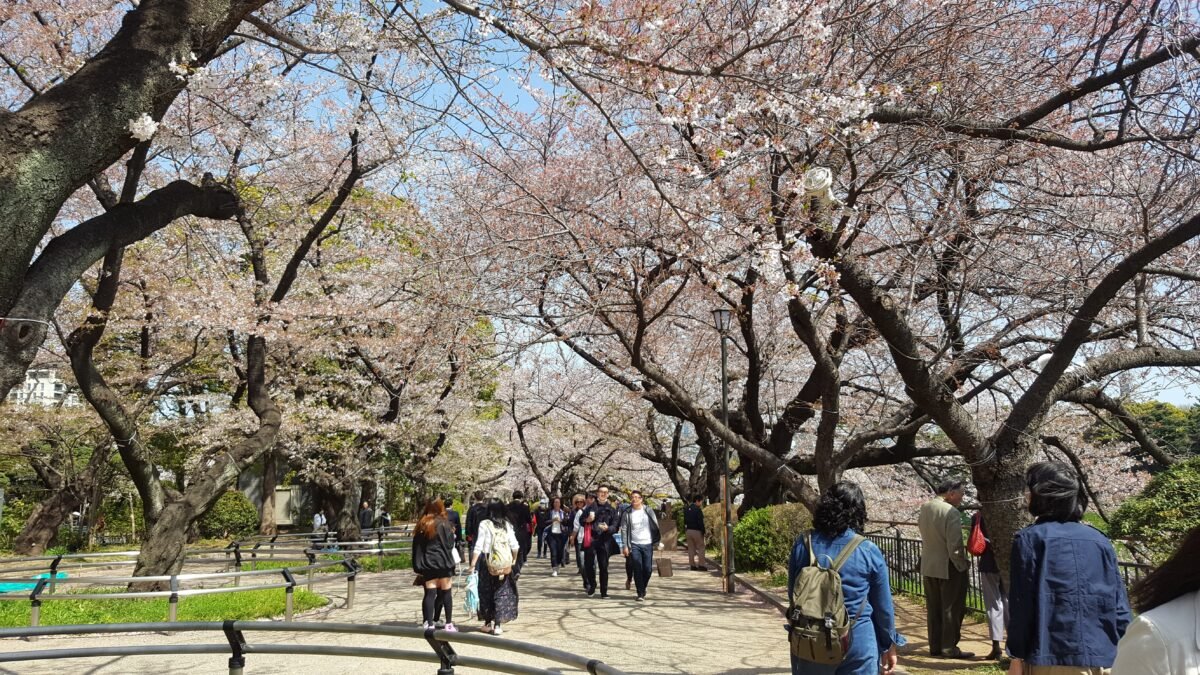
Spring, particularly cherry blossom season, sits in a different category from the holiday periods above — it’s driven by visitor demand rather than domestic travel. Bloom timing in Tokyo typically falls in late March to early April, though this shifts year to year with temperature variations. The visual impact is genuine and worth planning around if it matters to you. What comes with it is high accommodation demand, elevated prices, and the kind of crowds at major parks and viewing spots that require patience. If blossom season is your reason for going, book accommodation several months ahead.
Summer in Tokyo
Summer is the most physically demanding season. July and August bring heat and humidity that make extended outdoor movement genuinely taxing. It’s manageable with the right expectations, but it isn’t the version of Tokyo that most visitors find easy.
The Better Times to Visit
Autumn — mid-September through November — offers the most consistently comfortable experience. The weather is pleasant and the city is fully active. Autumn foliage in late November adds its own visual interest without the same accommodation pressure as cherry blossom season.
Late May and early June, immediately after Golden Week disperses, is an underrated window. The weather is mild before the summer humidity sets in, prices normalise, and the city returns to its ordinary rhythm.
Winter — December through February outside of the New Year period — is quieter, easier to navigate, and often significantly cheaper than peak seasons. The cold is manageable, and the city doesn’t shut down. Early to mid-December in particular offers good value before the New Year price spike begins around December 27.
How Long to Stay
There is no fixed number that feels like enough, and first-time visitors consistently underestimate how much time Tokyo can absorb without exhausting itself.
A first trip gives you a sense of the city’s pace, structure, and character — but it doesn’t reveal its layers. The more time you give it, the more intelligible it becomes. Neighbourhoods shift in character depending on when you visit. Food options expand with exploration. Day trips to Yokohama, Kamakura, and Nikko extend the range further without requiring full relocation.
You’re not deciding how much of Tokyo to finish. You’re deciding how much of it to give your time to on this particular visit, knowing there will be others.
Where Tokyo Fits in a Japan Trip
Tokyo tends to act as both the entry point and the anchor for a trip through Japan. It introduces you to how the country operates — the transport systems, the pace, the civic norms — and builds the functional fluency that makes everything else easier once you move on to other parts of Japan.
From Tokyo, other cities offer genuine contrast. Kyoto shifts the focus toward history and cultural depth, though it operates on stricter terms than most guides will tell you, as I’ve written in Kyoto is revered – but it operates on stricter terms. Osaka brings a different kind of urban energy — more open, less formal, which is why Osaka is welcoming – even if it’s not a city I’d return to. Smaller destinations change the pace entirely.
Tokyo doesn’t replace those experiences. It prepares you for them.
Travel Logistics Planner
A simple framework for thinking through the logistical side of travel — flights, entry requirements, accommodation and transfers — before the journey begins.
Delivered instantly. Occasional thoughtful updates from the road.