
Chiang Mai is the right first stop in Thailand. Not because it’s the most interesting city, or the most beautiful, or the one with the highest density of must-see attractions. It’s the right first stop because it allows you to arrive, orient yourself, and let your nervous system catch up — before the country asks anything more of you.

I have spent around six weeks in Chiang Mai across two separate visits, testing four different Accor properties across different parts of the city as part of my long-stay hotel strategy — something I write about in detail in Why I Sold My House and Live in Hotels Instead. Moving between properties wasn’t restlessness. It was research. Each location placed me in a different neighbourhood, and I wanted to understand how the city felt from each of them.
That experience is the foundation of everything that follows.
Why sequencing matters more than destination choice
The first week of a solo trip later in life is not really about sightseeing. It’s about orientation. Everything arrives at once — the sounds, the pace, the way systems work, the social tone, the small frictions that don’t register until they accumulate.
When those inputs arrive too quickly, the brain interprets overload as risk. That doesn’t mean a place is dangerous. It means the cost of interpretation is too high. You can push through that when you’re younger. Later in life, pushing through tends to drain energy rather than build confidence.
What you want from a first stop is not excitement. It’s traction.
First stops carry disproportionate weight because they set the baseline. They establish whether confidence builds or erodes, whether judgement sharpens or becomes defensive, whether curiosity opens or closes. This is why I’ve been direct elsewhere about sequencing — in Why I Would Not Start My First Thailand Trip in Bangkok and in Why I Would Never Send a Mature Solo Woman to Phuket or Pattaya First. Those articles explain what doesn’t work as a beginning. Chiang Mai is the constructive counterbalance.
By the time women are travelling solo in their later life, most are no longer interested in testing themselves unnecessarily. They’re not chasing intensity for its own sake. They’re calibrating how a place feels to move through. Chiang Mai rewards that calibration.
Chiang Mai vs Bangkok as a first stop
The most common question is whether to start in Bangkok or Chiang Mai. Here is how they compare across the dimensions that actually matter when you’re arriving solo for the first time.
If you want the full argument against starting in Bangkok, I covered it in Why I Would Not Start My First Thailand Trip in Bangkok. The table below shows how the two cities compare across the dimensions that actually matter when you’re arriving solo for the first time.
| Dimension | Chiang Mai | Bangkok |
| Scale / navigability | Compact. Old City is walkable. Neighbourhoods repeat patterns. | Sprawling. BTS/MRT essential. Disorienting on arrival. |
| Transport complexity | Grab is cheap, fast, no negotiation. Walking viable in Old City. | BTS/MRT reliable but requires route-learning. Grab available but traffic adds time. |
| Sensory load | Active without relentless. Quiet pockets easy to find. | High. Constant noise, heat, density. Takes days to calibrate. |
| Social tone for solo women | Neutral, unhurried. Solo presence draws no attention. | Indifferent rather than hostile. Easier once you know the city. |
| Cost of getting settled | Low. Accor and other mid-range hotels offer strong value. Food cheap and accessible. | Higher. Good-area hotels cost more. Transport adds up quickly. |
| Burning season risk | Feb–Apr smoke can affect air quality. Check AQI before booking. | Not affected. |
| Verdict | Right first stop if you want to arrive and settle before Thailand tests you. | Right base once you’re grounded. Wrong place to begin. |
Bangkok becomes an excellent base once you’re grounded — it’s now my preferred Thai base — and I cover it in detail in Bangkok for First-Time Visitors: What to Expect and How to Handle it. But it is a demanding arrival city, and demand has a cost when you’re still calibrating.
What four properties showed me about the city
My two visits took me across three different Accor properties and one property I booked on Booking.com: the Mercure Chiang Mai near Chang Phuak Gate (the northern gate), the Tapae Gate Villa near Tha Phae Gate (the eastern gate), the Movenpick Chiang Mai in the Night Bazaar district on Chang Klan Road, and the Novotel Chiang Mai Nimman Journeyhub in the Nimman area. Moving between them gave me the kind of comparative read of the city that a single base wouldn’t have.
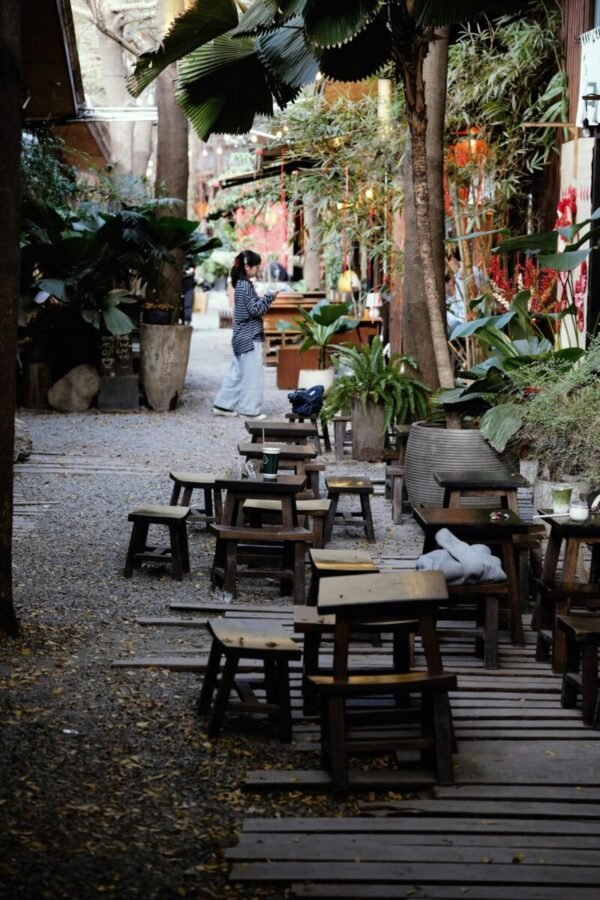
What I found was a consistent underlying rhythm that held regardless of the neighbourhood. The Old City is quiet, walkable, and dense with temples. Nimman is more contemporary — lined with cafés, design shops, and a younger energy. The Night Bazaar district on Chang Klan Road is livelier in the evenings but not aggressive or chaotic. Each area had a different surface texture and the same underlying ease.
That consistency is one of Chiang Mai’s genuine strengths. You don’t have to choose the right neighbourhood perfectly. The city doesn’t punish you for landing in the wrong one.
Where to base yourself
For a first visit, the Old City or the Night Bazaar district on Chang Klan Road are both strong choices. The Old City gives you walking access to temples, quiet streets, and a human scale that’s easy to navigate on foot. The Chang Klan Road area gives you more dining variety and proximity to the night market cluster. If you plan to stay longer — and Chiang Mai is an easy city to extend — basing yourself in two different areas across the visit is worth considering. The city reveals itself differently depending on where you’re placed.
Getting around
Grab operates reliably right across Chiang Mai. Fares are low, cars arrive quickly, and the whole city is well covered. If you’ve set up a credit card in the app, payment processes automatically at the end of each ride — no cash, no negotiating, no fumbling at the door. That setup is safe. I’ve used Grab throughout Thailand across multiple visits without any issues with card security. You verify the plate number before you get in, the route is tracked, and payment clears without interaction.
Walking is viable inside the Old City, though the pavements require attention. They are uneven in places and occasionally interrupted. I am not especially sure-footed, and I did trip and fall outside one of my hotels — staff came running immediately, and after I declined a hospital visit, they quietly patched me up with a first aid kit as if this were the most ordinary thing in the world. The hospitality was genuine rather than performed.
Getting there from Bangkok
Multiple airlines operate the Bangkok to Chiang Mai route daily, including Thai Airways, Bangkok Airways, Thai Lion Air, and Nok Air. Flight time is approximately one hour. Budget options make this an accessible connection.
For the transfer from Chiang Mai International Airport, I always book a private car through Booking.com. The driver meets you on arrival, the price is fixed, and there’s no negotiation involved. The Old City and central hotel areas are typically 15 to 20 minutes from the airport.
Practical details worth knowing
Laundry
Laundry services are easy to find throughout Chiang Mai. What you’re looking for are drop-off laundry shops — not coin-operated laundromats — where you leave your bag and collect it clean and folded a few hours later. These are common, inexpensive, and far more convenient than managing laundry yourself. Most neighbourhoods have at least one within a short walk.
How long to stay
Three to five nights is a reasonable minimum for a first visit. That’s enough time to find your feet, understand the city’s rhythm, visit a few temples without rushing, sort out your cash and work out what you actually want from the place. Chiang Mai is also an easy city to stay in longer. Mid-range hotels offer strong value, the infrastructure supports a slower pace, and the city’s tempo doesn’t punish you for not being constantly in motion.
The two night markets — and why the distinction matters
Chiang Mai has two well-known night markets, and they are easy to conflate before you arrive.
The Chiang Mai Night Bazaar is the nightly market on Chang Klan Road, east of the Old City. It operates every evening and covers several blocks, with indoor sections including the Kalare Night Bazaar and Anusarn Market. This is the one most visitors mean when they say “the night market.”
The Sunday Night Walking Market is a different event entirely. It runs along Ratchadamnoen Road inside the Old City, every Sunday only. It is larger, slower, and more artisan-focused. Both are worth visiting.
Festival seasons: plan ahead or book out
Two festivals bring significant crowds to Chiang Mai and push hotel prices up sharply.
Songkran, the Thai New Year water festival, runs across mid-April and is celebrated across Thailand. Streets flood with water fights. If that’s appealing, plan well ahead. If it isn’t, avoid the city in that window.
Loy Krathong and Yi Peng fall in November, on the full moon of the 12th lunar month. Loy Krathong is celebrated nationwide, but Chiang Mai’s version merges with Yi Peng, the Lanna sky lantern festival unique to Northern Thailand. Thousands of paper lanterns are released into the night sky simultaneously. It is unlike anything else in the country. Accommodation books out weeks in advance for this period and prices reflect the demand. If you want to attend, confirm your dates early and book the moment accommodation opens.
What actually settled me here
When I say Chiang Mai worked as a first stop, I don’t mean every day was effortless. I mean something more specific: I could map the city quickly. I understood how to get around without constantly rechecking. I didn’t feel watched, rushed, or extracted from. I could make small decisions without them cascading into fatigue.
What helped me settle wasn’t sightseeing. It was repetition. Taking the same routes. Ordering food without overthinking it. Letting days develop a shape.
One small moment captures it well. I remember standing at a Kasikorn Bank ATM, realising how straightforward the English interface was, and feeling an unexpected wave of relief. That kind of small competence accumulates faster than any attraction. Once it’s established, complexity becomes interesting rather than threatening.
Another moment stayed with me differently. A female Grab driver, in limited English, told me how brave she thought I was to be travelling alone. She said she wanted to do the same one day but didn’t yet feel ready. We exchanged simple reassurances during the ride — nothing elaborate, just two women recognising each other’s choices across different lives. That kind of interaction didn’t feel exceptional in Chiang Mai. It felt possible.
How Chiang Mai feels as a solo woman
I felt completely safe in Chiang Mai across both visits, including at night. Streets in the central areas are well lit and well populated in the evenings. Walking alone after dark didn’t require any particular vigilance beyond the normal awareness you carry anywhere.
Solo female presence doesn’t register as unusual here. Chiang Mai has a substantial digital nomad community, and solo women of all ages are a visible and unremarkable part of the city’s daily texture. There are no touts, no persistent approaches, no sense of being watched or followed. Whether that’s partly the culture and partly the demographic mix, the practical result is the same: you can move through the city without the low-level self-monitoring that drains energy in other places.
Southeast Asia’s deep respect for age works in your favour here in ways that are felt rather than announced. It shows up in small interactions — in the deference of service staff, in the ease of being left alone when you want to be, in the complete absence of the dismissiveness that older women sometimes encounter in Western travel contexts. Chiang Mai’s particular warmth compounds this. Staff at temples, markets, and hotels treat a woman travelling alone not as a curiosity but as someone who knows exactly what she’s doing.
What surprised me most was how quickly Chiang Mai allowed me to stop being a tourist and start being a resident. In Bangkok, I remained visibly a visitor. In Chiang Mai, I started having conversations with locals — shopkeepers, restaurant owners, hotel staff — within the first week. By the second visit, some of those conversations had continuity. That transition, from visitor to familiar face, is rare in a city this size. It is one of the reasons six weeks here felt shorter than two weeks in more demanding places.
What Chiang Mai is not
Chiang Mai is often described as “relaxed” or “laid-back.” That framing understates what’s actually useful about it. The city is active and has genuine texture — temples with real weight, a cultural centre that reframes Northern Thai history in ways that change how you see the streets, markets that operate on a local rhythm rather than a tourist one.
Wat Chedi Luang carried a gravity that reviews hadn’t prepared me for. The Chiang Mai City Arts and Cultural Centre left a deep impression, particularly in how it framed the city’s relationship to the rest of Thailand. These weren’t experiences that overwhelmed me. They were experiences I could receive properly because I encountered them from a grounded place.
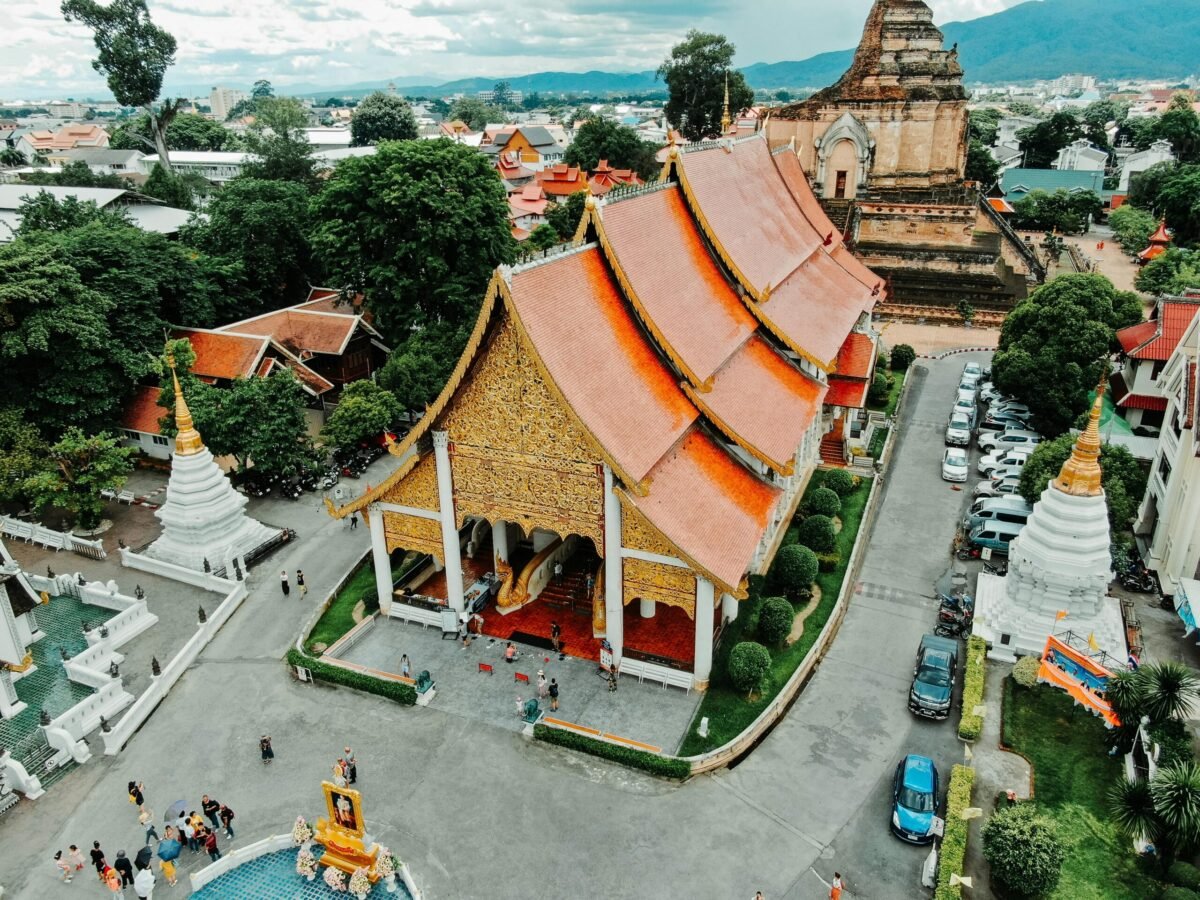
The point isn’t that Chiang Mai is gentle. It’s that Chiang Mai doesn’t compete for your attention at the same pitch as Bangkok. That difference is the space in which confidence builds.
One thing to check before you book: burning season
Chiang Mai’s burning season runs roughly from February through to April, when agricultural burning in the surrounding region can push air quality down significantly. The effect varies year to year and week to week. On my first visit, which was in early April, I didn’t notice anything significant. However, feedback from solo female traveller communities is consistent: women with respiratory sensitivities or asthma can find the smoke genuinely disruptive.
Before booking a Chiang Mai trip in this window, check current AQI data for the city. Apps like IQAir give reliable real-time readings. If air quality is a concern for you, arriving outside the February to April window is the lower-risk choice. October through January is generally the most comfortable period — cooler temperatures, lower humidity, and clean air.
This won’t be the right first stop for everyone
Some travellers thrive on scale. Others find quieter cities under-stimulating. There are women who would find Chiang Mai slow, or limiting, or simply not what they were looking for. That doesn’t make them wrong.
The point of sequencing isn’t to prescribe destinations — it’s to help you recognise fit earlier, so you don’t waste energy overriding yourself. If Bangkok’s density is exactly what you want from day one, start there. If the idea of arriving somewhere manageable before asking more of yourself feels right, Chiang Mai is the answer.
Start where your nervous system can catch up
Later in life, travel isn’t about proving anything. It’s about choosing environments that support judgement rather than constantly testing it.
Chiang Mai gave me a stable base from which to say yes and no more clearly later. When I eventually spent extended time in Bangkok, which is now my preferred Thai base, it didn’t feel like an assault. It felt like a system I could engage with on my own terms. Timing changed perception entirely.
You can always choose intensity later. You can add scale once you’re grounded. It is much harder to recover confidence once the first impression has eroded it.
Chiang Mai wasn’t the destination that defined Thailand for me. It was the one that made the rest of Thailand possible.
Travel Logistics Planner
A simple framework for thinking through the logistical side of travel — flights, entry requirements, accommodation and transfers — before the journey begins.
Delivered instantly. Occasional thoughtful updates from the road.