
Most people planning a Thailand trip start with the wrong question. They ask where to go. The real question is what order to go in.
I’ve written elsewhere about why Bangkok isn’t the place to begin, and why Chiang Mai is. This article draws that thinking into one sequence — not a list of cities, but a plan for the order you meet them in, and the reason behind each stop.
I’ve spent enough time in Thailand, across enough trips, to know what actually works for someone on their first visit. Most itineraries start in Bangkok simply because that’s where the flight lands — not because anyone decided it was the right place to start. This sequence does decide that, deliberately, and it’s the order I’d point a first-timer toward.
Thailand Isn’t One Trip
Broadly, Thailand splits into four experiences, and each one runs on its own weather clock.
| Region | Built Around | Best Time | Weather |
|---|---|---|---|
| North | Chiang Mai, Chiang Rai, Pai | Nov–Feb | Cool and dry. Avoid Feb–Apr, when crop burning drops air quality across the north. |
| Central Plains | Bangkok, Hua Hin, Sri Racha, Pattaya, Rayong, Koh Chang | Nov–Feb | Cool and dry. Hot Mar–May, wet Jun–Oct. |
| Andaman Coast | Phuket, Krabi, Phang Nga, Khao Lak, Koh Phi Phi, Koh Lanta | Nov–Apr | Wet season runs May–Oct, worst in Sep and Oct. |
| Gulf Coast | Koh Samui, Koh Phangan, Koh Tao | Jan–Sep | Wet season runs Oct–Dec, worst in Nov. |
Why Sequence Matters More Than Destination
Every solo trip later in life carries the same risk. It isn’t danger. It’s capacity. Arrive somewhere demanding on day one, and everything afterward inherits that fatigue. Get the first stop right, however, and confidence builds instead of eroding.
For a first-time Thailand trip specifically, that means starting in Chiang Mai rather than Bangkok. The country asks less of you there on day one, which makes the whole trip feel less daunting from the outset — not because Chiang Mai is easier in some general sense, but because it gives you room to calibrate before anything more demanding arrives.
I felt this directly the first time I arrived in Chiang Mai rather than Bangkok. My body settled before my mind caught up. Nothing dramatic marked the difference. It showed up quietly, in the accumulation of small, manageable decisions instead of one overwhelming one.
An ATM with an English-language interface, a few minutes’ walk from the hotel. The Old City is small enough that you’re rarely more than a ten-minute walk from where you meant to be. None of that is dramatic. It’s the absence of friction, stacking up until you notice it’s there.
That’s the whole argument behind this sequence. Not which city is better. Which one your nervous system can meet first.
The Cost of Getting the Order Wrong
When the first stop asks too much, the fatigue rarely gets read as fatigue. It gets read as a verdict on the place. You don’t think I arrived depleted. You think, this doesn’t feel right — and that conclusion sets before your judgement has had any chance to recover, which is exactly why it tends to stick.
That’s the actual risk in skipping the sequence. Not a harder few days. A false read on Thailand itself, formed at the one point in the trip you were least equipped to form it. Getting the order right isn’t about comfort. It’s about making sure your first impression is actually accurate.
Arrival Isn’t the Same Decision as Sequence
Before sequence comes routing, and routing has its own rules.
Flying In From Far Away
If you’re travelling from the US, Canada, the UK, Australia, or New Zealand, there’s no way to reach Chiang Mai without connecting through Bangkok. That’s not a sequencing choice. It’s the map.
The rule that matters here isn’t about Bangkok itself. It’s about not stacking a fresh domestic connection on top of a long-haul flight. Push straight through with no sleep, and you arrive in Chiang Mai already depleted, which defeats the entire point of starting there. Break the journey instead — overnight near the airport, then continue the next day rested. I’ve written about this in Why Your Arrival Time Matters More Than Your Flight Length, and the same logic applies here.
Already in the Region
If you’re travelling from elsewhere in Asia, the geography changes. Chiang Mai has direct flights from Singapore, Kuala Lumpur, Hong Kong, Seoul, Taipei, and Osaka. These are short regional hops that land in daylight, not long-haul flights that need a recovery day built in.
On my own first trip to Chiang Mai, I flew from Jakarta to Singapore, then caught a direct connection to Chiang Mai. I was already in the region and the flights were short, so I landed with hours of daylight still ahead of me. An overnight break exists to let fatigue clear before you push on — and on a trip that short, that fatigue never had the chance to build up, so there was nothing to recover from.
The principle stays the same either way. Match the arrival to what the flight actually demands of you, not to a fixed rule about always stopping in Bangkok.
Start in Chiang Mai
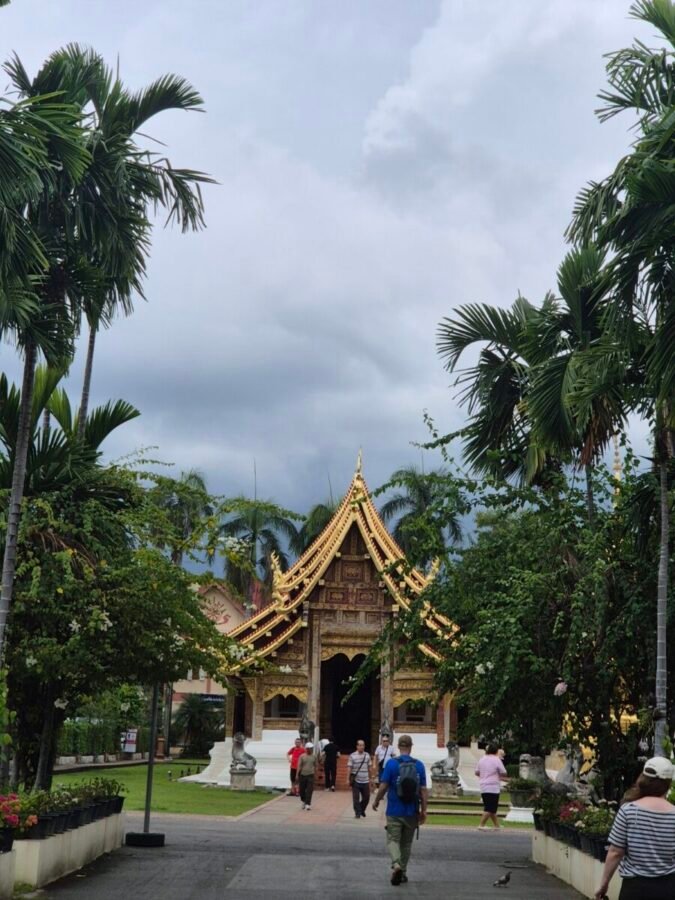
However you arrive, Chiang Mai is where the trip should begin. I’ve laid out the full case in Why Chiang Mai Is the Best First Stop in Thailand for Solo Women, and in Why I Would Not Start My First Thailand Trip in Bangkok.
The Old City is walkable and dense with temples, Grab rides are cheap and need no negotiation, and solo female presence draws no particular attention there. That’s the kind of low-friction start that lets you find your footing before Thailand asks anything more complicated of you.
Bangkok Becomes Base, Not Just Destination
Getting from Chiang Mai to Bangkok is a short domestic flight, about an hour, run multiple times a day by several airlines — one of the easier transitions in this whole sequence.
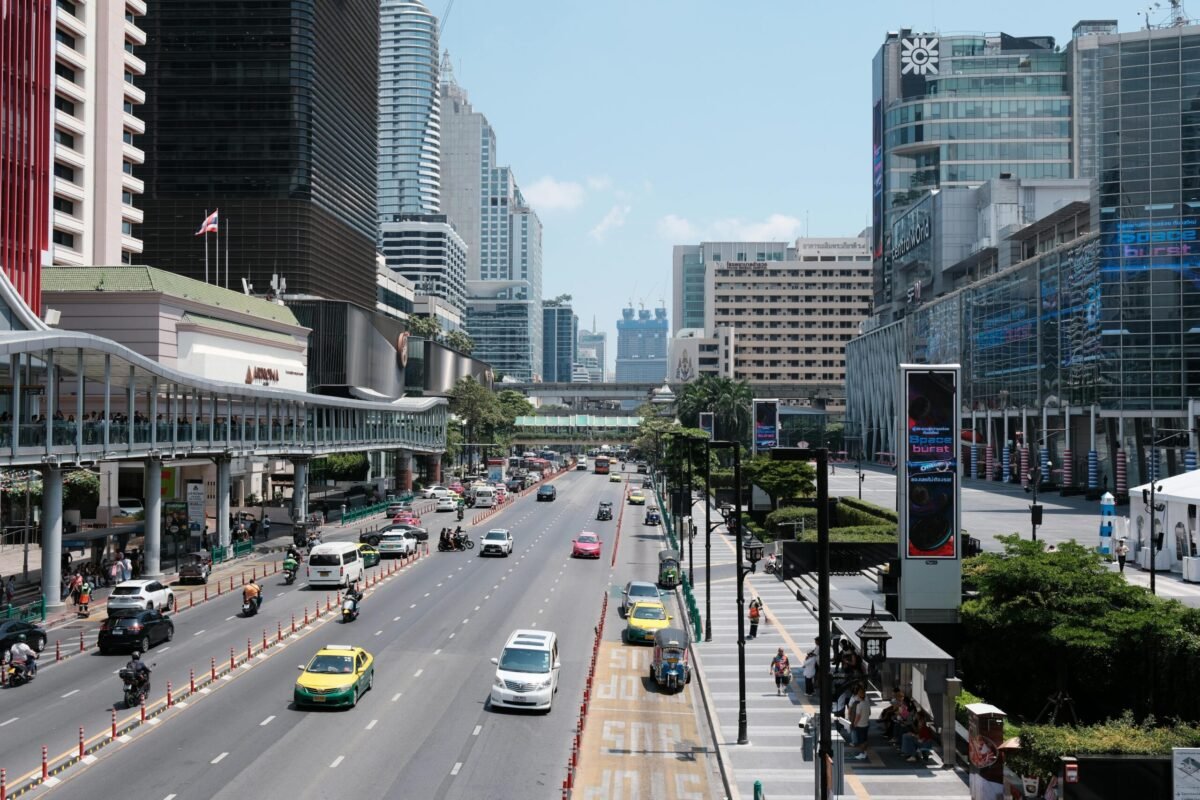
Once you land, Bangkok asks something different of you than Chiang Mai did. The Old City’s walkable lanes give way to a sprawling grid you navigate by BTS and MRT instead of on foot. The heat is more constant, the scale is bigger, the traffic is more intense and the pace doesn’t slow down to meet you the way Chiang Mai’s does. None of that is a problem if you’ve arrived grounded. It’s precisely the problem if you haven’t.
Leaving the Luggage Behind
Once you’re through Chiang Mai and oriented, Bangkok takes on a second role. It’s still a city worth visiting in its own right — but it also becomes infrastructure you use, a fixed point the rest of the trip can move around.
This is the same design principle behind luggage forwarding in Japan, applied to Southeast Asia. In Japan, you send your case ahead and travel the gap with a light bag. Thailand doesn’t have that forwarding system, but a Bangkok hotel can do the same job — with one distinction worth being precise about. Any hotel will hold a bag for a few hours, or even overnight. That’s standard practice, not a loyalty perk. What hotel status actually buys you is flexibility for longer: leaving a case for the better part of two weeks while you’re on a different island is a bigger ask than any policy guarantees, and that’s where being a known, returning guest genuinely helps.
I do this with the Novotel Sukhumvit 20 or the Grand Mercure Bangkok Atrium, and it’s the same hotel-based system I rely on everywhere I travel now, which I’ve written about at length in Why I Sold My House and Live In Hotels Instead.
Travelling Light to the Islands
Once the case is stored, fly out light. I always choose Don Mueang over Suvarnabhumi for this leg. It’s smaller and faster to move through, which matters more on a short domestic hop than it seems like it should.
Phuket is where I’ve proven this out, and I’ve written about Patong Isn’t Phuket in detail. The principle isn’t specific to Phuket, though. It applies to any of Thailand’s island clusters. Ferries and boat transfers make a heavy case a genuinely different problem than it is at an airport, so the lighter you travel, the easier that leg of the trip becomes, wherever the islands are.
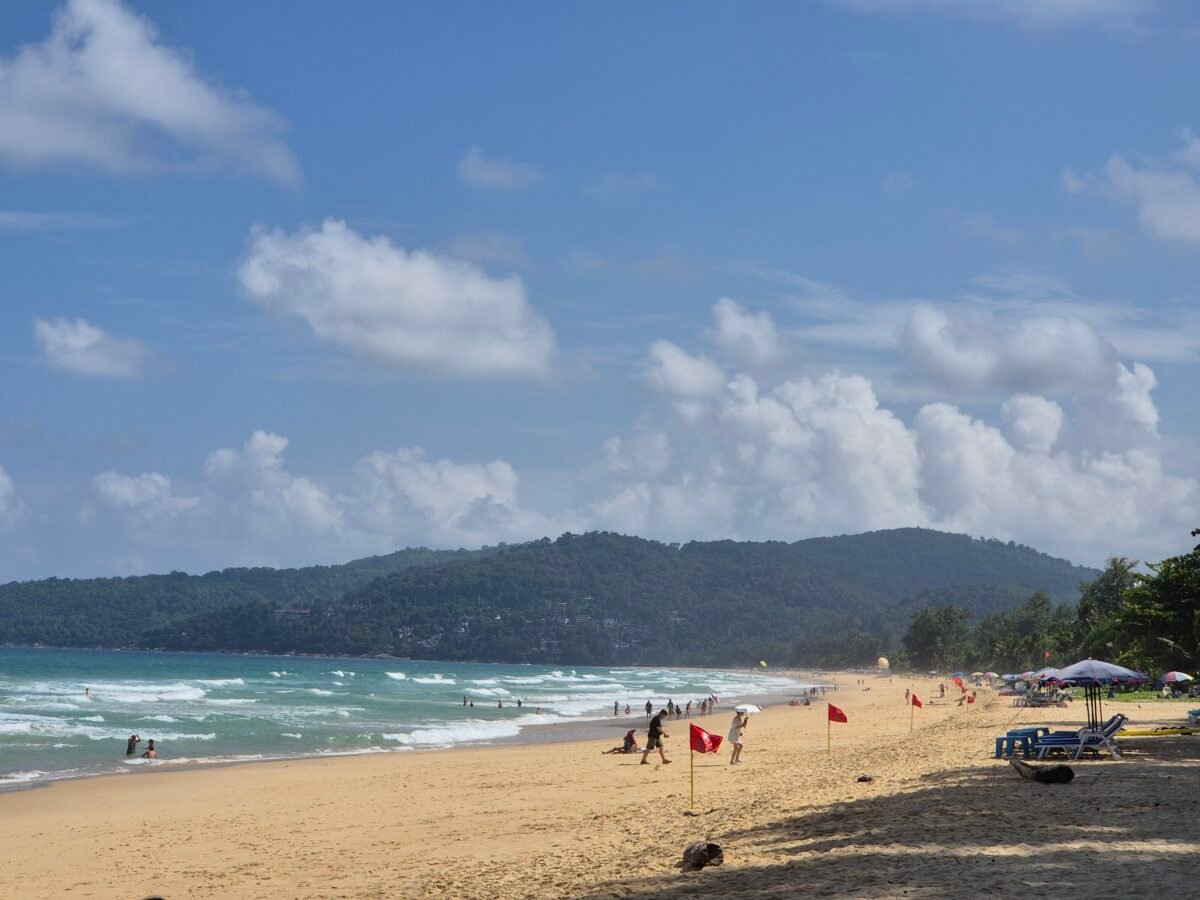
One thing worth knowing before you build this into island time: the Andaman coast and the Gulf coast run on opposite monsoon systems. Phuket’s wet season runs roughly May through October, worst in September and October. The Gulf side runs the reverse, wettest around November. What matters more than which island you pick is the framework itself — Phuket is the proven case here, but the same base-and-travel-light logic applies whether you swap it for the Gulf coast, Krabi, or Koh Chang.
Back to Bangkok — Collecting What You Left
The loop closes where it opened. Same hotel, luggage waiting, a few nights before you leave the country. It’s also the natural window for any last-minute shopping — you’re not hauling purchases through island transfers, and the luggage you left behind has the room to bring them home. Bangkok isn’t a place you pass through once. It’s a base you return to.
The Sequence at a Glance
This sequence isn’t calendar-specific. It holds whether you have ten days or a month. What changes is how long you spend at each stage, not the order you move through them.
| Stage | What Happens | Why It’s In This Order | Read More |
|---|---|---|---|
| Arrival | Break the journey if long-haul. Go direct if you’re already regional. | Skipping this gets misread as “wrong place” instead of “wrong timing.” | Why Your Arrival Time Matters More Than Your Flight Length |
| Chiang Mai | Start here. Orient. Calibrate before anything more demanding arrives. | Low-friction first stop builds confidence instead of eroding it. | Why Chiang Mai Is the Best First Stop in Thailand for Solo Women |
| Bangkok (base) | Check in, leave the heavy case, continue light. | A city you can visit and infrastructure you can use — not one or the other. | Why I Sold My House and Live In Hotels Instead |
| Islands | Fly out light via Don Mueang. Applies to any island cluster, not just Phuket. | Ferries and boat transfers make a heavy case a bigger problem than it is at an airport. | Patong Isn’t Phuket |
| Bangkok (return) | Collect the case. Last-minute shopping. A few nights before departure. | Closes the loop — Bangkok as a base you return to, not a place you pass through once. | Bangkok Practical Guide: What to Expect and How to Handle It |
A Three-Week Itinerary Utilising This Sequence
For readers who want this mapped against an actual calendar, here’s how the sequence fills three weeks. It follows the same order laid out above — Chiang Mai first, Bangkok as base, then the islands — with day trips built in.
| Days | Base | Nights | What’s Happening |
|---|---|---|---|
| 1 | Bangkok (airport area) | 1 | Arrive and recover from the long-haul flight before continuing. |
| 2–6 | Chiang Mai | 5 | Orient in the Old City. Day trips to Pai and Chiang Rai. |
| 7–11 | Bangkok | 5 | City base. Day trip to Ayutthaya. Leave the heavy case before flying out light. |
| 12–17 | Phuket | 6 | Island time. Day trips to Phi Phi Island and Phang Nga Bay (James Bond Island). |
| 18–20 | Bangkok | 3 | Collect the luggage, last-minute shopping, before the flight home. |
| 21 | — | — | Depart. |
Practical Basics Before You Go
Visa and the TDAC
Most Western passport holders qualify for a visa exemption on arrival, but exemption conditions and qualifying nationalities change, so check your specific entitlement on the official Thai e-visa site before you book — not through a third-party source. Your passport needs at least six months of validity beyond your entry date, and you may be asked to show a return or onward ticket at immigration.
Since May 2025, every foreign national entering Thailand must also complete a Thailand Digital Arrival Card (TDAC) before arrival — a mandatory online step, not something you can do at the airport. It can only be submitted within 3 days of your arrival date, including the day of arrival itself — the system won’t accept it any earlier. It takes about ten minutes on the official site, it’s free, and it’s valid for a single entry, so leaving the country and coming back means completing it again.
Connectivity
For data, I set up an Airalo eSIM before I land. A Thailand-only plan is the simpler choice if this is where your trip stays. I run the Asia regional plan instead, because Thailand is rarely the only country I’m in — it covers this trip and wherever I go next without swapping eSIMs at each border.
I also run NordVPN throughout — mainly for security on hotel and airport wifi, which I don’t trust by default, though it also means home banking and streaming accounts work without geo-restrictions getting in the way.
Money
Cash still matters for smaller purchases and street stalls, but cards are accepted everywhere structured — hotels, malls, restaurants. ATMs are easy to find; withdraw a larger amount less often rather than repeatedly, since each withdrawal carries its own fee. Malls often run food courts on stored-value cards rather than direct cash or card payment, which takes a moment to get used to.
Transport
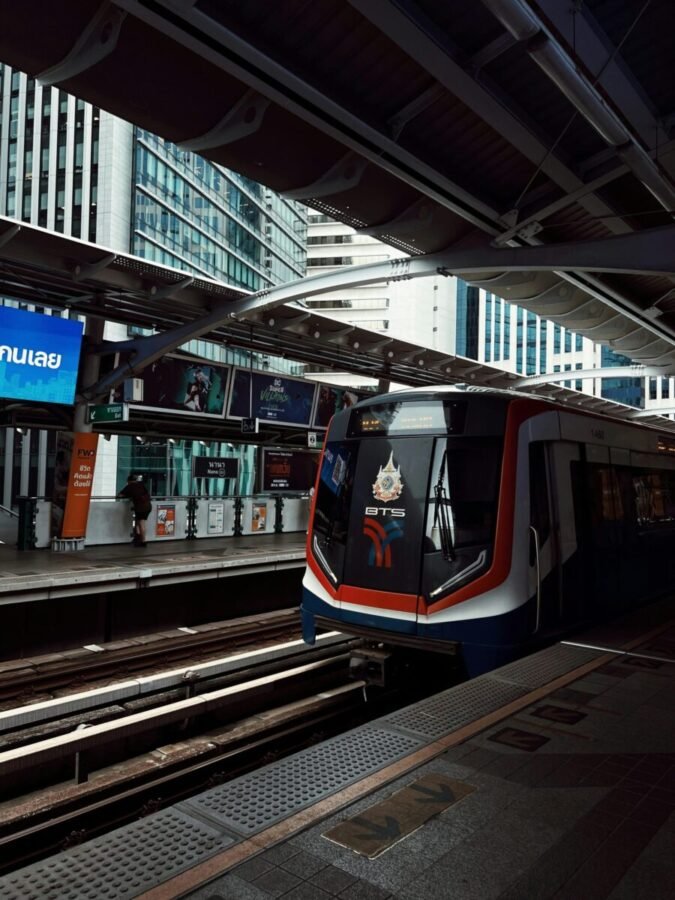
Within Bangkok, the BTS and MRT cover most of what you need, with Grab filling the gaps. In Chiang Mai, Grab alone is enough — cheap, metered in-app, no negotiation. Between cities, domestic flights are short and frequent. Between islands, ferries take over, which is exactly why travelling light through that leg of the sequence matters.
Not every place in Thailand has its own airport. Here’s what does, and what needs a road or boat transfer on top of getting there.
| Region | Has an Airport | No Direct Air Access |
|---|---|---|
| North | Chiang Mai (CNX), Chiang Rai (CEI) | Pai — road transfer only |
| Central Plains | Bangkok (Suvarnabhumi – BKK, Don Mueang – DMK) | Hua Hin, Sri Racha, Pattaya, Rayong, Koh Chang — road or ferry transfer |
| Andaman Coast | Phuket (HKT), Krabi (KBV) | Phang Nga, Khao Lak, Koh Phi Phi — road or boat transfer from Phuket or Krabi |
| Gulf Coast | Koh Samui (USM) | Koh Phangan, Koh Tao — ferry only |
That’s also why Pattaya and Rayong land in the ‘no direct air access’ column above. U-Tapao airport is under an hour to Pattaya and Rayong but it has no flights to Bangkok. Its routes run to Phuket, Koh Samui, and Chiang Mai instead. A working airport nearby doesn’t guarantee a route from where you’re actually starting. Check the real connection before you assume one exists.
Safety
The real risk in Thailand isn’t violence. It’s attention — men reading solo status as an invitation to negotiate, follow, or comment, concentrated around late-night drinking strips rather than the country generally. Sukhumvit, Siam, and the Ploenchit corridor in Bangkok stay lit, populated, and watched well past midnight. Chiang Mai’s central areas carry the same ease after dark.
Khao San Road, Soi Cowboy, and Patpong in Bangkok, and Bangla Road in Patong, are where that changes — built specifically around heavy drinking and aimed at extracting money from tourists after dark. Avoid those strips late at night and the rest of the itinerary in this piece carries very little of that risk.
What This Sequence Actually Buys You
My trips in Thailand get easier as they go on, not harder. That’s not an accident. Starting in Chiang Mai instead of Bangkok, leaving the case at a Bangkok hotel instead of hauling it through the islands, building in a buffer night instead of pushing straight through — none of these are separate tips. Each one removes a decision or a friction point from the stage that follows.
This is travel design thinking, applied as a system. Not a list of tips picked up along the way, but a way of removing friction at every stage, so each choice makes the next one easier.
That’s what a frictionless sequence actually buys you. You arrive in Bangkok grounded instead of overwhelmed — the difference between a city that exhausts you and one you can actually use. The trip gets lighter to manage as it goes on, instead of staying just as hard the whole way through.