
Bangkok has never confused me. It has frustrated me occasionally — the traffic, the heat, the sheer scale of it — but once I understood how it worked, it became one of the most functional cities I use in Southeast Asia.
That only becomes clear when the basics are already in place — where you’re staying, how you’re getting around, how you’re connected. Most of the discomfort people feel has less to do with the city itself and more to do with arriving without that structure.
This isn’t a place that rewards figuring things out as you go. With a few decisions made in advance, the city feels straightforward. Without them, it can feel like a lot very quickly.
If you’re going to Bangkok for the first time, what matters is how much you’ve set up before you arrive. This becomes much clearer once you understand how Thailand works as a whole, which I’ve outlined in Thailand Decision Framework.
What Bangkok Actually Feels Like When You Arrive
The first thing you notice is the heat. Not in a vague “it’s tropical” way, but in a constant, physical presence that affects how fast you move, how far you walk, and how long you stay out.
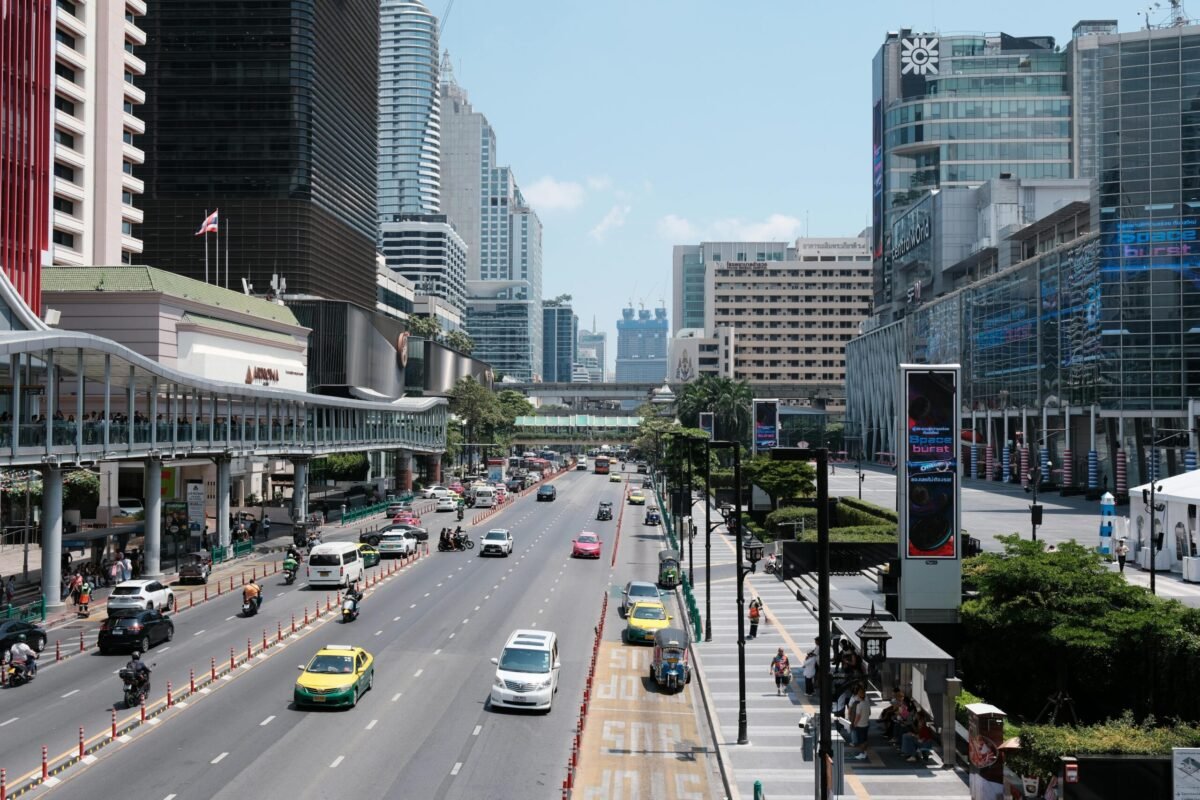
Then there’s the traffic. Distances that look short on a map don’t behave the way you expect, and moving across the city without a plan can take more effort than it seems like it should.
And then there’s the scale. Bangkok is not a compact, walkable city where everything reveals itself gradually. It’s spread out, and moving between places takes more effort than you expect. The city isn’t set up for casual exploration on foot.
None of this makes it difficult. But it does mean that the way you approach the city matters. If you expect it to feel like a series of highlights you can casually move between, it won’t. If you treat it as a place with systems that you learn, set up in the first few days and then use, it becomes much easier very quickly.
Arriving in Bangkok: What to Set Up Before You Land
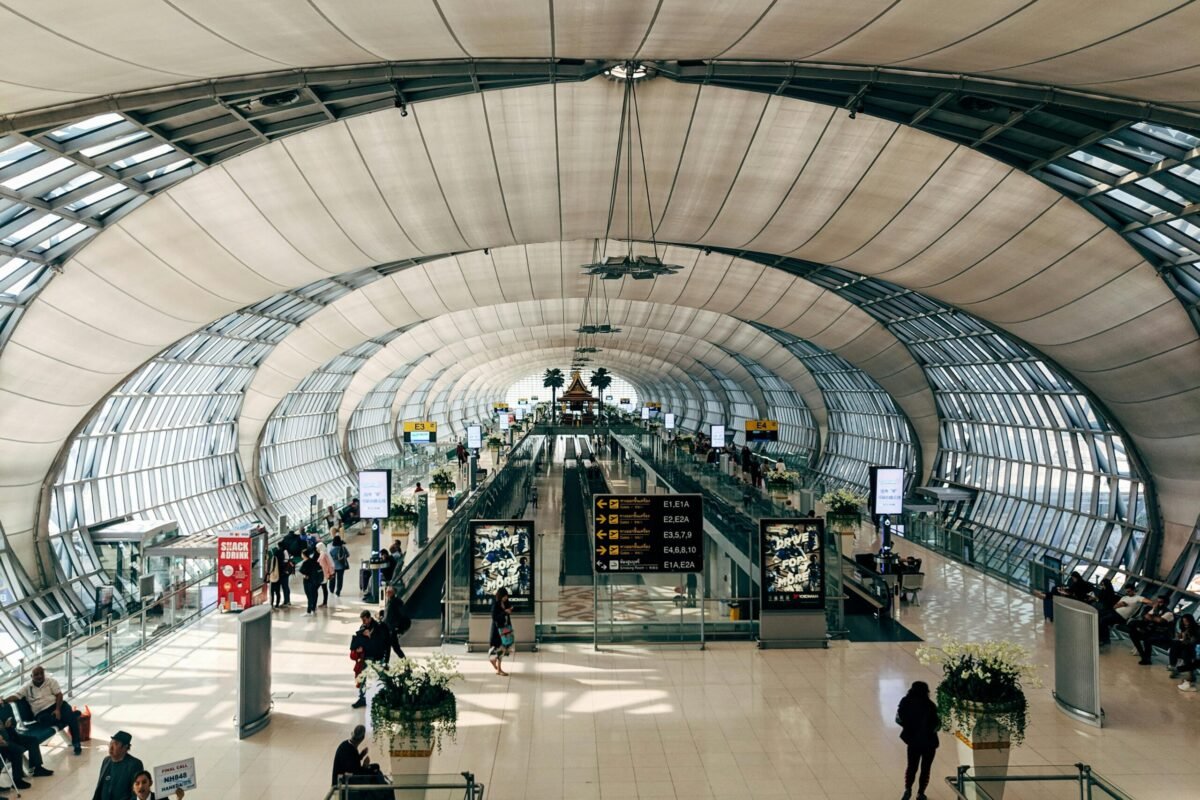
Bangkok has two main airports — Suvarnabhumi (BKK) and Don Mueang (DMK) — and which one you arrive into will shape how you get into the city.
BKK is the primary international airport and is connected to the Airport Rail Link, which will get you part of the way into the city. From there, you’ll usually need to transfer onto the BTS or MRT to reach your hotel. It works, but it’s not a single, seamless journey, especially if you’re arriving with luggage or after a long flight.
DMK, which handles a lot of regional and budget airline traffic, doesn’t have a rail connection into the city. Your options there are essentially road-based — taxi or Grab. Grab is a ride-share app that is widely used in Southeast Asia.
At both airports, taxis and Grab are readily available and easy enough to use. The issue isn’t availability — it’s traffic, and the added friction of having to navigate the airport to find where taxis and Grab are located before you even get moving. Getting into Bangkok can take significantly longer than expected, especially during peak hours, and it’s not the moment most people want to be navigating a new system for the first time. This becomes even more noticeable depending on when you land, which I’ve covered in Why Your Arrival Time Matters More Than Your Flight Length.
For a first arrival, I don’t use public transport or try to work it out on the ground. I pre-arrange an airport transfer. This is part of how I plan arrivals in advance — flights, transfers, and entry details are all set before I land using my Travel Logistics Planner.
I usually book this through Booking.com, but Klook and GetYourGuide offer similar options. It’s a simple decision, but it removes a surprising amount of friction at the exact point where you don’t need it.
There are three reasons I do this consistently, in Bangkok and anywhere new.
First, it removes decision-making on arrival. You’re not working out transport, queues, payment, or directions while tired and disoriented. Someone is there, and you leave the airport without thinking about it. The first 24 hours tend to set the tone for the entire trip, which I’ve broken down in The First 24 Hours of Solo Travel: Where Most Mistakes Happen.
Second, it allows you to pay in advance by credit card. That means no need to manage cash immediately, and it aligns with how I structure spending — including points accumulation.
Third, it removes the need to find an ATM on arrival. You don’t need local currency straight away, which gives you space to settle in before dealing with anything practical.
My approach is to arrive into a new city as frictionless as possible. Bangkok rewards that. Once you’re in the city and settled, everything becomes much easier to navigate.
English Works in Bangkok — With Limits
One of the more common concerns before arriving is how difficult basic interactions will be.
In practice, Bangkok is manageable. Most visitors get by without speaking Thai at all, regardless of how many times they’ve been.
English is widely used in hotels, shopping centres, transport systems, and most places a first-time visitor is likely to spend time. You’re not going to have detailed conversations everywhere, but you don’t need to. Most interactions are functional and predictable. In the situations where you do need help, Google Translate works well enough to bridge the gap.
Cash Still Matters in Bangkok
Cash is still relevant, but not in a way that complicates things. You’ll use it for smaller purchases, street food, and certain services, but cards are accepted in most structured environments — hotels, malls, restaurants.
ATMs are easy to find, and once you’ve withdrawn cash, you’re set. ATMs charge a fee per withdrawal, so it’s usually more efficient to take out a larger amount once rather than multiple smaller withdrawals.
In malls, food courts often run on stored-value cards rather than cash or credit cards. You load money onto a card, use it to pay, then refund any unused balance. Some malls let you keep the card active, others require you to cash out the same day.
Western Food Is Everywhere (If You Need It)
This matters more than people admit, especially on the first few days.
Bangkok has excellent local food, but it also has an extremely strong fallback system. The malls — and there are many of them — contain a mix of Thai and international options that are easy to navigate and consistent in quality. The wider city has international restaurants covering almost every cuisine you might want.
If you arrive tired, or you simply don’t feel like navigating unfamiliar menus, you don’t have to. You can eat well without thinking too hard about it.
That removes a layer of pressure that often builds up quietly. You don’t have to “figure everything out” immediately. You can ease into the experience while still being comfortable.
When to Visit Bangkok: The Window That Actually Works
Bangkok is hot every month of the year. That’s not a generalisation — it’s the baseline. Temperatures sit between 25°C and 35°C across all seasons, with humidity that makes the upper end of that range feel significantly heavier than the number suggests. There is no cool season in the way visitors from temperate climates tend to imagine it.
The Best Window for a First Visit
November through February is the period that works. Humidity drops, rainfall is minimal, and while it is still warm, it is warm in a way that doesn’t actively work against you. Mornings are manageable. You can walk without the heat becoming the dominant experience of the day. For a first visit, this matters — because Bangkok already asks enough of you in terms of navigation, scale, and adjustment, without the climate adding to that load.
The Months Worth Avoiding
April is the hottest month on the calendar, regularly reaching 38°C and above. Combined with humidity, it can become genuinely difficult if you haven’t acclimatised, and on a first trip is not something you can plan around. The wet season runs from approximately May through October, with August and September carrying the heaviest rainfall. Bangkok rain is not background weather — it arrives suddenly, heavily, and it can strand you mid-plan in ways that are manageable when you know the city and genuinely disruptive when you don’t.
What to Wear in Bangkok: Heat, Temples, and Getting It Right
Bangkok dressing solves two problems: the heat, and the temple dress code. They pull in slightly different directions, and it’s worth understanding both before you pack.
Dressing for the Heat
The operative principle is loose, breathable, and light-coloured. Linen and cotton in light weights work. Synthetic fabrics that trap heat don’t. Comfortable walking shoes matter more than most people anticipate — Bangkok involves more incidental walking than it appears to from a map, and footwear that becomes uncomfortable within an hour will limit your range considerably.
Air conditioning in Bangkok’s malls, restaurants, and transport is aggressive. A light layer in your bag means you’re not cold inside and not carrying excess weight outside.
The Temple Dress Code
Shoulders and knees need to be covered to enter Bangkok’s temples and this is consistently enforced. Scarves and lightweight trousers that pack small are the practical solution — you wear them for the visit and remove them immediately after. Some temples offer wraps at the entrance for a small fee, but having your own removes the dependency.
What Not to Overthink
Bangkok is not a conservative city in its general streetwear norms. Outside of temple visits, the dress code is largely governed by comfort and heat management rather than modesty requirements. Dress for the climate, carry something lightweight for temple visits, and the rest takes care of itself.
Thailand Entry Requirements: Visa, Arrival Card, and What to Sort Before You Land
Many Western passport holders qualify for a visa exemption into Thailand, but exemption conditions, durations, and qualifying nationalities change. Check your specific entitlement on the Thai e-visa official site before you book — not through a third-party source and not based on someone else’s recent experience. Don’t assume what applied last year still applies now.
Two things apply regardless of exemption status. Your passport needs at least six months validity beyond your entry date. You may also be asked to show a return or onward ticket at immigration.
The Thailand Digital Arrival Card (TDAC)
Since May 2025, every foreign national entering Thailand must complete a Thailand Digital Arrival Card before arrival. It replaced the old paper form and is now a mandatory online pre-arrival step — not something you can complete at the airport.
The process takes around ten minutes on the official site — tdac.immigration.go.th. You’ll need your passport details, flight number, arrival date, and your first accommodation address. Submit it within 72 hours before arrival, save the QR code to your phone, and you’re done. It is free. Third-party sites charging a fee for the same form are not the official site.
One detail worth knowing: the TDAC is valid for a single entry. If you leave Thailand and return during your trip, you complete it again before re-entering.
Getting Around Bangkok Is Easier Than It Looks
Most people overestimate how complicated transport will be.
In reality, you will use two systems for most of your time in Bangkok: the BTS (skytrain) and the MRT (underground metro), with Grab filling the gaps. This is enough to get you across most of the city without needing anything else.
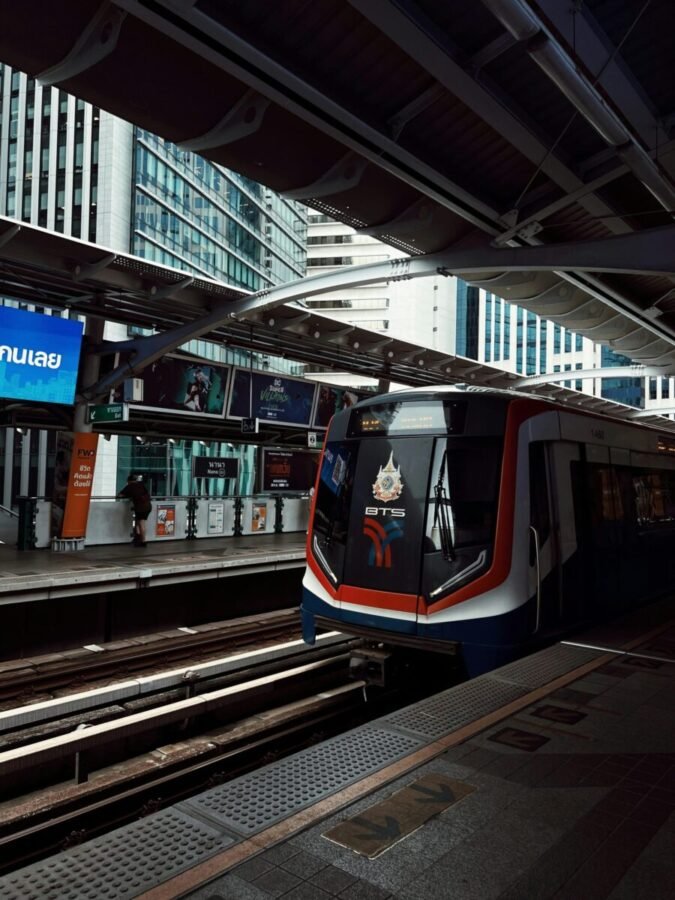
The BTS runs above ground and connects the main commercial areas — Sukhumvit, Siam, Silom — while the MRT runs underground and extends coverage across the city. Between the two, you can get to most places quickly without dealing with traffic. Connections between BTS and MRT are straightforward and well signposted, and once you’ve done it once, it’s easy to repeat.
Using them is simple. For the BTS, you can buy single-journey tickets from machines or get a Rabbit card, which is a stored-value card you can top up and reuse — available at BTS stations. For the MRT, you can tap in directly with a Visa credit card at the gates, which is the easiest option; otherwise, you can buy single-journey tokens at the station. Stations are clearly marked in English, routes are easy to follow, and trains run frequently.
This is why I rely on BTS and MRT as my default. They’re fast, predictable, and get you across the city without having to think about traffic.
Peak hours are the main point of friction. Trains get crowded, and what is normally a straightforward trip can feel much more effortful than it needs to be. If you can, avoid travelling during the morning and evening rush periods, especially on your first few days.
I only use Grab when I don’t want to walk or when I want door-to-door service, but that convenience comes with the trade-off of traffic. What looks like a short ride can take significantly longer during peak hours.
Taxis are available, but I don’t use them. They introduce small frictions — negotiating routes, inconsistent use of meters — that aren’t worth dealing with when better options exist. Tuk tuks are visible everywhere, but I avoid them due to the frequency of scams and inflated pricing, especially for first-time visitors.
The shift is simple: you’re not navigating a complex transport network. You’re using two rail systems for almost everything, and only stepping outside that when you choose to. Once that becomes your default, Bangkok feels much easier to move through.
Where to Stay in Bangkok Without Overthinking It
Where you stay in Bangkok is less about finding the “best” area and more about choosing a base that reduces effort.
For my longer stays, I use two bases in Bangkok: Novotel Sukhumvit 20 and Grand Mercure Bangkok Atrium. They do different jobs, and together they cover what I need from the city.
Novotel Sukhumvit 20 works well when I want to stay close to the Em District and the Sukhumvit/BTS corridor. Benchasiri Park is nearby for an easy walk, Phrom Phong and Asok BTS stations are both within reach, and there’s enough range in restaurants and cuisines nearby that daily life doesn’t require much thought. The hotel’s free shuttle to Emsphere and Asok removes another layer of friction.
Grand Mercure Bangkok Atrium sits outside the popular Sukhumvit zone, but from a money-for-value perspective it is extremely hard to beat. It has free shuttles to major shopping malls and the Phetchaburi MRT station. The airport run to both BKK and DMK is more efficient from there, which matters more than people think on arrival and departure days.
As an Accor Diamond member, both bases work particularly well for me because breakfast and lounge food and beverage are included. That means a large part of my day-to-day living cost is effectively absorbed into the one room rate, which changes the value equation entirely. This is the same model I explain in Why I Sold My House and Live In Hotels Instead.
How Safe Bangkok Actually Is for a Solo Woman
Bangkok asks less of a solo woman after dark than most cities its size, and that surprised me the first time I noticed it. Sukhumvit, Siam, and the Ploenchit corridor stay lit, populated, and watched well past midnight, and walking between a BTS station and a hotel entrance rarely feels like a decision.
The areas that warrant more attention are the ones built around late-night drinking — Khao San Road after midnight, Soi Cowboy, and the Patpong night market stretch — not because something will happen, but because the density of touts and drunk tourists raises the noise you have to filter through. I stay alert there. I don’t avoid them entirely; I just don’t linger. The genuine risk in Bangkok isn’t violent, and it isn’t really about being a woman alone. It’s attention from men who’ve decided your solo status is an invitation to negotiate, follow, or comment — usually outside nightlife strips, where alcohol isn’t even involved.
The Small Things That Trip People Up
It’s rarely the big things that cause problems. It’s the small mismatches between expectation and reality. What builds up instead is a kind of low-level pressure that’s easy to overlook, which I’ve written about in Solo Travel Anxiety: What’s Real and What’s Not.
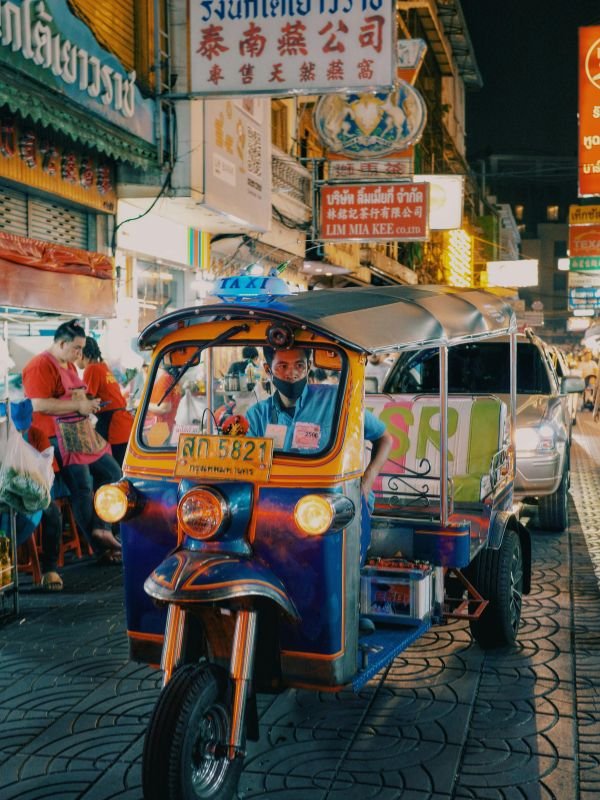
Traffic behaves differently than you expect. Walking routes are not always obvious. Prices can vary depending on where you are and how you’re paying.
Bangkok also has a layer of interactions designed specifically to extract money from people who don’t know the city yet. Taxis without meters, inflated prices near major temples, strangers with unsolicited advice pointing you toward specific shops — these are not random. They are directed at anyone who reads as unfamiliar with the city.
The issue isn’t scams in isolation — it’s being put into situations where you have to make decisions on the spot. The simplest way to avoid that is to remove those situations entirely. I don’t use taxis or tuk tuks, which eliminates most pricing and route issues immediately. I stick to BTS and MRT wherever possible, and use Grab when I want door-to-door transport, where pricing is fixed in advance.
For attractions, I book through established platforms rather than buying on the street or relying on unsolicited advice. It removes the need to compare prices or judge intent in the moment. I also ignore “helpful” approaches from strangers suggesting alternative routes, closures, or special deals — those are rarely neutral.
The pattern is consistent: anything that requires you to decide quickly, negotiate, or change plans on the spot is where problems tend to appear. If you set things up in advance and stick to predictable systems, most of this simply doesn’t come up.
What’s Actually Worth Your Time in Bangkok
The easiest way to see Bangkok’s best sites without managing logistics all day is the blue-flag Chao Phraya Tourist Boat. One ticket gets you on and off at the piers that matter, for as long as you want, and it removes the need to think about transport between stops — you’re simply moving from one thing worth seeing to the next.
Start at Wat Pho, home to the reclining Buddha, and pair it with the Grand Palace next door — the two are close enough to do back to back, and going early avoids both the heat and the crowds. The Bangkok National Museum sits a short walk further north and gets skipped by almost everyone, which is exactly why I’d send you there; it gives you more context for what you’ve just seen than either of the larger sites offers alone.
Cross the river from Wat Pho’s pier and you’re at Wat Arun, the temple that looks better from the water than it does up close — worth the crossing for the view back toward the city alone. End the day at ICONSIAM, where SookSiam, the indoor market on the ground floor, recreates Thailand’s regional floating markets under one air-conditioned roof — food from all over the country, no heat, and a tourist boat pier right outside for the trip back.
Start With What You Want From Bangkok — Then Decide the Time
That list will fill a day, maybe two, and it’s the right place to start. But it isn’t the whole city, and trying to extend it into a complete itinerary is where things start to feel effortful. Bangkok isn’t a city you “cover” in a set number of days. The better starting point is to decide what you actually want from it.
For some, that’s food and shopping. For others, it’s temples, day trips, or using the city as a base to access other parts of Thailand. Those are different trips, and they require different amounts of time.
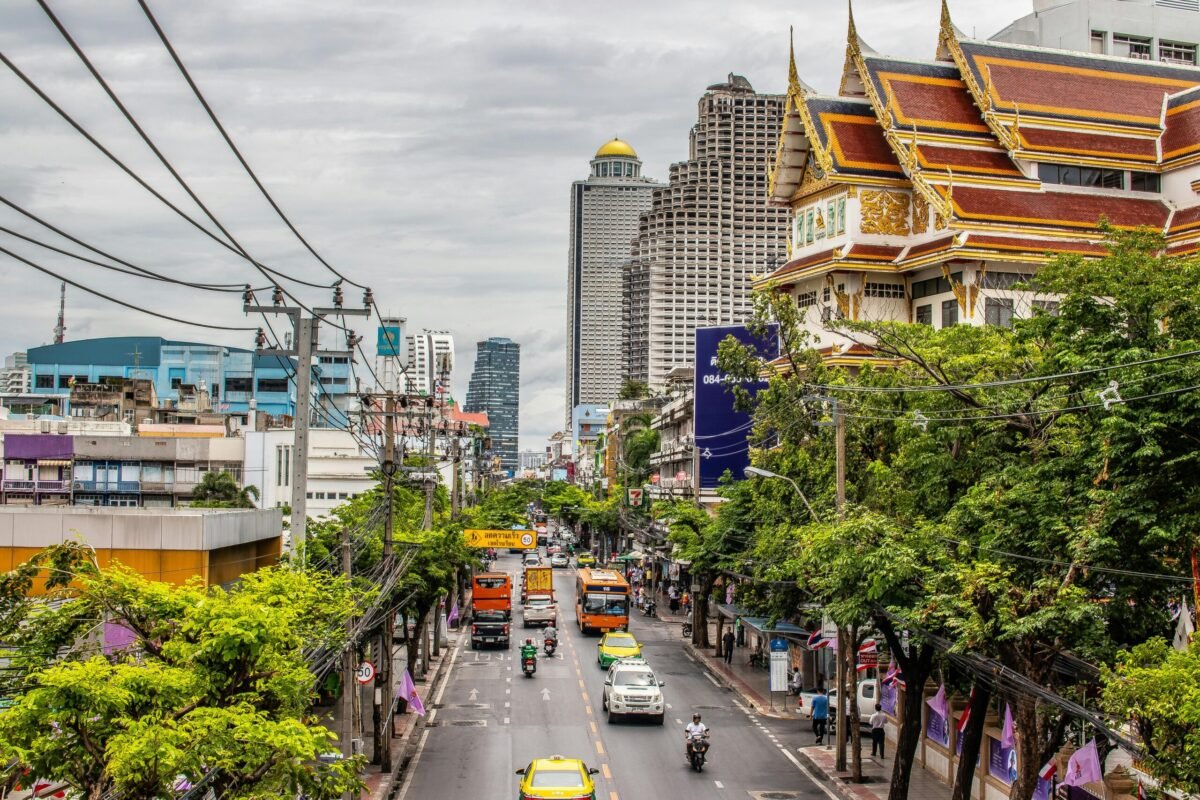
If you try to fit everything into one visit, it quickly becomes effortful. There’s simply too much here — not just within the city itself, but in what sits around it. Day trips, different neighbourhoods, different layers of the city all pull in different directions.
That’s why I don’t plan Bangkok around a fixed number of days. I plan it around what I want to do on that trip, and I accept that I won’t see everything.
Bangkok works better when you treat it as a city you return to, not one you try to complete in a single visit. The first trip gives you a surface-level understanding. The next one goes deeper. Over time, you start to see how the city actually functions beyond what’s immediately visible.
The question isn’t how many days you need. It’s what you want from this visit — and whether you’re willing to come back for the rest.
Most trips end up being shorter than the city warrants, simply because there’s more here than most people can realistically cover in one visit.
Having said all that, I would still not recommend Bangkok to be the first stop for first trip to Thailand — it is a hub, not a beginning, and the difference matters more than most itineraries acknowledge. This is also why I approach Bangkok differently from most first-time itineraries, as explained in Why I Would Not Start My First Thailand Trip in Bangkok.
Where This Fits in Your Trip
Once you understand how Bangkok operates on the ground — how to move around, where to stay, what to expect — the more important question is not what you do in the city, but where it fits into your trip as a whole.
That’s a separate decision, and it’s the one that tends to shape the entire experience.
Bangkok rewards preparation and punishes drift. That’s not a criticism — it’s just how the city is built. Once you understand its systems and stop expecting it to reveal itself casually, it becomes one of the most efficient bases in Southeast Asia. I return to it consistently, not because it surprises me, but because it doesn’t. That reliability is worth more than novelty most of the time.
Travel Logistics Planner
A simple framework for thinking through the logistical side of travel — flights, entry requirements, accommodation and transfers — before the journey begins.
Delivered instantly. Occasional thoughtful updates from the road.