
I have never used Ho Chi Minh City as a long base, and I don’t plan to. Three days, structured before I land, and the city gives me everything it has. Beyond that, the effort compounds without the returns increasing. That is the frame I bring to Ho Chi Minh City, and it is the frame that makes it work.
This is not a place that rewards working things out as you go. It meets you at full pace from the moment you land. Whether that feels manageable or overwhelming depends less on the city itself and more on how much friction you’ve already removed before you arrive.
If you’re coming here for the first time, what matters is not what you plan to see. It’s how you plan to move, eat, and function inside it, which becomes much clearer once you understand how Vietnam works as a whole in the Vietnam Decision Framework.
What Ho Chi Minh City Actually Feels Like When You Arrive
The first thing I noticed in Ho Chi Minh City wasn’t the heat. It was that the usual rules don’t apply — and that nobody is going to explain the ones that do.
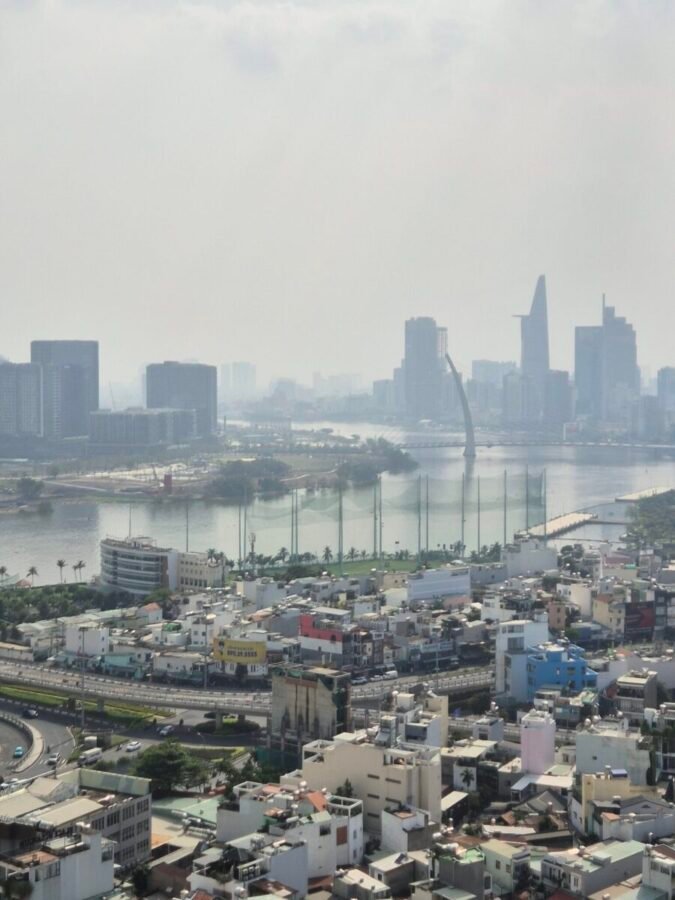
There are traffic laws in Ho Chi Minh City. In practice, they don’t govern how traffic actually moves. What you’re dealing with on the ground is a continuous flow of motorbikes and vehicles that don’t stop, don’t yield predictably, and don’t create clear right of way. There is movement, and you either understand how to exist inside it, or you carry that confusion with you everywhere.
The standard travel advice is to cross the road by walking slowly and letting traffic move around you. It is repeated endlessly, usually by writers who present it as a rite of passage — as though getting comfortable with it is part of the experience. That framing does not serve a mature solo woman navigating an unfamiliar city alone. You are stepping into moving traffic and relying on dozens of drivers to adjust around you in real time. If you hesitate, stop, or misjudge speed, you create immediate risk.
The pavements don’t offer a clean alternative. They’re uneven, frequently blocked, and used for parking and business overflow. You’re pushed back onto the road regardless. Walking any meaningful distance means constant adjustment and constant exposure to traffic, with noise layered over all of it — engines, horns, movement — not occasional but continuous.
This is the reality that catches people off guard, and it’s one of the main reasons visitors come away more drained than they expected.
My position is straightforward: don’t try to get used to it. Take Grab everywhere you go.
Grab removes the need to navigate traffic on foot, eliminates unpredictable situations, and lets you move through the city without constantly managing risk. You are not missing anything by doing this. You are simply removing the part of the experience that causes the most friction.
Arriving at Tan Son Nhat: Remove the Variables Before You Land
Tan Son Nhat Airport sits close to the city, but proximity doesn’t translate into ease. Immigration queues are not predictable, and after a long flight, standing in one that stretches far longer than expected is an unnecessary cost.
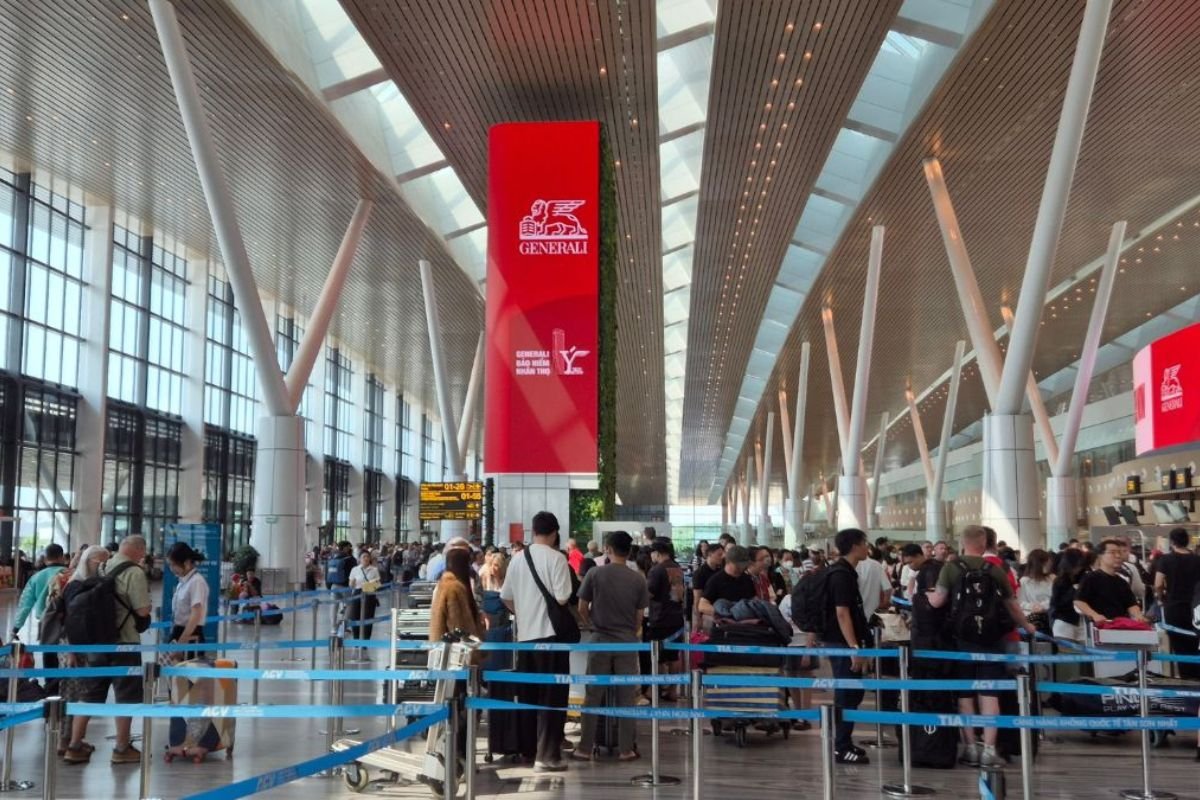
I always book an immigration fast-track service in advance, typically through Klook or GetYourGuide. It is a small cost that removes meaningful uncertainty from the first hour of the arrival. This is part of how I remove friction before I land — flights, transfers, and entry details are already set in my travel logistics planner, so I’m not making decisions on arrival.
The same logic applies to getting into the city. A pre-arranged airport transfer is a must for a first arrival — not because alternatives don’t exist, but because navigating the pickup process and general airport confusion when you’re tired sets a tone that carries forward. When your driver is already waiting, you walk out and leave. Timing plays into this more than most people realise, which is why I prioritise arrival windows carefully in Why Your Arrival Time Matters More Than Flight Length.
There are no decisions to make and nothing to figure out on the spot. That first hour shapes how the rest of the city feels more than most people expect.
It’s also why I structure arrivals before I land rather than trying to fix things on the ground, which I’ve broken down in The First 24 Hours of Solo Travel: Where Most Mistakes Happen.
Connectivity: Set Up Your eSIM Before You Land
Your phone is the operating system for this trip. Grab runs on it, maps run on it, translation runs on it. Arriving without data means none of the systems that make Ho Chi Minh City manageable are available to you at the moment you need them most.
The frictionless solution is an eSIM, set up before you leave home. I use Airalo, which offers both a Vietnam-specific plan and an Asia-wide plan for those moving across multiple countries. If Vietnam is one stop in a longer regional trip, the Asia plan removes the need to switch plans at each border. Your phone will need to be eSIM compatible — most current models are, but worth confirming before you buy an eSIM.
Entry Requirements: Confirm the Details That Apply to You
Vietnam entry is straightforward once you’ve confirmed what applies to your nationality. The details do change, and assumptions — including assumptions based on previous trips — are where problems start.
Some nationalities qualify for visa exemption. Others require an e-visa applied for in advance. The only reliable source is an official one, not forums or recent anecdotes. Your passport must be valid for at least six months beyond your entry date, and you may be asked to show an onward or return ticket.
If you require an e-visa, apply at least a month ahead. Processing is generally efficient, but it is not something to leave until the final days before departure. One detail worth knowing: some sections of the application form ask for district names and local location details through dropdown menus that aren’t intuitive if you’re unfamiliar with how Vietnamese addresses are structured. Using AI to interpret what the form is actually asking for can save time and avoid unnecessary errors.
The official Vietnamese government e-visa portal is evisa.gov.vn. Apply directly rather than through third-party services, which charge unnecessary processing fees for the same application. Verify the URL is current before you apply, as government portals occasionally migrate. At time of writing, there is no need for e-arrival form submission. However, it is always best to check for latest information.
Getting Around: How Movement Actually Works
Movement in Ho Chi Minh City is less a matter of choice and more a matter of managing effort.
Grab is the default for most trips. It removes the kind of repeated, low-level decisions that build up over the day. It’s predictable, the price is set before you move, and the route requires no explanation on your part. I link a credit card in the app so there’s no cash management at the end of the ride. That detail matters more than it sounds — it removes one small point of friction that would otherwise repeat itself across every trip.
Download Grab app and complete your account setup before you leave your home country. Link a credit card while you’re still at home on reliable wifi and easier multi-factor authentication. Arriving with the app already configured means everything works the moment you need it. No setup, no delay, no friction.
The metro is now operating, and it is useful where it runs. The first line connects District 1 to the eastern side of the city — Binh Thanh, Thu Duc — and provides a clean, predictable alternative to road traffic for those specific routes. Whether it’s relevant to you depends entirely on where you’re staying. If your accommodation sits near a station, it becomes a straightforward option. If not, you’ll be relying on Grab to reach the line anyway, which removes much of the advantage. It is a useful tool for specific trips rather than a system you build your movement around.
Taxis exist and are usable, but they introduce small friction points — communication, route clarity, pricing — that accumulate over time. Grab is simpler.
I do not walk in the streets of Ho Chi Minh City unless I have to.
Where to Stay in Ho Chi Minh City: Position Matters More Than the Room
Your accommodation choice in Ho Chi Minh City determines how much effort you expend every single day. This decision matters more than most people realise.
Ho Chi Minh City is divided into districts, and where you stay shapes how the city feels day to day.
District 1 is the centre of gravity for first-time visitors. It’s where the major hotels, restaurants, and tourist infrastructure concentrate. It’s also the loudest, busiest, and most relentless part of the city. For a short stay with a full itinerary, it works well. For anything longer, the intensity accumulates.
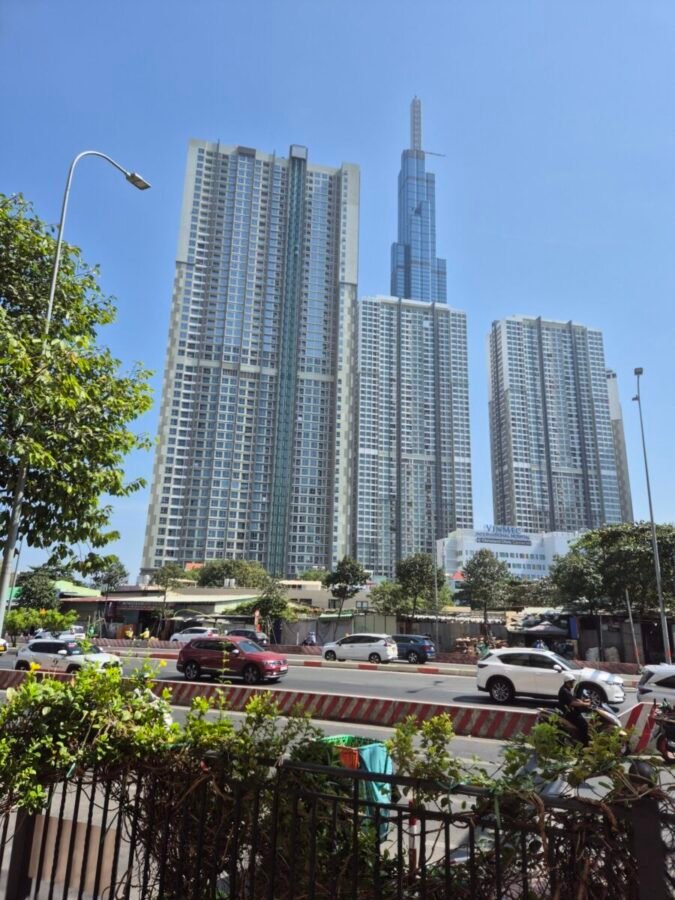
Further out, the environment becomes less pressured and prices improve, but you’re now relying on transport for almost everything. For a first visit, I don’t try to optimise across too many variables. I choose a base that reduces decision-making and simplifies movement.
Binh Thanh sits north of District 1 and offers a more residential feel at lower price points. It’s less polished than District 2 but functional as a base, particularly for travellers watching costs. Transport into the centre is straightforward via Grab, and the metro’s first line provides an additional option for reaching District 1 directly.
District 2, now officially part of Thu Duc City following an administrative merger, is still widely referred to by its original name by travellers, hotels, and locals alike. It sits east of the city centre across the Thu Thiem tunnel and has a noticeably different character — more spacious, less dense, with a higher concentration of international restaurants and longer-stay accommodation. It suits visitors who prefer a calmer environment and don’t mind using Grab or the metro for every trip into the city centre.
District 3 sits immediately adjacent to District 1 and offers a noticeably quieter environment without sacrificing access. It has a good range of accommodation and restaurants, feels less pressured, and is close enough to District 1 that proximity isn’t a meaningful trade-off. For visitors who want to be near the centre without being inside its full noise, District 3 is the more comfortable base if you don’t mind using Grab for every trip into the centre.
Language and Communication: What to Actually Expect
You will function in Ho Chi Minh City without speaking Vietnamese. That doesn’t mean communication is seamless, and it’s worth knowing where the gaps actually appear.
In hotels and more structured environments, English is generally sufficient. Outside those settings, it becomes less consistent. Cafes, smaller restaurants, and everyday interactions often require adjustment — pointing, translating, simplifying. Menus are usually in Vietnamese, but written in the Roman alphabet, and photos or visual cues make them workable once you’ve adjusted. You’re reading, matching, and choosing rather than relying on descriptions. The adjustment happens quickly.
None of this prevents you from functioning. It means you’re actively bridging gaps rather than moving through interactions without effort.
Cash: Still the Default for Everyday Transactions
Cards are accepted in hotels, malls, and more structured businesses. For everything else — street food, smaller venues, local services — cash remains the standard. ATMs are easy to find. Carrying cash is simply part of how the city operates, and accepting that early removes a small but recurring point of friction.
Food: High Quality, Uneven Access
The food in Ho Chi Minh City is consistently strong, and local options are available throughout the city at every price point. Access is where the effort comes in.
Menus are not always easy to interpret, and ordering in smaller or more local places requires translation apps, visual cues, or occasional trial and error. Western food exists, particularly in District 1, cafes, and malls — but it is not a built-in fallback across the city. You usually need to seek it out intentionally.
For many Western travellers, that reliable fallback matters more than they’ll admit. It’s not about preference. It’s about having an option available when you’re tired, overwhelmed, or not in the mood to navigate. That option exists here, but finding it adds to the day’s effort. You will eat well in Ho Chi Minh City. Plan for it rather than assuming it will arrange itself.
Tap water in Ho Chi Minh City is not safe to drink. Hotels reliably provide bottled water, but if you’re staying in a serviced apartment or self-catering accommodation, confirm this before you arrive or factor in buying it locally. It’s also worth carrying a small bottle when you’re out — staying hydrated in the heat and humidity matters, and access to water isn’t always immediate when you’re moving through the city.
When to Visit Ho Chi Minh City: Timing Affects How the City Behaves
The dry season, roughly December through April, is the most straightforward period. It is hot but manageable, and daily plans are unlikely to be disrupted. The wet season, May through November, introduces heavy rain that arrives quickly and without much warning. Movement in Ho Chi Minh City already requires attention. Adding significant rain to that changes what you can realistically do in a day and how smoothly you can move between places.
What to Wear in Ho Chi Minh City: Practical Choices for a Demanding Environment
Breathable, lightweight fabrics are non-negotiable in the heat and humidity. Anything that traps heat becomes uncomfortable quickly, particularly when you’re moving between air-conditioned interiors and the street. Footwear deserves more thought than people usually give it. Pavements are uneven, crossings require attention, and you’ll be adjusting your footing constantly. Shoes that hold up over longer periods make a noticeable daily difference.
How Long to Stay
Three days is enough in Ho Chi Minh City for most first time visitors. It gives you time to experience the city, find a working rhythm, and see what you came to see without pushing into diminishing returns. Beyond that, the effort required to keep moving through it begins to outweigh what comes back from it — particularly when other parts of Vietnam offer a different kind of experience with significantly less friction, like what I’ve experienced in Hoi An Is The One Place In Vietnam That Always Works For Me.
The Small Situations That Trip People Up
Most difficulties in Ho Chi Minh City don’t come from anything major. They come from small moments where you’re expected to respond on the spot: someone offering unsolicited help, a price that isn’t fixed, an unclear ordering situation, a decision about transport when the obvious option isn’t immediately apparent. None of these are serious on their own. Together, across a day that already involves navigating traffic and communication gaps, they compound.
The solution is consistent: use systems where the price is set, book in advance where it makes sense, and ignore anything that begins with unsolicited assistance. The fewer real-time decisions you have to make, the less of this becomes an issue.
Where Ho Chi Minh City Fits in a Vietnam Trip
Used as an entry point, exit point, or contained urban stop, Ho Chi Minh City shows you how the country moves — the pace, the density, the way everyday life operates at full speed with no adjustment built in. What you get here is Vietnam unfiltered.
It doesn’t carry a longer stay well. It’s a city that’s easy to visit but harder to form a connection with over time, which is exactly what I’ve unpacked in Ho Chi Minh City Is Easy to Visit – Harder to Care About. There’s no easy rhythm to fall into, and staying oriented takes sustained effort that doesn’t ease the longer you remain. Three to five days, structured from the start, and it makes complete sense. Treated as the main event, it doesn’t hold.
Other parts of Vietnam work differently. Cities like Hanoi operate at the same intensity but hold attention in a different way, which is why I keep returning as I’ve written in Hanoi – Why I Keep Going Back, Even Though It’s Full On. The environment is easier to settle into, and a routine forms without having to build it consciously from scratch. That’s where the trip opens up. Ho Chi Minh City is a useful, necessary stop. It is not the core of your Vietnam trip.
For how the rest of the country breaks down by region — and where I’d actually spend the time this stop frees up — see Planning a Trip to Vietnam? Start With the Region, Not the Circuit.
Travel Logistics Planner
A simple framework for thinking through the logistical side of travel — flights, entry requirements, accommodation and transfers — before the journey begins.
Delivered instantly. Occasional thoughtful updates from the road.