
I did not leave Australia because something went wrong. There was no crisis, no loss, no moment of standing in an empty house wondering what came next. I left because a careful experiment in solo travel confirmed what the numbers already suspected: that the life waiting for me on the other side of retirement looked nothing like the conventional version and was better in almost every measurable way than the one I was leaving behind.
That is the whole story, compressed. Everything else is the detail of how I found that out.
I was born in Penang, grew up in Kuala Lumpur, and migrated to Australia alone in my thirties. I spent the decades that followed building a life in Melbourne — career, property, community, the full architecture of a conventional adult existence. When retirement approached, I did what my professional instincts had always trained me to do: I examined the structure I had built and asked whether it was actually working as well as it appeared to be. The answer, when I looked at it honestly, was more complicated than I had expected.
What followed was an eight-month experiment that began in a country I had never visited, evolved through trial and error across four countries, and ended with a spreadsheet that made the permanent decision obvious.
I sold my Australian property in 2026, more than a year after the experiment had already told me what I needed to know. The capital that had been sitting locked inside those walls is now generating returns inside my superannuation. My life is in Asia. Melbourne, I would return to visit but I would not return to live. The economics do not support it, and more importantly, neither does the life I have now.
The Experiment Begins — Vietnam, Cold
I started the experiment in Vietnam. I had never been to Vietnam.
Most people planning a trial retirement would choose somewhere familiar — Thailand, perhaps, or Bali, somewhere with an easy entry point and a well-worn path for Western visitors. I flew into Ho Chi Minh City and immediately encountered the first of many moments where Vietnam declines to make things simple.
Tan Son Nhat airport in HCMC is among the most disorienting entry points in Southeast Asia. Even transferring through it to Hanoi required collecting my bags on arrival and physically carrying them to the Vietnam Airlines check-in counter in the arrivals hall, nothing signposted in a way that made intuitive sense. It was an early lesson that Vietnam operates on its own logic, and that logic is not always legible on first contact.
Hanoi was a different city in character, though the defining features of Vietnam’s major urban centres — the traffic, the heat, the motorbikes moving in every direction at once, the noise, the almost complete non-walkability — were consistent throughout. What Hanoi offered that Ho Chi Minh City did not was a return on the effort: layers of history and culture that rewarded slow attention, a city worth the friction of navigating it. I wrote about this in Hanoi – why I keep going back, even though it’s full on.
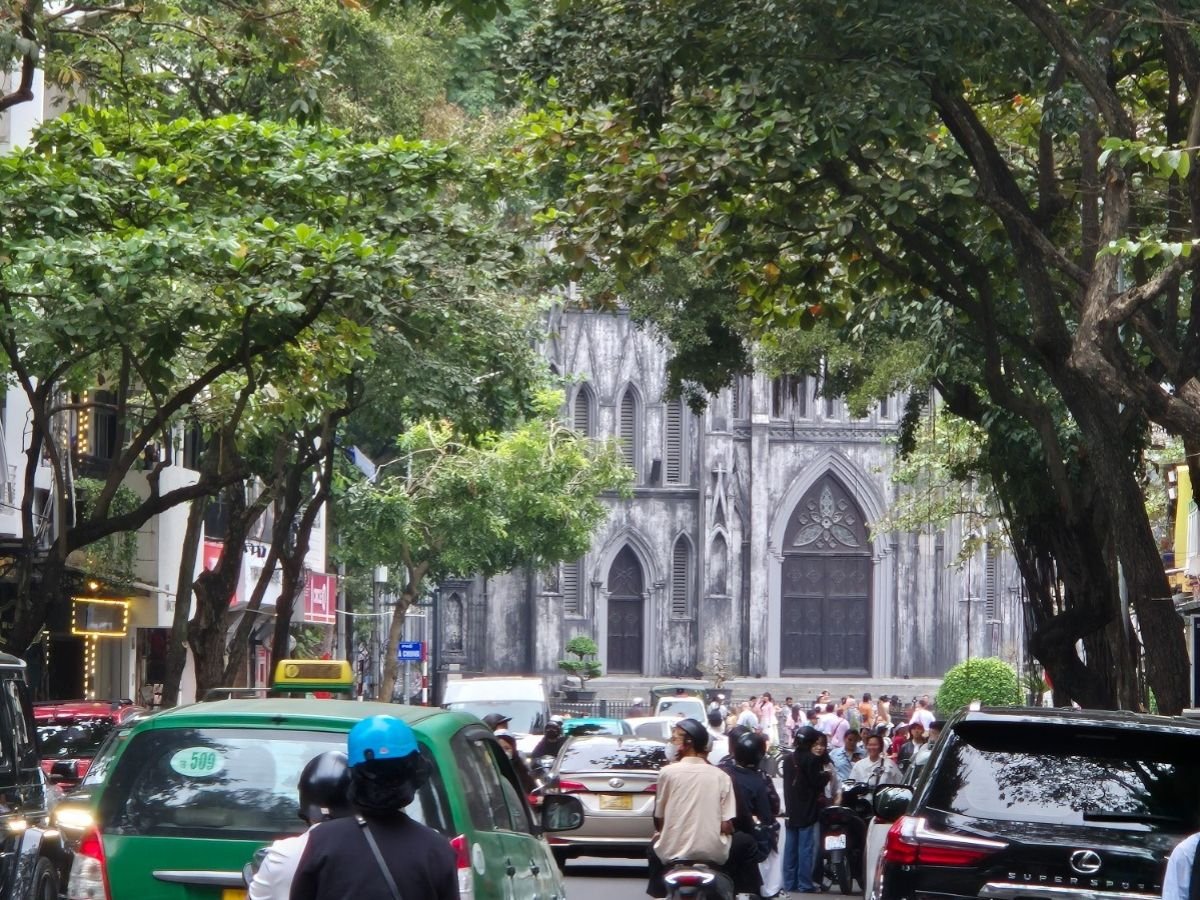
From Hanoi I worked my way south through Ha Long Bay and Danang before arriving in Hoi An, and that is where something shifted.
Hoi An: The First Moment It Made Sense
I loved Hoi An the moment I arrived. The architecture, the scale, the fact that the old town is genuinely walkable in a country where walking is otherwise a survival sport. All of it landed differently from anything that had come before on the trip. Yes, it is heavily touristed. That is not a secret and it is not a reason to avoid it.
What I discovered on that first visit, and understood more completely on the return trips that followed, is that Hoi An has a version of itself that exists beneath the tourist surface, and you only access it by staying longer or coming back. Early mornings before the tour groups arrive. Streets that empty out in the afternoon heat. A rhythm the town has maintained for centuries that the visitor traffic has not entirely displaced.
I have written about this in Hoi An is the one place in Vietnam that always works for me, but for the purposes of this story, it was the first place on the entire journey where I stopped assessing the experiment and simply lived inside it for a few days. That distinction mattered more than I realised at the time.

Vung Tau and What It Taught Me
From Hoi An I continued south back to Ho Chi Minh City, which confirmed what the airport transfer had suggested: it is a city that takes more than it gives, at least for the kind of travel I was doing. I was planning to stay The Airbnb I had booked there lasted one month as it was too late to cancel. Something about the arrangement — the isolation of it, the absence of the support infrastructure I had been unconsciously relying on in hotels — made the city feel harder than it needed to be.
I cancelled the subsequent month Airbnb stay and pivoted to Vung Tau, a coastal town two hours south of the city that was not on the original itinerary, and the relief was immediate.
Why Accommodation Model Matters More Than Destination
That unplanned detour taught me something I could not have arrived at theoretically: that the accommodation model shapes the entire experience of a place, not just the quality of the sleep. The Airbnb experiment ended in Ho Chi Minh City. I have not repeated it in any city.
Vietnam as a whole is an acquired taste. I want to be direct about that, because the travel industry tends to flatten Southeast Asia into a series of equally approachable destinations, and Vietnam is not that. It requires patience, tolerance for disorientation, and a willingness to let it show you what it actually is rather than what you arrived expecting.
With subsequent trips, Vietnam has grown on me considerably. The smaller cities and towns — Hoi An, Hue, Hai Phong, Vinh Yen — are where I have found the version of Vietnam that makes the effort worthwhile. Ho Chi Minh City I would not return to unless the travel infrastructure changes significantly. I wrote about this in Ho Chi Minh City is easy to visit – harder to care about. The rest of the country I would return to, and have.
Four Countries, Eight Months, One Gradual Conclusion
After Vietnam came Cambodia, Thailand, and Indonesia, followed by a return to Vietnam. Each country added a layer of understanding that the previous ones had not provided, and none of it happened quickly or cleanly. This was not a journey that produced a single moment of clarity. It was iterative — a process of accumulating evidence about what worked, what I actually needed to function well, and what I had been overestimating or underestimating before I started.
Cambodia surprised me most in the early stages. Siem Reap, in particular, was not what I had anticipated — a smaller city that turned out to be remarkably comfortable and affordable, with a pace that suited longer stays better than shorter ones. Like Hoi An, it rewarded the decision to slow down rather than move through quickly. I have written about the experience in Siem Reap works – until you try to do too much, but the relevant point here is that Cambodia shifted something in my understanding of what Southeast Asia could offer beyond the destinations most Western travellers default to.
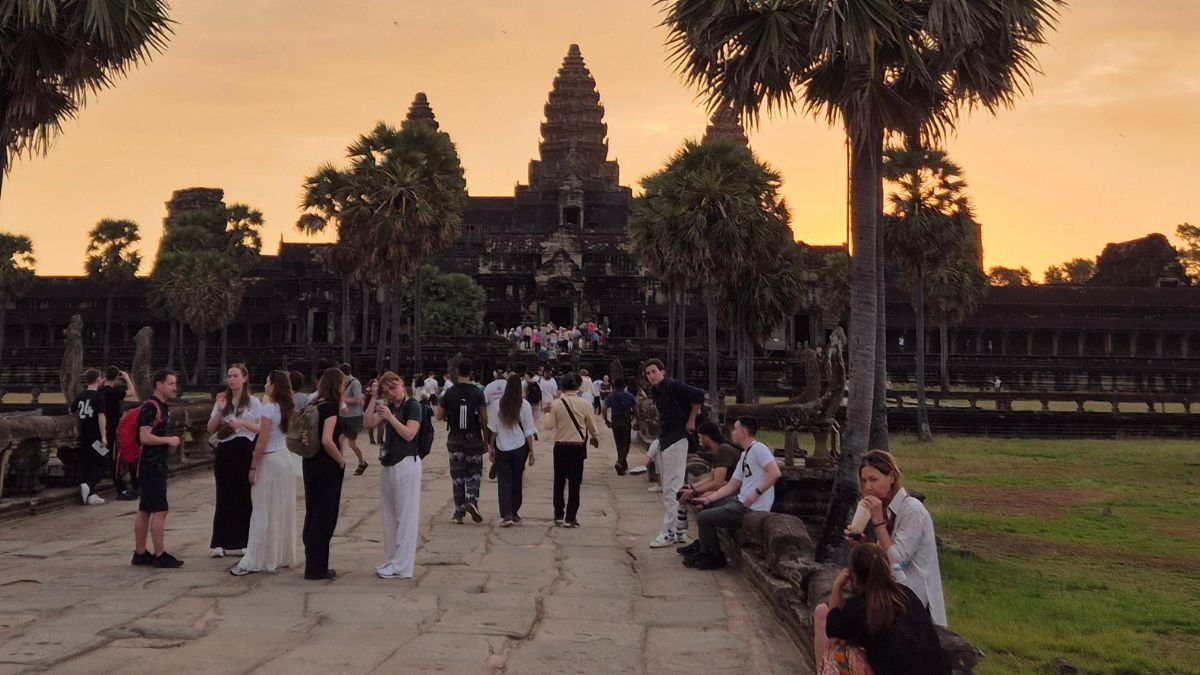
Thailand: Where the System Reached Full Capacity
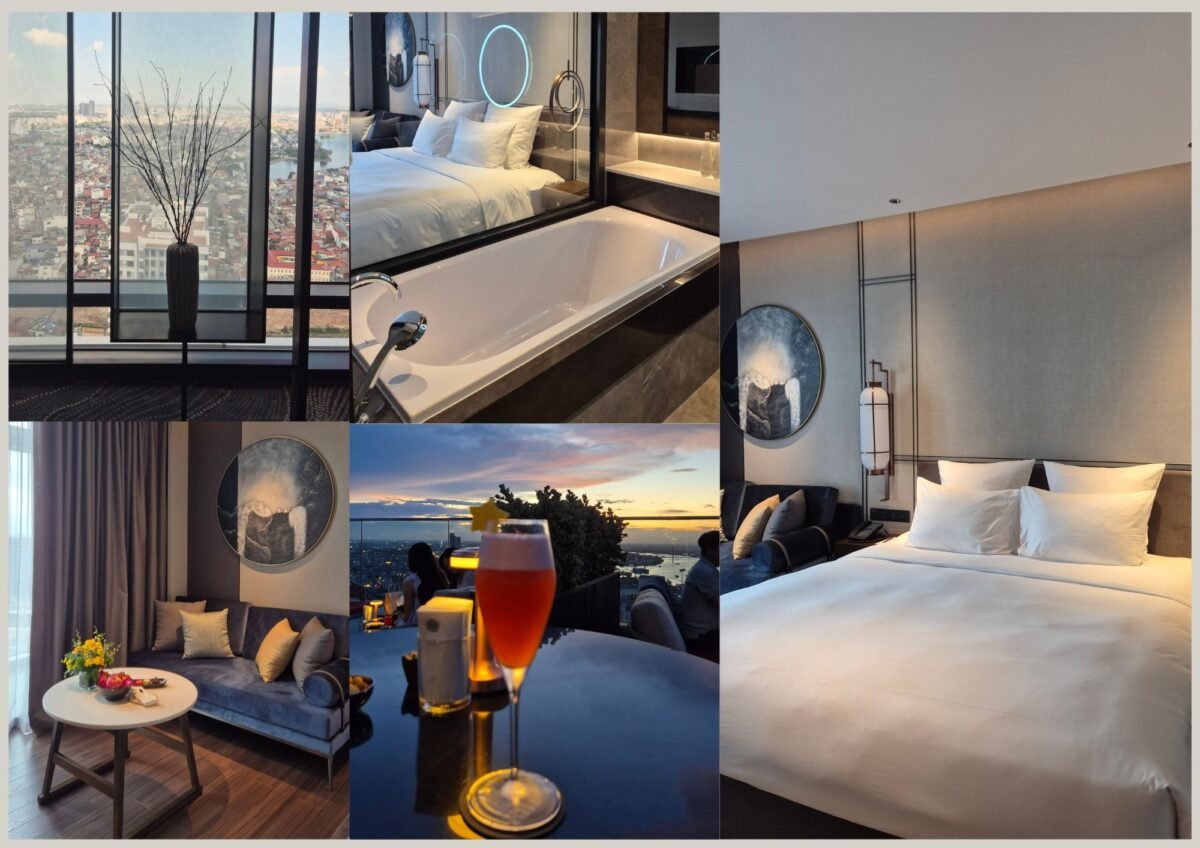
Thailand was where the model stopped being an experiment and started behaving like a life. On my second trip, my Destination Thailand Visa (DTV) was approved, and I stayed for six months. All of it inside four and five star hotels, moving between properties with meals included as a function of my hotel status.
That combination — accommodation, food, gym, pool, the full infrastructure of daily life — absorbed into the hotel ecosystem at a cost that would not have been believable to me twelve months earlier, before I understood how loyalty programs actually work when you are living inside them rather than visiting occasionally.
The Executive Lounge becomes something different when it is your dining room. The consistency of service across properties within the same brand network becomes something different when it is your daily environment rather than a pleasant surprise during a holiday.
Six months in Thailand, across multiple cities and 16 properties, produced the clearest picture yet of what optimised long-term hotel living looks like in practice. I have covered the specifics — the cities, the logistics, the hotel choices — across the Thailand articles on this site. What matters for this story is that by the time those six months had passed, the question of whether the lifestyle worked had been comprehensively answered.
Indonesia and the Status Architecture
Indonesia was where I did a deliberate mattress run to secure my IHG Platinum status — a decision that sounds arcane if you are not familiar with how hotel loyalty programs function, and entirely rational once you understand the infrastructure it unlocks. Status is not a reward for frequent travel. It is an asset that changes the financial structure of long-term hotel living, reducing the effective cost of accommodation while simultaneously improving the quality of the experience.
Indonesia has its own articles, but the status architecture piece is central to how the entire model works, and Jakarta is where I built a critical component of it. I detailed this in Jakarta is not a city you explore – It’s one you go to with a purpose.
Then I Did the Sums
I am a qualified CPA. I cannot help myself. Once the lifestyle question had answered itself. Once it was clear that this was a life I wanted to continue, not merely an experiment I had survived. I sat down and did what my professional formation has always compelled me to do – I built the full financial analysis.
The Numbers I Already Knew
I had always known that homeownership costs are high. That was not the surprise — I had been tracking those numbers for years in the budget spreadsheet that has followed me through every stage of adult life.
What I had not known, because I had never had reason to calculate it, was how much cheaper it actually is to live well inside the hotel ecosystem in Southeast Asia when you are leveraging status benefits rather than paying retail rates. The gap between what I had assumed the comparison would show and what it actually showed was significant enough to qualify as genuinely surprising, even for someone who had spent a career working with financial data.
What the Comparison Actually Showed
The full mechanics of that analysis — the capital release, the investment return, the cost comparison, the ASFA retirement standard and what it actually assumes — are detailed in the Why I sold my house and live in hotels instead article. I will not replicate them here. What I will say is this: when I finished that spreadsheet, the decision to make the lifestyle permanent was not a difficult one. The analysis had done the work. What remained was execution.
Capital Released Is Capital Working
There is one piece of the financial picture that belongs in this article rather than in the mechanics. Selling the property did not mean draining capital to fund hotel stays. It meant releasing capital that had been sitting dormant inside bricks and land — producing nothing, generating no return, simply waiting — and allowing it to work instead. That capital is now inside my superannuation, generating returns that will eventually be tax-free when I turn 60 and start taking my pension. The house was not a store of security. It was a prison for money that had better things to do. Once you see it that way, it is very difficult to unsee.
People hear “living in hotels full-time” and their immediate assumption is that this requires serious wealth — that it must be burning through capital at a rate only a millionaire could sustain. I used to think that. I no longer do, and the reason I no longer do is that the assumption confuses the cost of occasional hotel stays with the economics of continuous long-term living inside a hotel ecosystem, leveraging status and loyalty infrastructure that most short-term travellers never access.
Money you can make. Time you will never get back. That reorientation away from the question of what the life costs and toward the question of what it returns — is where the real analysis begins.
What Ms Grey Nomad Actually Is
This site exists because the information I needed when I started this journey was not available in the form I needed it. There is no shortage of travel content for women. There is a significant shortage of travel content written from genuine long-term immersion in the countries being covered, by someone who understands both what mature Western women need from travel and how Asia actually works from the inside.
Writing From Inside the Countries, Not Passing Through Them
I grew up in this region. I understand the cultural logic of Southeast and East Asia in ways that cannot be acquired on a two-week trip, however well-observed. At the same time, I spent decades building a professional and personal life in Australia, which means I understand the specific anxieties, assumptions, and practical concerns that Western women in their fifties and beyond bring to this part of the world. That combination — cultural fluency on both sides of the divide — is what I bring to the writing on this site.
Articles Built From the Ground Up
The articles published here are not assembled from research and a short visit. They are built from extended stays, repeated trips, and the kind of accumulated operational knowledge that only comes from actually living somewhere rather than passing through it.
The Bangkok articles came from months in Bangkok across multiple trips, including a six-month stay on a DTV. The Vietnam articles came from three separate journeys, north to south. The Japan content reflects multiple visits including extended base-camp stays. When I tell you that the Executive Lounge at a specific hotel tier changes the economics of long-term living, it is because I have tested that thesis across dozens of properties and several countries, not because I read it somewhere.
The content on MGN covers destinations, logistics, money, mindset, pacing, and the practical architecture of solo travel for women later in life. It will continue to expand — more frameworks, more tools, more of the detailed operational intelligence that makes the difference between a journey that works and one that costs more than it should, in time, effort, money, or all three. What stays constant is the vantage point: someone who is living this, continuously, and reporting back with precision.
If you are at the beginning of thinking about this kind of life — whether that means a long trip, a sabbatical, or something more permanent — the Travel Planning section is where to start. If the financial and housing question is what is driving your thinking, the Money and Value section has the frameworks. If you want to know how to pace a long journey without accumulating the kind of fatigue that ends trips prematurely, Travel Comfort and Pacing section covers the practical architecture of moving well — when to slow down, when a base camp serves better than constant movement, and how to structure travel so that it remains sustainable across weeks and months rather than just days.
If safety and confidence are what is holding you back, the Safety and Confidence section addresses the real risks and the overstated ones with equal honesty — because conflating the two does not make anyone safer, it just makes the decision harder than it needs to be. If the internal resistance is what you are working through — the noise from people who don’t understand the decision, the habit of waiting until everything feels certain — Solo Travel Mindset section is where that gets examined directly. And if you want to know what specific destinations are actually like for a solo woman travelling independently and well, the Destinations section has the detail, city by city.
On Leaving Australia
I still like Australia. Melbourne especially — it is where I built my adult life, where my close friends are, where I laid down roots over two decades. I would go back to visit. I have no intention of going back to live, and the reasons are both financial and personal, in roughly equal measure.

The financial case is straightforward once the capital has been released and redeployed. The return on investment that the property is now generating inside superannuation outperforms the alternative of having it sitting dormant inside a house in a city where the cost of living has continued to rise. The comparison that once seemed obviously in favour of homeownership looks very different when the capital is actually working rather than waiting.
The personal case is harder to compress into a single argument, but it comes down to this: the life I have now — the mobility, the immersion, the density of experience, the return of time that the hotel ecosystem provides by absorbing the domestic labour a private home requires — is not a life I want to trade back for a fixed address. That is not a criticism of the life I had. It served its purpose and I built it deliberately. It is simply an accurate account of what the comparison looks like from where I am standing now.
The break is clean. That is not the same as saying nothing was left behind when I sold. Something was — the version of myself with a permanent address, a key, a coordinate on the map that meant home in the most literal sense. That version existed for a long time and she served her purpose well. What replaced her is not a diminished version. It is a different operating model entirely — one with more freedom, more flexibility, and a financial structure that paved the way for how I actually wanted to live.
I left Australia at 57. The experiment is over. The conclusion held.
Travel Logistics Planner
A simple framework for thinking through the logistical side of travel — flights, entry requirements, accommodation and transfers — before the journey begins.
Delivered instantly. Occasional thoughtful updates from the road.