
Bali remains one of those places that lingers after the trip is over. That is part of what makes it so difficult to dismiss. The traffic is real, the delays are real, and the friction has a way of creeping into the day more than people expect, yet none of that seems to cancel out the island’s hold.
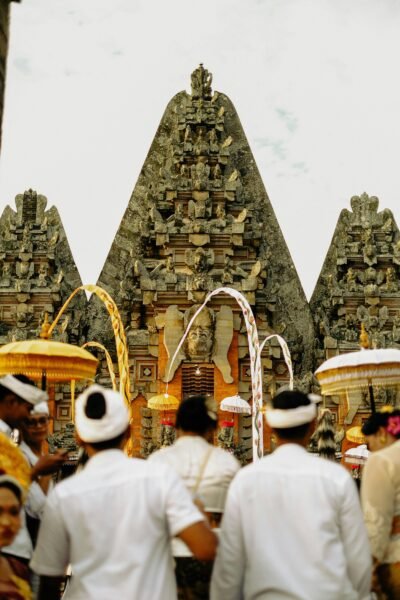
Bali still has a cultural presence that feels immediate rather than staged. Temples, offerings, and rituals are not tucked away into designated sightseeing moments but sit inside ordinary life, which means the place keeps feeling distinct even when it is frustrating. Food is another reason the island settles into people so easily. Eating well rarely feels difficult in Bali, and that matters more than it sounds because it lowers one layer of effort even while other parts of the experience become heavier. Familiarity strengthens the pull further. Bali has been written about, filmed, sold, and repeated for so long that many people arrive with the feeling that they already know what kind of place it is.
Because Bali still gives people much of what they come for, it is easy to assume the rest of the experience will follow just as smoothly. The culture and food are still there. The recognisable Bali atmosphere is still there. What no longer holds in the same way is the belief that all of this can be accessed casually, cheaply, and without much thought.
Anyone trying to place Bali within a wider Indonesia trip needs to start from a more grounded view of the country itself, which is why this sits inside the broader Indonesia decision framework.
The Version of Bali Most People Carry In Their Head Is Out of Date
Most people arrive in Bali with a very specific expectation. Cheap villas, easy café days, and a sense that plans can be made as the day unfolds without much consequence. That version of Bali feels both affordable and effortless, which is exactly why it continues to circulate so widely.
That expectation comes from an earlier stage of the island, when traffic was lighter, distances were easier to manage, and prices did not shift as much based on location. Movement required very little thought. It was possible to stay almost anywhere and still access what was needed without losing large parts of the day to getting there.
Where the shift actually shows up
Those conditions have changed in ways that are not immediately obvious from the outside.
Accommodation that appears well-priced often sits far enough away from where time is actually spent, which turns every trip out into something that has to be considered. A short distance on the map can mean a much longer journey once traffic is involved, and that changes how often people are willing to move.
Plans that were meant to stay flexible begin to require structure, not because the traveller prefers it, but because the day does not hold together otherwise — something that becomes much clearer when viewed through The First 24 Hours of Solo Travel: Where Most Mistakes Happen.
How the day starts to get shaped
The shift becomes clear through repetition rather than one major moment.
The first delay feels like an inconvenience. The second begins to affect timing. By the third, the day is already being shaped by how long it takes to get between places, and decisions start getting filtered through that constraint.
Why the mismatch persists
What creates confusion is that Bali still looks exactly like the place people expect. Villas are still easy to find, cafés are still everywhere, and the visual impression of the island continues to suggest that everything can be done casually.
What those images do not show is how often transport needs to be arranged, how long short distances can take, and how quickly a day can start to revolve around movement instead of place.
What has actually changed
Bali still offers the same reasons people choose it in the first place, but accessing those parts of the island now requires more planning, more time, and a clearer understanding of how the island actually functions.
Bali’s Friction Starts the Moment You Land
Immigration Is Faster — If You Set It Up Properly
Bali’s friction shows up as soon as the plane lands, although it no longer always begins where people expect.
Immigration used to be the first bottleneck, with long queues that could take a significant amount of time to clear. That has improved for travellers who prepare properly. An e-passport combined with completing the visa and entry requirements online allows use of the e-gates, which is now the fastest way through the airport. The last time I went through Bali a few years ago, those e-gates were noticeably underused, even when the manual counters were busy.
The Arrival Experience Is Still Chaotic
That does not mean arrival feels smooth.
The first clear signal comes immediately after stepping out of the airport. Drivers approach quickly, calling out, negotiating, competing for attention which can feel overwhelming on arrival, especially without a plan. The environment is loud, crowded, and persistent. Anyone expecting a calm, orderly arrival realises very quickly that Bali does not operate that way.
That is why I do not negotiate on arrival. A car is arranged in advance, not as a luxury, but as a way to remove the first decision. Even with that sorted, the next reality sets in straight away.
The drive from the airport, which looks short on a map, can take close to an hour depending on traffic. What should feel like a simple transfer becomes the first example of how time behaves differently in Bali.
Movement Does Not Get Easier After You Arrive
That pattern continues beyond the airport, and it quickly becomes clear how much the day is shaped by movement — something that sits at the centre of why your arrival time matters. Getting from one place to another rarely happens without planning, even when compared with Jakarta, where traffic is heavy but the structure is more contained than what Bali presents across multiple areas. Transport has to be arranged. Walking is not always practical depending on the area. A short trip out for a meal or a café often means checking routes, booking a ride, and allowing more time than expected.
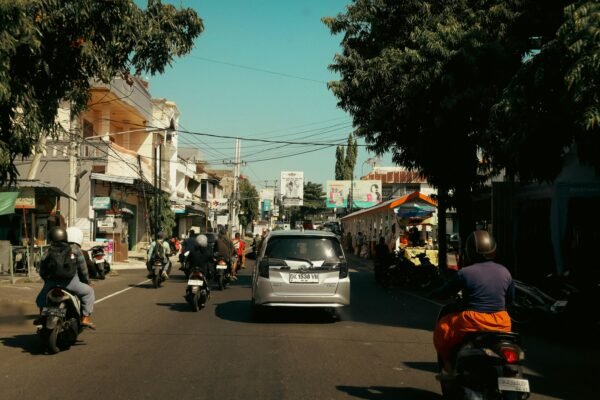
The issue is not one difficult journey. It is the repetition. A single delay is easy to ignore. Several in a day begin to shape how the day works. Plans become spaced out. Decisions start getting filtered through the effort required to get there. What looks simple when reading about Bali turns into something that has to be managed once it is experienced.
That is where the weight of Bali shows up. Not through one major problem, but through how much of the day is taken up by moving through it.
Some Areas Of Bali Are Far More Work Than They Are Worth
One of the biggest mistakes people make is to treat Bali as a single destination. It does not function that way. Bali behaves more like a collection of separate zones, each with its own rhythm, density, and limits — very different from Yogyakarta, where staying in one area still allows most of the experience to come together without much movement. Seminyak is not interchangeable with Canggu, and Ubud does not operate like Uluwatu. Even when areas appear close on a map, they do not behave like connected neighbourhoods within one city.
That becomes a problem when people try to combine them.
A drive that looks short on the map often takes far longer in practice. Time gets lost between locations. One move affects the next. What was meant to feel varied starts to feel disjointed, not because Bali lacks variety, but because the effort required to move between areas has been underestimated.
Bali does not handle constant movement well. The island works better when each area is treated as its own base rather than part of a smooth island-wide flow.
Which Bali areas are the wrong fit for many mature travellers
Kuta is the easiest one to rule out. For a mature traveller looking for comfort, calm, and a day that does not have to fight for shape, Kuta is not where I would stay. The area leans heavily into nightlife, crowd density, and a younger party scene. Even people who are not participating in that scene still have to live around it. That changes the feel of the streets, the noise, the traffic, and the general tone of the stay. Kuta may still suit younger travellers who want cheap access to bars, beach energy, and late nights. It is not where I would send someone looking for a more settled Bali experience.

Canggu is the other area I would be cautious about, and in many cases I would avoid it too. Canggu gets sold as stylish, current, and full of good cafés, but that description leaves out the part that matters more: density, congestion, scooter traffic, and a daily rhythm that often feels more chaotic than relaxed. It appeals strongly to digital nomads, younger long-stay travellers, and people who do not mind building their day around movement, queues, and scene-driven energy. For many mature travellers, especially those who want Bali to feel enjoyable rather than draining, Canggu is often more effort than reward.
That does not mean nobody should go. It means the area is frequently mismatched to the kind of trip people think they are booking.
The Bali base that still works for me
Legian is the area I have gone back to time and again. That is not because it is the most fashionable part of Bali. It is because it sits in a far more usable middle ground. Legian is close enough to Kuta and Seminyak to reach restaurants, shopping, and activity without too much trouble, but far enough from full party-town intensity that the stay does not feel swallowed by it. That balance matters.
For someone who wants access without constant exposure, Legian still makes sense. It does not pretend to be serene. It does not need to. What it offers is a more workable position: near enough to the action when wanted, but not trapped inside the noisiest version of Bali.
Which other Bali areas are worth considering
Seminyak can still work for visitors who want a more polished base with better dining, shopping, and hotel options, provided they accept that it still carries a social, outward-facing energy. It is more grown-up than Kuta, but it is not quiet.
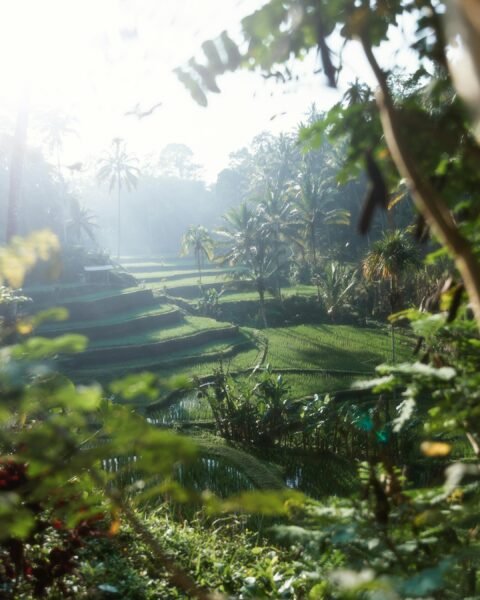
Ubud suits a different kind of stay altogether. Readers who want greenery, temples, a more inward pace, and less beach-scene energy may find it a better fit. The trade-off is that Ubud is not convenient for someone trying to combine too many other parts of the island. It works best when treated as its own contained stay.
Sanur is another area mature travellers should seriously consider. It tends to feel calmer, more settled, and less performative than Kuta, Seminyak, or Canggu. The pace is easier. For visitors who want Bali without feeling dropped into a youth-oriented scene, Sanur is often one of the more sensible choices.
Nusa Dua can also work for travellers who want a more self-contained resort stay, cleaner planning, and less day-to-day friction, though it is significantly more expensive than most other parts of Bali and often feels isolated from the rest of the island.
Why people keep getting Bali wrong
The phrase “doing Bali” sounds harmless, but it creates the wrong expectation from the start. It suggests the island can be covered, as though moving between areas is part of a natural flow.
In practice, trying to “do Bali” usually means stitching together multiple zones and expecting them to behave like one connected place. They do not.
That expectation turns short distances into long transitions, and simple plans into something that needs coordination. The friction does not come from one bad decision. It comes from repeating the same wrong assumption over several days.
Bali becomes easier to work with once the island is approached as a series of contained environments. One base works. Constant movement does not.
Bali Is Still Called Cheap, but the Meaning of Cheap Has Changed
Bali can still be done cheaply. That part is true. What is less true now is the assumption that the Bali most people actually want is automatically cheap.
The more comfortable version of Bali — well-located accommodation, better quality hotels or villas, easy access to food, a more manageable day — sits at a different price point than the old narrative suggests. The cost shift is not always dramatic in a single line item— it becomes clearer when viewed through this piece on Why I Sold My House and and Live In Hotels Instead, where cost is treated as a full system rather than just price. It is more often visible in the way spending layers across the day and across the stay.
Accommodation no longer feels straightforwardly cheap once quality and location are brought into the same calculation. Meals, cafés, transfers, and convenience spending do not seem excessive one by one, but they change the economics of the trip when they are taken together. What used to feel clearly low-cost now sits in a more mixed position.
The old story assumes that low prices automatically create an easy life. That is not how Bali works now. Lower spend may still be possible, but it often comes with more distance, more inconvenience, or more daily effort. A more comfortable setup reduces some of that pressure, but it no longer sits in the bargain category people still talk about.
The Reason Bali Still Pulls People Back Has Not Gone Away
The appeal is real. Bali’s cultural layer is visible in daily life in a way that feels immediate rather than decorative. Temples, offerings, and rituals are not side notes. They shape the atmosphere of the place, while the food scene remains broad enough that settling in does not require much effort. The island still carries a sense of abundance, familiarity, and recognisable energy that many people respond to strongly.
That is why Bali cannot be dismissed just because it has become more difficult. The attraction survives the friction, partly because the appeal was never built on efficiency in the first place. People return to Bali because the place still feels like Bali — not because it is easy, but because it still has character, recognisability, and a cultural presence that continues to hold even after the easier version has gone.
Bali Still Works — But Only When It’s Used Correctly
What has changed is not the appeal, but how easily those parts of the island can be accessed.
Using Bali as if it were still simple creates most of the frustration people talk about. Movement takes longer than expected, plans require more structure, and days do not hold together unless they are contained.
One base works better than several. Less movement keeps the day intact. Expectations need to match how the island actually functions, not how it used to.
Bali does not fail as a destination. The approach to Bali is what fails. Once that is corrected, the experience becomes far more predictable, and the parts that make Bali worth visiting begin to show up again without the same level of friction.
Travel Logistics Planner
A simple framework for thinking through the logistical side of travel — flights, entry requirements, accommodation and transfers — before the journey begins.
Delivered instantly. Occasional thoughtful updates from the road.