
Every place I’ve written about on this site has settled into a clear identity by the time I finished with it. Taipei never quite did that for me.
I spent eight days there, the first stop of a two-month run through East Asia before Seoul and then Japan. The question I kept circling wasn’t whether I liked it — I did, quickly and completely — but what Taipei was actually about, underneath all that ease.
Taipei Doesn’t Make a Strong First Impression
Taipei didn’t try to impress me, and for the first day or two, it didn’t. The buildings looked worn in a way I hadn’t quite expected — paint peeling off facades, older structures left to weather rather than restored, hardly a tree or a planted verge in sight. It read as gritty rather than grand, closer to run-down than romantic.
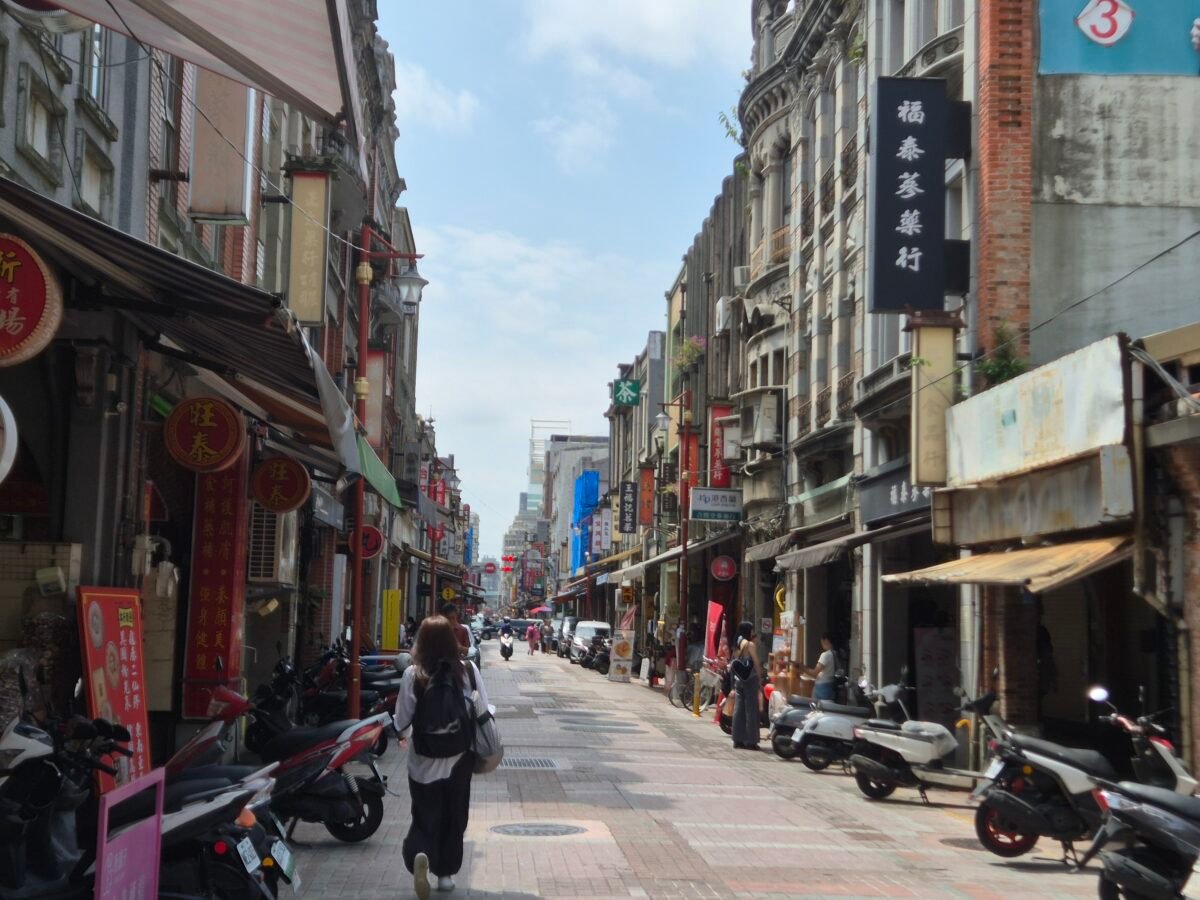
And yet, almost immediately, something about it also felt like home. I’m Malaysian Chinese, and the language fragments, the food smells drifting out of shopfronts, the general rhythm of the street all landed somewhere familiar before I’d consciously worked out why.
Taipei’s first impression, in other words, was two things at once: a city that hadn’t bothered to look after its own facade, and a place that felt, oddly, like I already belonged there.
The City Is Designed Exceptionally Well
Underneath that rough first impression, though, the actual machinery of the city told a different story, starting with how I got there in the first place.
Landing
I landed in Taipei straight from Ho Chi Minh City, a trip chaotic enough that I’ve already decided it will be my last one there — I wrote about exactly why in Ho Chi Minh City Is Easy to Visit — Harder to Care About.
The contrast hit almost immediately, at a pedestrian crossing: the little green man appeared, and every car actually stopped. It sounds like a small thing to notice, and it is, but after a week of stepping into HCMC traffic on faith, being able to cross a Taipei street on the strength of a traffic light felt like real relief.
My own system for a new city helped too. I’d pre-arranged a private car from the airport, door to door, so there was nothing left to decide after a long flight — no queue, no fare to negotiate, no decisions until I’d actually slept.
Cash, Cards, and Convenience Stores
Cash came first once I’d settled in. ChatGPT pointed me to a branch of the Bank of Taiwan, a short walk from the hotel, and explained why it was the better choice over a standalone ATM — more reliable for foreign cards, generally safer.
The transit card came next. I bought my EasyCard from a staffed counter at Zhongshan station rather than a machine, and ChatGPT had already told me it would work both ways — tapping onto the MRT and paying at convenience store registers with the same card.
A few days later, in one of those stores, I genuinely didn’t know where to tap it. The woman behind the counter showed me without a flicker of impatience.
That kind of small, unhurried helpfulness showed up constantly — on trains, in shops, on the street. Every station I used had a lift or an escalator, English signage throughout, and a system that was easy to learn in a day.
Even the Laundry
Even the hotel laundry ran on the same combination of systems and people. The machines took coins only, and the detergent vending machine was printed entirely in Chinese. Reception broke my notes into coins and helped me buy the right detergent, and ChatGPT walked me through the machine itself, step by step.
I wrote about exactly this kind of on-the-ground AI use — the bank, the EasyCard, the machines, the whole method — in Forget AI Itineraries: What Actually Helps Solo Travellers. Taipei is where that method got its first real test on this trip, and it held up.
Din Tai Fung
Din Tai Fung was the clearest example of the whole city’s approach. I’d timed lunch for 2pm to dodge the worst of the queue and still waited half an hour, which felt fair for dumplings in the country where they started. A robot delivered me to my table.
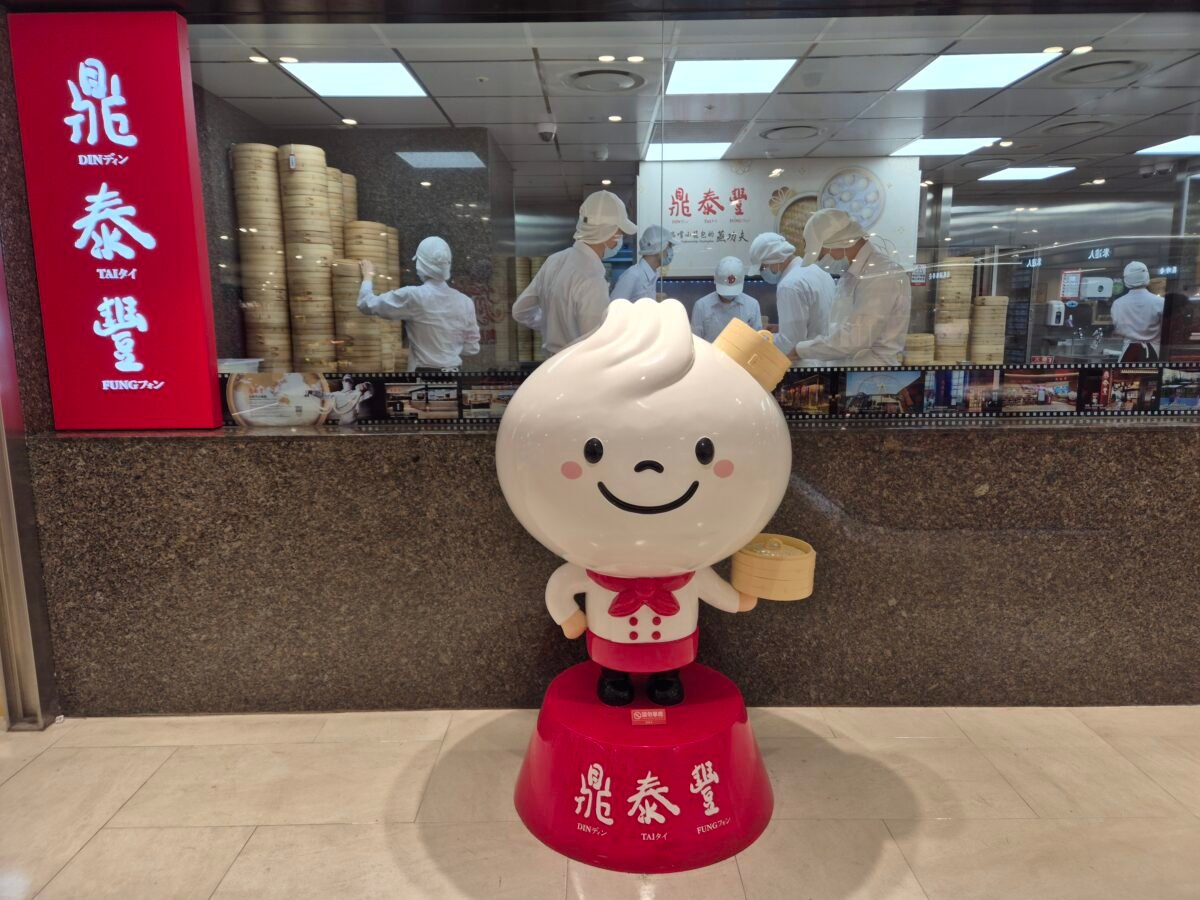
I didn’t know how to order once I got there, and a staff member pointed out the QR code printed on my queue ticket — the same ticket I’d already crumpled into my bag without thinking. I had to smooth it flat on the table before it would scan. The food, once it arrived, made the whole plan worth it, and cost noticeably less than the same meal at Din Tai Fung in Australia.
The Practical Version
If you want the practical version of all that:
- Book a private car for the airport transfer. No queue, no decisions to make after a long flight.
- Ask ChatGPT (or similar) for a specific bank branch — mine pointed me to the Bank of Taiwan — rather than guessing at a standalone ATM.
- Buy an EasyCard at a staffed MRT counter. It works for the MRT and for convenience store purchases alike.
- Apply for TWAC, Taiwan’s online arrival registration, within 3 days of arrival — that window includes your day of departure, so time it carefully — and check your own country’s visa requirements separately.
- Don’t walk the underground tunnels from Taipei Main Station if you can help it. They’re not easy to navigate.
- For popular restaurants generally, eat outside standard lunch or dinner hours. Little to no queue.
- Uber and Google Maps both work normally here.
None of Seoul’s Friction
None of this is a given in this part of the world. The contrast became obvious a few weeks later, in Seoul: A Developed City That Forgot Its Elders, a genuinely friction-filled place to move through, day after day.
Much of that friction came down to stairs. Seoul’s stations were built up and expanded over decades — long corridors between platforms, minimal escalators, station after station with no lift in easy reach. It’s a system that quietly assumes you can walk, and walk a lot, without ever asking whether you actually can.
Taipei’s network is newer in more places, and it shows. Every station I used had a lift or an escalator, no exceptions, no hunting required.
The difference wasn’t really about wealth or development — Seoul is every bit as developed as Taipei, arguably more so. It was about what got prioritised when the systems were designed. Taipei built for people who might not be able to manage stairs. Seoul, in enough places, didn’t.
That’s the whole difference, really — dozens of small systems, quietly doing their job, day after day.
Taipei Doesn’t Tell You Who It Is
The more I admired how effortlessly Taipei functioned, the more I wanted to understand the city behind those systems. I’d expected to understand the city, and Taiwan more broadly, through its history, and the National Palace Museum was the first place I tested that on.
The National Palace Museum
It’s genuinely impressive, inside and out, and almost everything in it arrived from mainland China with the Kuomintang government in 1949 — bronzes, jade, imperial scrolls, a collection built around dynasties that never touched this island.
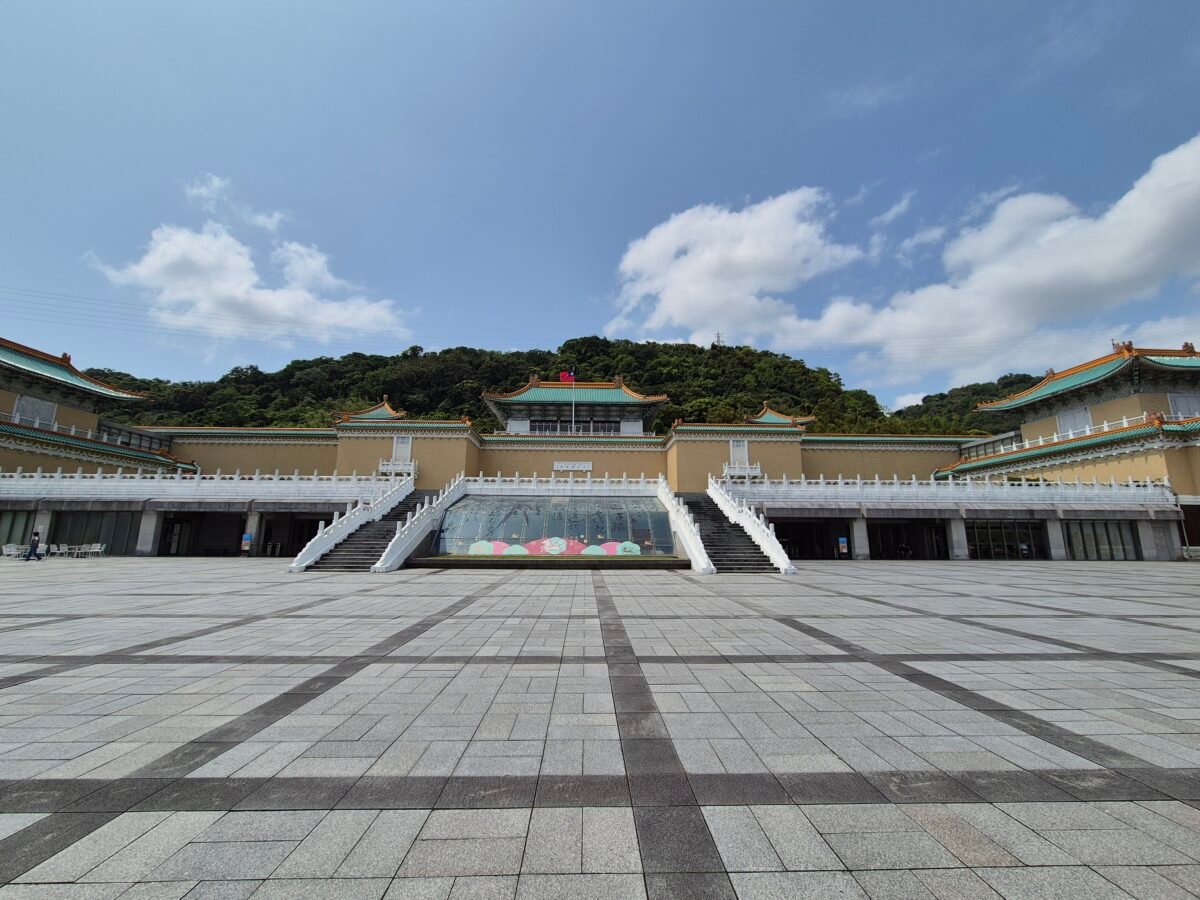
That’s not a criticism of the museum’s collection. It’s an observation that, as a first-time visitor trying to understand Taiwan, I came away knowing far more about imperial Chinese civilisation than modern Taiwanese identity.
The National Taiwan Museum
This was meant to be the correction, and it was thinner than I expected — displays that gestured at Taiwanese history without quite settling into it. That’s not really the museum’s fault either.
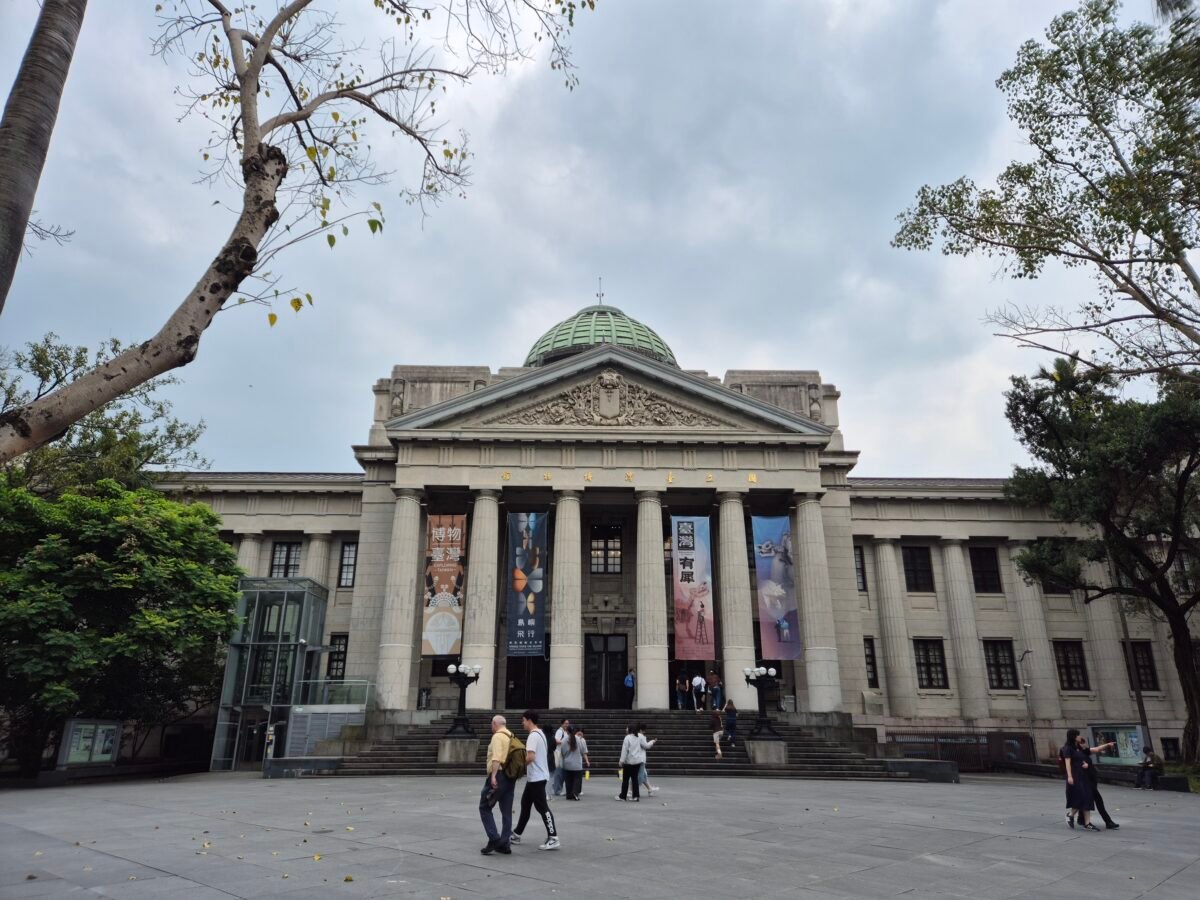
For most of the twentieth century, Chinese history was the only version taught in schools here, and Taiwanese history specifically wasn’t something you could study until martial law lifted in 1987.
The dedicated institution for that story only opened in 2011, and it’s not even in Taipei — the National Museum of Taiwan History sits two and a half hours south, in Tainan.
Chiang Kai-Shek Memorial Hall
This repeated the same pattern, though the heat made that decision for me. The scale of the place is obvious from the plaza alone — white marble, a blue octagonal roof, 89 steep, fully exposed steps up to the entrance.
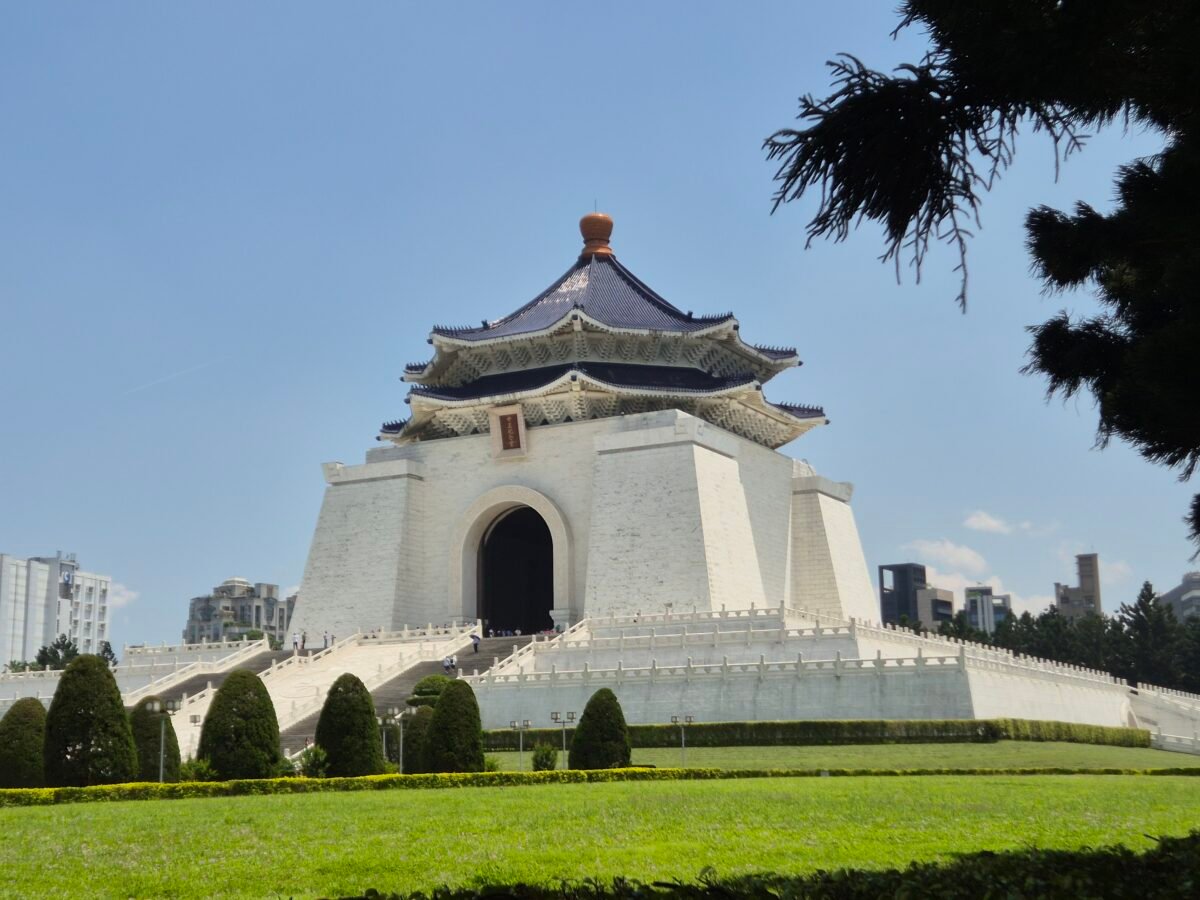
There’s a lift, I found out afterwards, for exactly this situation. I didn’t know that at the time, decided the climb wasn’t worth it in that heat, and spent most of my visit in the park beside the hall instead.
I never made it inside, so I can’t speak to the museum firsthand, but it’s apparently where the story does get more complicated — there’s a newer, permanent exhibition on Taiwan’s fight for freedom of speech under the very martial law Chiang enforced. Whatever corrective I was looking for elsewhere in the city might have been sitting inside the monument to the man responsible for suppressing it. The heat just got there first.
If Taiwan’s own story lives anywhere close to whole, Tainan seems the more likely place to find it. It’s already on the itinerary for my next Taiwan visit.
Heritage Without a Narrative
Heritage streets told a related version of the same story: Bopiliao, a preserved block in Wanhua. I walked into it late one morning.
The street-facing row was the first thing I saw — ornate Baroque-style pediments, cream-brick upper floors, ground-floor arcades built for foot traffic. Cars lined the kerb, but the shopfronts behind them sat shuttered, paint faded, no real movement along the block.
I turned down the alley behind it expecting more life and didn’t find it: covered walkways between brick pillars, red lanterns strung overhead, potted plants set out in neat rows, and almost nobody in it.
Then, in a courtyard further in, where the old brick had been stripped back and braced with raw steel framing — left exposed rather than restored, the layers of construction on full display — a woman in a red cheongsam appeared, a purple hat on her head and a floral umbrella in hand. A crew was filming her. Traditional music played from a speaker somewhere out of shot.
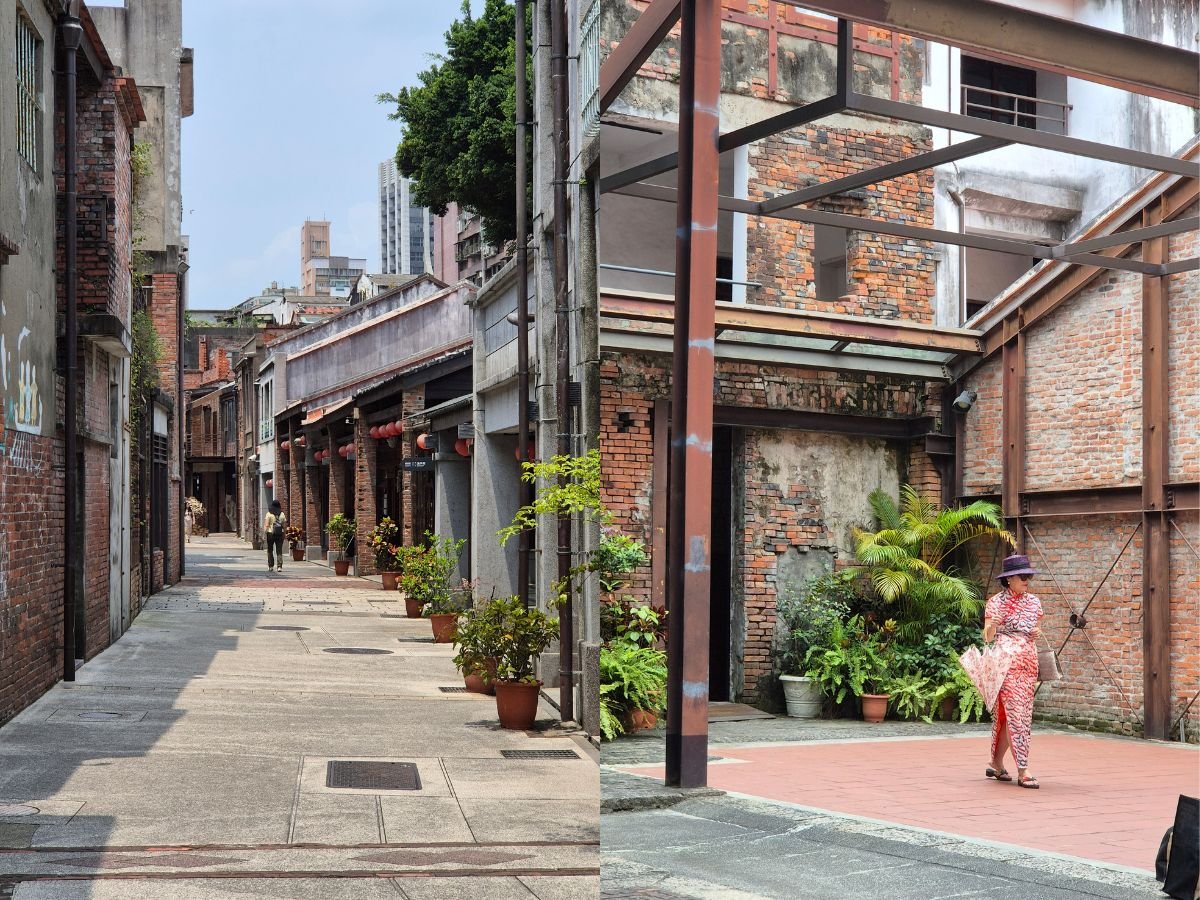
I sat down on a bench and watched, and it struck me only afterwards what I was actually looking at: the closest thing to heritage in action I saw anywhere in Taipei, and it wasn’t coming from the buildings themselves. It was a costume, a script, and a camera crew, animating a space the architecture alone couldn’t.
Bopiliao is beautifully preserved. What it isn’t, at least on the morning I saw it, is interpreted — there’s a real difference between keeping a building standing and giving people a reason to actually be inside it.
What Singapore Did Differently
Preserving buildings is only half the task. Helping visitors understand why they matter is the other half.
I’ve seen the other version of this in Singapore, where Clarke Quay and CHIJMES are old shophouses and colonial buildings too, just put back to work as bars, restaurants, and event spaces with real foot traffic every night of the week. I wrote about what that buys a city in Is Singapore Worth It?.
That’s not really a verdict on Bopiliao so much as a difference in approach — Singapore chose activation, and Taipei, at least here, chose preservation on its own terms. Bopiliao just felt quieter for it. Almost hesitant to tell its own story out loud.
Taipei’s Contradiction
Bopiliao was really just the clearest version of something I kept noticing everywhere — the parts of Taipei built to function were miles ahead of the parts built to explain.
Here’s the part I keep circling. Everything about the mechanics of being in Taipei worked, cleanly and consistently, day after day.
And the better the city ran, the more curious I got about what it wasn’t telling me.
A place that gets the hard, unglamorous stuff right — transit, safety, service, the small daily frictions most cities never fully solve — has clearly made deliberate choices about what to prioritise. Explaining itself to visitors, it seems, just wasn’t one of them.
I left Taipei impressed by how frictionlessly it all worked — especially landing there straight from a city that had used up all my patience for chaos. I also left wondering why a place with this much history seemed reluctant to tell me any of it directly.
Maybe that’s just Taipei’s character. It doesn’t perform for visitors. It gets on with its own life and leaves you to work the rest out for yourself, whether that’s a limitation or simply a different idea of what a city owes the people passing through it. I’m still deciding which.
Either way, there’s more of this city I still want to see.