
Eleven nights in Seoul, and I would not go back. Not for the shopping. Not for the history. Not even on points.
I stayed at the Ibis Ambassador Insadong, close to every sight worth seeing, and burned enough loyalty points to make the entire stay free. Free didn’t change my mind. That fact alone tells you something about what actually went wrong.
What a developed city forgot to build
Seoul markets itself as modern, efficient, and forward-looking. The infrastructure behind that image tells a different story once you slow down enough to need it.
Train stations rely on stairs, and many have no working lift. I watched older Korean residents, not tourists but people who actually live here, haul themselves and their bags up flight after flight because no alternative existed. This isn’t a city that’s liveable for its own seniors, let alone a foreigner passing through.
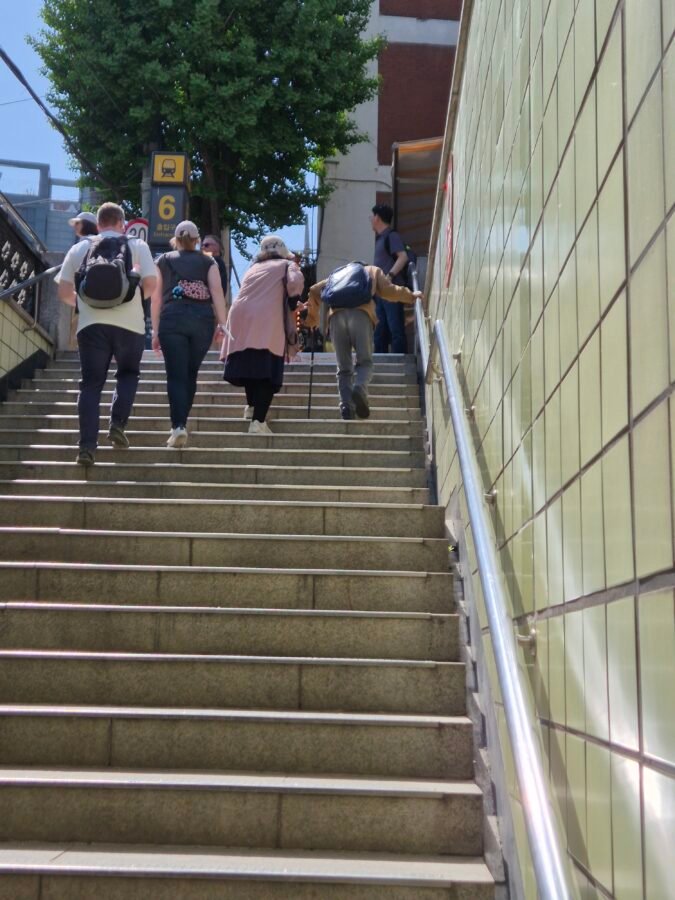
I wasn’t only watching from the sidelines, either. I dealt with leg problems of my own on this trip, and every staircase without a lift reminded me how little this city accommodates a body that isn’t at full strength, at any age. There is nowhere to sit while you wait, either. Not on the platforms, not in the stations above them, not on the streets, and not in the shopping centres I passed through afterward. A city this size, this developed, has simply not built a place for a body that needs to rest.
Signage compounds the problem, and it isn’t confined to some outer edge of the city you could simply avoid. This was happening in Insadong itself, at Jongno 3-ga Station, one of the most tourist-trafficked corners of Seoul. Information rarely appears in anything other than Korean, and train stations are the worst offenders. I leaned on AI constantly just to work out which platform I needed, and more than once gave up entirely and called a Kride taxi instead.
Exactly the situation I wrote about in Forget AI Itineraries: What Actually Helps Solo Travellers. That is not how I move through a city. I read the signs, follow the flow, and get where I’m going in Tokyo and Bangkok, and especially in Hanoi, a city I wrote about in Hanoi Travel: Why I Keep Going Back Even Though It’s Full On. In Seoul, I outsourced almost every transit decision to AI because the city itself offered no way in.
The respect I expected and didn’t find
I arrived assuming Asian culture carries an inherent respect for age. Seoul corrected that assumption twice.
A café and a convenience store, on two separate occasions, treated me with a dismissiveness I hadn’t encountered anywhere else in Asia. I can’t say whether those two interactions reflected wider Korean culture or were simply bad experiences. But after days of navigating stations, stairs and public spaces that already felt unfriendly to ageing bodies, they reinforced the impression I’d already formed.
One afternoon at the movies
The friction wasn’t limited to trains. One afternoon, I tried to watch a movie at Coex Mall, a vast complex with almost no signage pointing toward the cinema. Finding it felt like searching for a needle in a haystack. Buying a ticket meant using a machine, and the staff on hand didn’t speak English, a contrast that struck me hard since even staff at small local cinemas in Vietnam speak enough English to help a foreign customer.
A Korean woman waiting nearby noticed I was stuck and stepped in to help, and without her I would have simply walked out. The concourse offered no proper seating either, only stadium-style steps built into the floor, nothing designed for anyone with mobility issues.
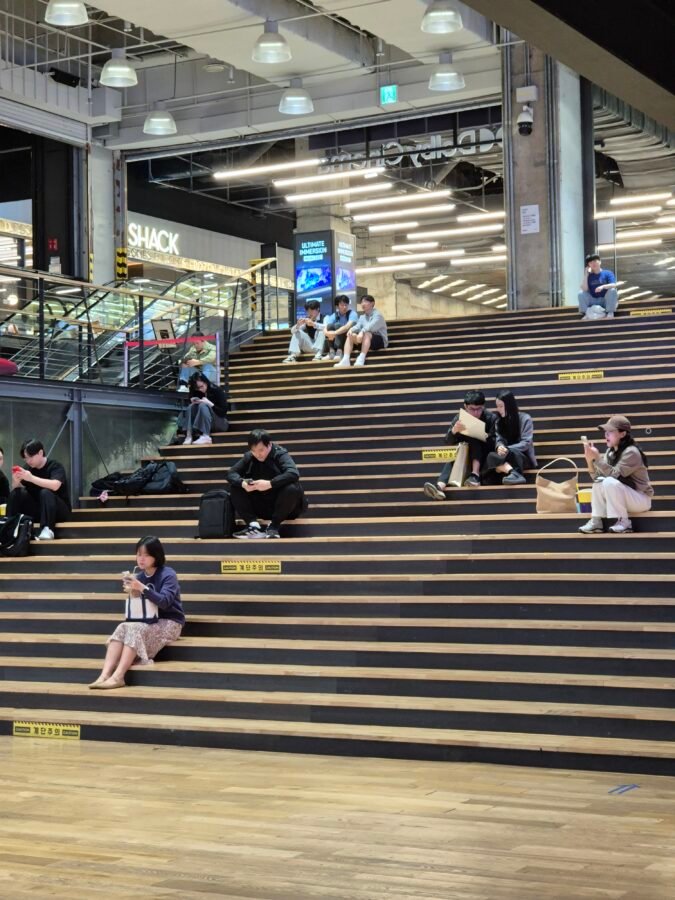
I’d planned to see the Gangnam Style sculpture while I was there too, but finding the cinema had already worn me out, so I let it go. After the film, I wanted something to eat before heading back, and every restaurant in the mall had closed for the gap between lunch and dinner service. Restaurants inside shopping centres across Southeast Asia simply don’t do this.
None of these frustrations, on their own, would have made me write this article. Together, though, they created something much harder to describe until I’d lived through it: constant decision fatigue. Every day involved another staircase, another translation, another missing seat, another navigation problem or taxi decision. Travel gradually became less about discovery and more about managing friction.
Free didn’t fix it
The Ibis breakfast was downright terrible. I dreaded going down for it most mornings, a feeling I have never had in the 365 nights a year I’ve spent living in hotels since I sold my house, something I wrote about in full in Why I Sold My House and Live In Hotels Instead. The room, at least, was what I’d expect of a basic Ibis, nothing more, and Ibis Styles properties across Southeast Asia are a notch above this one. Location put me within train-station distance of almost everything I wanted to see, not walking distance, and the friction of getting through those stations left me taking taxis more often than I wanted to.
The hotel itself wasn’t the issue. It was a perfectly ordinary Ibis in a good location. What mattered was that even eleven free nights, booked entirely on loyalty points, couldn’t outweigh the daily friction of getting around. When a trip costs you nothing and you’re still counting down the days until you leave, the problem isn’t the hotel. It’s the destination.
The Parts of Seoul I’d Still Recommend
Not everything left me frustrated. Seoul has genuine strengths, and some of them were outstanding.
The shopping that actually delivered
Myeongdong lives up to the hype. I got to Olive Young early and kept the visit short, since the queues turn unmanageable fast if you don’t. In that window, I found Beauty of Joseon and Round Lab sunscreens that felt lighter than any SPF I’d used before, and I’m converted now. Back in Bangkok, I spotted Beauty of Joseon on the shelves at Watsons, which made restocking simple. If you want the tax refund, bring your passport.
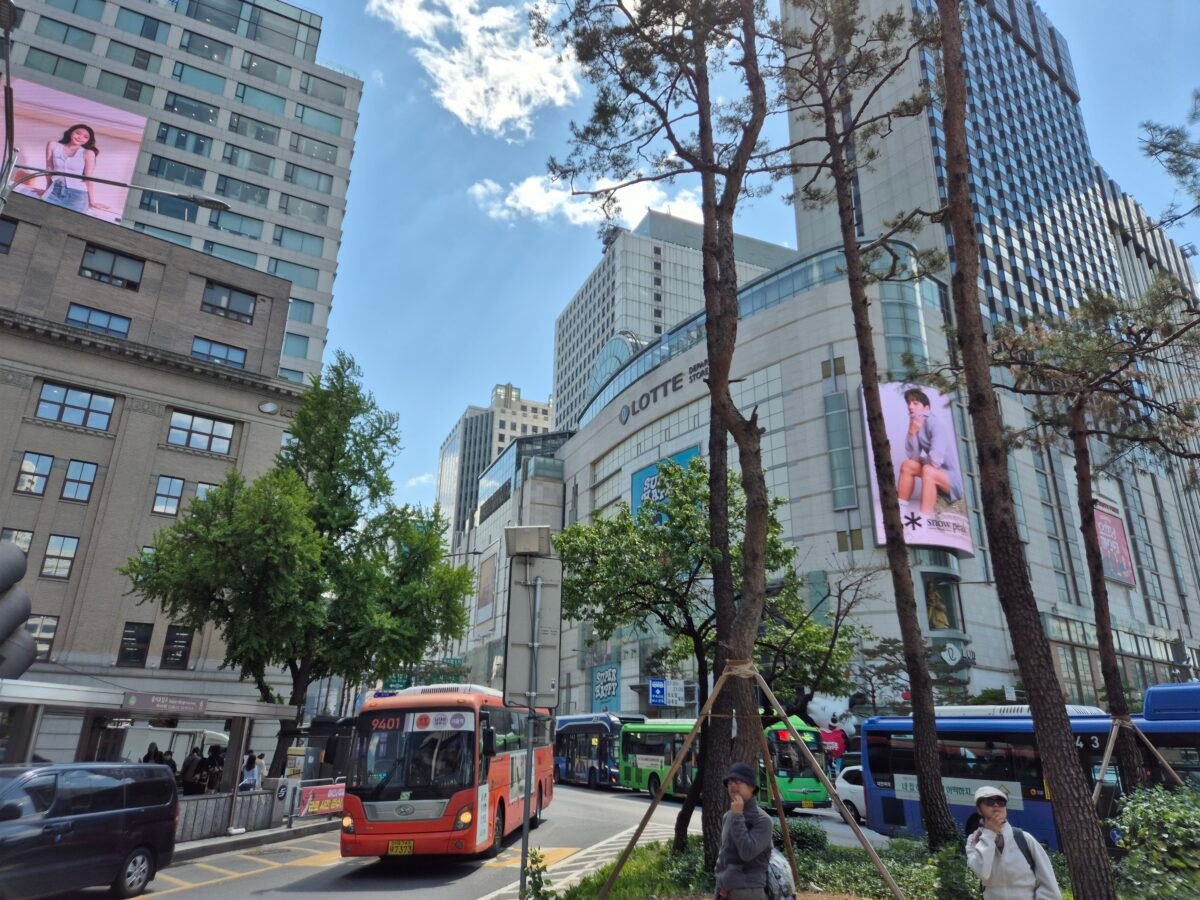
Etude turned out to be the real discovery. Its range for more mature skin has genuinely impressed me. The products aren’t cheap, but the staff sent me out with so many free samples, face masks, hand cream, collagen cream, face wash, that the cost balanced out. I’m now trying to track Etude down in Bangkok.
Food That Worked For Me
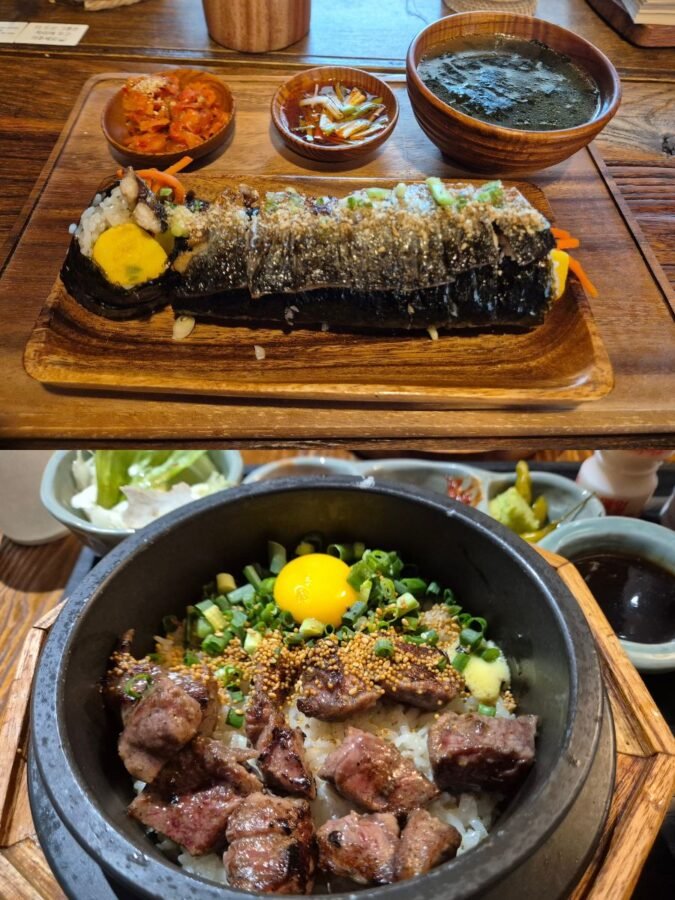
Much of Korean cuisine sits at an intensity that numbs the taste buds, and I avoided most of it because of that. If you feel the same way, gimbap, dolsot bibimbap, samgyetang (ginseng chicken soup), mandu (dumplings), and galbi all worked for me without the heat.
The museums, and the walk, that impressed me
I visited the National Museum of Korea and the National Palace Museum of Korea, the latter tucked inside the Gyeongbokgung Palace grounds. Both are free, and both were exceptional. These are museums that tell a story, not just buildings holding artifacts behind glass, and I was surprised neither charged admission given the quality on display. Every museum should meet this standard.
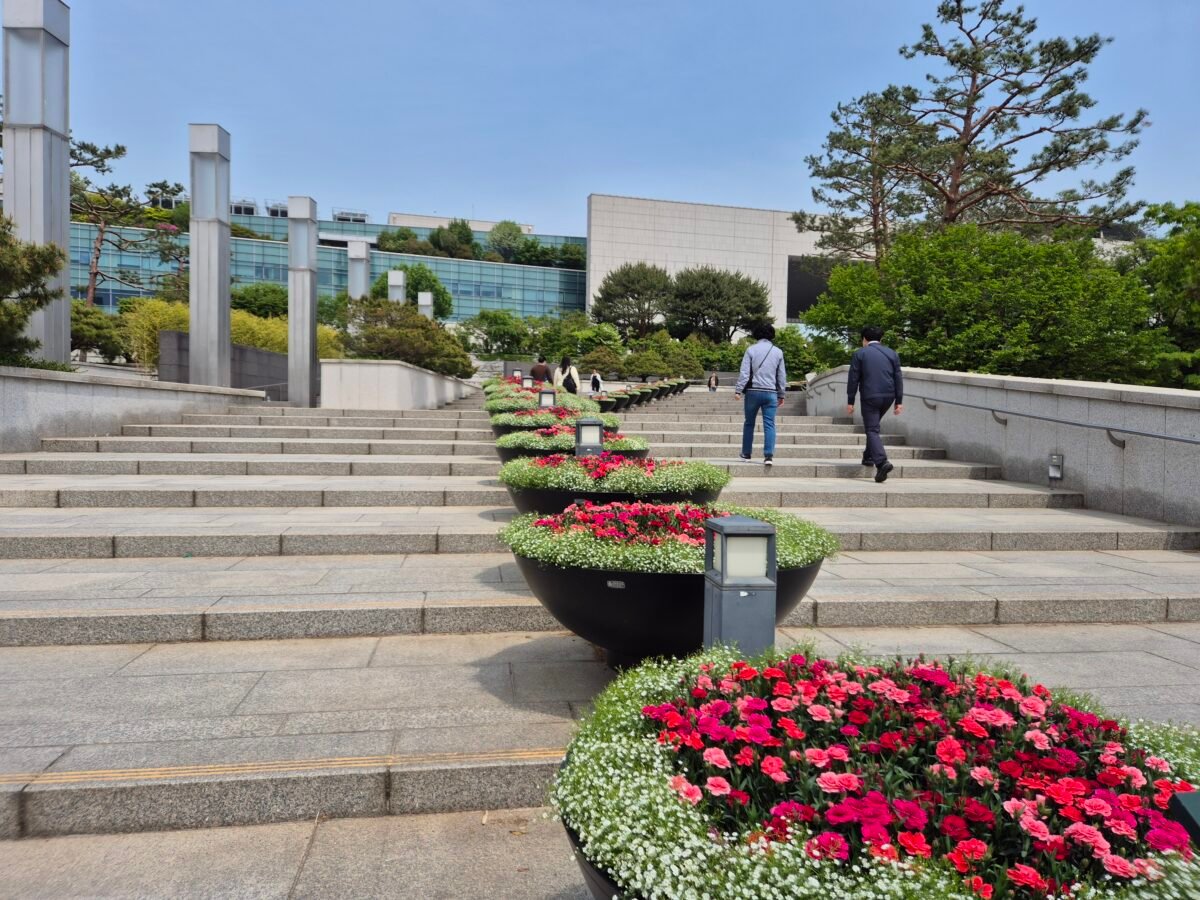
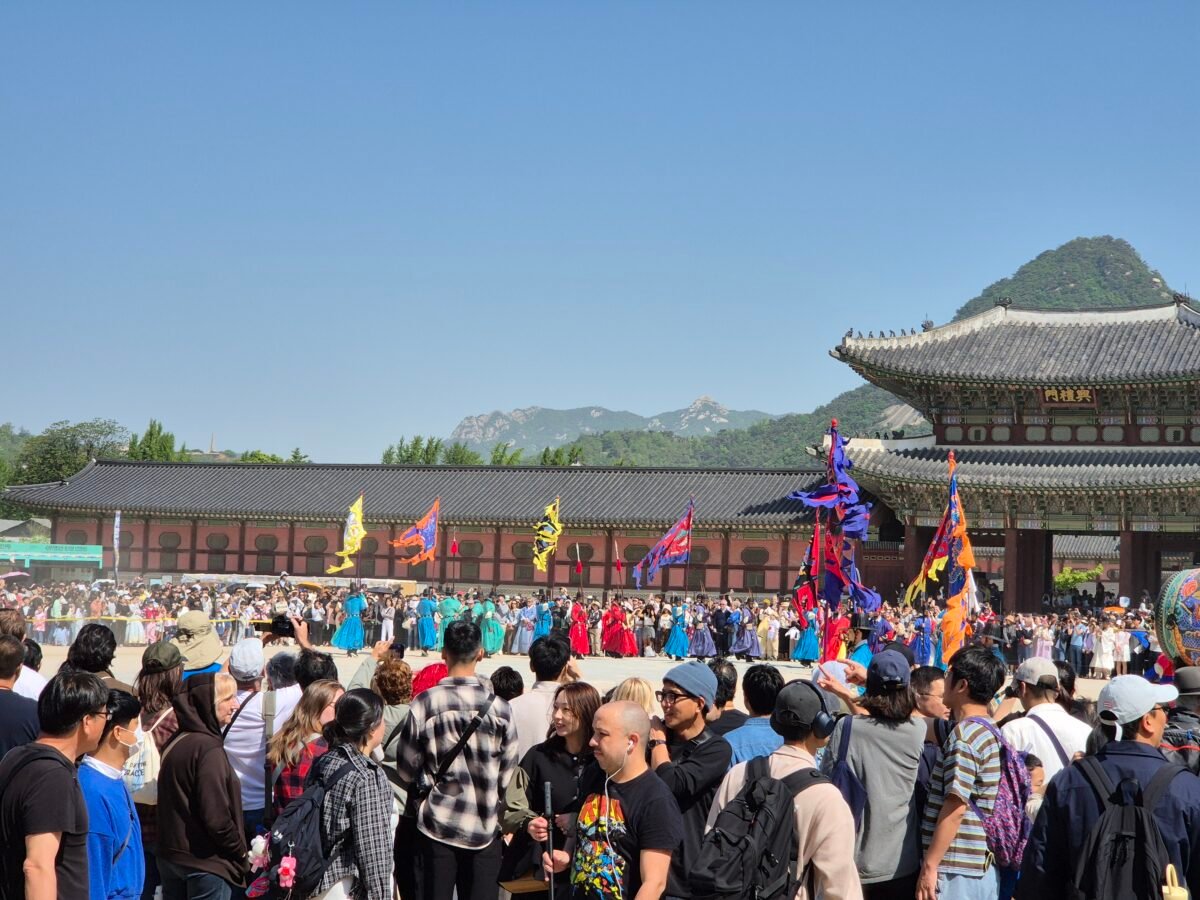
The two main palaces I visited, Gyeongbokgung and Changdeokgung, were every bit as striking, and worth the time even with the crowds.
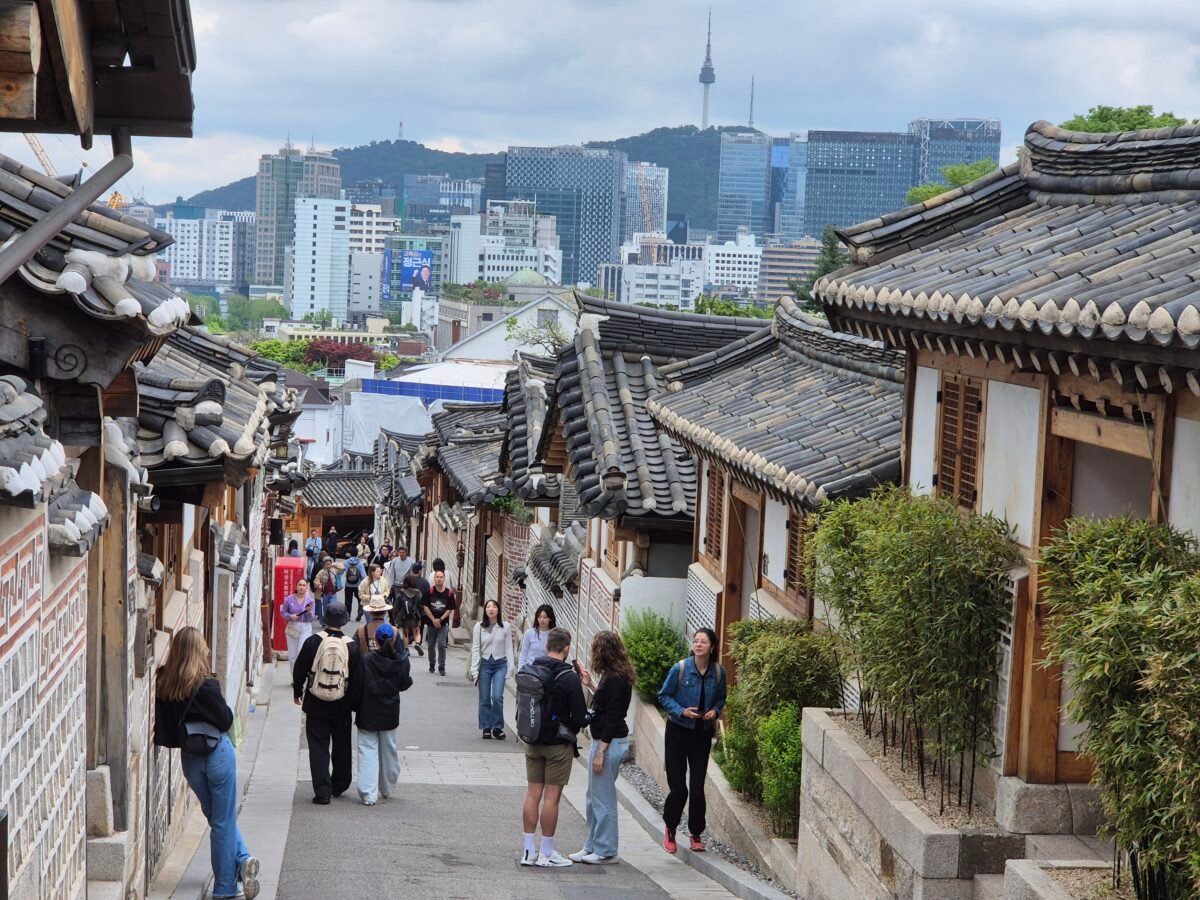
I also walked from my hotel up to Bukchon Hanok Village, a proper hike up the hill, and the view at the top made it worthwhile. None of it, individually or together, outweighed eleven days of navigating stairs, apps, and streets built without me in mind.
Before you go, if Seoul is still on your list
If you go anyway, plan around the friction rather than pretending it isn’t there.
Stay close to the sights, in Insadong or Myeongdong, since you’ll likely rely on taxis more than trains. That will cost you, and there’s no way around it. Kride is the taxi app I used, and it’s foreigner-friendly with an easy setup. Uber also operates in Seoul, something I didn’t know despite researching before I left, so download it as a backup.
Google Maps doesn’t work properly in South Korea. Download Naver Maps instead for navigation, though it isn’t close to Google Maps in quality. Even Naver Maps isn’t built with a foreigner in mind, since most reviews sit in Korean and you’ll find yourself translating each one just to get anything useful out of it. After a while, I gave up and reverted to Google Maps for reviews instead, running both apps side by side, which is friction in itself.
Five nights is enough for Seoul. Incheon Airport sits roughly one to one and a half hours from the city by car, depending on traffic, and I pre-arranged a private car transfer from the airport to my hotel, my usual approach in any new city, exactly the kind of decision I recommend in The First 24 Hours of Solo Travel: Where Most Mistakes Happen. It cost more than I wanted to pay, but I was glad I didn’t try to work out the trains after a long flight.
Seoul, then Japan
I flew to Japan directly after Seoul, and the contrast was immediate. Lifts exist where you need them. Seating appears on platforms as a matter of course. Signage in Tokyo, which I cover in full in Tokyo for First-Time Visitors: What to Expect, in Osaka, and in every station in between, assumes a traveller who doesn’t read Japanese and builds accordingly. I rarely saw older residents forced to battle the infrastructure in the same way I’d noticed in Seoul. Lifts, seating and clearer signage reduced much of the physical effort that had worn me down only days earlier. Seoul and Tokyo sit an hour apart by flight and a world apart in how they treat anyone with mobility issues, at any age. I felt that gap personally, not just observed it in the people around me.
Taipei, and the return I’d actually make
Taipei had already set the bar, since I visited it just before Seoul rather than after. Public seating turns up where you’d actually want it, station signage reads clearly in English alongside Chinese, and the pace of the city never once demanded that I outsource my thinking to an app just to get from one district to the next. I landed in Seoul with that standard still fresh, and Seoul never came close to meeting it. Where Seoul left me counting down the nights, Taipei is a city I would return to without hesitation.
The verdict
Seoul has genuine highlights, and I won’t pretend otherwise. But a destination earns a place on your itinerary not by how many attractions it has, but by how little energy it asks you to spend reaching them. Seoul adds friction at every layer, on the stairs, at the platform, in the shops, in the language you can’t read. Japan removes that friction. Taipei removes it too. Seoul, for now, doesn’t make the list.
I’ll still give Busan and Jeju a chance, maybe in a couple of years. I’m in no hurry to rush back to South Korea.