
Hiroshima was never supposed to become a favourite. I arrived braced for a single, heavy experience and a convenient base for everything around it. By the time I left, I had cancelled most of my plans, because I no longer wanted to be anywhere else. Somewhere across those six nights, the city quietly moved itself onto the short list of places I return to in Japan every year.
I Thought Hiroshima Would Be About One Thing
I left Hiroshima off my first trip to Japan, eight years ago, on purpose. I don’t condone war, and for a long time I had no wish to stand in the place where it reached one of its worst conclusions. The city stayed off my map by choice, not by oversight.
What changed my mind was Oppenheimer. Watching it, I realised that avoiding Hiroshima had let me keep the whole thing at a comfortable distance, a fact I knew rather than a place I understood. So I decided that this time I would go, not to pay respects to an idea, but to understand more than I did.
Even then, I expected Hiroshima to be about that one thing. The Peace Memorial Museum and the A-Bomb Dome were the reason the city was on the itinerary at all. Around them I arranged the rest of the stay as pure logistics: six nights in one central hotel, and four day trips fanning out to Miyajima, Okayama, Himeji and Fukuyama. Hiroshima would carry the weight of the museum for a day, and then I would move outward and let the surrounding region do the work.
That was the plan, at least, and Hiroshima had other ideas.
The Longest Three Hours I’ve Ever Spent in a Museum
I expected the Peace Memorial Museum to take an hour, perhaps two. In the end I stayed for closer to four. The reason wasn’t that I couldn’t pull myself away from the horror. I stayed because I wanted to understand two things: why it happened at all, and how the city rebuilt itself afterwards.
The ground floor shows you what the bomb did to Hiroshima. Above it, three further floors take on the harder questions, setting out how it happened, why it happened, and how the city put itself back together, alongside the human stories that carry all of it. That is where most of those hours went.
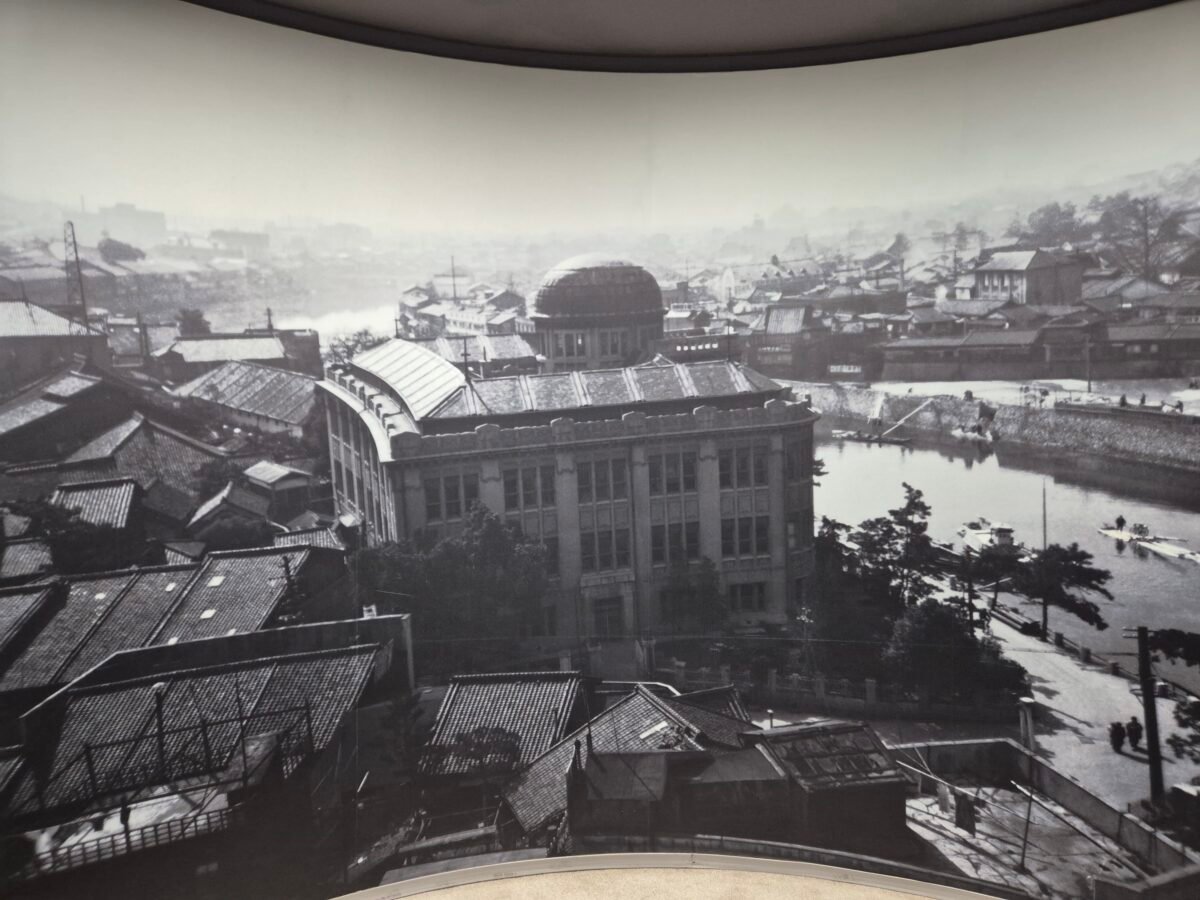
Whenever a display raised something it didn’t fully explain, I photographed it and asked ChatGPT to fill in the background: the wartime decisions, the political context, the long shape of the recovery. What it gave back was substantial, well beyond what any wall of panels can hold, and it is exactly the on-the-ground use I make the case for in Forget AI Itineraries: What Actually Helps Solo Travellers. I left understanding a great deal more than I had walked in with.
The first room
The first room does not let you settle. It puts the devastation in front of you at once, image after image of what the bomb did to the city and the people in it. The room is small, and it was packed, with visitors leaning past one another to reach the English panels. Some of them were lifting their phones to photograph the images on the walls. I couldn’t comprehend why people were taking pictures of the horror and devastation, and I still can’t. Going through the room grew harder by the second, until I was distraught and half-claustrophobic and had to get out.
I found a bench just outside and sat down. People kept moving past me, in and out of the room I had just left, and I let them go. My chest had gone tight and my breathing shallow, so I focused on slowing it while the murmur of the room drifted out through the doorway.
In front of me, a wide window looked out over the park. The reflecting pool and the Cenotaph lay just below. Beyond them the Dome stood small against an ordinary working city, people crossing the paths in the afternoon sun. What had just been shown to me in ruins was out there, in the light, going on with its day.
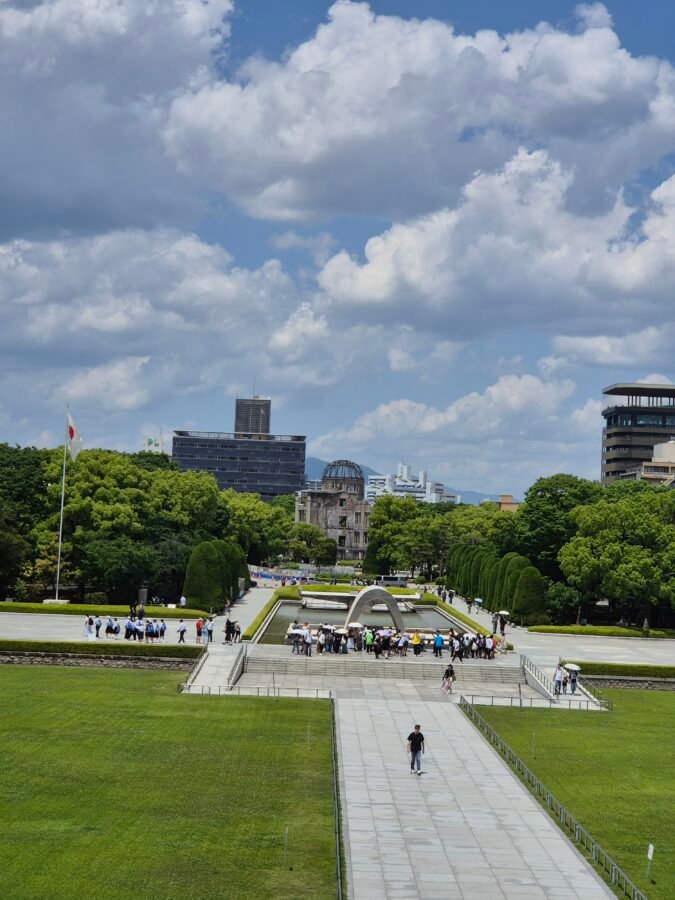
I don’t know how long I stayed there. It was long enough for my pulse to settle and for the floor to feel solid under my feet again, and nowhere near long enough to make me want to step back inside. I did not go back into that room. When I finally stood, I turned away from it for good and carried on through the rest of the museum.
A name from Penang
One photograph in that first room had already stopped me before I left it: a young man, with the name Abdul Razak beside him. The ground floor gives a section over to the foreign residents most visitors never think to expect, and that is where his story filled in. Many were students, brought from across Southeast Asia during the war under Japanese scholarship programmes while the region was under occupation.
Razak was one of them. Born in Penang, he had been sent first to Tokyo and then to Hiroshima to train as a teacher, and on the morning of 6 August 1945 he was in a classroom roughly a kilometre and a half from the hypocentre. He survived; two other Malayan students with him did not. After the war he went home, taught the Japanese language in Malaysia for the rest of his life, and died in Kuala Lumpur an old man.
I was born in Penang and grew up in Kuala Lumpur. Until I stood in that museum, I had no idea a young man from my own birthplace had been in that city, on that morning, when the bomb fell. History I had always read as distant, something that happened to other people in another time, suddenly carried an address I recognised, and stopped being history at all.
I Needed a Day Before Facing the Dome
I didn’t go to the Dome that day. I couldn’t. What I had seen needed somewhere to settle before I could stand in front of the building itself, so I gave it the rest of the afternoon and a full night first.
Later that evening, in the executive lounge, I overheard another traveller quietly ask a question that had already crossed my own mind: how different history might have been if different voices had been making the decisions. Neither of us had an answer. The question simply sat there, the way the museum intends its questions to, and I carried it up to my room with me.
I walked over to the Dome the next morning. For years I had pictured it as something large, because the photographs always make it look that way. In person it is a small building, and that was the first surprise. The second was how little its size mattered. Standing beneath it, a day on from the museum, the modesty of the structure did nothing to soften the weight of it; if anything, it made what the building represents land harder.
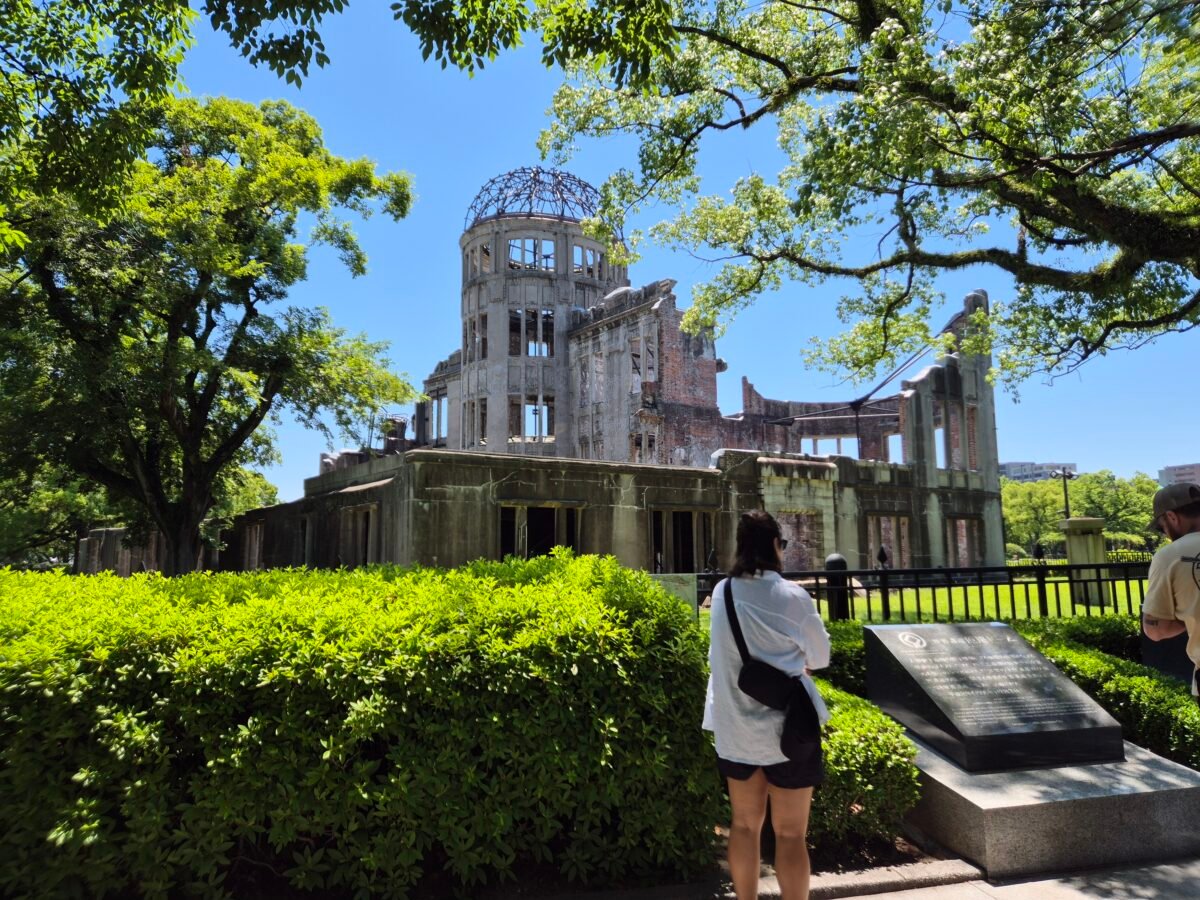
My eyes filled without warning. I pulled my cap down and stood there until it passed. Never once, anywhere, had I cried at a monument before. That morning was the unexpected first, and I stopped trying to reason my way out of it, because some things reach you before logic has a say.
A City That Refused to Be Defined by Its Past
I had braced for that weight to hang over the whole visit, and it simply didn’t. Here is what I had not accounted for at all: the living city is genuinely lovely.
The city I hadn’t expected
Wide rivers run through the centre of it. The boulevards are broad, the pavements are generous, and the whole place is built for walking in a way that made every day easy. Parks turn up everywhere, far more of them than I had expected. The pace is unhurried, and the locals were consistently, unshowily warm. Hiroshima has rebuilt itself completely, without ever pretending the past didn’t happen, and it holds the memorial and the ordinary daily life of a city side by side without strain.
Why two days isn’t enough
That is the part almost nobody arrives prepared for. Hiroshima’s history has so thoroughly overshadowed what the city is today that most travel blogs, and now most AI itineraries, grant it the standard two days and move on. Two days is enough to see the museum and the Dome. It is nowhere near enough to understand the place, and treating it as a box to tick before Kyoto is a real shame, because the city rewards anyone who stays.
That contradiction is what undid my own itinerary. I had four day trips booked and I took only one, a day at Himeji and its castle, which was well worth going for. The other three I let go. Miyajima, the one excursion nobody skips, I skipped. I did have some leg trouble on that trip, and it slowed me down, but leg trouble alone would never have cancelled three separate excursions.
I wrote about how that played out, and what it did to the maths of my rail pass, in Why I Won’t Buy The JR Pass Again. The truth here is simpler than the fares, though. Every morning I found I would rather stay in Hiroshima than leave it, and eventually I stopped arguing with myself and cancelled the rest.
Hiroshima Is Surprisingly Easy to Explore
Part of what makes a city worth returning to is how little it asks of you, and Hiroshima asks very little. Getting there sets the tone, since it is a major shinkansen hub and Hiroshima Station sits close to the centre, which makes both arriving and leaving almost effortless. The city itself is compact. The tram network reaches most of what a visitor wants, tourist loop buses cover the rest, and a great deal of it is simply walkable from wherever you happen to be. Trams and buses both run on the same prepaid IC card I use everywhere in Japan, which I break down properly in The Transit Card You Need for Public Transport in Japan.
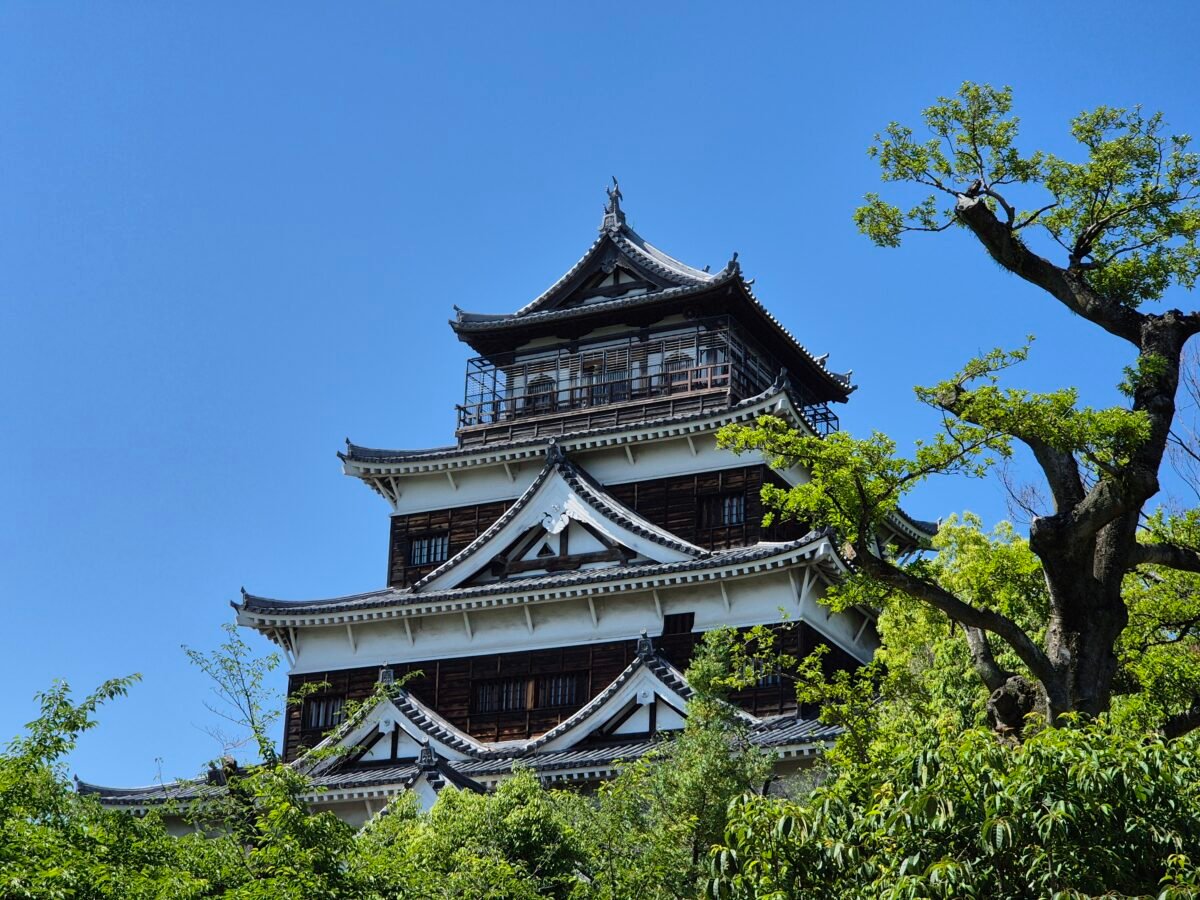
Not that I got it right on the first attempt. Setting out one morning for Hiroshima Castle, I sailed straight past my stop, then made things worse by working my way through what felt like every colour of bus on the loop in turn. That day I saw a great deal of the city I had never planned to see. The castle came good in the end. There was even a genuine silver lining, because I found corners of Hiroshima I would never have gone looking for, and I was glad to have seen them.
Crowne Plaza Hiroshima: An Unexpected Pleasure
I don’t normally give a hotel a section of its own, but this one became part of why the city worked, so it has earned one.
Everything within reach
The Crowne Plaza sat exactly where I needed it to. Trams ran from the doorstep, and the tourist loop bus stopped almost directly outside. A FamilyMart was downstairs, a drugstore stood immediately outside the door, and a coin laundry was five minutes away. Breakfast came three ways, too: the executive lounge, an all-day restaurant, or a dedicated Japanese restaurant. My IHG Platinum status put all three within reach at no extra cost, the lounge included, and I had fully intended to be disciplined about which one I chose. That resolve lasted about a day.
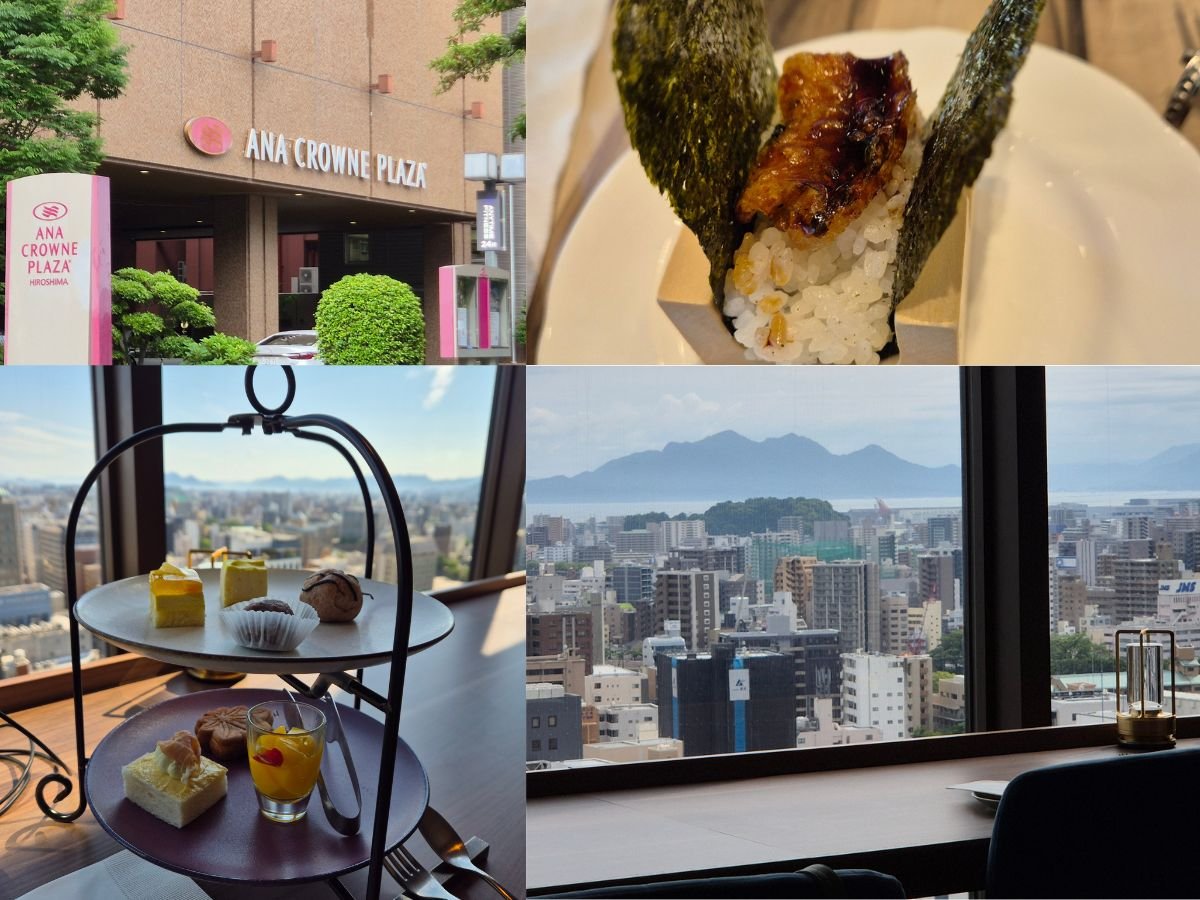
A breakfast built around the region
The all-day restaurant won me over, because its buffet leaned into Hiroshima’s own cooking rather than the usual international spread. Each morning it laid out regional specialities: Hiroshima-style okonomiyaki, Setoda lemon soup, and open sushi topped with local anago, the conger eel the area is known for. It was a thoughtful introduction to the region’s cuisine before I had even left the hotel, and it turned a routine hotel breakfast into something I looked forward to. In the evenings the lounge did its own quiet work, with sake that never seemed to run dry.
Why it made the difference
None of that is glamorous, and every part of it mattered. Each of those small conveniences removed a decision I would otherwise have had to make, an errand I would otherwise have had to run, a friction I would otherwise have had to absorb. A good city becomes a great one when your hotel takes friction away instead of adding it, and Hiroshima, hotel included, delivered exactly that without my having to build it myself. That isn’t a holiday preference so much as a way of living, and it’s the whole case I lay out in Why I Sold My House and Live In Hotels Instead.
How to Give Hiroshima the Days It Needs
If you take one thing from all of this, take the time. There is so much more to Hiroshima than the museum and the Dome, and the city only shows you that once you stop rushing through it. Here is how I would give it the room it deserves.
- Allow at least five nights. Two days covers the museum and the Dome and almost nothing else. Between the living city and the day trips within easy reach, five nights earns its place, and you will not spend any of it watching the clock.
- Use the sightseeing loop bus. The hop-on-hop-off Meipuru-pu runs three colour-coded routes (orange, green and lemon), looping between the station and the main sights. It is free if you hold a JR Pass; without one, you simply tap your transit card as you board. There is a Meipuru-pu office right next to the bus stop where you can pick up the route map, which you will need. The buses leave from the Shinkansen side of the station, and doing a full circuit of all three routes is worth it on its own just to get your bearings.
- Treat Hiroshima Station as a destination, not just a transit point. The rebuilt station is full of restaurants, shopping and even a cinema. When you arrive, the south exit is the city side: I took a taxi from there to my hotel, and the trams and local buses into the centre leave from the same side. If you are planning a shinkansen day trip, reserve your seat at the JR ticket office inside the station, which is where I booked my Himeji leg.
- Build the day trips as options, not obligations. Himeji is worth a full day and Miyajima is the one most people plan around, but keep them as trips you can drop without regret. The city itself may turn out to be the thing you would rather not leave.
Hiroshima Isn’t Just a Place You Visit. It’s One You Return To.
Here is the part that surprised me most. It was not the museum that earned Hiroshima its place in my permanent Japan rotation, and it was not the Dome either. Those were profound, and I carry them with me, but they are not experiences you go back to a city to repeat. You move through them once, and once is enough.
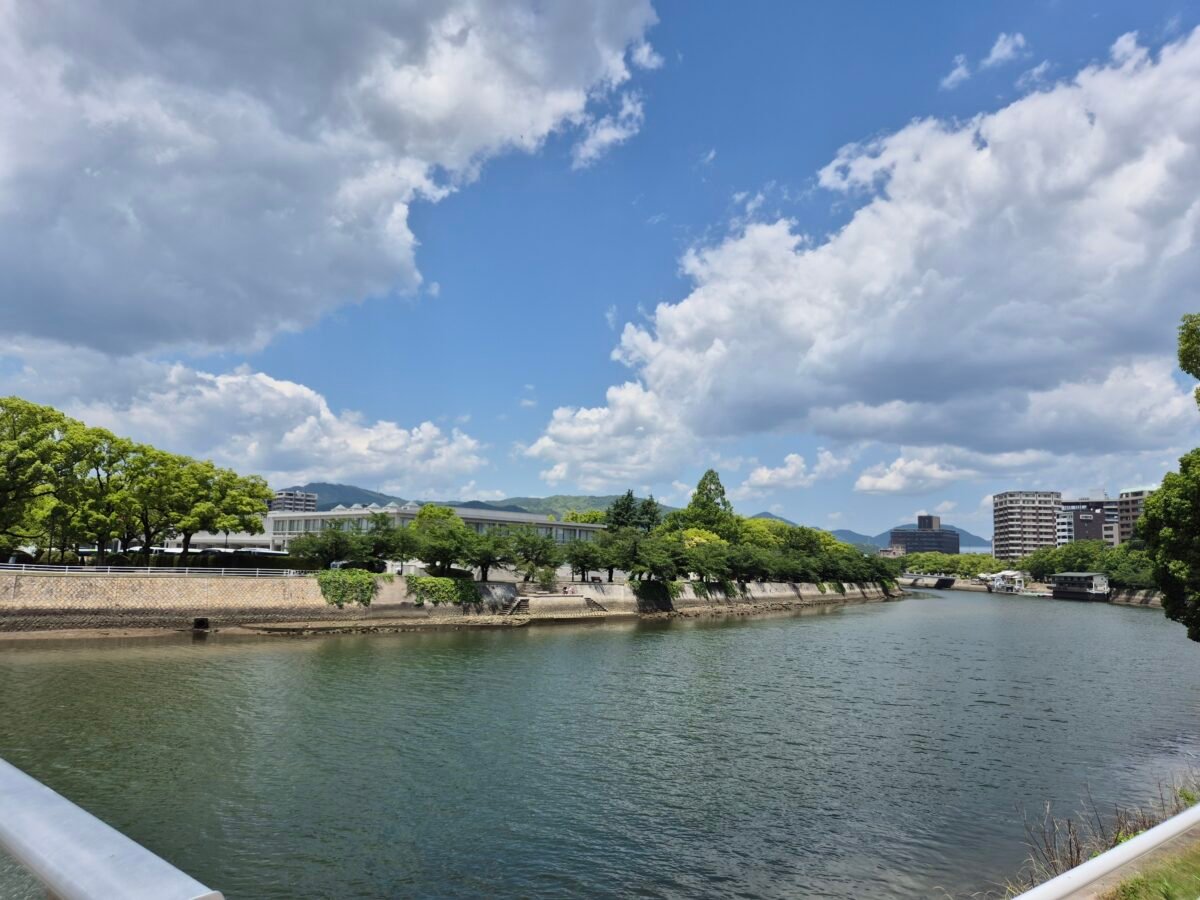
What brings me back is the city itself: the wide boulevards and the parks, the ease of moving through it, the warmth of the people, and the frictionless days made possible by a hotel that removed every small obstacle before I reached it. Beneath all of that sits one plain fact. Three mornings running, I would rather stay in Hiroshima than go anywhere else. A city that can do that to you in only six nights is one you build a habit around, and Hiroshima now sits beside Tokyo as somewhere I return to rather than merely visit.
I came to Hiroshima to understand its past. I left planning my next visit.