
Every guide told me not to waste nights in Nagoya. Use it as a transfer point, they said, and base yourself in Takayama for the mountains. I did the opposite, giving Nagoya a full five nights and a proper stay in Takayama for another 5 nights. The choice I was warned against became the one that saved my trip to Central Japan.
The sights I had already researched in Nagoya did not agree with the guides. There were more of them than a few days pass-through allowed, and several asked for unhurried time. So I trusted my own research over the consensus, and my instinct over both.
My original plan looked clean on paper: Tokyo, a transfer at Nagoya, then Takayama as my base, with a single day trip out to Shirakawago and back. What happened was messier. The plan broke, I adjusted, and the adjustment only worked because Nagoya had the room to absorb it.
The lesson was not that Nagoya is better than Takayama. It was that the town closest to the sights is not automatically the base you build around. Nagoya earns one for its transport logistics and the numerous day tours departing from it.
Why Nagoya Earns Its Nights — and Anchors the Region
Nagoya rarely gets defended, so let me defend it. Japan’s fourth-largest city is not competing with Tokyo or Kyoto, and it does not try to. Instead, it offers something quieter and more useful: a full city to explore and a logistics hub that reaches everything around it, without asking you to change hotels frequently.
Nagoya feels lived in rather than performed. Office workers outnumber tourists, department stores serve locals instead of souvenir hunters, and restaurants fill with residents finishing work rather than tour groups. After Tokyo and Kyoto, the city felt refreshingly ordinary, and I came to appreciate that.
What Nagoya Actually Gives You
The easiest way to see the city’s main sights is the Me~guru loop bus, which links them on one hop-on hop-off route, with no train changes to work out. The one catch, in my case, was reaching the departure point. My hotel left me a long walk through the underground shopping areas beneath Nagoya Station, though a taxi would have spared me the tunnels.
The Castle, the Museum and Sakae
The loop bus strings together the headline stops. Nagoya Castle was worth the morning, whatever its modest billing suggests. The original was lost in the war, and Japan tends to give a reconstruction less weight than the thing it replaced, which may be why the place gets undersold. Its main keep is closed now for a full timber rebuild, so the golden roof ornaments are something you admire from the grounds rather than climb to, while the rebuilt Honmaru Palace and the wide, calm gardens carry the visit on their own.
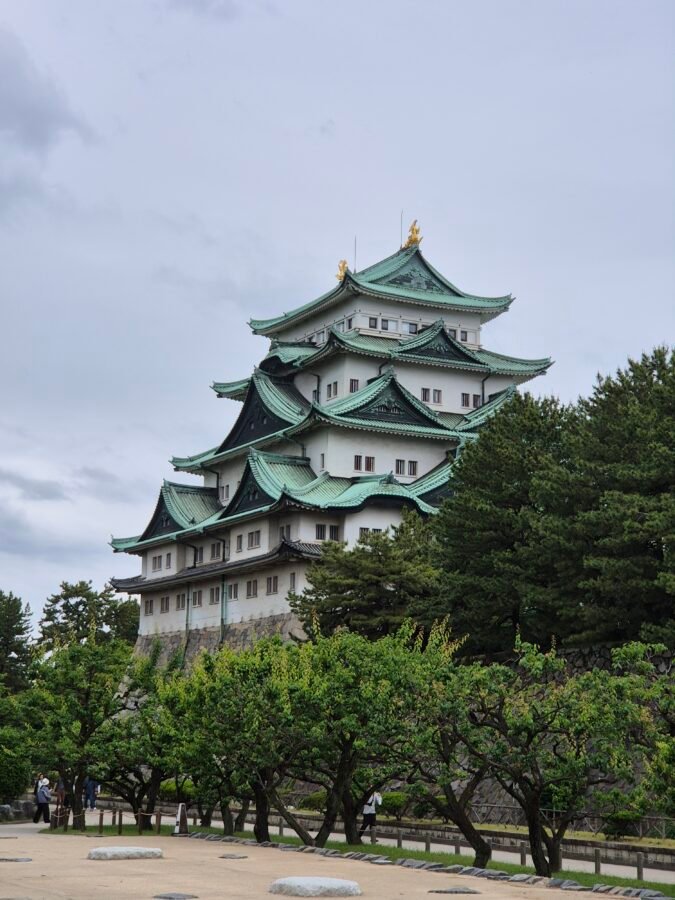
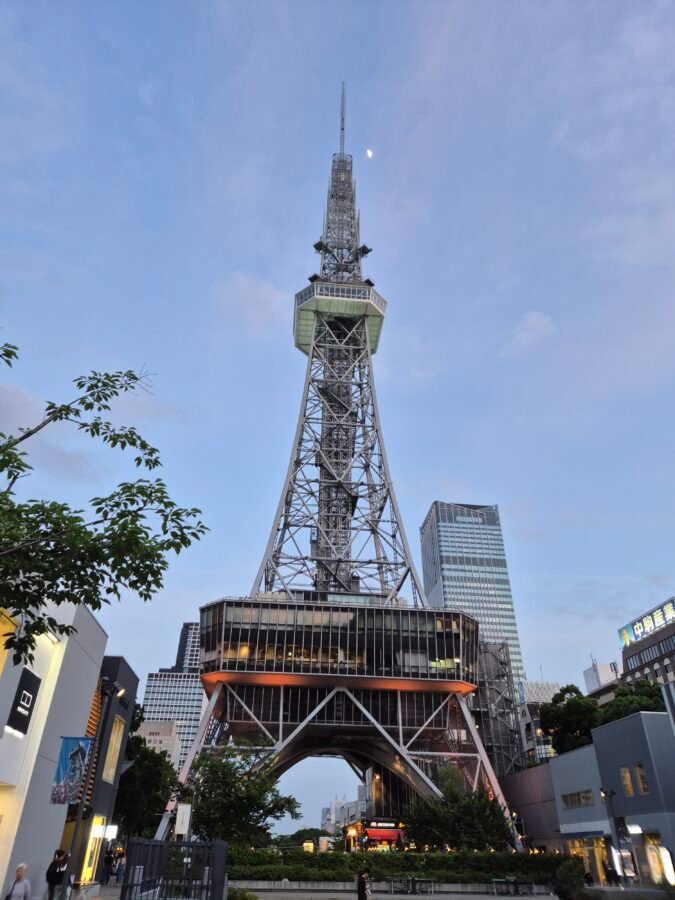
Further along the route, the Tokugawa Art Museum holds the treasures of the ruling family that once controlled this region, and it rewards a slow walk rather than a quick look. Sakae, the next major stop, is the city’s shopping district, spread above ground and through the malls beneath it, with Oasis 21 and its glass “water roof” and the Mirai Tower rising over the park beside it.
Atsuta Shrine, Off the Loop
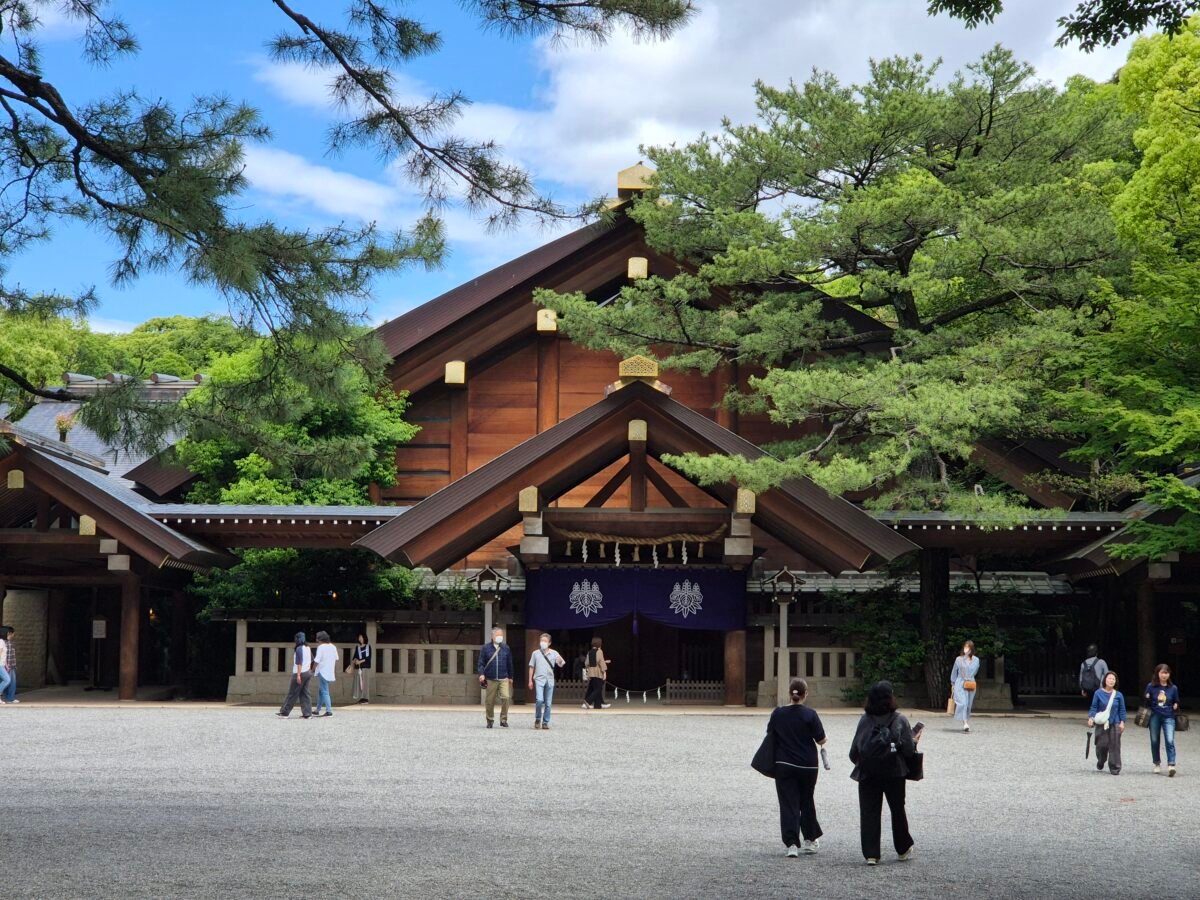
Atsuta Shrine sits apart from all of this, and it rewarded me more than I expected. Shrines are not usually my thing, yet Atsuta is different. It has stood for nearly nineteen hundred years, second in importance only to the Grand Shrine at Ise, and it guards the sacred sword, one of the three imperial regalia of Japan, sealed away so completely that not even its priests have seen it.
You cannot go inside the main hall either, so the visit is really about the grounds: a dense forest of thousand-year-old camphor trees, where the noise drops away and only the gravel underfoot breaks the quiet. Reaching it means a subway ride rather than the loop bus, out beyond the city centre, and the calm alone repays the ride out. Nagoya is also the nearest logistics hub from which to reach Ise itself, should the greater shrine tempt you.
Eating at Nagoya Station
Even Nagoya Station earns an afternoon. Its shopping halls run deep underground, and the depachika, the basement food floors, are their own kind of sightseeing. Nagoya is famous for hitsumabushi, grilled eel over rice eaten in stages, which I never sat down to properly. I made sure to try the eel regardless: eel rice from the Takashimaya depachika, and an eel sushi ekiben to carry onto the train down to Hiroshima, the city I write about in Why Hiroshima Became One of My Favourite Cities in Japan.
None of this fits a transfer window that Nagoya is reputable for. It rewards a proper stay.
Why Nagoya Works as a Base
Beyond what there is to see, Nagoya works as a base for plain, practical reasons. It is a major Shinkansen stop, so you arrive from Tokyo or Kyoto without effort. Limited express trains run north into the mountains toward Takayama. Organised tours and highway buses to the harder-to-reach villages set out from here too. Meanwhile, it never feels overrun the way the marquee cities do.
There is a cost angle too. I stayed at Ibis Styles Nagoya and covered it with reward points, which made the base essentially free, the same loyalty habit behind Why I Sold My House and Live In Hotels Instead. Points aside, a base that stays settled and familiar, stops being a decision you re-make every few days.
Getting around inside the city taught me something worth passing on. I used my Pasmo card for everything, the subway and the Meitetsu lines, none of which are JR. For daily movement in a city like this, a JR rail pass barely helps. I’ve run the full numbers in Why I Won’t Buy The JR Pass Again, and Nagoya is the clean example: the JR pass covers the long hauls between cities, while the transit card covers the life you actually live once you arrive. I go deeper on the card itself, and how to buy and load it, in The Transit Card You Need for Public Transport in Japan.
Takayama — Worth More Than a Day Trip
I based myself at Mercure Takayama, planning to day-trip to Shirakawago from there. That plan did not survive contact with reality. Reserved Nohi Bus tickets to Shirakawago had sold out. I tried booking an organised tour from Takayama through Klook, but it was cancelled; the tours, it turned out, mostly departed from Nagoya rather than Takayama. What remained was queuing for non-reserved seats, which did not appeal.
So I let the Shirakawago-from-Takayama plan go, and reached the village later from Nagoya instead. That took nothing away from Takayama, which I had wanted to see in its own right. People call it the little Kyoto of Japan, and it earns the name: preserved Edo-era streets and wooden townhouses that hold the same old-Japan character people travel to Kyoto for. Kyoto asks a great deal of visitors, as I wrote in Kyoto Is Revered — but It Operates on Stricter Terms; Takayama asks far less.
The Old Town
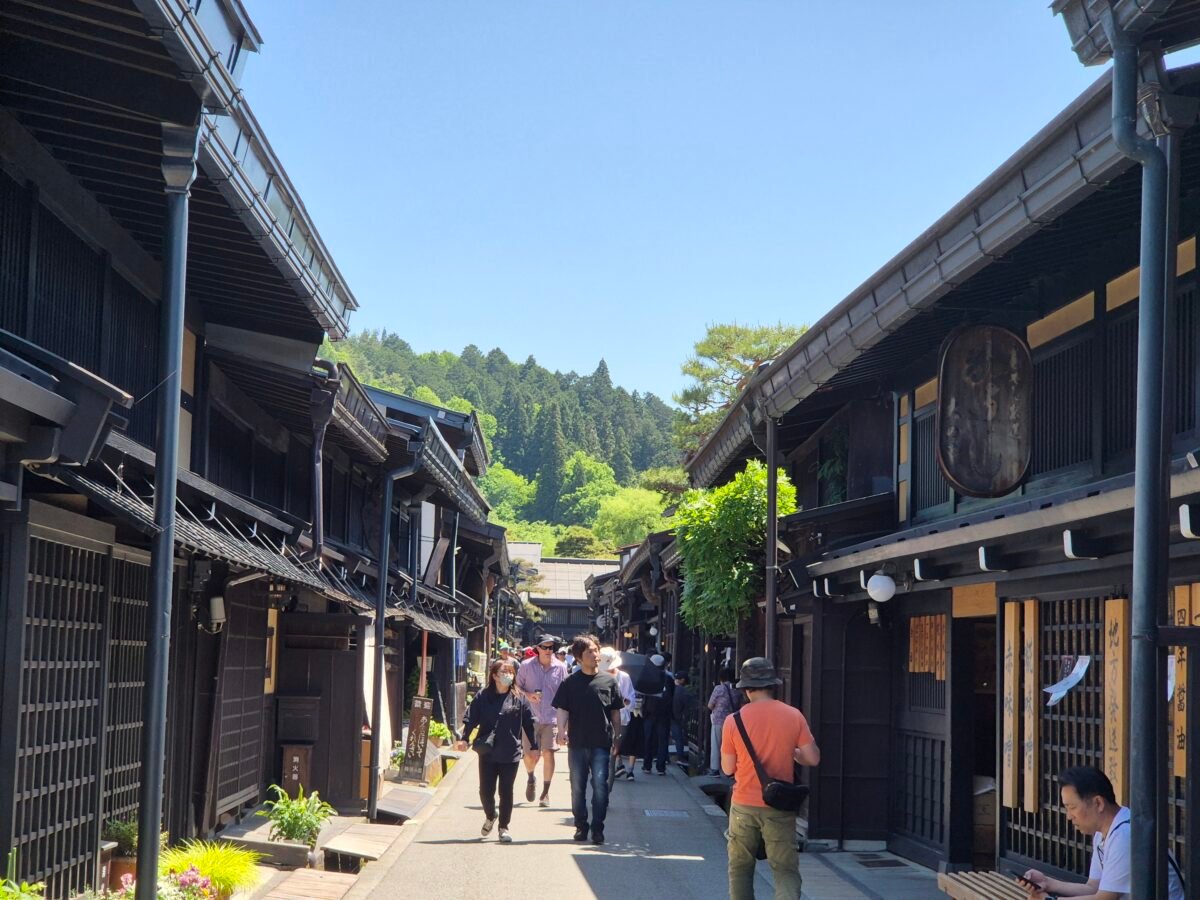
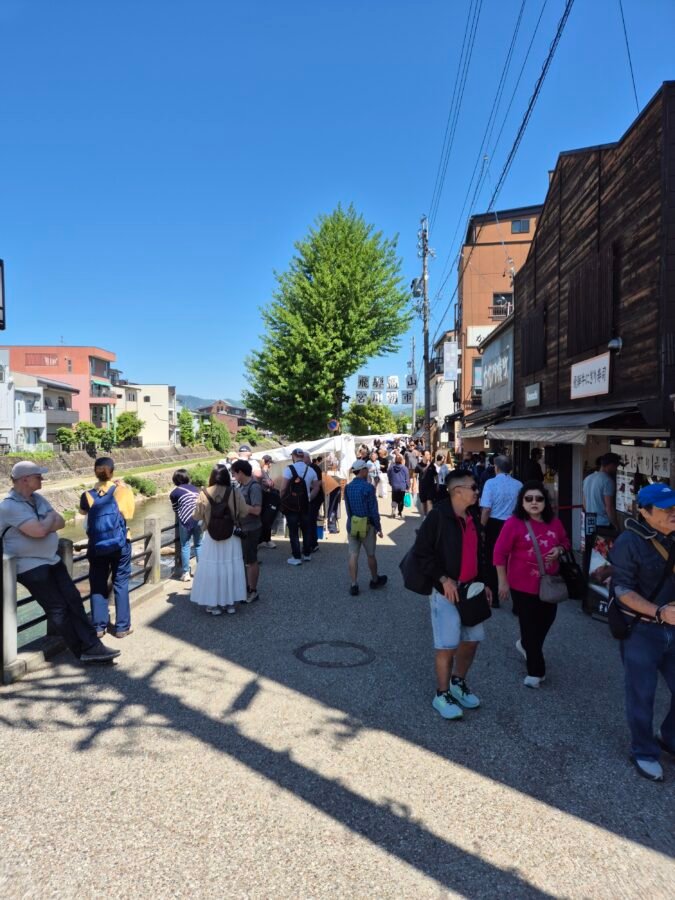
Takayama’s old town, Sanmachi Suji, is one of Japan’s best-preserved Edo-period merchant districts, protected as an Important Preservation District for Groups of Traditional Buildings. Its most famous street runs low and dark-timbered between old sake breweries and merchant shops.
The Miyagawa Morning Market is a charming riverside market where local farmers and artisans sell fresh produce, handmade crafts and regional specialities, creating a relaxed atmosphere that feels more like a community gathering than a tourist attraction.
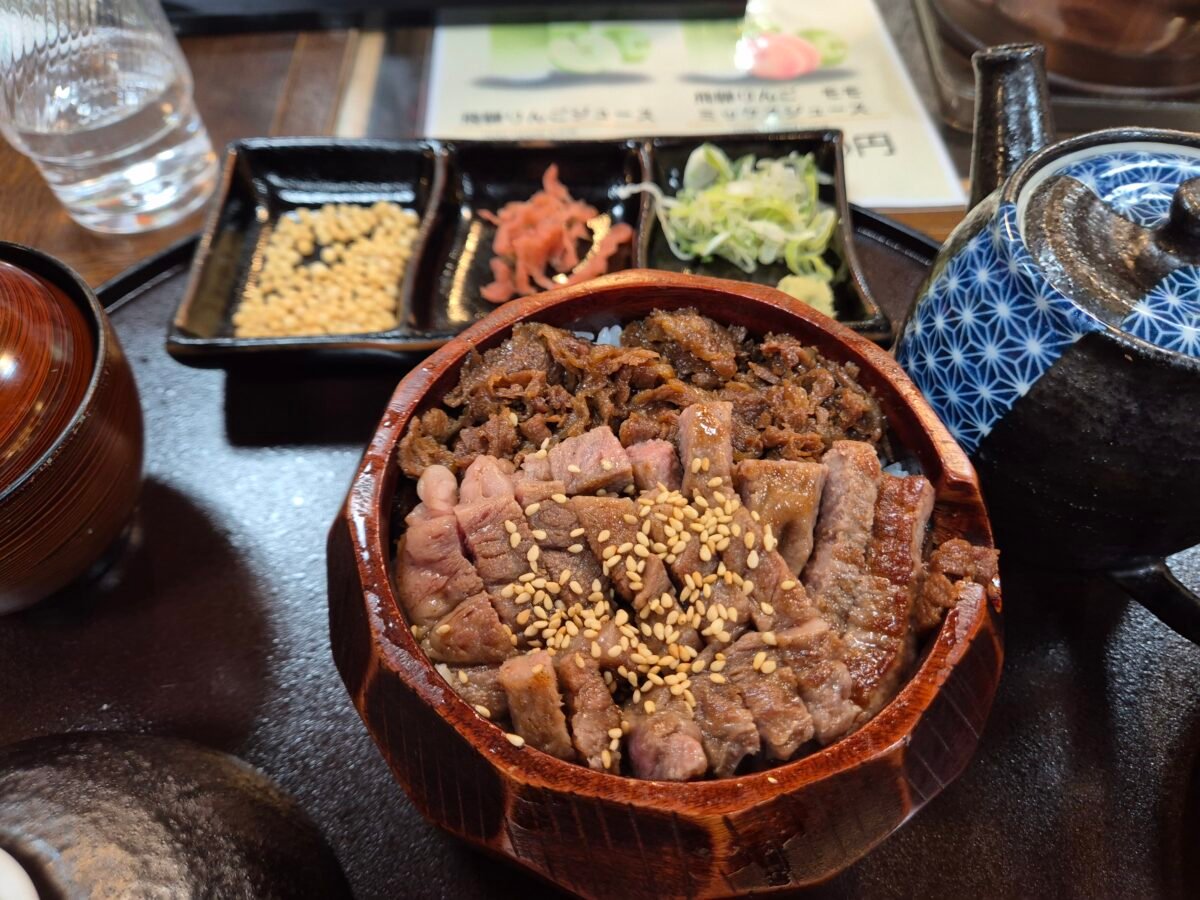
Takayama sells Hida Beef everywhere, stall after stall along the old streets offering it as sushi, two pieces to a plate. Hida beef is wagyu from Japanese Black cattle raised in the Gifu mountains, graded highly for its marbling. That fat runs in fine threads through the meat, so it melts as it cooks and turns the beef tender. Hida beef sushi was not enough for me; I wanted a proper sit-down lunch, so I went to Takumiya Yasukawa. It did not disappoint, and the hype around the quality of Hida beef is real.
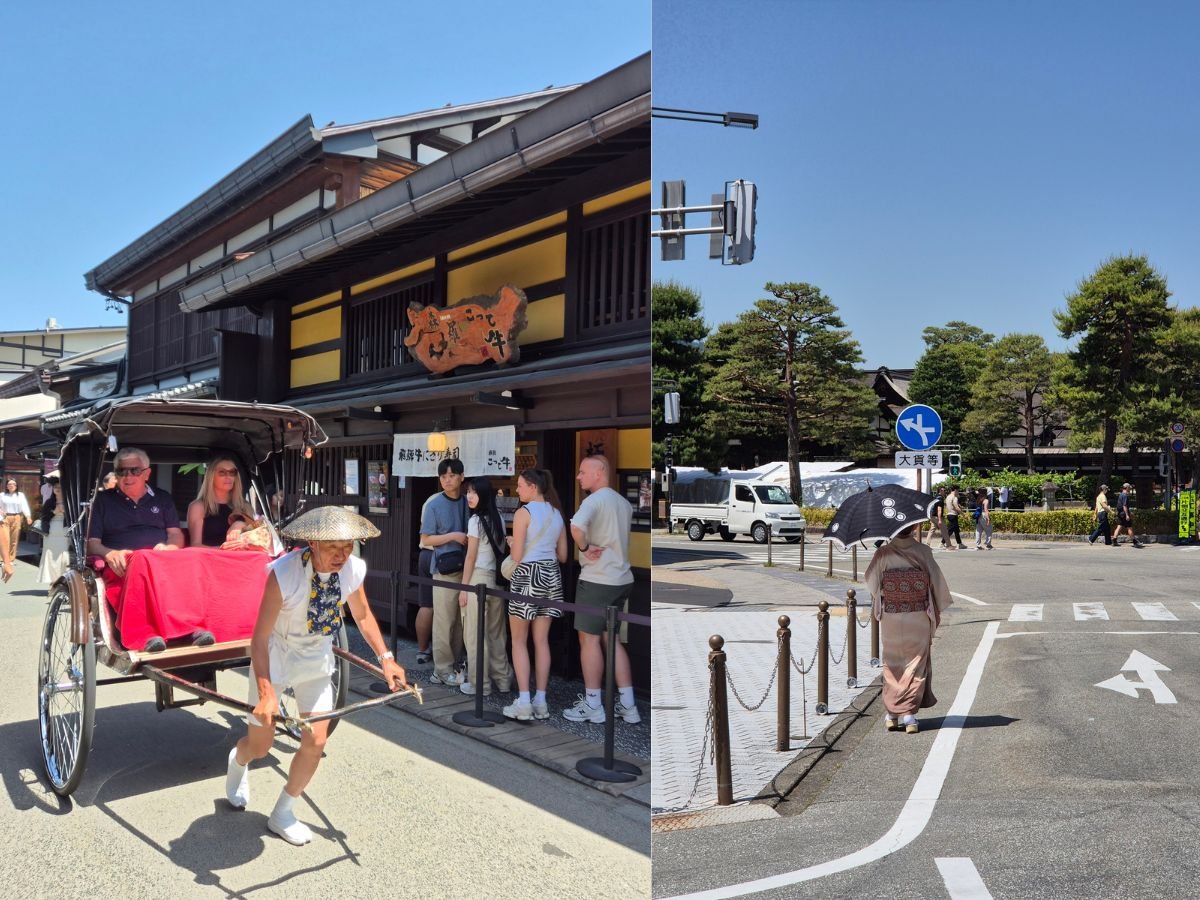
This is where the little-Kyoto name earns itself. Rickshaws still work the old streets, their pullers in straw hats and split-toe boots, and you pass women in kimono carrying parasols against the sun. The wooden shopfronts behind them have looked much the same for a century. You get the traditional Japan that people travel to Kyoto for, without the crush that now comes with it.
The Museum and the Jinya
To make sense of the town, take its history in order. Do the Takayama Museum of History and Art first. The museum itself is well worth the time, and where English signage became limited, I used ChatGPT to pull the full history and context as I moved through the rooms, deeper than any plaque or audio guide, until the place came alive. I’ve written a whole piece on how I use AI like this on the ground, Forget AI Itineraries: What Actually Helps Solo Travellers.
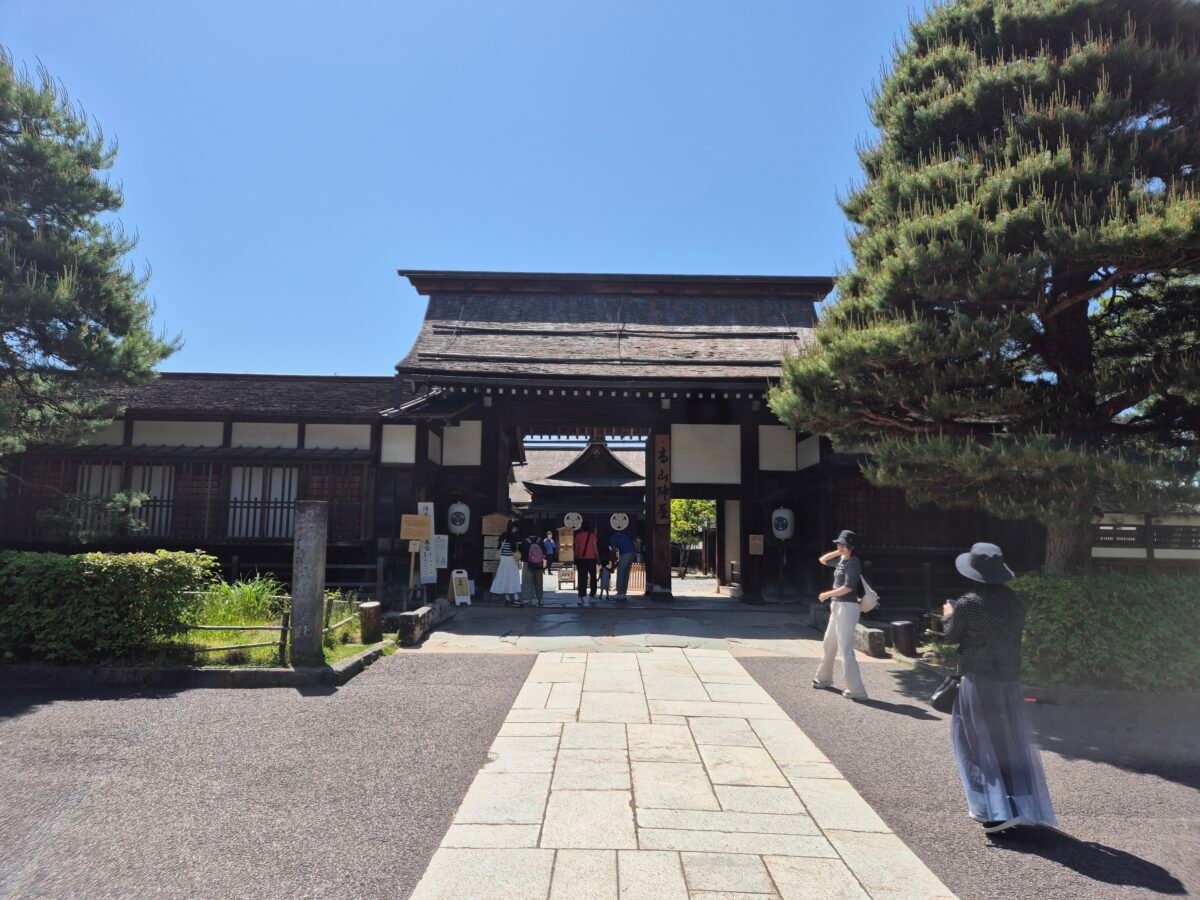
Visit Takayama Jinya after the museum. This was the office from which the Tokugawa shogunate ruled Hida directly, the region’s forests and mineral wealth valuable enough to govern from Edo rather than hand to a local lord. It is the only such government house still standing in Japan. Seen after the museum, its tax ledgers and rice stores actually mean something.
None of this is a day trip. The Shirakawago tour I later took from Nagoya allowed just two hours in Takayama, nowhere near the time the town deserves.
Hida Furukawa — Takayama’s Quiet Neighbour
A settled base pays off in the small trips you would otherwise skip. With Takayama sorted, I took an easy JR ride north to Hida Furukawa, a town most itineraries never mention.
Hida Furukawa surprised me. I had not expected the quiet beauty of the place, the way the mountains sit close around it and the old white-walled storehouses lean over the canals. Those canals run so clear that koi drift through them in slow colour, and there are benches set along the water where I sat far longer than I had meant to, genuinely mesmerised.
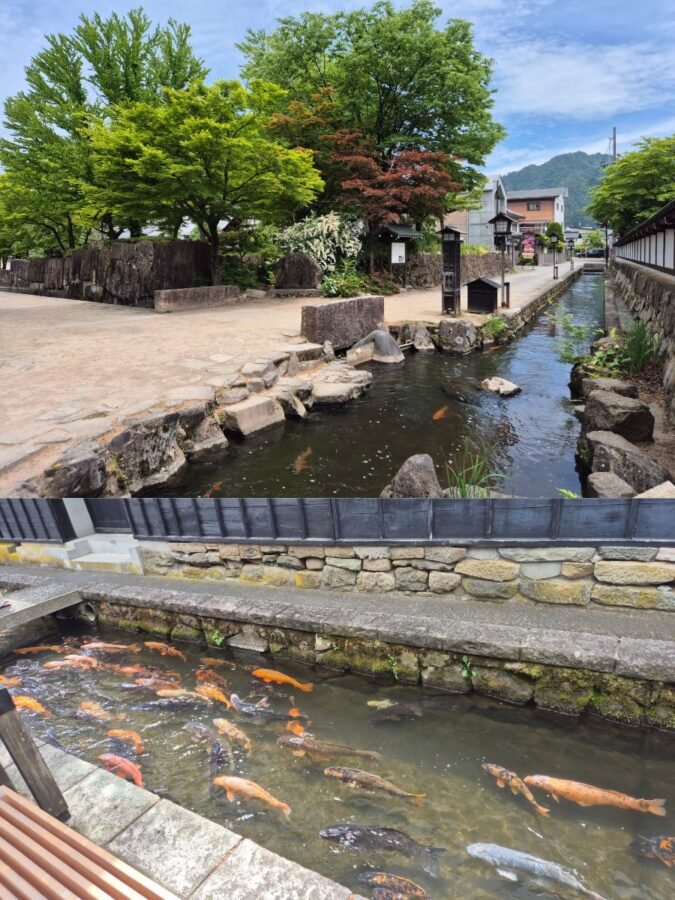
Few tourists reach the town, so its streets keep their ordinary rhythm, going about the day rather than performing for visitors. This is the understated gem I would tell you not to miss, and half a day in it is half a day well spent.
Shirakawago — More Than a Pretty Village
I reached Shirakawago on a Klook day tour out of Nagoya. It left from below the Mirai Tower in Sakae, an easy subway ride from my hotel and back, which is exactly the sort of thing that makes Nagoya work as a base; the subway here is simple to navigate. The route ran Shirakawago first, then Takayama for lunch and a short tour, then on to Gujo Hachiman. Shirakawago itself deserves its fame. It also comes with an entrance I was not aware of.
Why the Roofs Are Built That Way
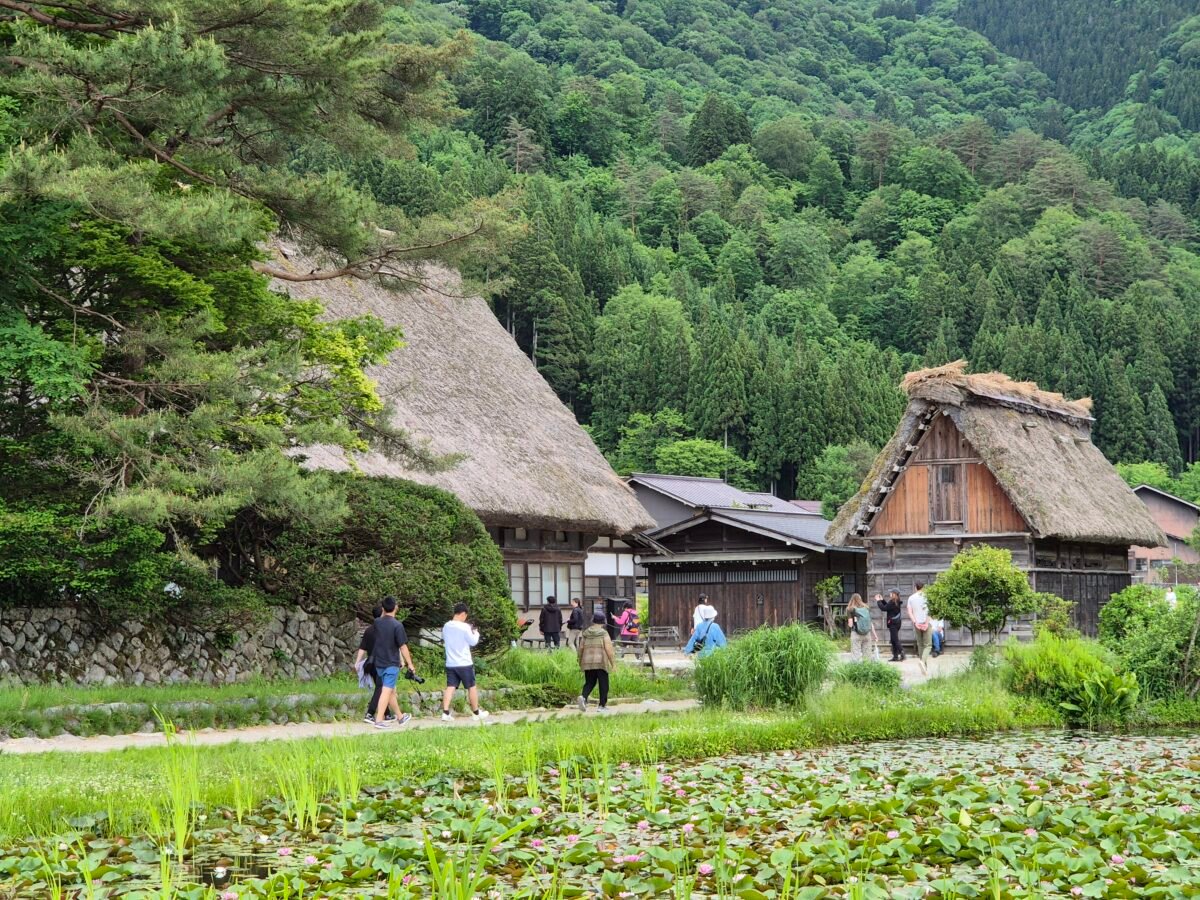
The village is UNESCO-listed for its gassho-zukuri farmhouses, named for roofs shaped like hands pressed together in prayer. Those steep thatched roofs are not decoration. They shed the region’s heavy mountain snow, and the vast attics beneath them once held silkworm cultivation, the area’s old livelihood. Replacing a roof was too large a job for one family, therefore whole communities did it together, a tradition called yui. The architecture is a record of how people survived here.
The Bridge, the Crowds, and What the Tour Skips
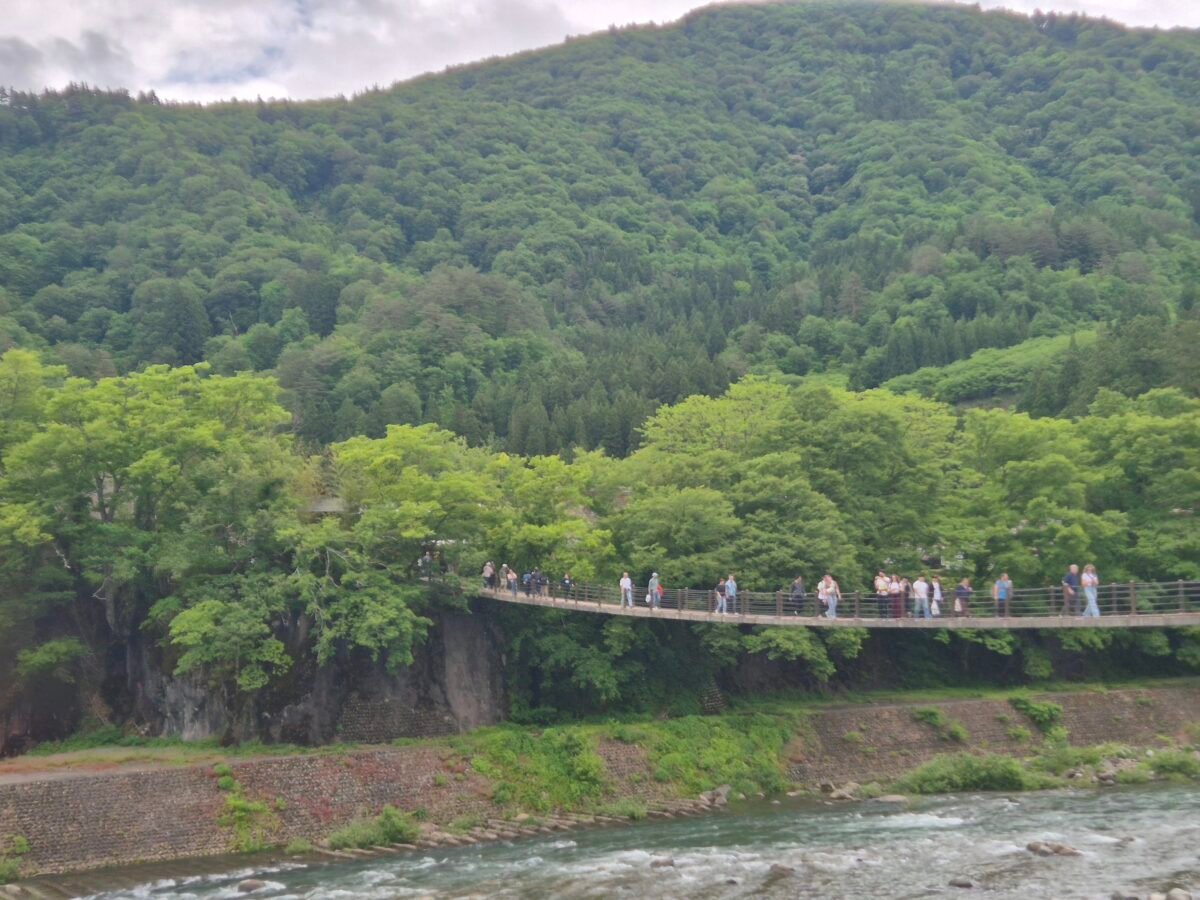
I am afraid of heights, and nobody had told me you enter the village across a suspension bridge over the river. The whole span sways underfoot. Other visitors had noticed as much, and several were jumping on the spot to make it swing harder while their friends filmed them.
Then our guide stopped the group in the middle to line everyone up for a photograph. I did not stop. I kept going, eyes on the far bank, trying not to look down, and crossed it twice that day, out and back. I mention it because nobody warned me, and a reader who shares that fear would want to know.
This tour was rushed, partly because the village sits two hours by bus from Nagoya, so the driving alone swallowed much of the day. It steered toward whatever photographs well. The group went up to the observatory and over to the three farmhouses that fill every Instagram feed. My legs were troubling me that day, so I skipped the observatory climb and walked the village itself instead, which was the better choice regardless and still left me wanting more time than the schedule allowed.
Shirakawago also confirmed a position I had been forming. Tours built like this one — three towns, hours on a coach, stops chosen for how they photograph — do not suit the way I travel.
Gujo Hachiman — More Reputation Than Reward
I had heard so much about Gujo Hachiman that I expected a highlight. It was not one.
The town is known for water, its canals and channels and famously clean streams. Yet the canals did not match what I had already seen in Hida Furukawa, the quiet neighbour nobody had hyped. We arrived late, in the evening, because the tour had over-run its stop in Takayama: two hours there against the one hour Klook advertised. I sat that stop out, since I already know Takayama inside out, which made the lost time doubly obvious.
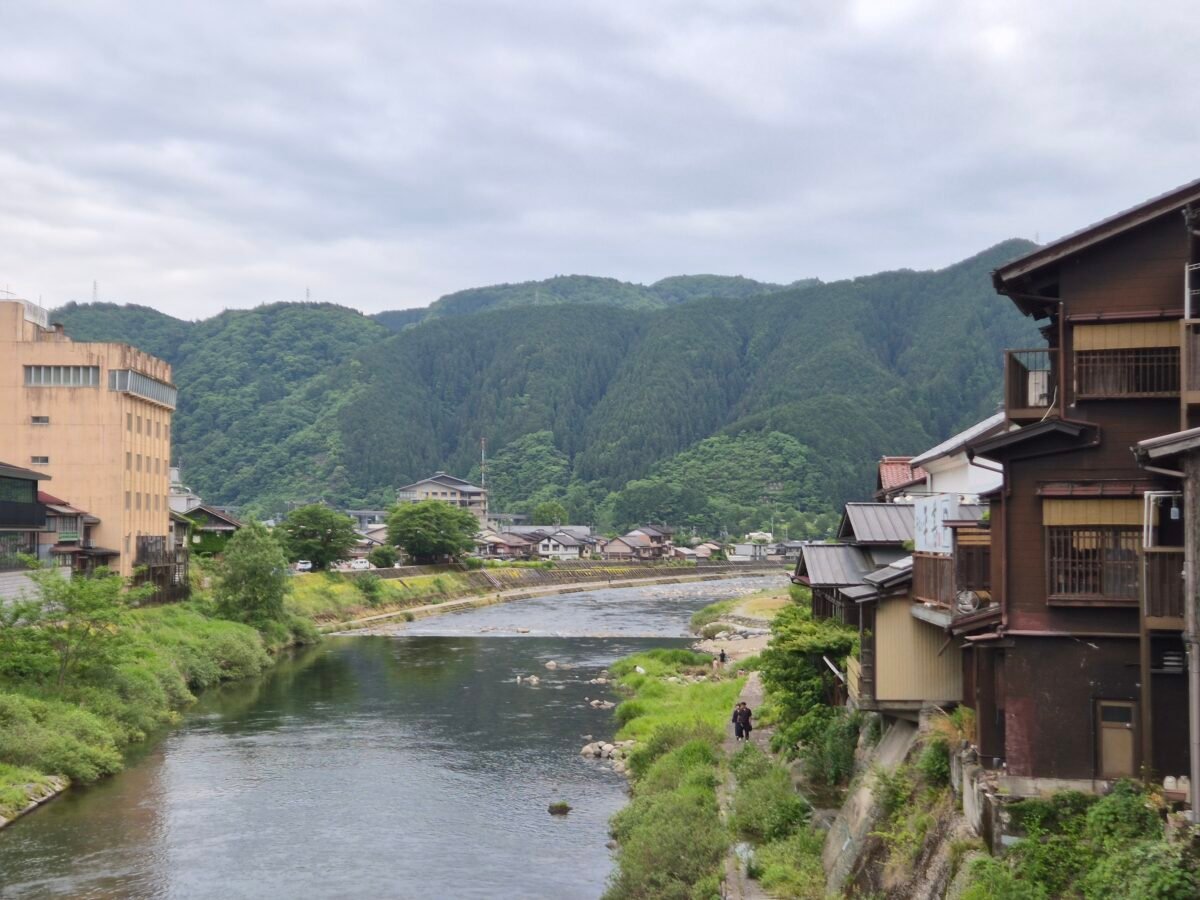
By the time the tour reached Gujo Hachiman, the light was going. Its hilltop castle was never on the itinerary; it sits high in the hills and would take most of a day, so I only caught a glimpse of it. We had a short walk through the streets in the dusk, and that was the whole of the town for me. I would skip Gujo Hachiman and put my time elsewhere.
How to Base Yourself in Central Japan
Strip the trip down and a simple framework remains, one you can apply well beyond this region. Choose the transport hub with margin if you want options and full flexibility. Only choose the town nearest the sight if you plan logistics thoroughly. I normally do that and the one time I didn’t, it came back to bite me.
This basing decision only makes sense next to the five other cities it was built around. The whole forty-day structure is in Planning a Japan Trip? Start With the System, Not the Cities.
The Base Test
Ask three questions of any base you are considering. Does it connect by both rail and organised tours, so a broken plan has a backup? Does it hold enough spare capacity to absorb a day that goes wrong? And does it spare you from packing and moving mid-trip? Nagoya answered yes on all three counts.
Here is the shape that worked. Nagoya deserves five nights; there is far more to see and experience there than most people expect. Give Takayama a few days too, three if you move quickly and more if you like to linger. Hida Furukawa is an easy hop from Takayama, well worth it for the canals and the koi. Shirakawago can be reached from either town, though the timing rewards planning ahead.
Send Your Luggage Ahead
One more move keeps it frictionless. Send your main bag ahead from your prior base straight to Nagoya, and carry only a backpack into Takayama. It is waiting for you when you reach the city, and no case ever goes up or down a station staircase. I set out that exact method in Luggage Forwarding in Japan: A Real Multi-City Route.
The Plan At A Glance
| Base | Nights | What it covers | Book ahead & notes |
|---|---|---|---|
| Takayama (Mercure Takayama) | 3–5 | Sanmachi old town, the Miyagawa morning market, the Museum of History and Art, then the Jinya, Hida beef, and a half-day to Hida Furukawa. | Book the reserved Nohi Bus seats early to day-trip Shirakawago independently. Accommodation is expensive and can triple during the spring and autumn festivals, so book ahead. |
| Nagoya (Ibis Styles Nagoya) | 5 | The city itself: Castle, Atsuta Shrine, Tokugawa Art Museum, Sakae, Nagoya Station. Plus day trips to Shirakawago, Gujo Hachiman, and Ise. | Pasmo or Suica covers all local transit; the JR Pass does not. |
Two practical notes carry the rest. Inside Nagoya, your Pasmo or Suica card does all the work, while a JR rail pass never touches the local lines. And the Me~guru loop bus, useful as it is, needs a little time on foot or a quick taxi to reach it, unless you stay near the departure point.
What I Would Do Differently
If I did it again, I would not take the tour at all. I would book the reserved Nohi Bus seats early and day-trip Shirakawago from Takayama on my own clock, giving the village the full day it deserves. Nagoya I would keep as the base, returning for the independent day trips I ran out of time for. That is the real advantage of a hub. You can always come back to it.
Final Thoughts
The nights I was told to cut were the ones that made this trip frictionless. When the Shirakawago plan collapsed, Nagoya had the slack to catch it, and I saw the village after all. That was luck, honestly: I had kept those Nagoya nights because the city deserved them, not because I saw the collapse coming. But it is the kind of luck you can build in. Give the hub the nights, and the margin is there whether the plan holds or not.
Central Japan does not need to be a scramble of one-night stops and dragged suitcases. Base yourself where the transport is, keep a little room in the schedule for the day that goes sideways, and let the region come to you. I gave each of two towns a proper stay, moved through everything else from those two anchors, and enjoyed a part of Japan that most travellers rush straight past on their way somewhere else.